
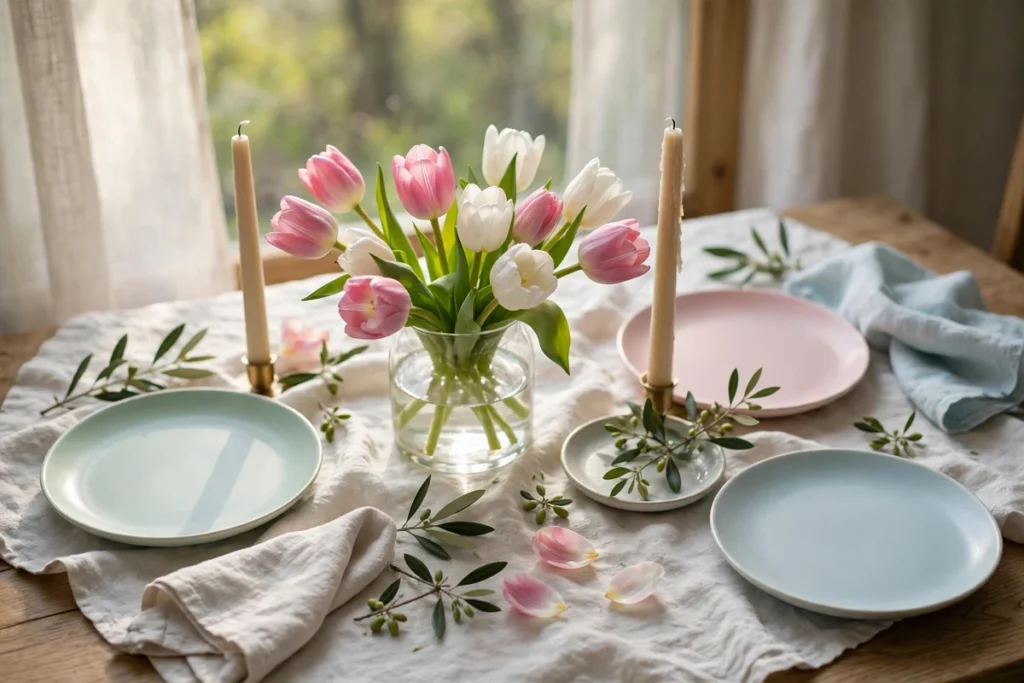
My table is the same small wooden table I have had for years, and for most of winter it just holds whatever needs a home for a minute: keys, mail, a bag I meant to put away. Then spring comes, and I want it back. Not for a big party, and not for a photo. I want it back for breakfasts that last a little longer, and for evenings when someone stays for one more cup of tea.
That is what this list is about. I have tried every idea here on my own table, in my own small home, with things I already owned or picked up for very little. A bunch of tulips from the market, a runner I already had folded in a drawer, candles that had been waiting in a box since winter. Nothing here needs a new table, a new room, or a perfect house. Some of these ideas worked the first time. A few of them wobbled, dripped, or leaned sideways before I got them right, and I will tell you about those too, because that is the part that actually helps.
If you are new here, you can start back on The Inspire Rooms homepage and browse from there. For now, pick one idea, try it at your next meal, and see how different the same old table can feel.
1. Start With a Low Vase of Fresh Tulips
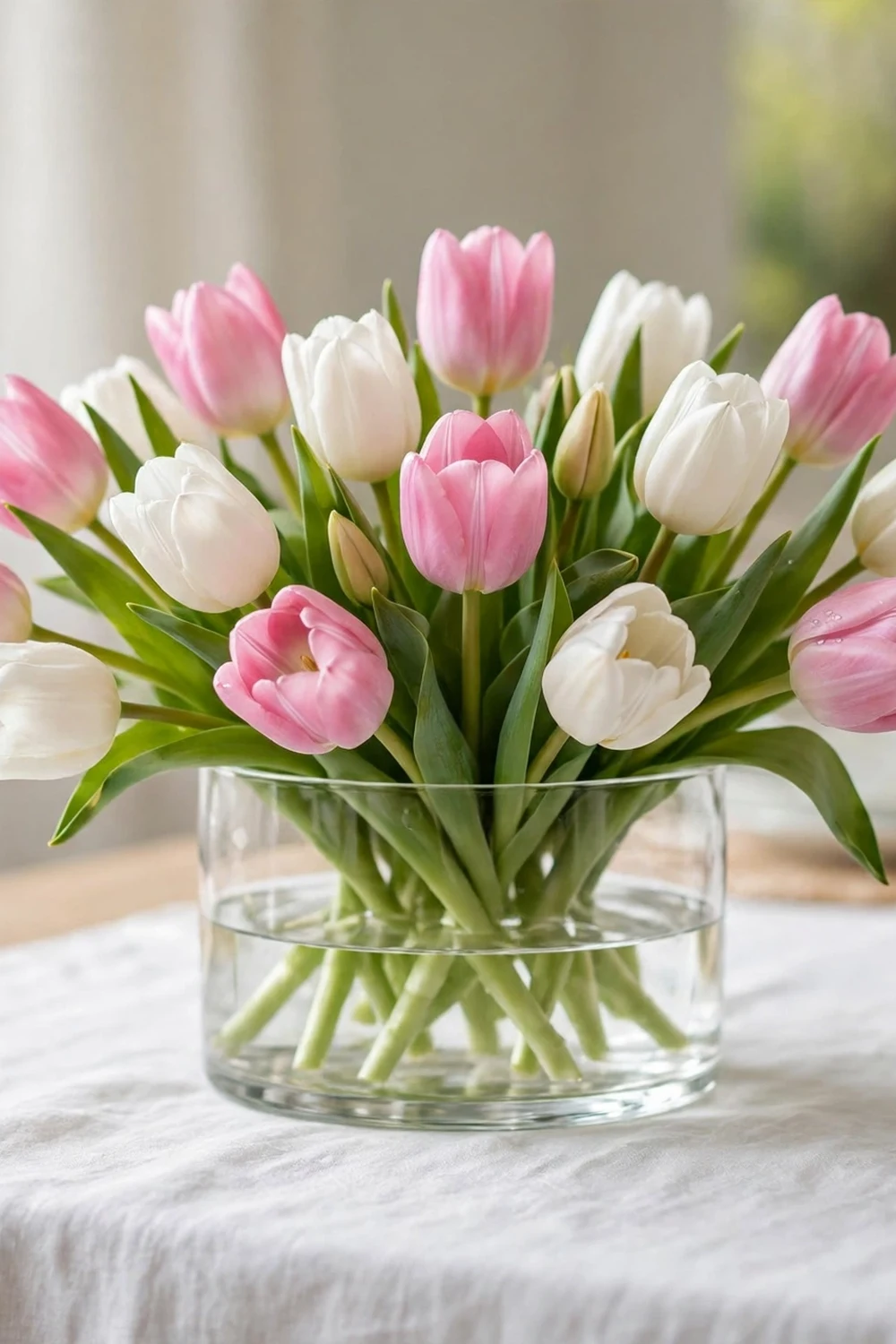
A low vase of tulips is where I start, almost every time. I like pink and white together, nothing too tall, so I can still see the person across the table. Tall flowers look lovely in photos, but at a real meal they turn into a wall, and everyone ends up leaning around them to talk.
I cut the stems at an angle, take off any leaves that would sit in the water, and use less water than I used to. Tulips drink a lot, but they also keep growing in the vase, which is part of their charm and part of the trouble. The first time I filled a vase to the brim, the stems bent and flopped by the next morning. A little less water, and a vase that is wider than it is tall, keeps them standing much longer.
Tip: Change the water every two days and trim a tiny bit off the stems each time. It takes two minutes, and it is the difference between tulips that last three days and tulips that last a whole week.
If you love fresh flowers on the table, these Easter flower arrangements have more combinations that work just as well in a low vase as they do in a tall one.
2. Layer a White Cloth With a Soft Sage Runner
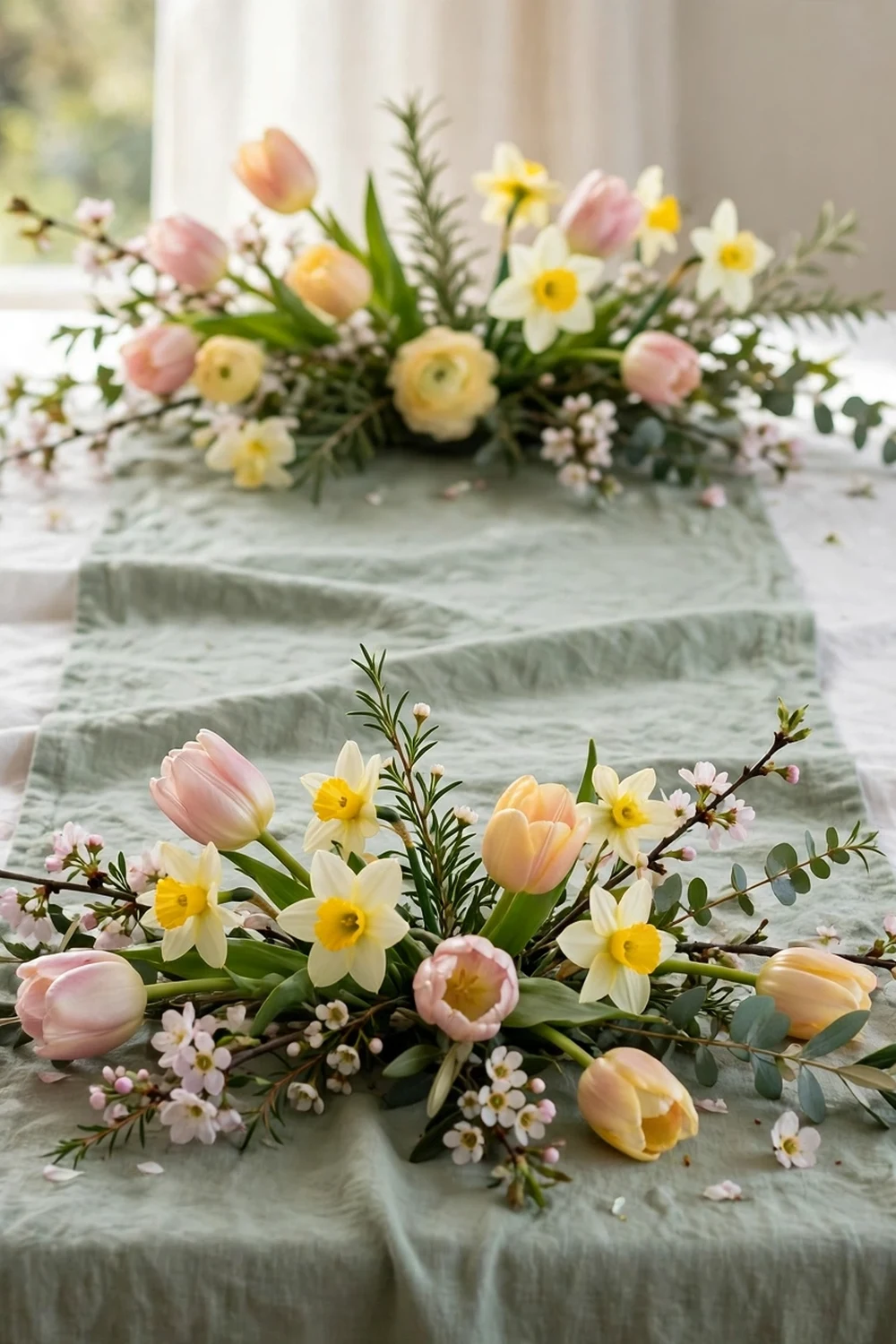
A white cloth on its own can feel a bit plain on my wooden table, and a runner on its own can feel a bit bare. Together, they work. I put the white cloth down first, smooth out the wrinkles with my hands, and then lay a soft sage runner straight down the middle. The sage picks up the green in the flowers without shouting about it.
My runner kept sliding to one side the first few times, especially when someone pulled a plate toward them. I fixed it with a thin non-slip mat underneath, cut to the size of the runner, and now it stays where I put it. It is not pretty, but nobody sees it, and that is the whole point.
Tip: Let the runner hang evenly on both ends, about the same length each side. If one end is much longer than the other, the whole table looks lopsided, even if everything else is perfect.
3. Stack Pastel Plates on Plain White Dinner Plates
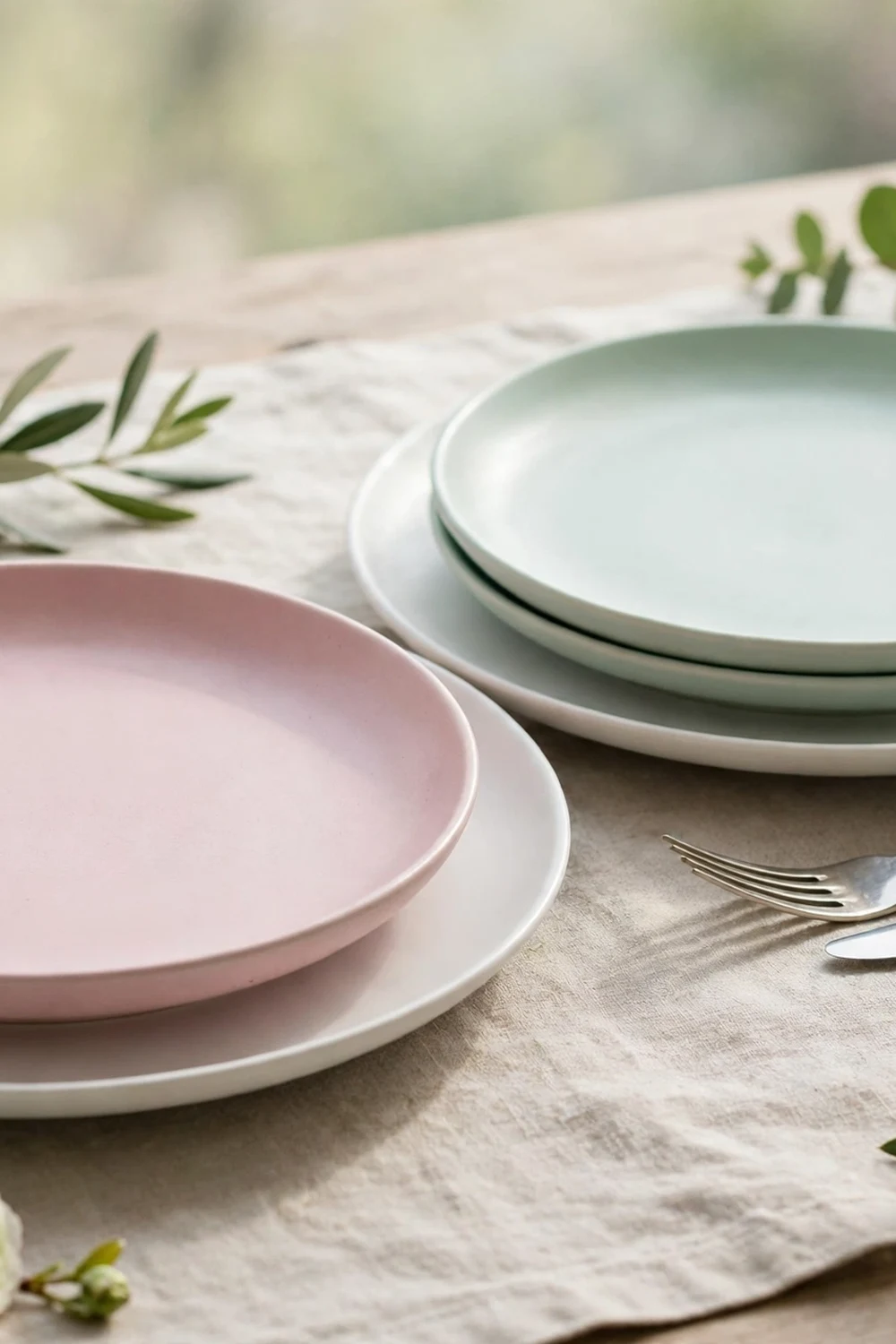
I do not own a full pastel dinner set, and I do not need one. I stack one pastel plate, pink or mint, on top of a plain white dinner plate at each place, and suddenly the table looks like I planned it. The white plate does the heavy lifting, and the pastel one adds the spring colour.
Getting the basics right matters more than owning fancy pieces. Fork on the left, knife on the right with the blade facing the plate, glass above the knife, and only the pieces you will actually use. If you want a clear reminder of where everything goes, the Better Homes and Gardens guide to setting a table lays out basic, casual, and formal settings in plain language.
Tip: Keep the stack to two plates per place. Three looks impressive for about five minutes, and then the first person has nowhere to put their bread.
4. Run a Fresh Greenery Garland Down the Middle
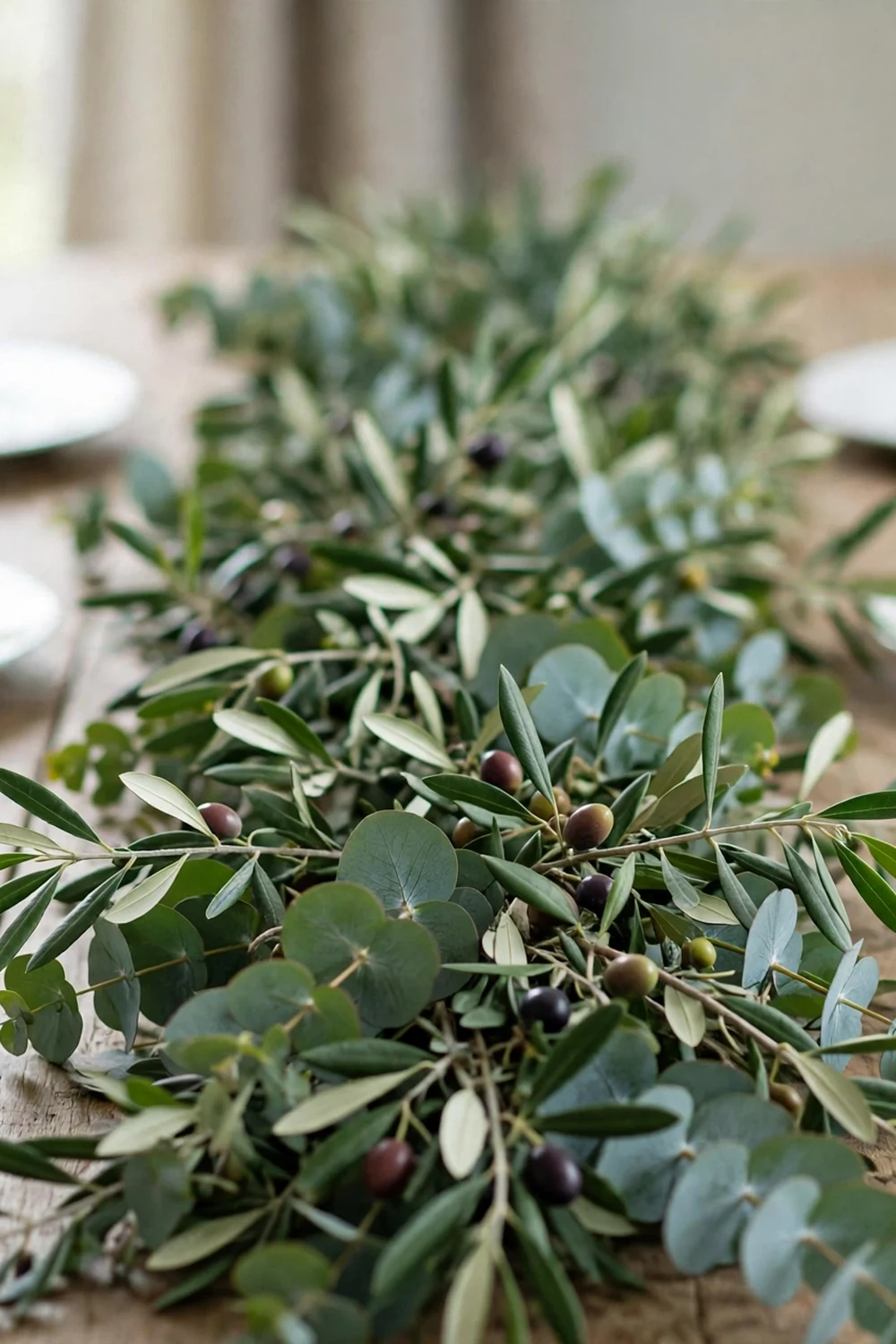
A greenery garland is my favorite way to fill a long table without spending much. I lay soft eucalyptus and a few olive branches down the middle, overlapping them so there are no bare patches, and I let a few ends curl out over the edge. It smells faintly fresh when you sit down, and it makes the table feel finished before a single plate goes on it.
The first garland I made was too thick in the middle and too thin at the ends, so it looked like a green hill. Now I start with a thin base layer all the way along, and then tuck in extra pieces only where there is a gap. It takes a few more minutes, but the result looks gathered, not piled.
Tip: Keep the garland low and flat. If it starts creeping up into a hedge, guests will be peeking over it all through the meal, and nobody enjoys that.
Greenery works indoors and out, and these Palm Sunday decorations using simple greenery use the same soft branches in a different part of the house.
5. Line Up Small Bud Vases, One Stem Each
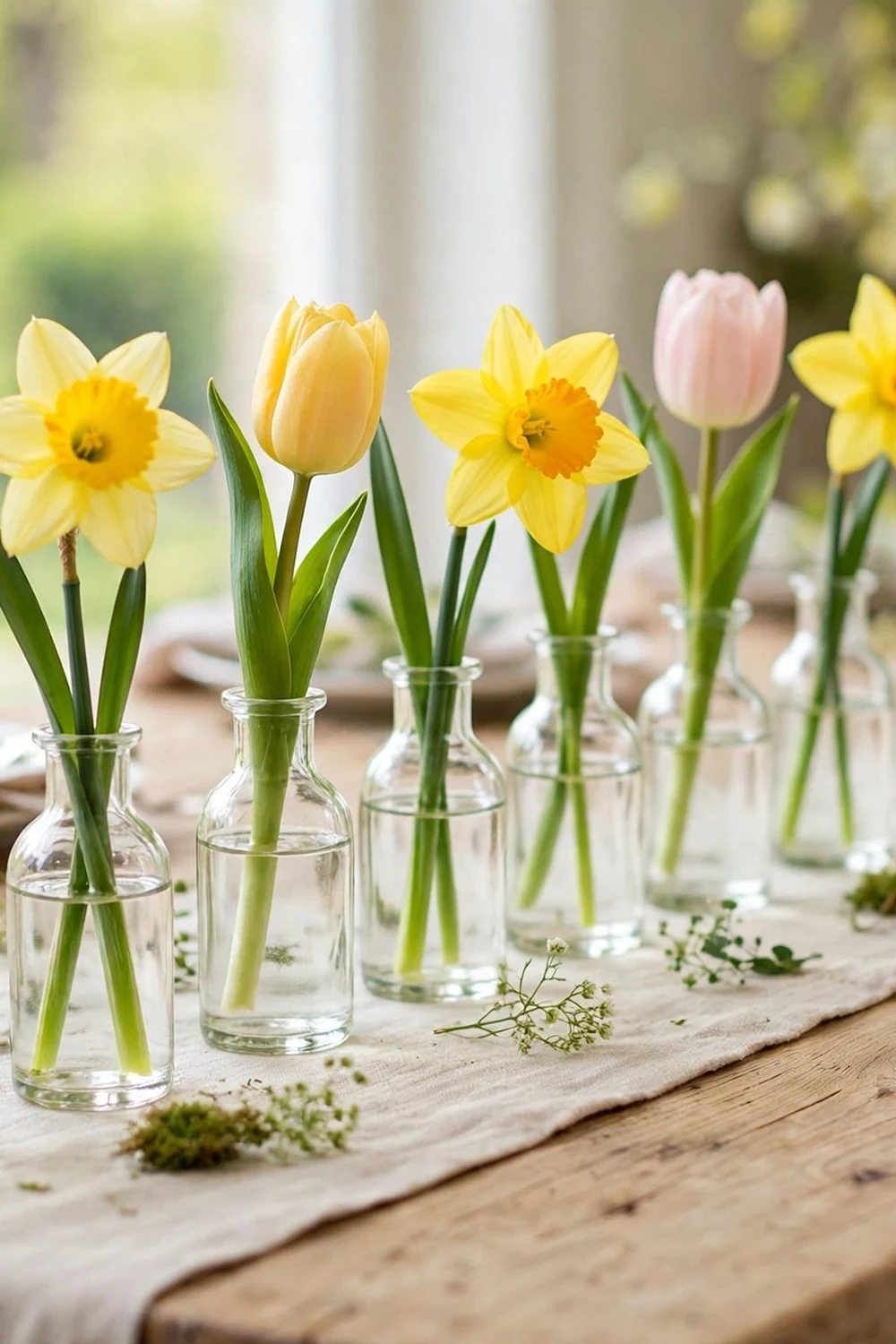
Bud vases saved me the year I could only afford one small bunch of flowers. Instead of cramming them all into one vase where half of them hid, I put one stem in each tiny vase and lined them down the middle of the table. Five little vases looked like more flowers than one big bunch, and everyone could see across the table between them.
I mix clear glass with one or two pale ceramic vases, so it does not look like a matching set from a shop. A single tulip, a daffodil, a sprig of blossom, whatever I have. The stems do not need to match, they just need to be fresh and roughly the same height, or the line looks jumpy.
Tip: Fill bud vases only halfway. A full tiny vase splashes when someone bumps the table, and spring water on a linen cloth is a stain you will be thinking about all evening.
6. Put a Bowl of Lemons in the Middle and Call It Done
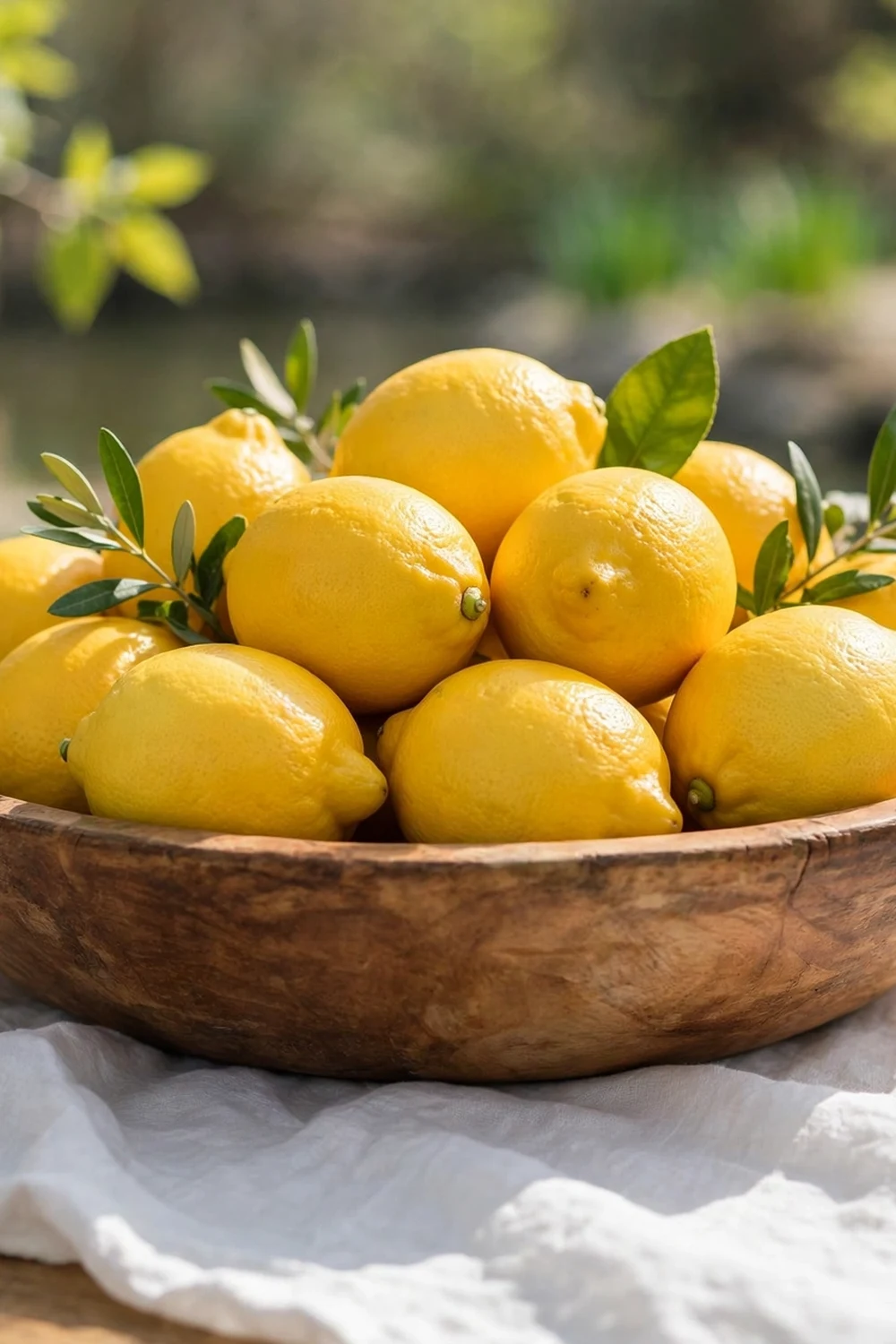
Some days I do not want a flower arrangement at all. On those days, a bowl of lemons does the job. The yellow is so bright against a white cloth that the whole table wakes up, and the lemons smell clean and sharp when you lean in. I tuck a few green leaves between them so it does not look like a fruit bowl that wandered in from the kitchen.
I learned to put a small cloth or a cork mat under the bowl, because a heavy bowl dragged across a wooden table leaves a mark you notice every day after. Now the bowl sits still, the lemons stay put, and I can use them for cooking later in the week, which feels like the opposite of wasteful.
Tip: Choose lemons that are firm and heavy for their size, and turn the prettiest side out. A dull, soft lemon in the middle of the bowl is the first thing your eye finds, for all the wrong reasons.
7. Use Woven Placemats and Simple Rattan Chargers
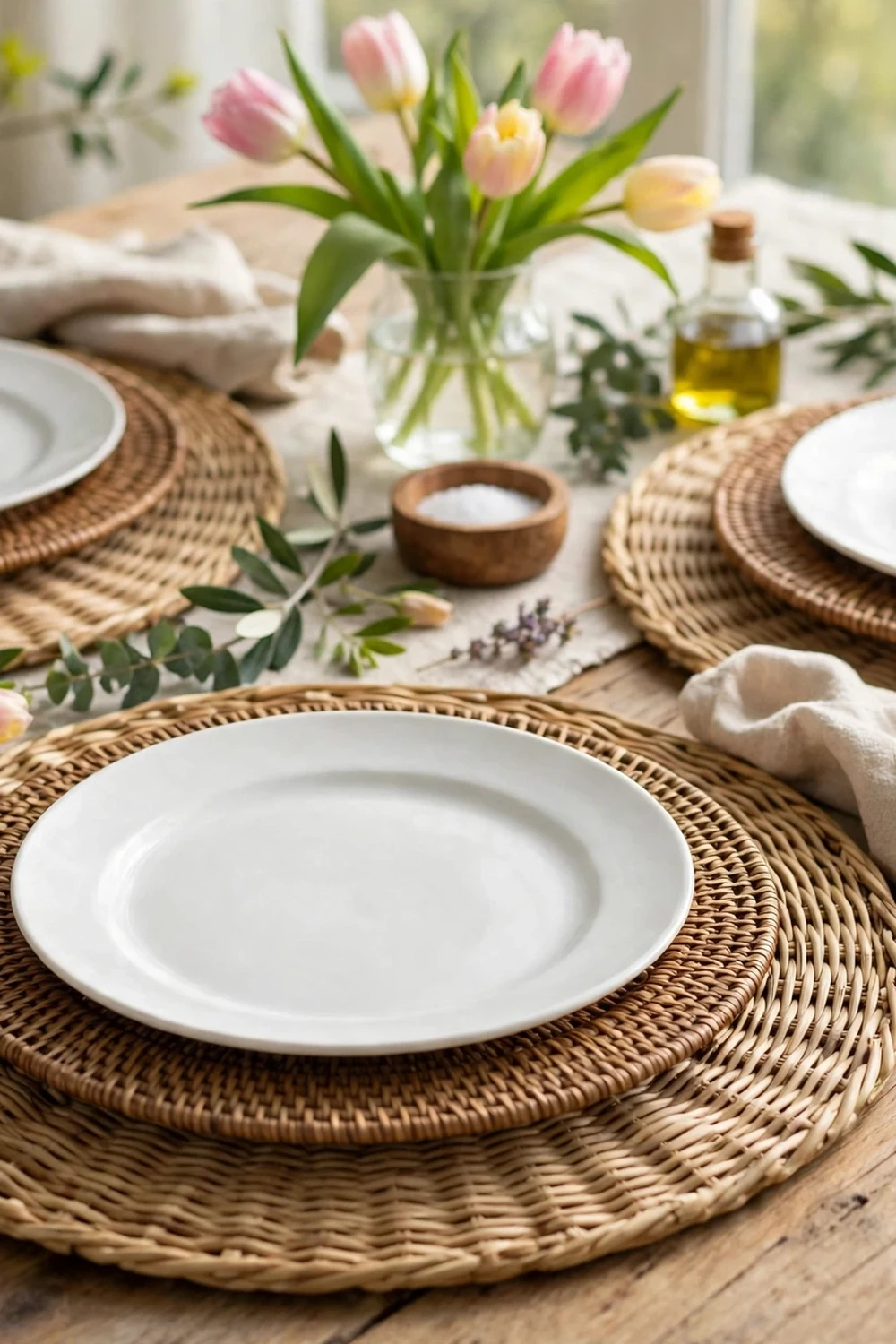
Woven placemats are the texture my table was missing. The wood was smooth, the linen was smooth, the plates were smooth, and everything slid together into one flat look. A woven mat under each plate breaks that up, and a round rattan charger underneath adds a warm, natural edge that suits spring without trying too hard.
I wipe the mats down after a meal instead of washing them, because a full wash makes some woven mats curl at the edges. A damp cloth, a quick shake outside, and they are ready for next time. If a mat starts to fray at one corner, I trim the loose thread instead of pulling it, which only makes the fraying worse.
Tip: Line the mats up so the same amount shows on each side of the plate. A mat that sticks out two inches on one side and barely peeks out on the other will bother you all through dinner, even if nobody else notices.
8. Write Place Cards by Hand and Tuck in a Herb Sprig
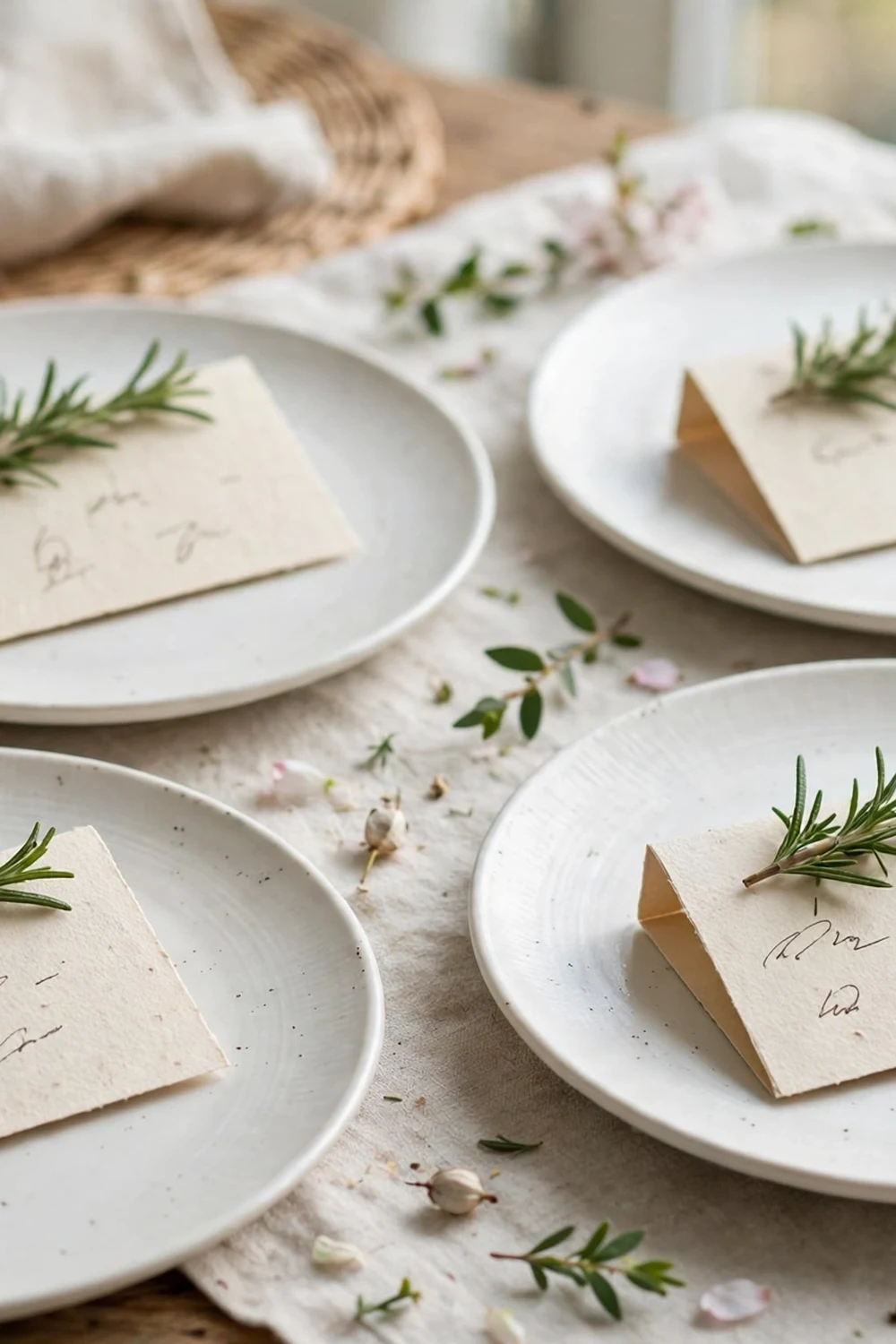
Handwritten place cards are a small thing that makes people feel expected. I write each name on a small card, in my normal handwriting, not fancy calligraphy, and I tuck a tiny sprig of rosemary or thyme behind it on the plate. It takes five minutes for the whole table, and guests always pick the card up and smile before they sit down.
My first cards kept blowing over or sliding off the plate when someone opened a window. A tiny fold at the bottom of the card, so it stands like a little tent, fixed that, and the herb sprig holds the card in place like a paperweight that smells good.
Tip: Write the names a little larger than you think you need to. In candlelight, small writing turns into a guessing game, and nobody wants to sit in the wrong seat by mistake.
9. Light Low Taper Candles in Pastel Holders
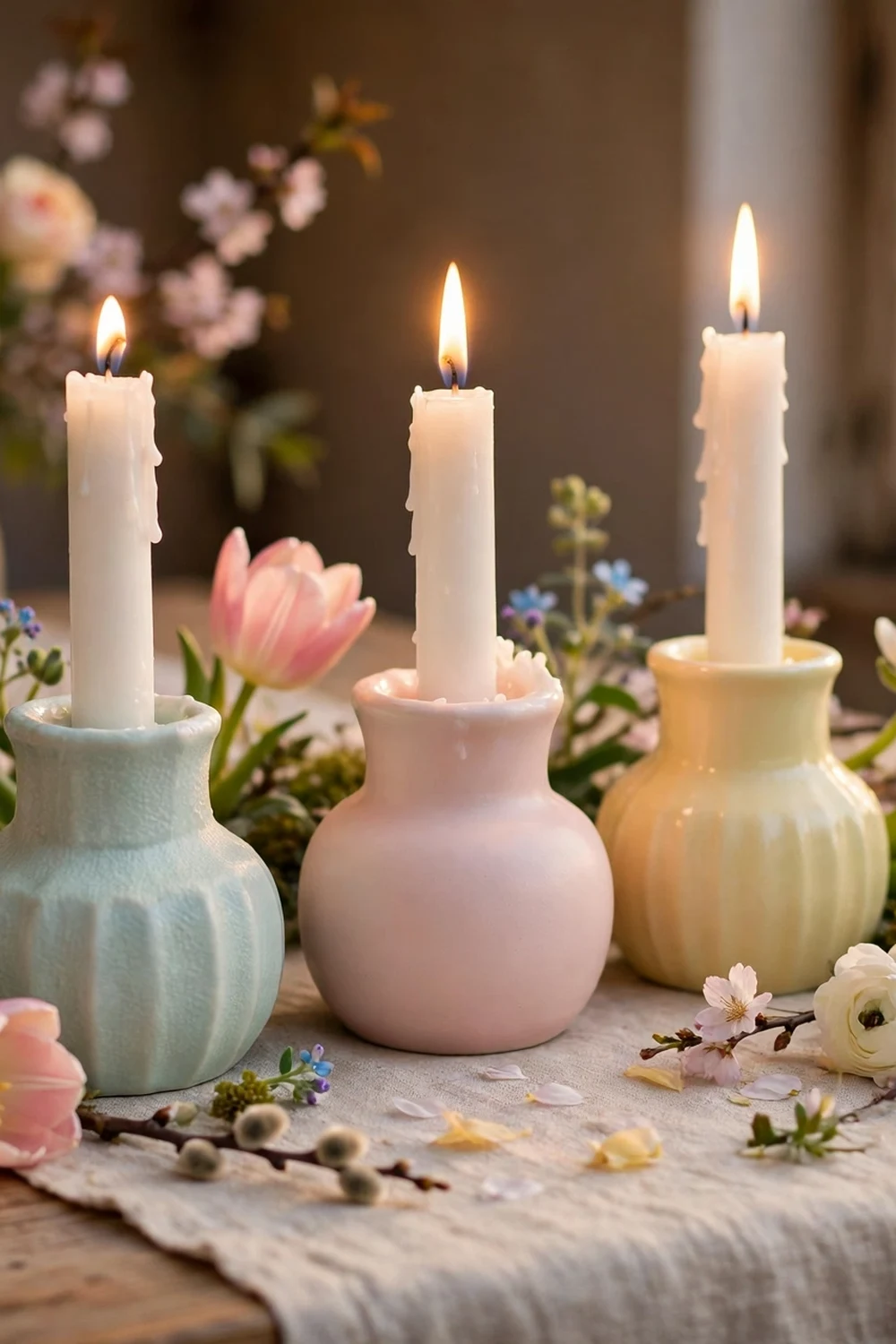
Candles change a table more than almost anything else I own, and they cost very little. I use low taper candles in pastel holders, pink, mint, and cream, spaced down the middle of the table between the flowers. At lunch they look like quiet colour, and in the evening they glow and make everyone look a little softer.
I drip wax on the tablecloth exactly once, and that was enough. Now I put a small saucer or a felt pad under each holder, and I trim the wicks short before lighting them so the flame stays steady instead of dancing and smoking. I never leave candles burning in an empty room, and I blow them out before I clear the plates, not after.
Tip: Keep candles low and away from the greenery garland. A tall flame next to dry eucalyptus is not a risk worth taking for the sake of a pretty photo.
10. Grow a Row of Herb Pots Down the Center
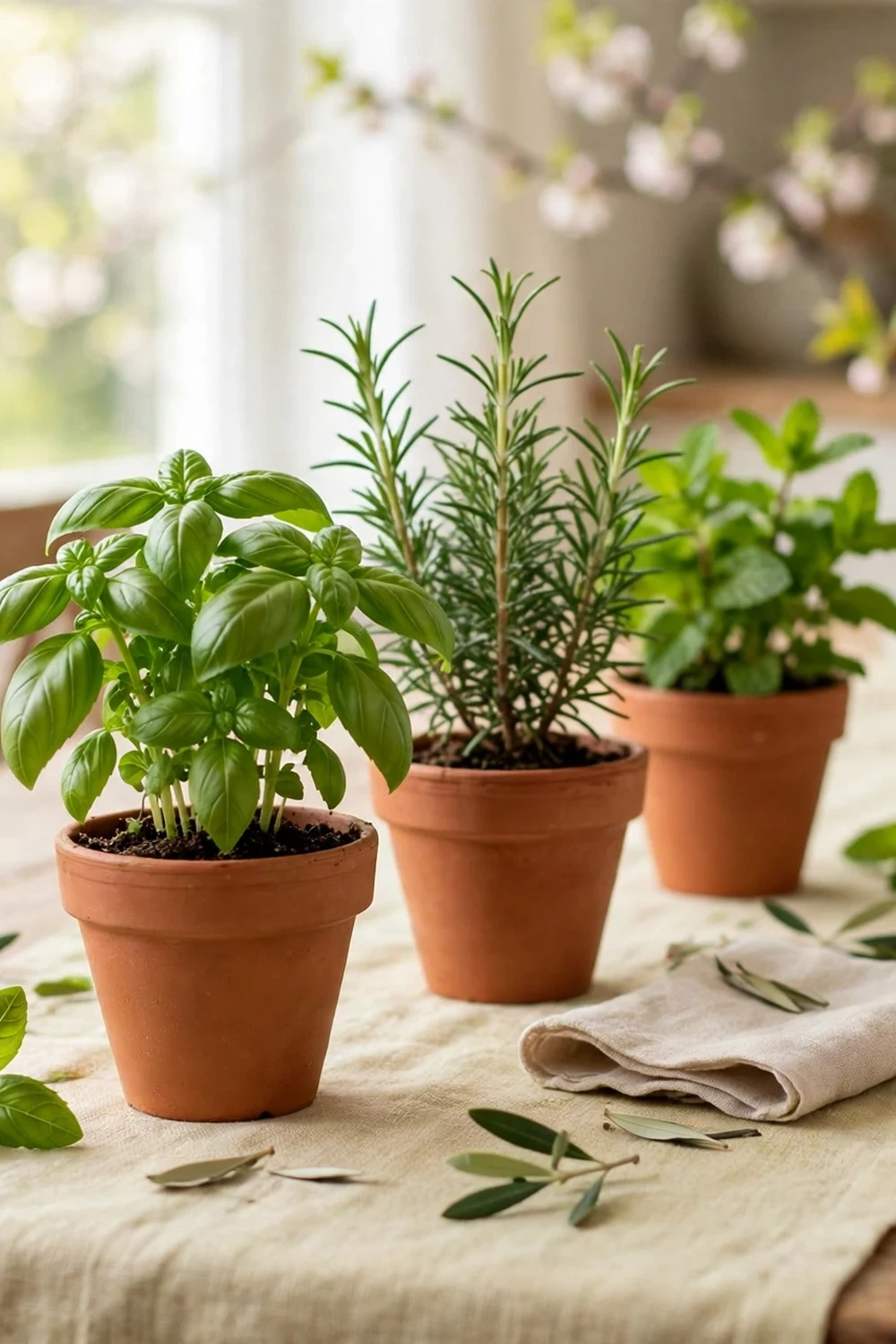
Herb pots down the middle of the table are pretty and useful in a way flowers are not. Basil, rosemary, and mint in small terracotta pots smell wonderful when someone brushes past them to reach for bread, and later in the week those same pots go back to the windowsill and keep growing. I keep mint in its own pot, because it spreads fast and will happily take over a shared pot if I let it.
Each herb wants something a little different, which is why separate pots work better than one big shared planter. Basil likes steady moisture, rosemary likes to dry out a bit between waterings, and mint likes its own space and regular pinching. The Illinois Extension guide to growing herbs in containers explains those differences clearly, and it is the guide I check when a plant starts looking unhappy.
Tip: Pinch the tops of basil plants regularly. It keeps them bushy instead of tall and leggy, and you get more leaves to use in the kitchen.
11. Fold Napkins Loosely and Tie Them With Twine
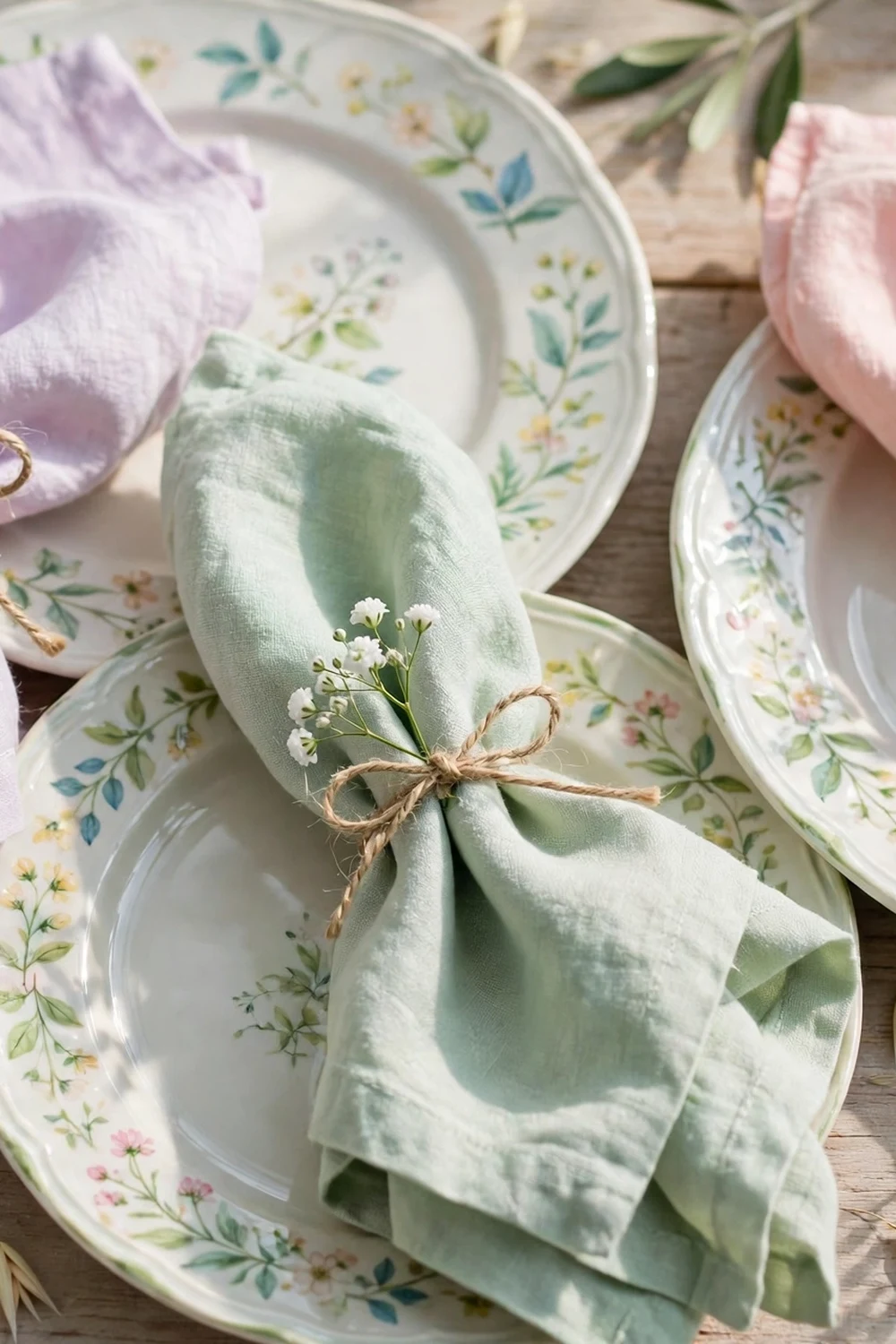
I used to fold napkins into complicated shapes I found online, and they always collapsed the moment someone picked them up. Now I fold them loosely, in half or in thirds, and tie them with a short piece of twine with one tiny flower tucked under it. It looks relaxed and a little bit rustic, and it actually survives being moved from the plate to a lap.
The twine matters more than I expected. Thick rope looks heavy on a pastel napkin, and thin thread disappears completely. A medium baker’s twine, wrapped twice and tied in a simple knot, holds the fold without cutting into the linen. I cut the ends short so they do not dangle into anyone’s food.
Tip: Iron or steam the napkins first, even if you are folding them loosely. A wrinkled napkin tied with twine looks messy, while a smooth napkin tied the same way looks intentional.
12. Set Out a Bowl of Speckled Eggs in a Little Nest
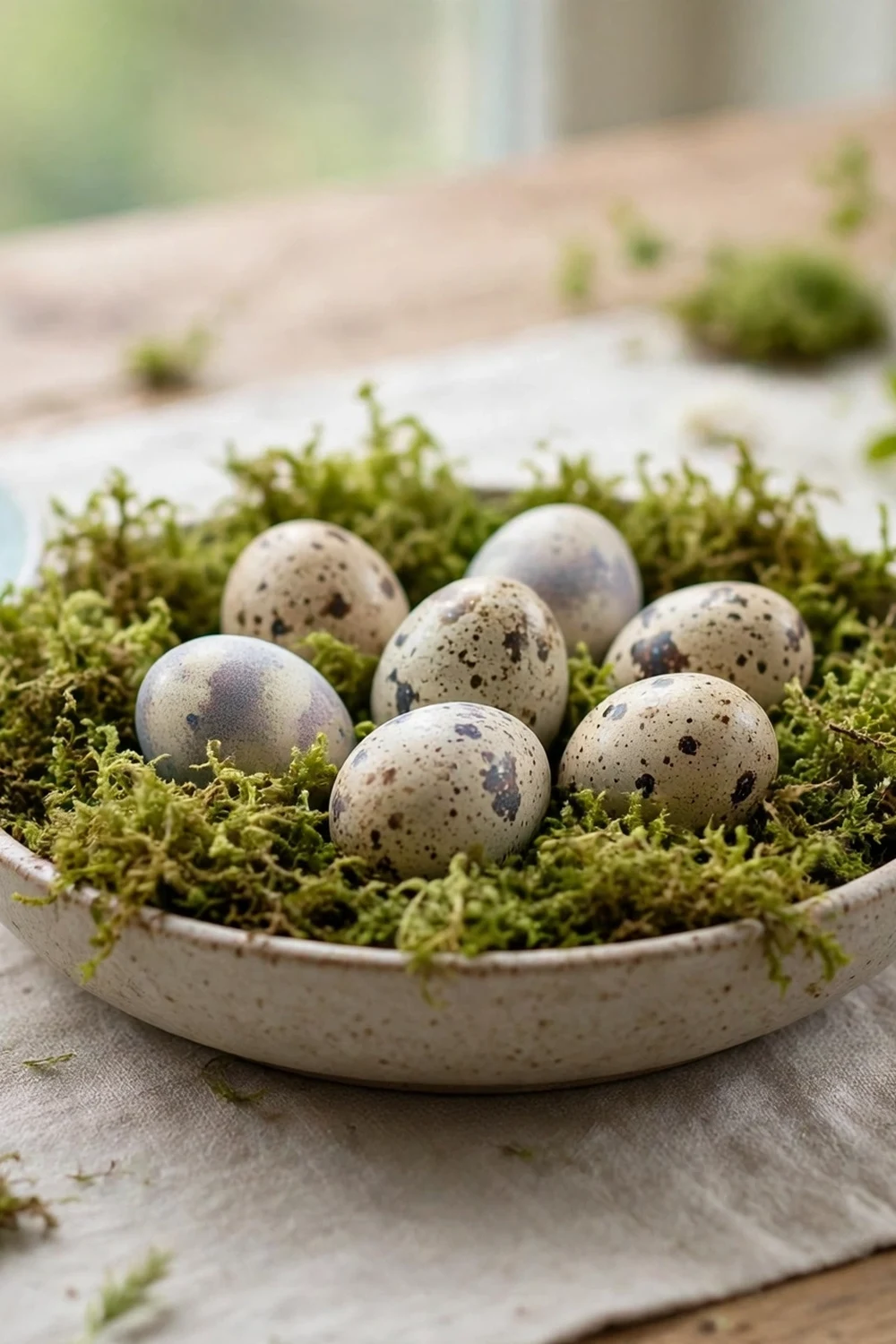
A bowl of speckled eggs in a little nest is the spring table idea I reach for when I want something seasonal without going all the way to a holiday theme. I line a shallow bowl with a little soft moss, nestle the eggs in gently, and set it where everyone can see it but nobody has to reach over it. The pale blue, cream, and brown speckles look like they belong on a spring table in a way bright colours sometimes do not.
My first nest shed moss all over the tablecloth, which was not the look I wanted. A thin layer of moss pressed flat, with the eggs sitting in shallow dents instead of rolling around, fixed that. I also keep the bowl away from the edge, because one knocked egg rolling off the table is a mess nobody needs at dinner.
Tip: If you use real eggs, keep them in the bowl for decoration only during the meal, and put them back in the fridge afterward. Pretty does not have to mean wasteful.
If you like this kind of soft spring styling, these modern Easter decor ideas use the same gentle palette in the rest of the house.
13. Fill Jam Jars With Wildflowers for a Rustic Table
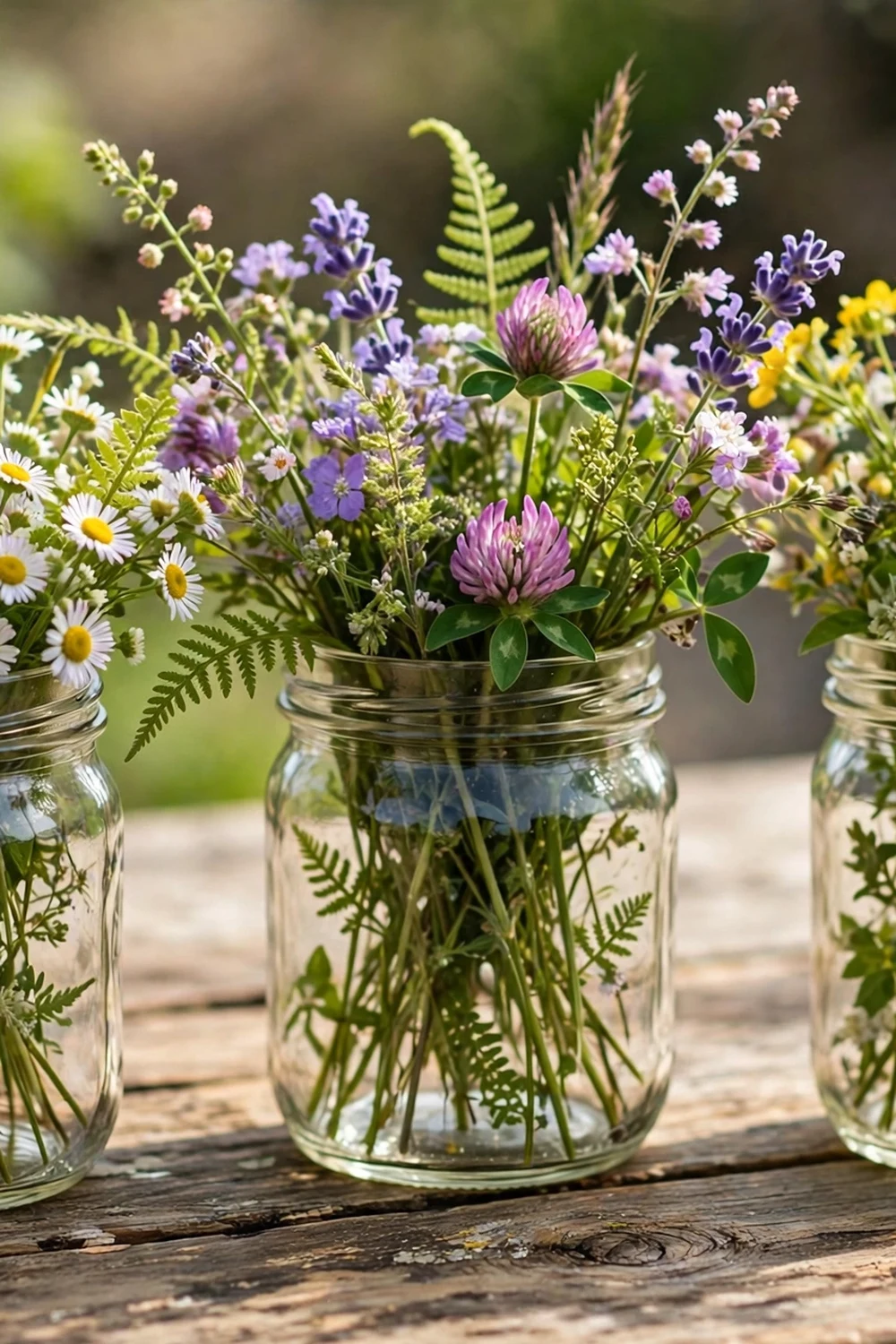
Jam jars are my rustic answer to fancy vases. I fill three or four clean jars with loose wildflowers, daisies, a few stems of something tall, a little greenery, and I scatter them down the table instead of lining them up in a row. The table looks like someone gathered flowers that morning, which is exactly the feeling I want, even when the flowers came from the market.
The jars wobble if they are too light, so I put a few small stones in the bottom of each one before adding water. It keeps them steady, and it stops a jar from tipping when someone reaches across the table. I also keep the flowers a little uneven in height, because perfectly even jars look like a shop display, and I like my table to look lived in.
Tip: Change the jar water daily. Wildflowers in small jars go cloudy fast, and cloudy water makes even fresh flowers look tired.
14. Lay a Loose Trail of Blossoms Instead of a Runner
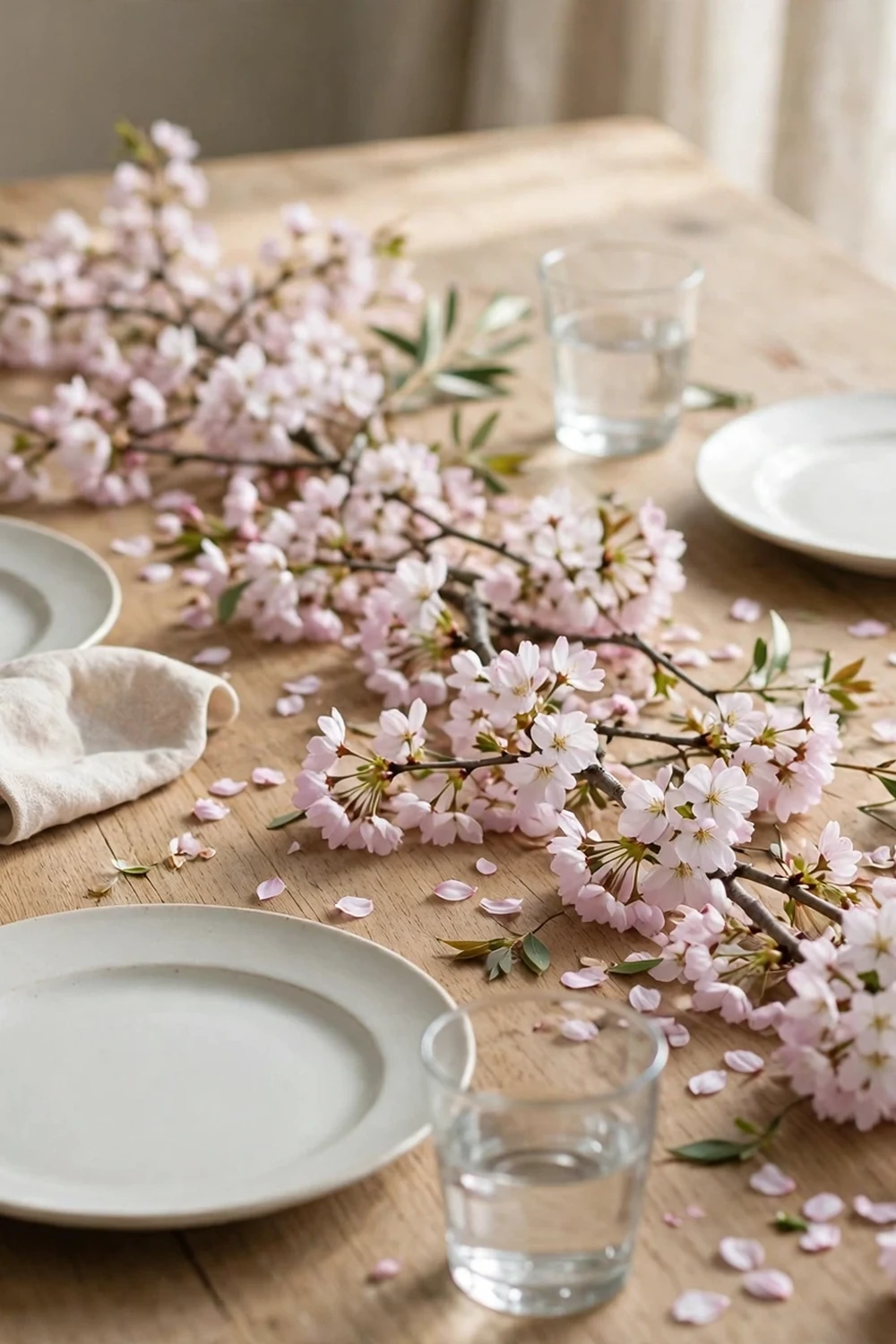
A trail of blossoms is the prettiest lazy idea on this list, and I mean lazy in the best way. Instead of a fabric runner, I lay a loose trail of blossom stems and petals down the middle of the table, a little thicker in the center and thinner at the ends. It looks like spring walked across the table and left a few things behind.
Petals fall, and that is part of it, but a table covered in petals by the main course is not charming, it is just messy. I use stems with a few petals still attached, rather than loose petals on their own, and I keep the trail narrow, well away from the plates. A quick shake of the cloth outside afterward clears the rest.
Tip: Put a plain runner underneath the blossom trail if your table is dark wood. The pale blossoms show up much better against a light base than they do against dark grain.
15. Set Glass Hurricanes With Petals and Tea Lights
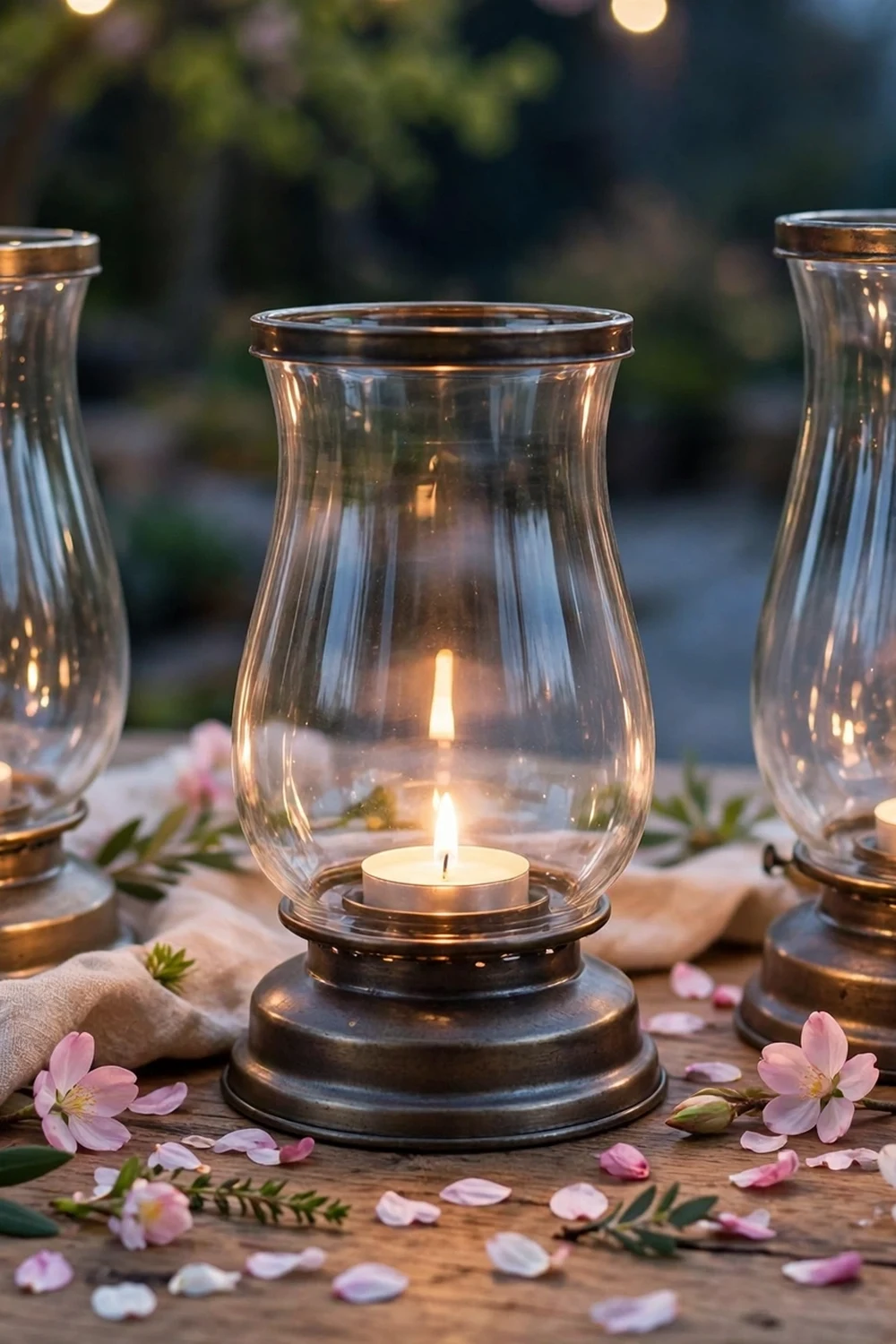
Glass hurricanes are my evening version of a flower centerpiece. I set two or three tall glass cylinders down the table, scatter a few petals inside each one, and drop in a tea light. The glass protects the flame from drafts, the petals catch the light, and the whole table glows in a soft, warm way that a plain candle never quite manages.
I learned to put the tea light in a small metal cup inside the hurricane, because a tea light sitting directly on petals can scorch them, and the smell of singed petals is not a spring smell anyone wants. The glass also gets warm, so I lift hurricanes by the base, not the rim, when I move them.
Tip: Use battery tea lights if children will be at the table. They flicker almost like real ones now, and you can relax instead of watching every small hand near the glass.
16. Build the Centerpiece on a Tiered Cake Stand
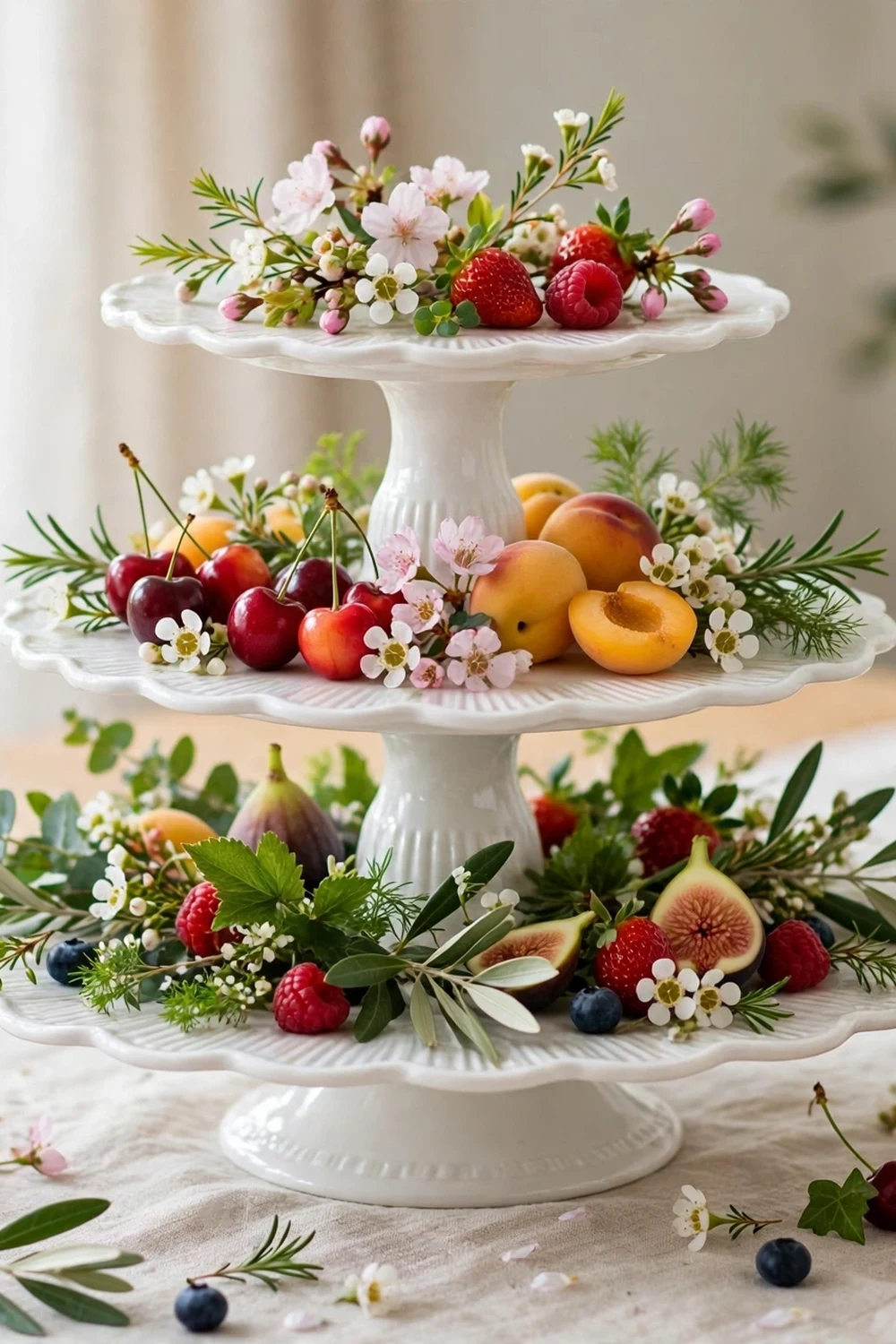
A tiered cake stand is not just for cake, at least not at my house. I dress one with small flowers on the top tier, a little greenery on the middle, and a few pieces of spring fruit at the bottom, and it becomes a centerpiece that also holds food. Guests can take a strawberry or a small flower from it, which makes the table feel generous instead of just decorated.
Balance matters here, because a top-heavy stand tips, and I have seen it happen. I put the heaviest things, the fruit, on the bottom tier, and the lightest things, the flowers, on top. The stand sits in the middle of the table where nobody has to reach across it, and I check that it does not wobble before anyone sits down.
Tip: Line each tier with a small paper doily or a linen square. It stops fruit from rolling, catches loose petals, and makes the whole stand look finished instead of bare.
17. Use a Gingham Cloth and a Jug of Daffodils
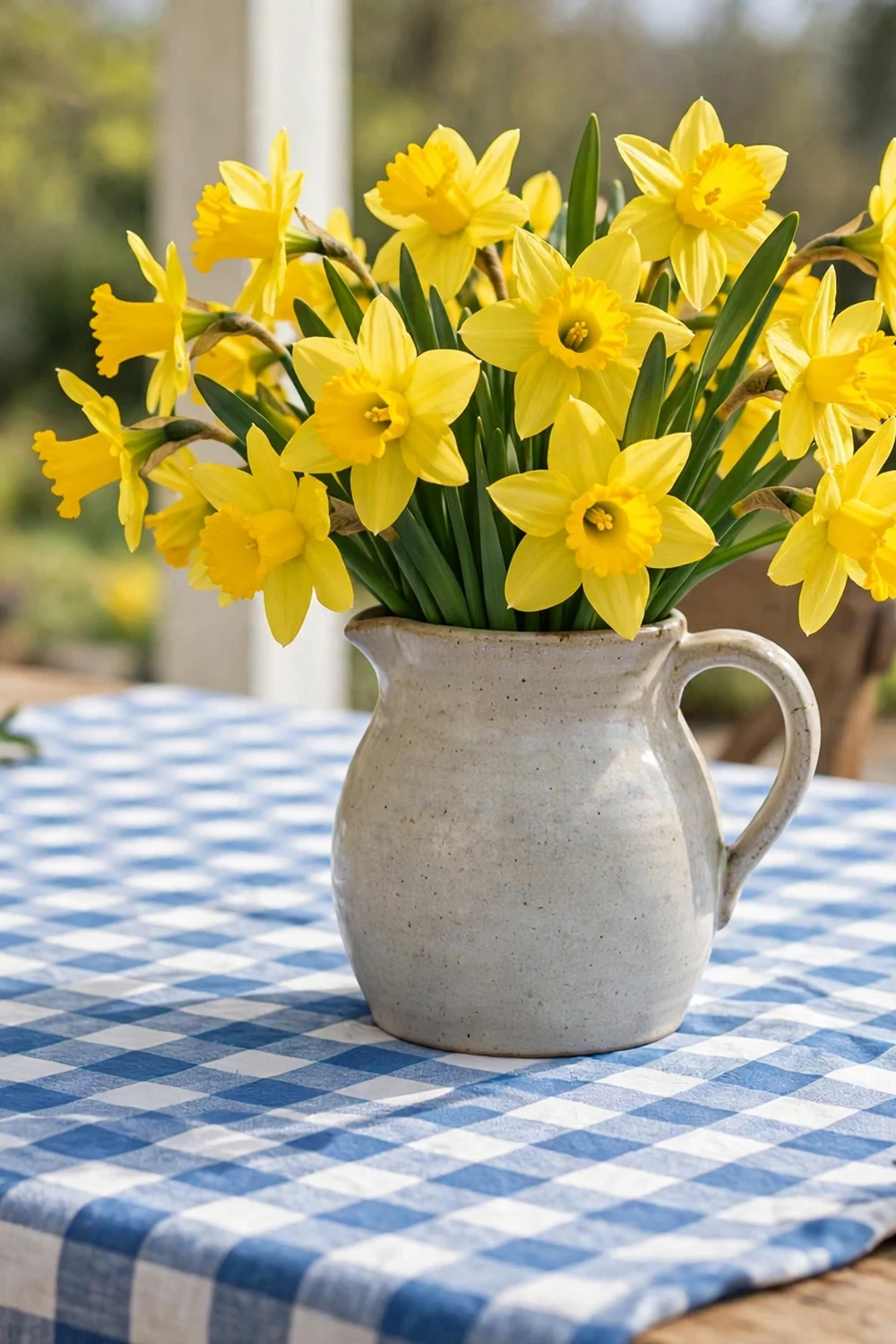
Gingham is the tablecloth I reach for when I want spring to feel cheerful instead of formal. A blue and white check, with a ceramic jug of bright yellow daffodils in the middle, looks like a picnic that decided to come indoors. The check is busy enough to hide a small spill, which is a practical bonus I appreciate more every year.
Daffodils have a sap that can shorten the life of other flowers in the same vase, so I keep them on their own in the jug, and I do not mix them with tulips in the same water. On their own, they last well, they smell faintly sweet, and that yellow against blue gingham is the happiest colour combination on my table all year.
Tip: Cut daffodil stems under water and let them sit on their own for a few hours before arranging them. It keeps the sap from clouding the water as fast.
18. Take the Table Outside With Lanterns and Wildflowers
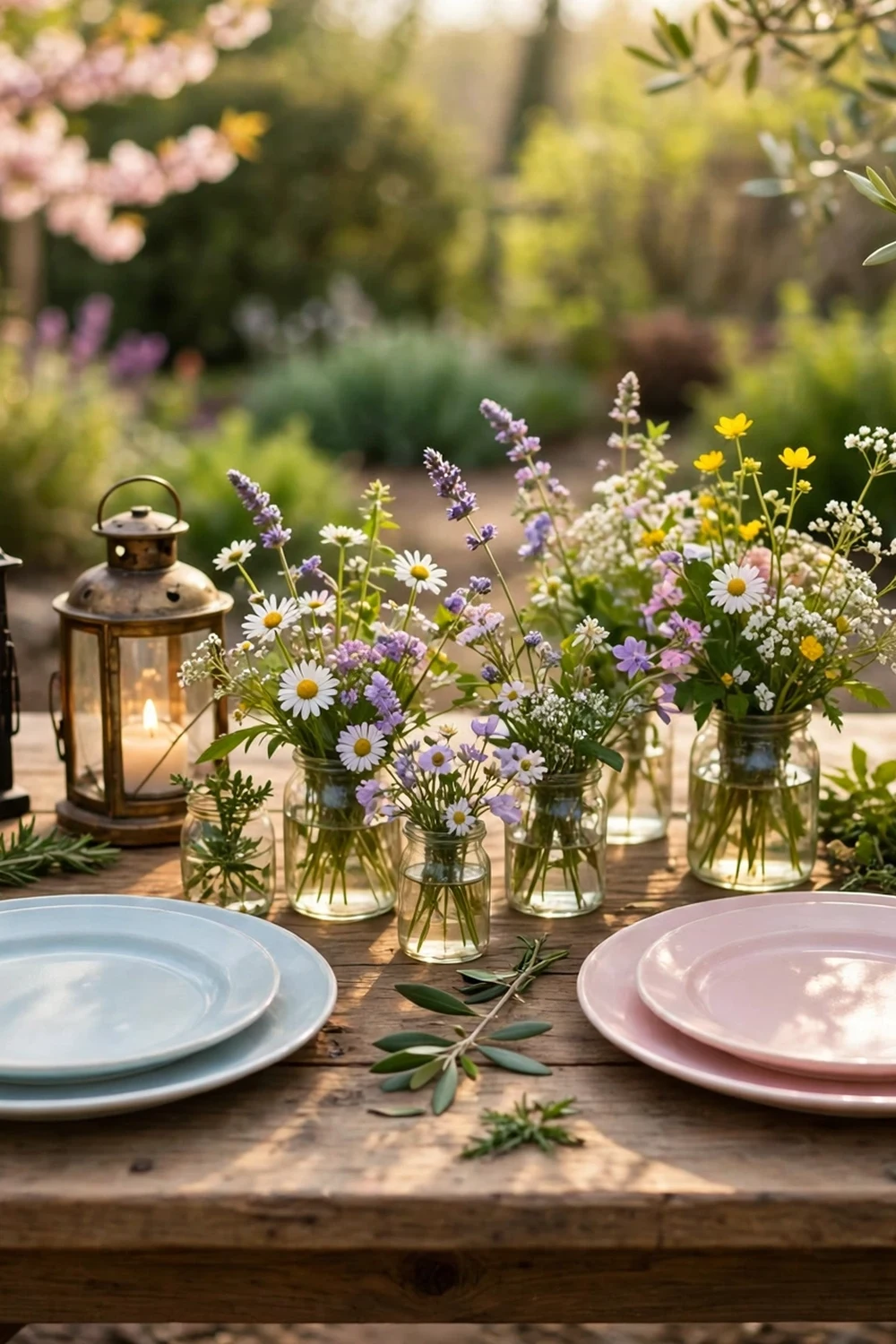
The last idea is the one I look forward to all winter: taking the table outside. On the first really warm evening, I carry the linen, the plates, and the jam jars of wildflowers out to the garden table, and I add lanterns at each end so the light lasts after sunset. Eating outside makes even a simple meal feel like an occasion, and the garden does half the decorating for me.
Wind is the thing to plan for out here. Light napkins fly, tall flowers bend, and a tablecloth flaps like a sail if you do not weigh it down. I use heavier linen outside, clips on the cloth corners, and low jars instead of tall vases, and I bring the candles in if the wind picks up. It is still worth it, every single time, for that first outdoor meal of the year.
Tip: Set the outdoor table a little earlier than you think you need to, and then walk away for ten minutes. When you come back, you will see what is crooked, what is about to blow over, and what needs moving, before any guests arrive.
If you are setting up outside, these spring front porch decor ideas will help the entrance match the table, so the whole house feels like spring from the door in.
That is the whole list, and I hope at least one idea made you look at your own table a little differently. You do not need all eighteen. You need the one that fits your table, your light, and the ten minutes you actually have before your next meal. Start there, see how it feels when you sit down, and add another idea next week if you want to.
If you are planning more spring decorating, these Easter wreath ideas for your front door use the same soft, fresh feeling at the entrance. Start with one idea, and let spring do the rest.
Save this on Pinterest so you can find it again when you are standing at your table with a bunch of tulips in one hand and a question in the other. I would love to know which idea you try first.