
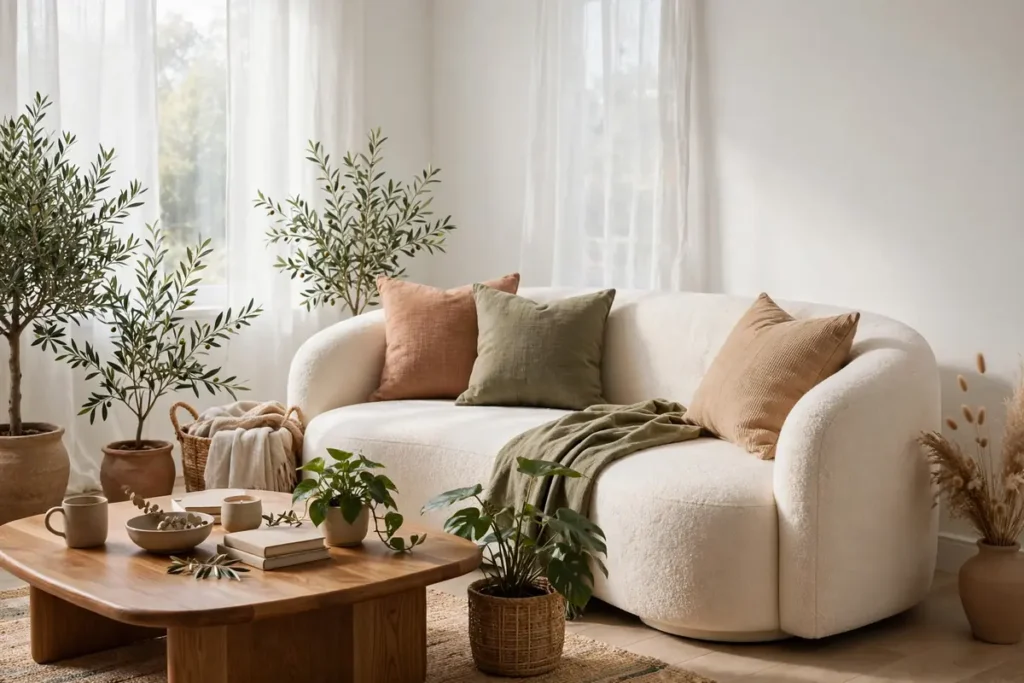
When I first heard the pantone color of the year 2026 pick, I laughed a little. A white. After years of rich browns and deep greens, Pantone chose a soft airy white called Cloud Dancer, and my first thought was that it sounded too plain to build a whole home around. Then I sat with it for a few days, and I started to see why it works. My own living room felt lighter the moment I cleared one crowded shelf and let the white wall behind it show, and that small change taught me more than any color chart could.
You can find plenty of home decor ideas on The Inspire Rooms, but this post is about one shade and how to live with it without turning your home into a showroom. Cloud Dancer is PANTONE 11-4201, a billowy white that Pantone describes as calm and airy. I am not going to pretend a paint name will fix a busy life. I will show you 18 small, practical ways to use this soft white so your rooms feel rested, warm, and still very much yours.
1. Start With Soft White Walls
My hallway used to be a warm beige that looked tired by winter, and I kept blaming the light. When I repainted it in a soft white close to Cloud Dancer, the same hallway looked wider in the morning and softer at night. The trick was not a bright stark white. It was a white with a gentle warm cast, the kind that does not glare when the sun hits it straight on.
Paint one wall first if you are unsure. I always test a color on the wall that gets the least direct light, because that is where a white can turn grey or blue in a disappointing way. Live with the test patch for two days, and look at it in morning light, in evening light, and with the lamps on. If it still feels calm at all three times, you have found your white.
Tip: Paint the ceiling the same soft white as the walls in a small room. The line between wall and ceiling softens, and the room reads taller than it really is.
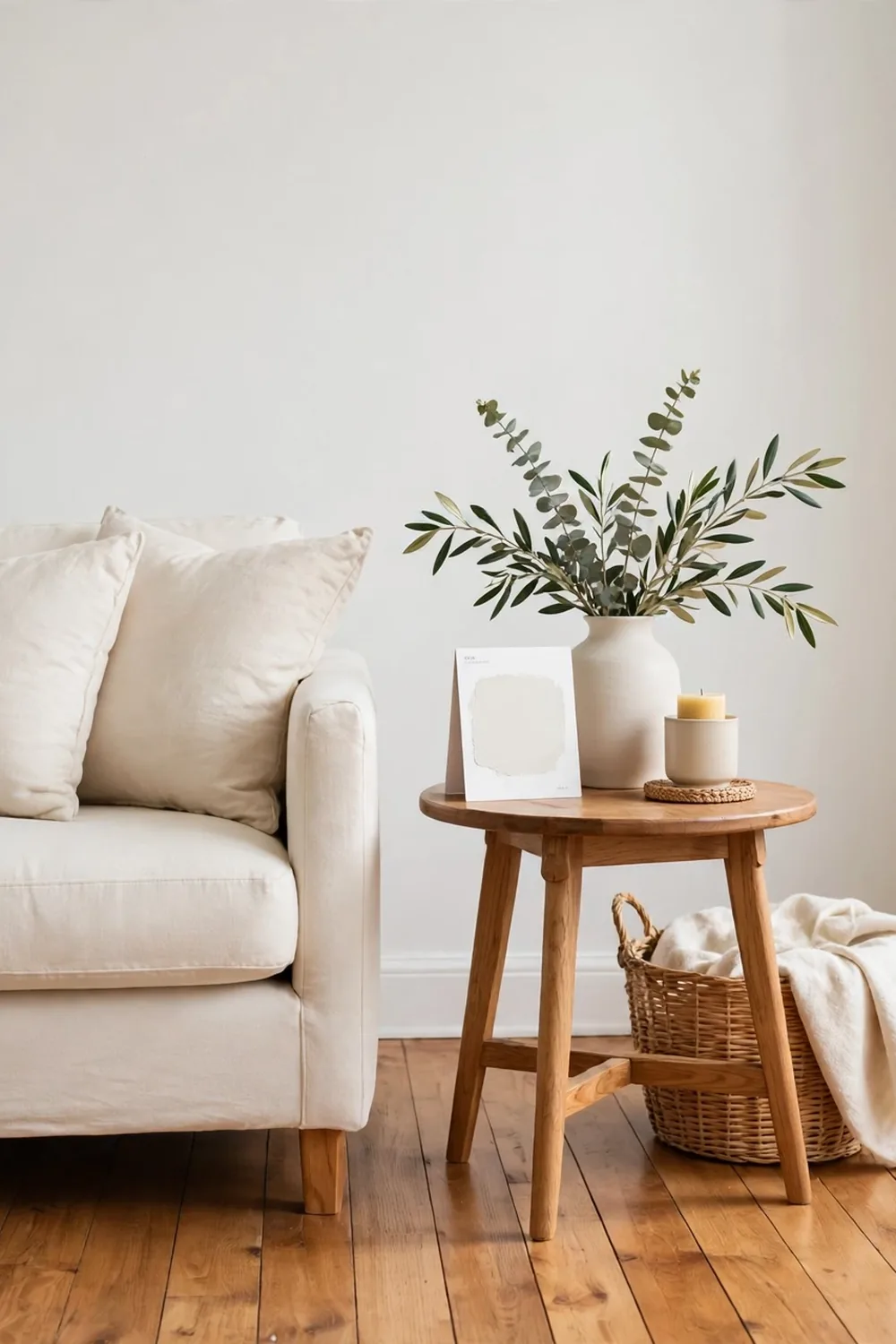
2. Make White Bedding Feel Like a Treat
I used to save white bedding for guests, because I thought it would look messy within a week. Then I bought a plain white cotton set for my own bed, and I learned the opposite is true. White sheets show me right away when they need a wash, so my bed actually stays fresher, and the whole room feels like it was just made even when the rest of the house is not perfect.
Layering is what keeps white bedding from looking flat. I put a white fitted sheet down, then a light duvet, then a cream throw folded across the foot of the bed. The throw gets pulled up on cold nights and tossed aside on warm ones, and that lived in crease is part of the charm. For more bedroom layering ideas, I often look back at my Spring Bedroom Ideas post, because the same soft layers work in any season.
Tip: Keep two white pillowcases in rotation so you can swap a stained one out without waiting for laundry day.

3. Choose a White Sofa You Can Actually Wash
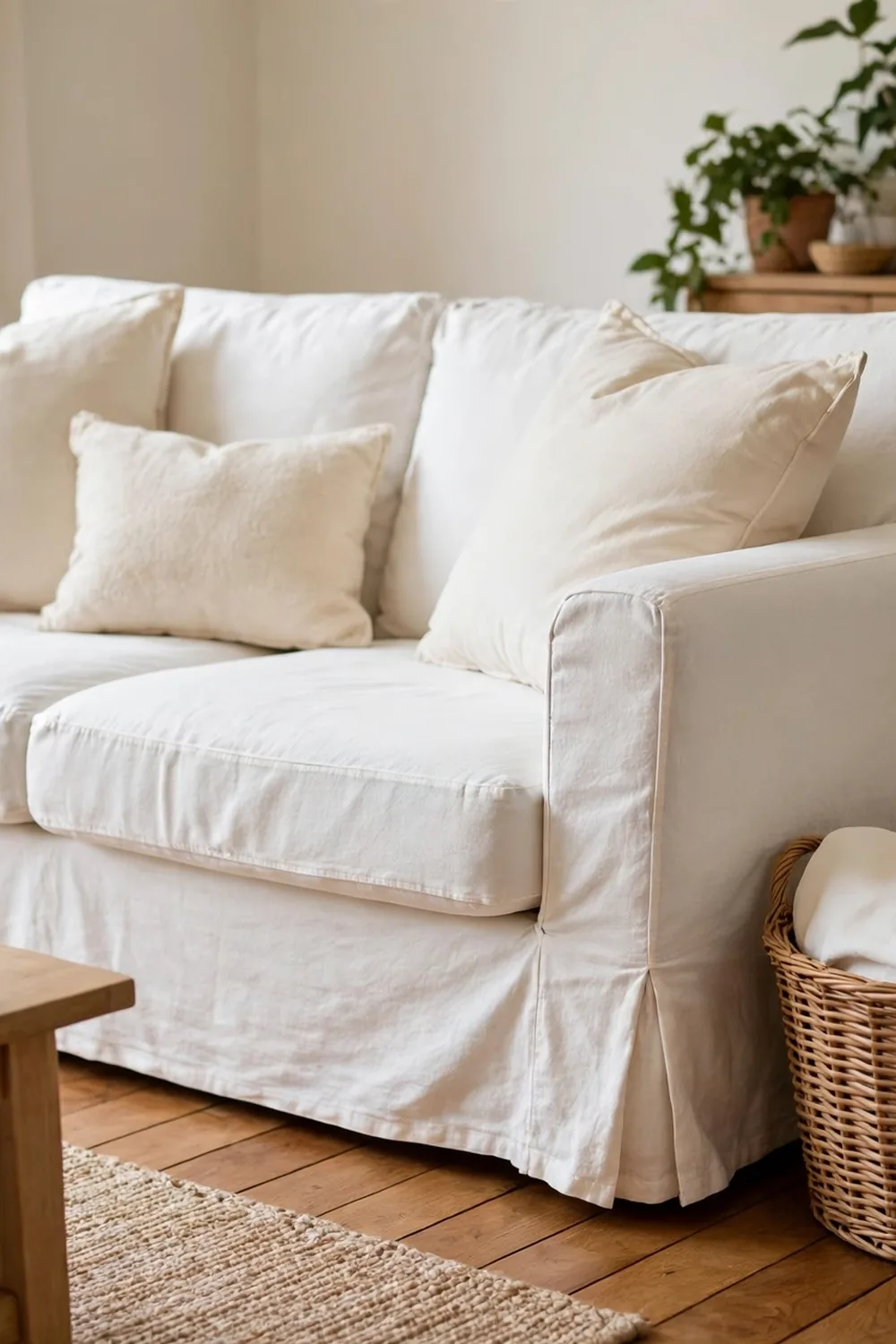
A white sofa scared me for years, and I am not going to pretend otherwise. I have spilled coffee, sat down with muddy shoes still on, and watched a guest drop a full plate near the cushions. The sofa that survived all of that was not a fancy one. It was a simple slipcovered sofa with covers I could take off and wash at home.
If you want a white sofa, ask one question before you buy anything else. Can the covers come off. If the answer is no, keep looking, because a white sofa without washable covers will make you nervous every time someone sits down. A loose cover also softens the shape of the sofa, which suits this calm white much better than a stiff tailored look.
Tip: Buy a second set of cushion covers if you can, even in a plain cream. Rotating them means the sofa never has to sit bare while one set is in the wash.
4. Brighten a Kitchen Without a Full Remodel
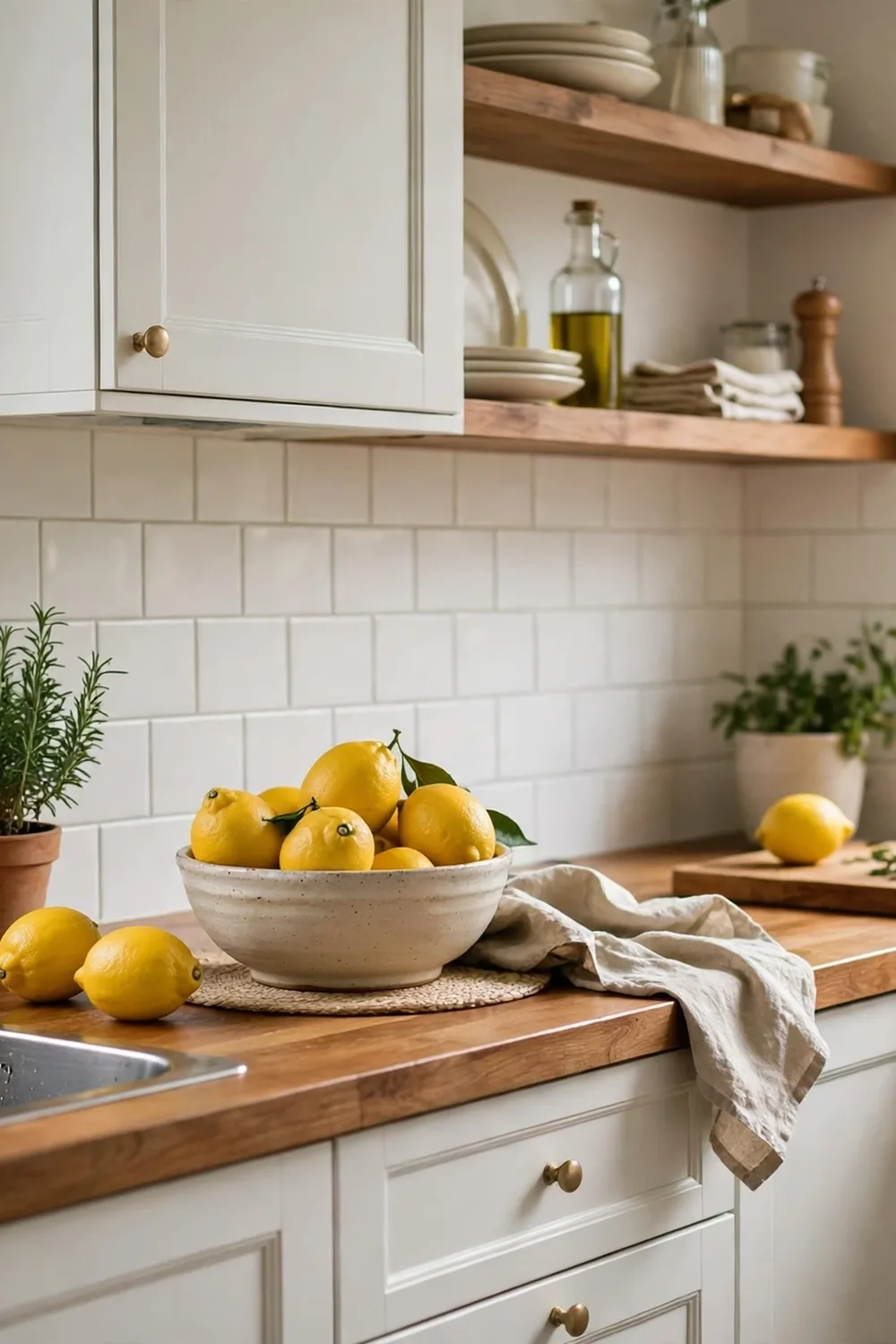
My kitchen never needed new cabinets. It needed the dark hardware and the cluttered counters to calm down. I painted the upper cabinets a soft white, left the lower ones in wood, and suddenly the room felt like it had more air in it. The white up top catches the daylight, and the wood below keeps the room from feeling cold.
You do not need to paint every cabinet to get this effect. Start with the wall behind the stove or the open shelves, and keep the rest as it is for a week. A white tile backsplash does a similar job, and it wipes clean in seconds after cooking. I keep a bowl of lemons on my counter now, not because it is a styling rule, but because the yellow looks cheerful against the white and I actually use them.
Tip: Swap dark cabinet knobs for simple light wood or brushed brass ones before you commit to paint. The change is small, but it shifts how the white reads.
5. Let a White Bathroom Breathe
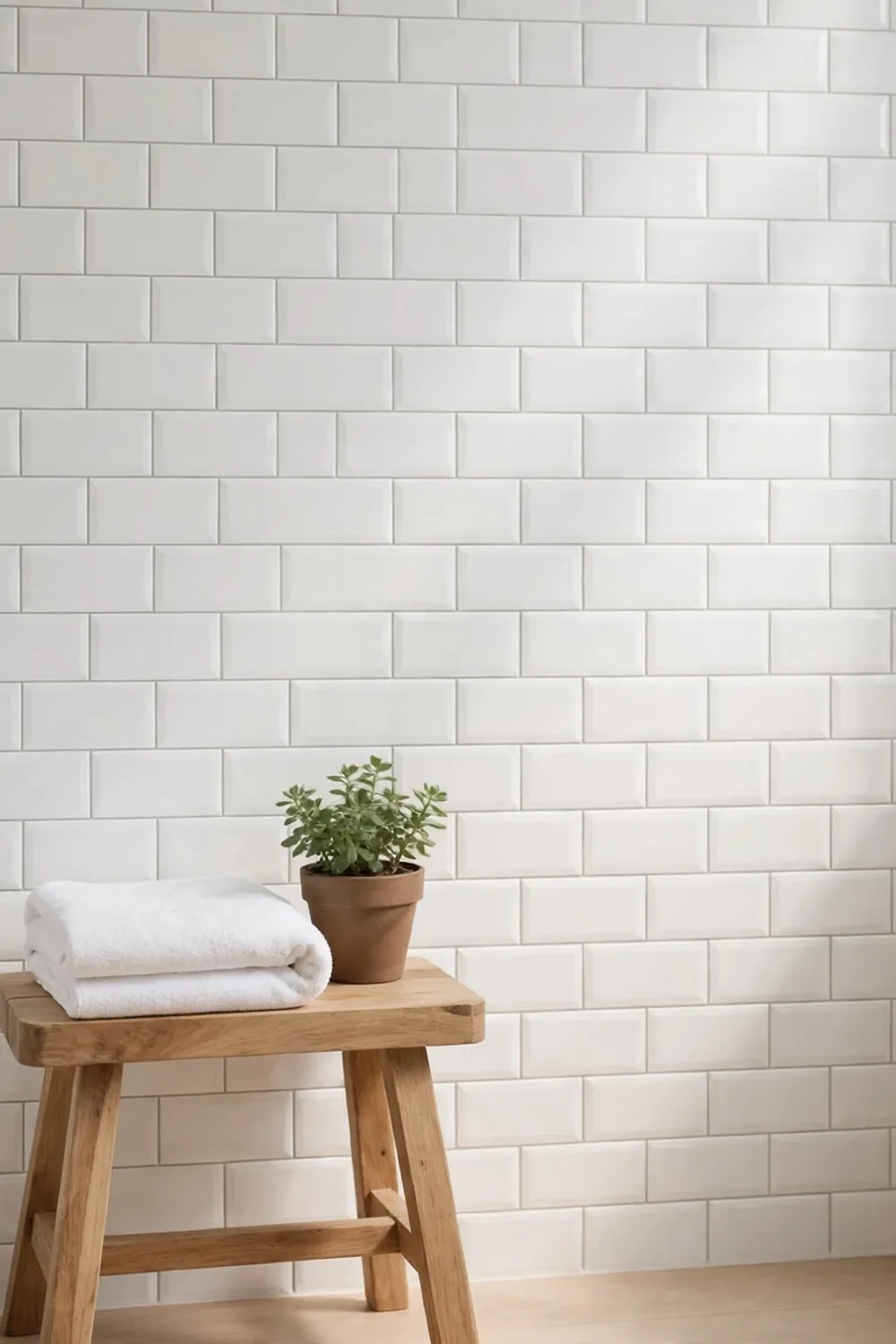
White bathrooms can go wrong fast. I have seen plenty that look like a clinic, all shine and no warmth. Mine changed when I added one wooden stool and a thick white towel that actually gets used. The wood broke up the tile, and the towel added a soft shape that the hard surfaces were missing.
Keep the tile simple and let texture do the work. A matte white tile, a woven basket, and a small plant in a clay pot will carry a whole bathroom. I leave the window open a crack when I can, because steam plus white tile can feel damp if the room never airs out. A small mirror with a wood frame helps too, and it costs far less than retiling a wall.
Tip: Fold towels in thirds and stack only three high. A tall wobbly stack looks messy fast, and three neat folds read calm.
6. Layer Whites Instead of Matching Them
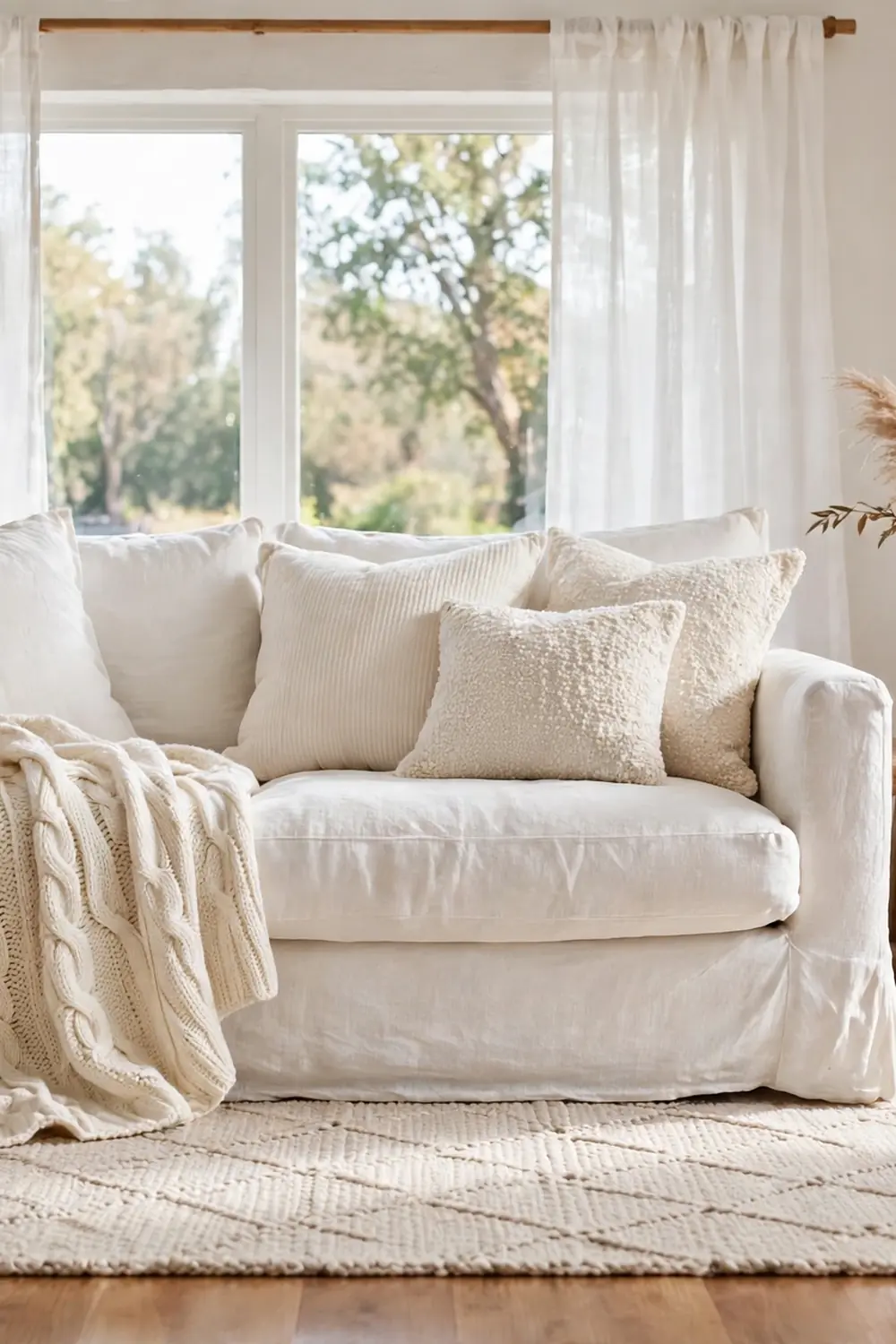
Here is the mistake I made first. I bought everything in the exact same white, and the room looked washed out, like a photo with the brightness turned up too high. Real white rooms work because the whites are slightly different. One is creamy, one is cool, one is almost beige, and together they give the eye something to rest on.
Try this in your living room. Put a white linen sofa next to a cream knit throw and an off white rug, and stand back. You will see depth that a single matching white never gives. Pantone itself built whole palettes around Cloud Dancer, and you can browse Pantone’s color palettes for Cloud Dancer to see how a soft white sits next to pastels, earth tones, and deeper shades. I borrowed the idea of pairing white with a muted green from one of those palettes, and it is still my favorite corner of the house. For mantel styling in a white room, my Spring Mantel Decor Ideas post has a few simple groupings that work here too.
Tip: Hold fabric samples together in daylight, not under shop lights. Two whites that match in a store can clash badly at home.
7. Warm White Up With Wood
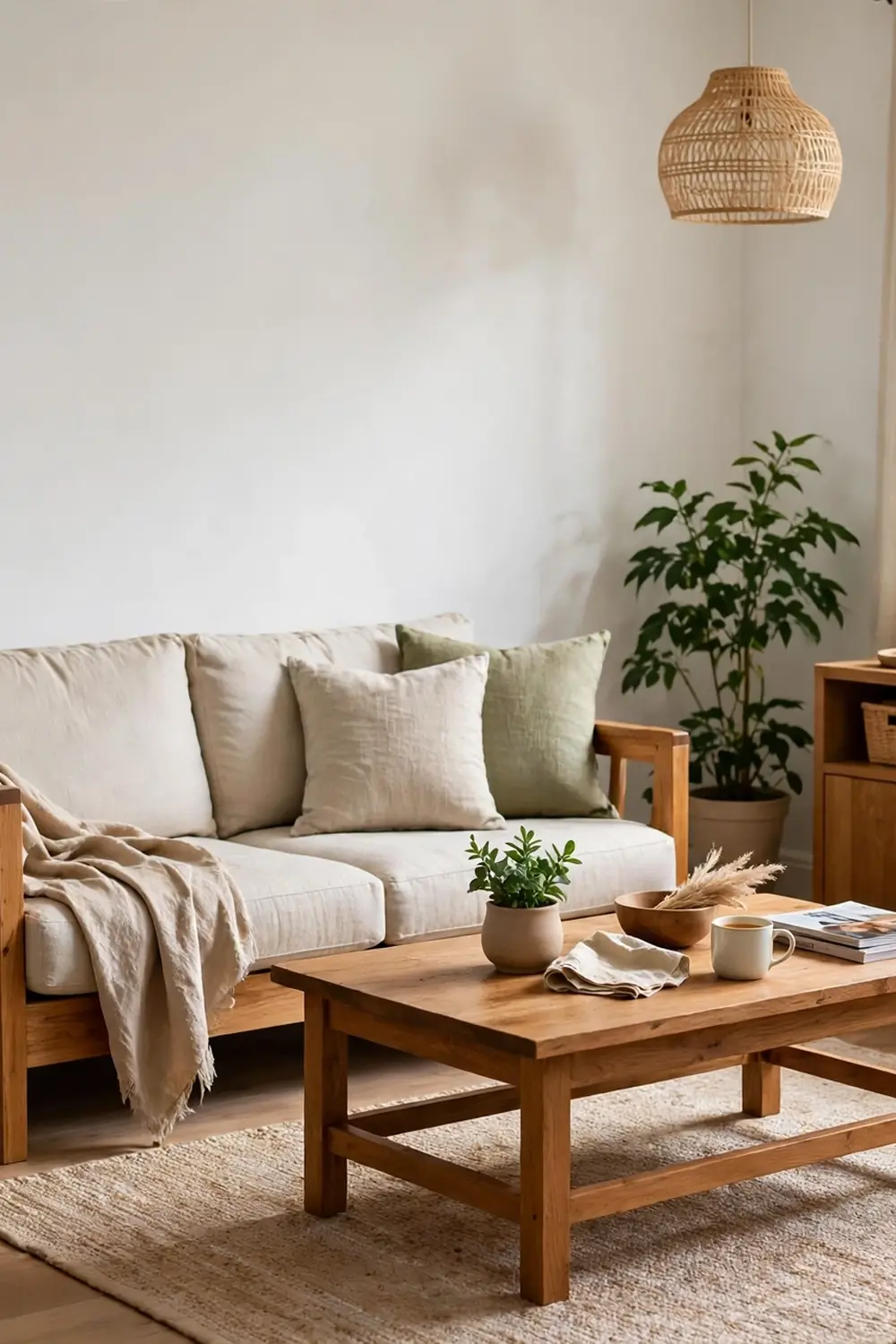
White on its own can feel distant, and wood is the fastest way I know to fix that. My coffee table is plain oak, scratched in a few places from years of mugs and books, and it is the piece that makes my white sofa feel like home. The grain gives the room a story, and the warm tone stops the white from feeling cold.
You do not need matching wood everywhere. One warm wood piece is enough, and a second one in a different tone is fine too. I have oak next to a darker walnut bowl, and they sit happily together because the white around them ties them up. If your floors are already wood, you are halfway there. Just let a little of that floor show instead of covering all of it with rugs.
Tip: Oil a dry wooden table once a season if the maker recommends it. The color deepens a little, and the white next to it looks even softer by contrast.
8. Add Plants Before You Add Color
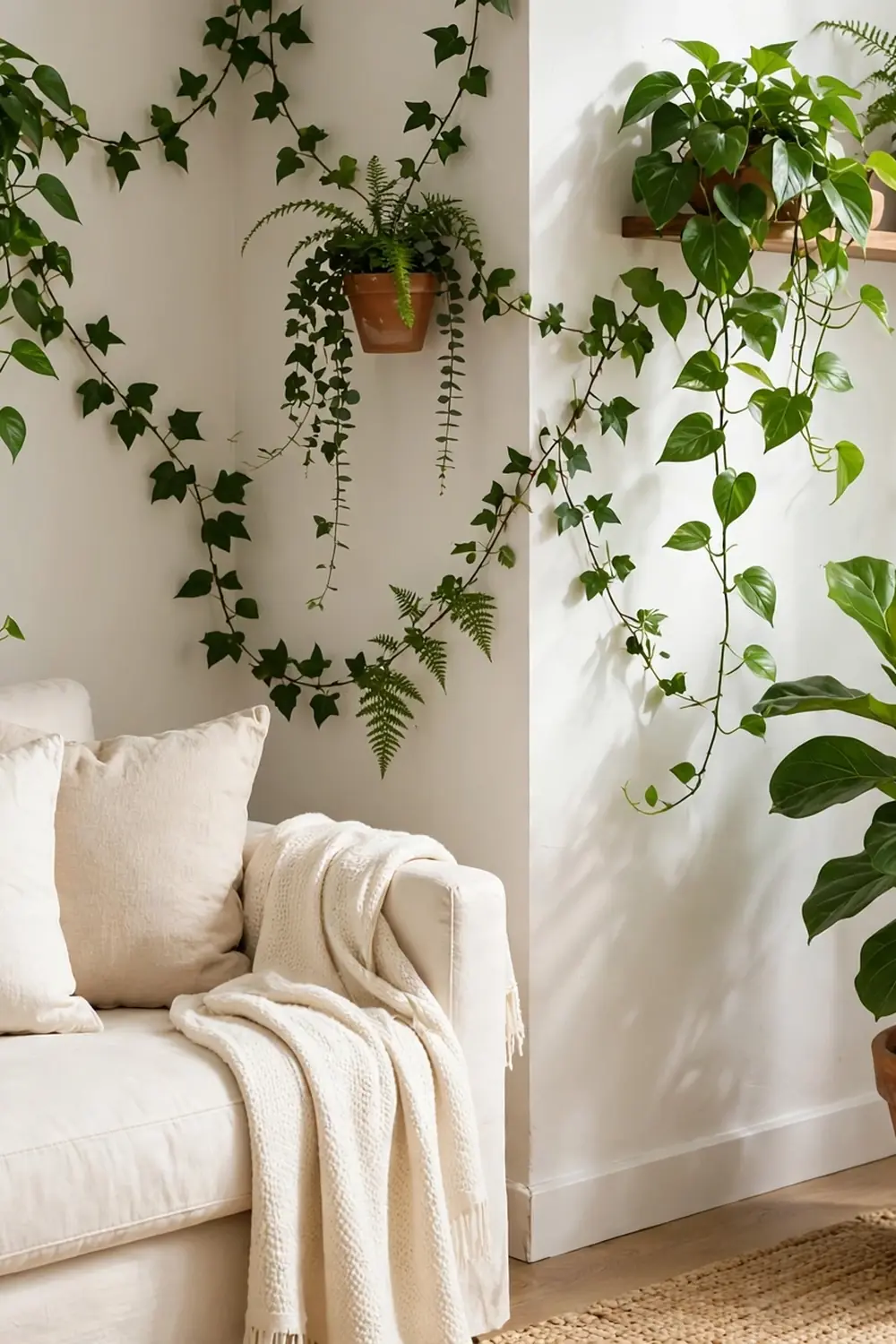
When a white room feels empty, my instinct used to be to buy a bright cushion. Now I move a plant first. Green against soft white is gentle, and it changes through the day as the light moves. A tall plant in a clay pot can anchor a whole corner, and a trailing plant on a shelf adds movement without any new color at all.
Start with plants you already keep alive. I killed my share of fussy plants before I settled on the tough ones that forgive a missed watering. Put the largest plant where you see it first when you walk in, because that first green shape sets the tone for the room. Smaller plants can fill shelves and window sills after that, one at a time, so the room grows slowly instead of turning into a jungle overnight.
Tip: Wipe plant leaves with a damp cloth once a month. Dust dulls green fast, and clean leaves make the white walls behind them look brighter.
9. Hang Sheer White Curtains and Stop There
Heavy curtains fight this soft white. I learned that the hard way when I hung thick drapes in a white room and the whole space went dark by four in the afternoon. Sheer white curtains do the opposite. They soften the window, they let daylight through, and they move a little when the air shifts, which makes the room feel alive.
Hang them high and wide, past the window frame on both sides, so the window looks larger than it is. I use a simple rod and plain linen sheers, nothing patterned, because the light itself becomes the pattern. At night the sheers give privacy without shutting the room in, and a single lamp behind them glows in a way that still feels calm.
Tip: Wash sheers on a gentle cycle and hang them back while slightly damp. They dry smooth, and you can skip ironing most of the time.
10. Set a White Table for Everyday Meals
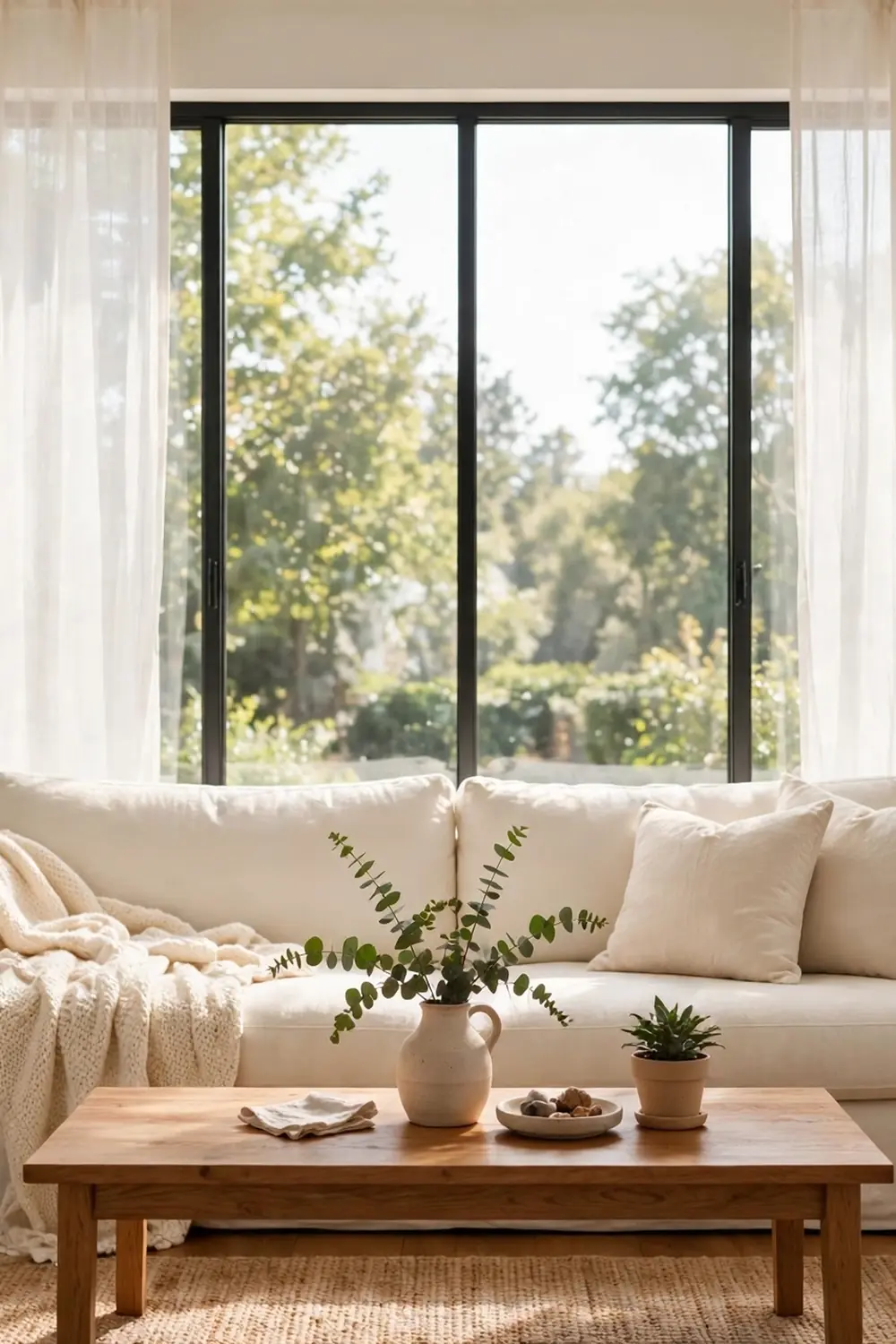
A white dining table sounds precious, but mine gets used every day, and that is the point. I set it with plain plates, linen napkins in a natural tone, and a single vase with green stems. The table looks dressed without feeling formal, and when the meal is over, everything wipes down in a few minutes.
White tables also make food look good, which is a small joy I did not expect. A simple salad, a loaf of bread, and a jug of water look like a proper meal on white. I do not save this table for guests. Using it daily is what keeps it from feeling like a display piece, and the few marks it has picked up tell me it is part of real life. My Spring Tablescapes post has a few table settings that use the same calm base with seasonal touches.
Tip: Use a washable table runner in a natural linen tone under the centerpiece. It protects the table and adds warmth without hiding the white.
11. Leave Breathing Room on White Shelves
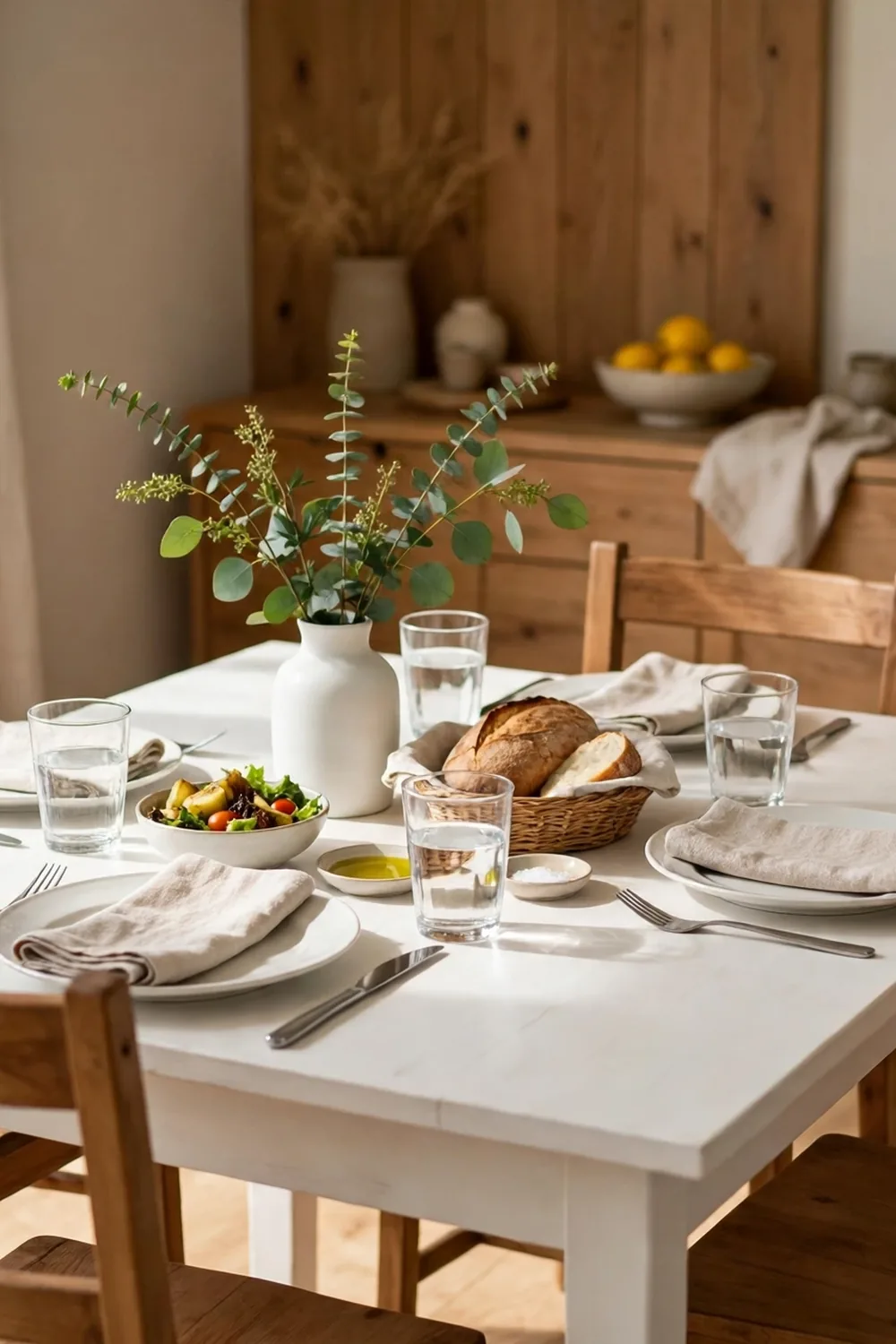
I used to fill every shelf because empty space felt wasteful. Then I cleared one white shelf down to three things, a vase, a stack of books, and a small plant, and the whole wall relaxed. White shelves need that empty space. Without it, they look cluttered no matter how tidy each object is.
Group things in odd numbers and leave at least one shelf mostly empty. I keep everyday books on the lower shelves where I can reach them, and the prettier pieces higher up where they catch the light. If a shelf starts to fill up again, I take one thing off before I add anything new. That one in, one out rule has kept my shelves calm for months.
Tip: Stand in the doorway and squint at your shelves. The shapes you can still see clearly are the ones worth keeping.
12. Make the Entryway the Calmest Spot in the House
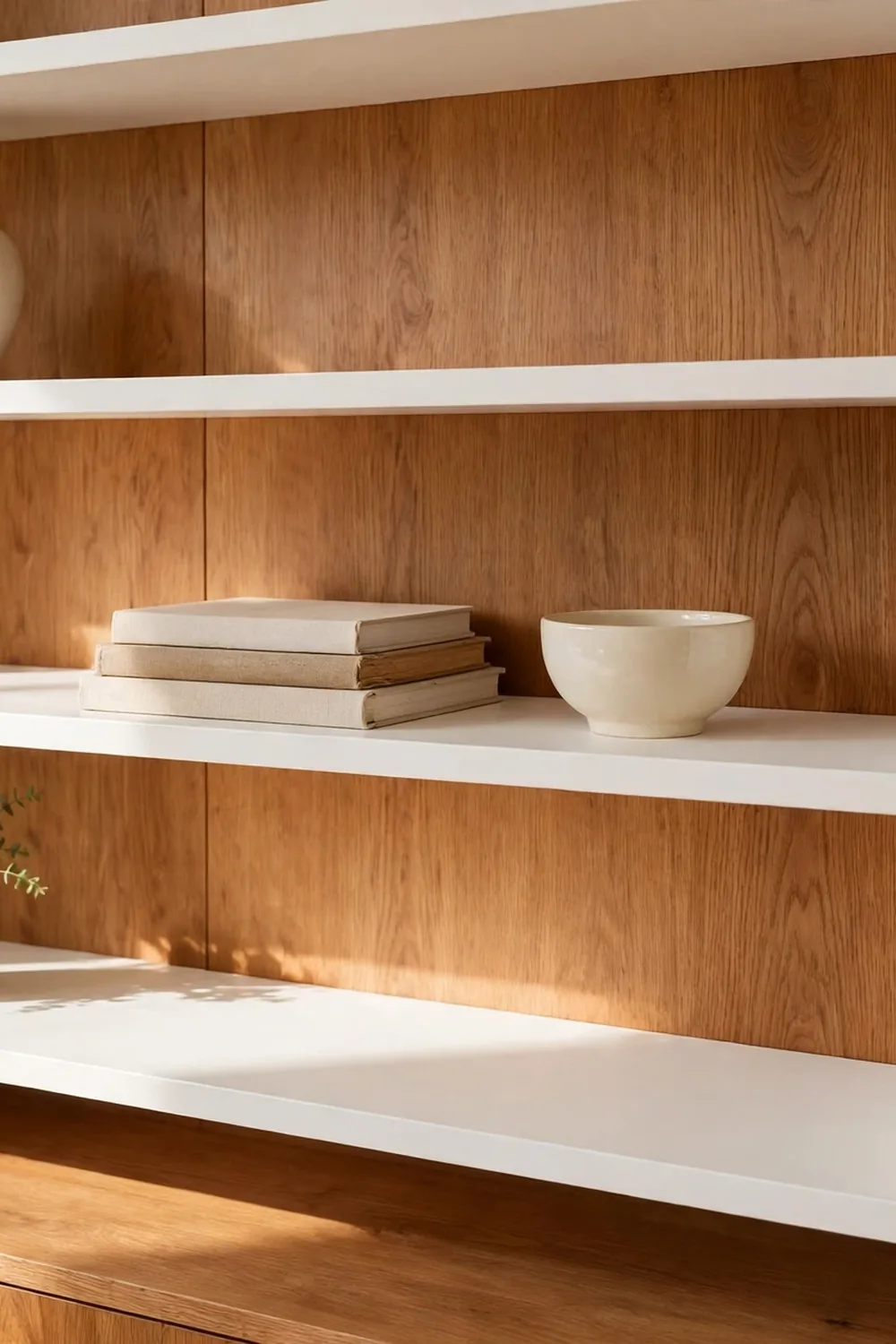
The entryway is the first room you see and the last one you leave, so it sets the mood for the whole home. Mine is small, just a bench, a woven mat, and a vase with green stems, all against a soft white wall. Nothing fancy, but coming home to that quiet corner feels like a deep breath after a noisy day.
Keep the entryway to what you actually use. A bench to sit on while you put shoes on, hooks for coats, and a small tray for keys will do more than a console full of decorations. I shake the mat out every few days, because a white entryway shows dust fast, and that quick habit keeps it looking fresh without a big clean.
Tip: Put a small basket by the bench for scarves and gloves. Loose items on a bench look messy, but the same items in a basket look tidy.
13. Use White to Open Up a Small Room
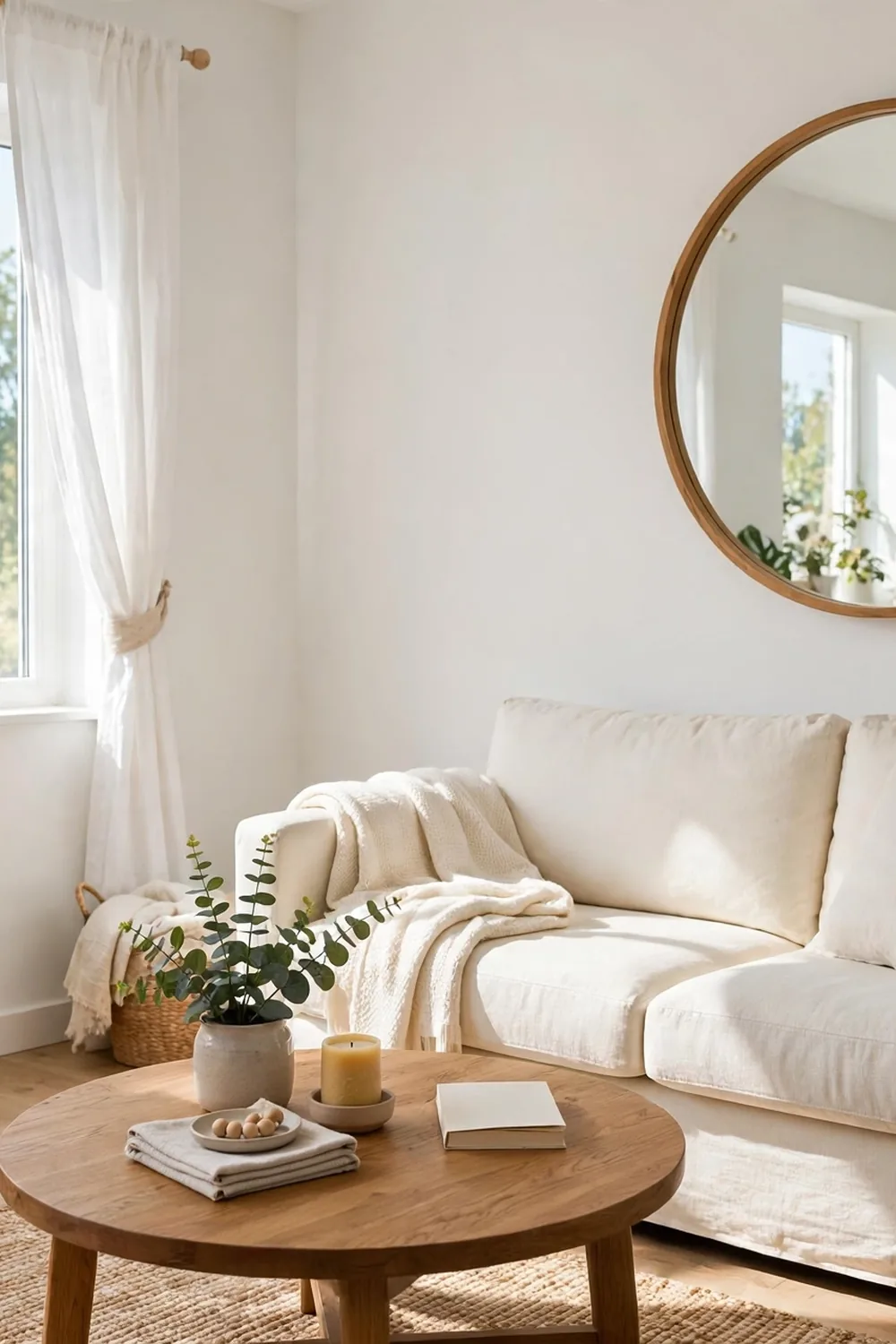
Small rooms taught me the most about white. My smallest room once had dark walls and a heavy rug, and it felt like a cupboard. I painted the walls soft white, swapped the rug for a lighter one, and hung a round mirror opposite the window. The room did not get bigger, but it stopped feeling cramped, and I started using it every day.
Mirrors help, but they are not magic. The real change came from keeping the furniture low and the colors close together. A cream sofa, a light wood table, and white walls blur the edges of the room, so your eye travels further. I also kept the window clear of heavy frames, because daylight is the best tool a small white room has.
Tip: Choose one large mirror over several small ones in a tiny room. One clear reflection opens the space, while many small ones can feel busy.
14. Pair White With Clay and Earth Tones
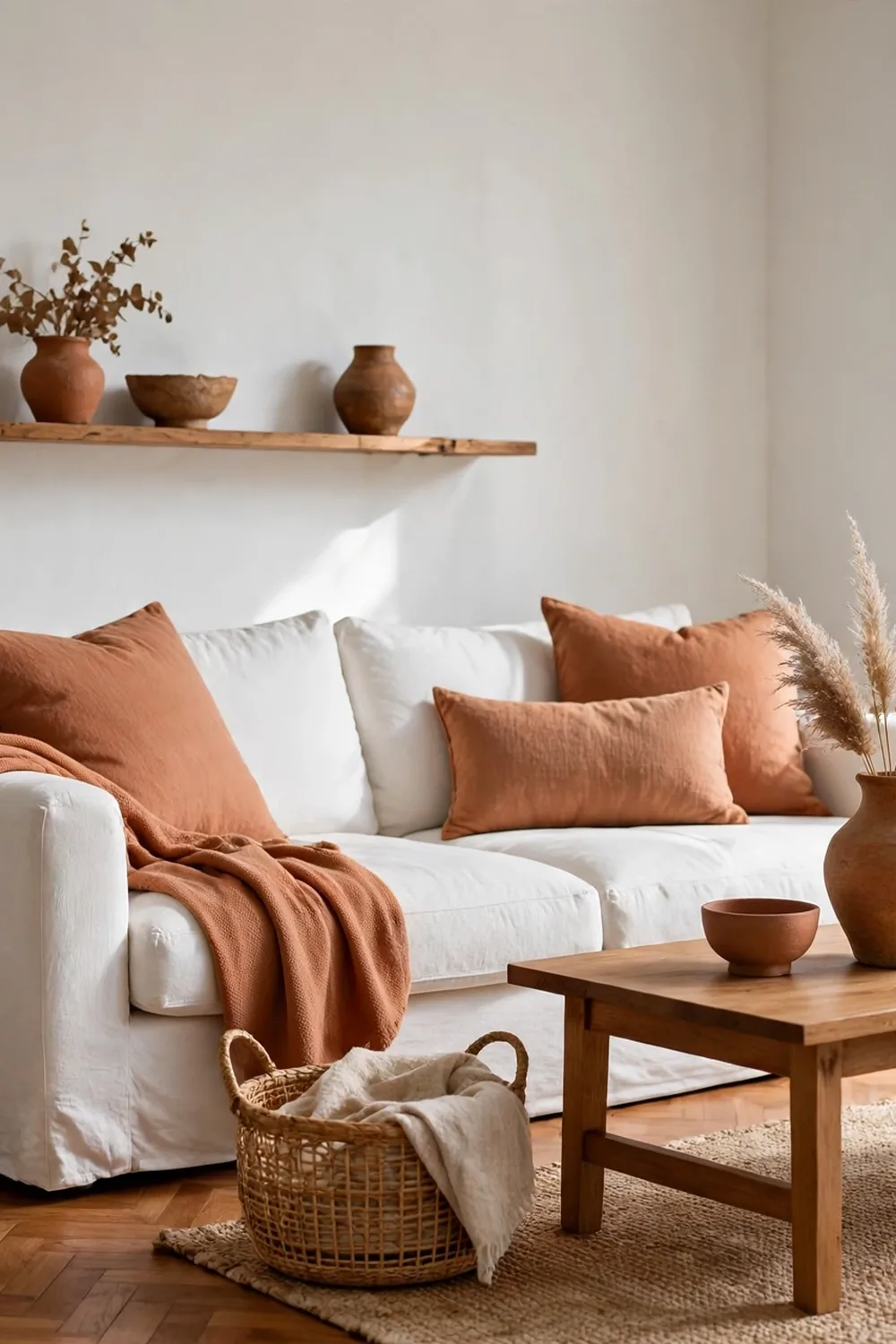
If all white feels too pale for you, clay tones are a kind friend to it. I added two terracotta cushions and a clay vase to my white sofa, and the room warmed up at once. The earthy color grounded the white without taking over, and the room still felt calm in the evening when the light went soft.
Use clay in small doses first. A throw, a cushion, or a single vase is enough to test the pairing. I keep the larger pieces white and let the clay show up in things I can move, so I can swap them out when the season changes. In autumn I add a deeper clay throw, and in spring I pull it back and let the white breathe again.
Tip: Mix matte clay with one glossy ceramic piece. The shine keeps the earth tones from looking dusty.
15. Let Warm Light Do the Evening Work
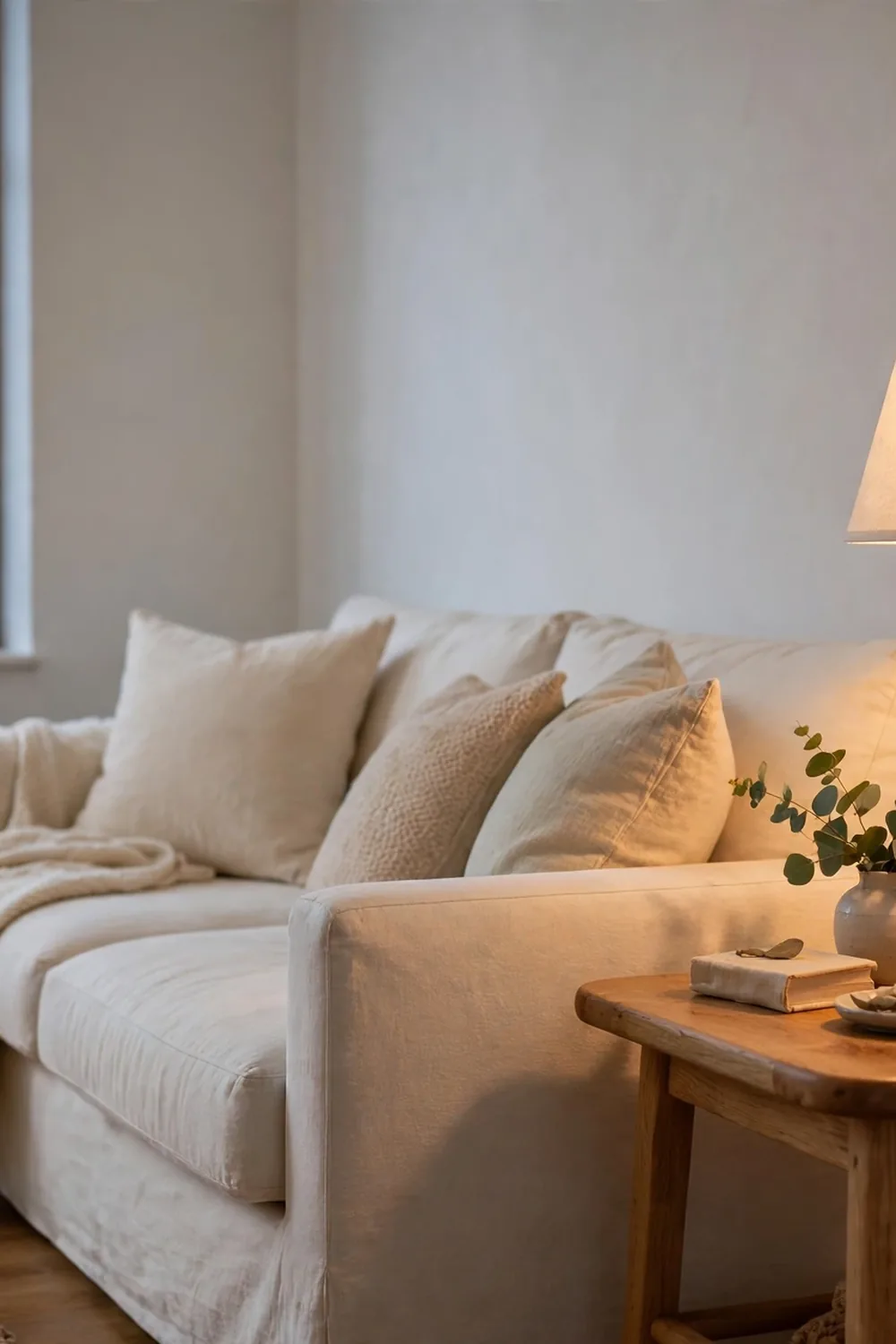
White rooms change completely after sunset, and that is where lamps earn their keep. I used to rely on one bright ceiling light, and my white living room looked harsh at night. Now I use two warm lamps, one by the sofa and one on a side table, and the white walls glow instead of glaring.
Brass lamps suit this soft white well, because the warm metal adds a gentle shine without a strong color. I keep the bulbs warm, not daylight white, because a cool bulb can turn a soft white wall blue at night. Dim the lamps if you can, even a little, because a white room at low light feels restful in a way a bright room never does.
Tip: Put the lamp where you sit to read, not in the middle of the room. Light that lands near you feels cozy, while light from far away feels like a waiting room.
16. Add One Dark Note So White Stands Out
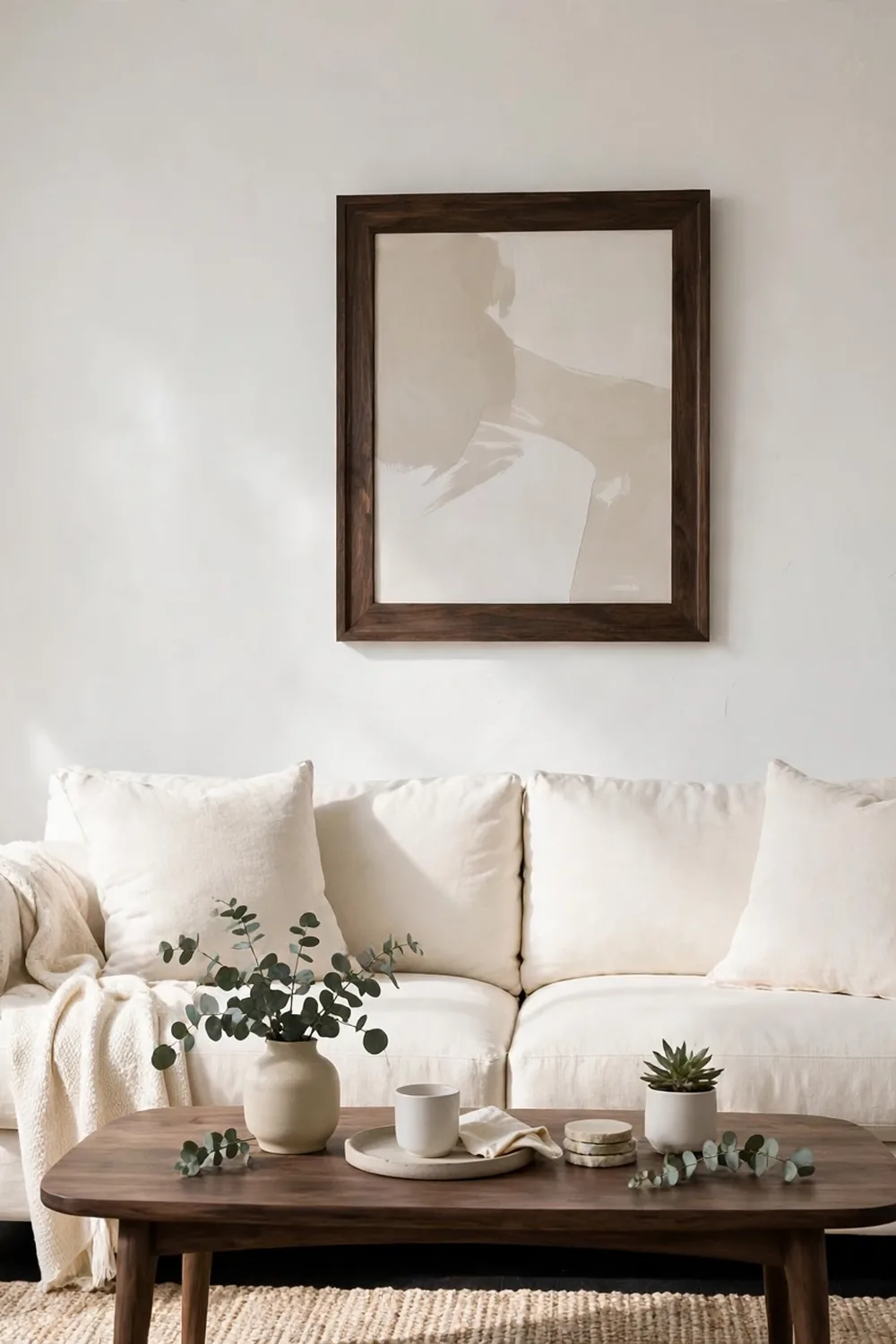
A room that is all white can lose its shape, and one dark piece brings it back. I have a black floor lamp next to my white sofa, and a dark wood frame on the wall above it. Those two dark notes frame the white, and suddenly the sofa looks intentional instead of washed out.
Keep the dark pieces few. One lamp, one frame, or one dark wood table is plenty. If you add too many dark things, the calm feeling goes away and the room starts to feel heavy again. I think of dark accents like punctuation in a sentence. A little gives shape, a lot makes everything feel loud.
Tip: Repeat the same dark tone twice, not once. Two dark pieces feel planned, while a single dark piece can look like a mistake.
17. Keep White Practical With Easy to Clean Choices
People ask me how I keep white practical, and my answer is boring in the best way. I choose things I can wash, wipe, or shake out. Washable cushion covers, a rug I can take outside and beat, and a table that wipes clean with a damp cloth. None of that is glamorous, but it is why my white rooms still look good on a normal Tuesday.
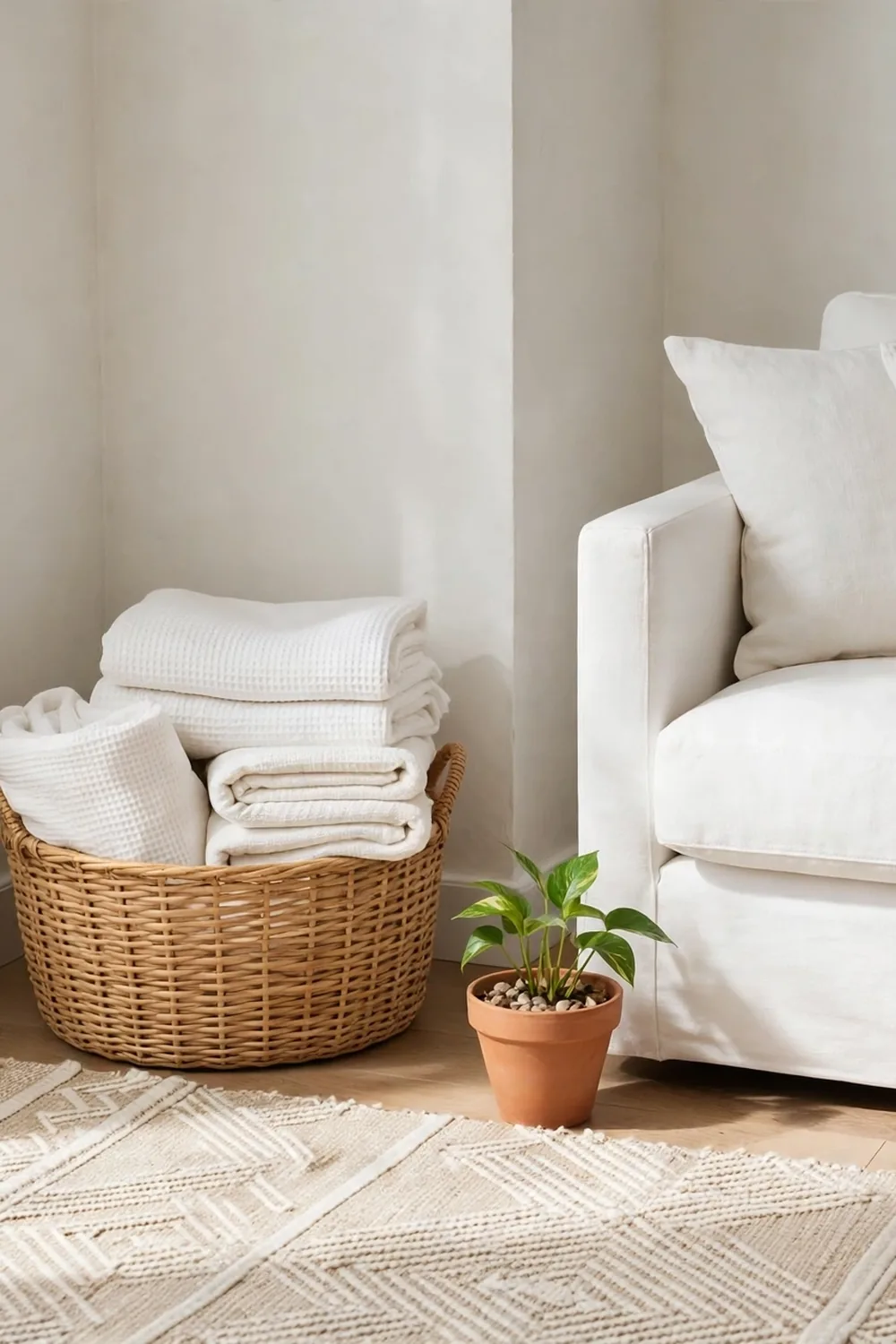
I also keep a small basket of folded white throws near the sofa. When one gets stained, it goes in the wash and another comes out, so the room never waits for laundry. White does show marks, and I will not pretend otherwise. The trick is not avoiding marks. It is building a routine where a mark is a five minute job, not a weekend project.
Tip: Treat a fresh stain right away with plain cold water and a clean cloth. Most everyday marks lift if you catch them early.
18. Let White Hold Your Personal Things
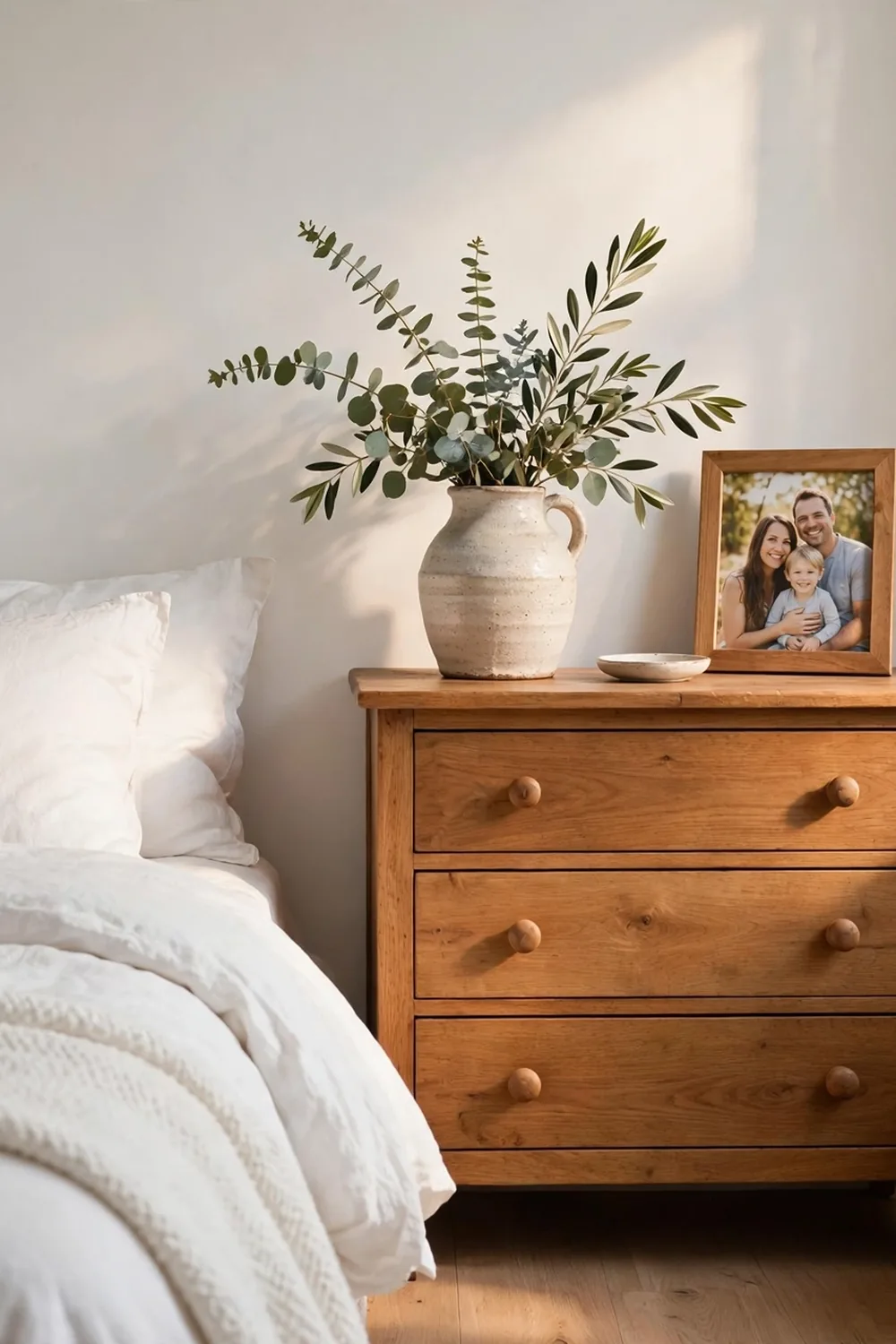
A white room should not feel empty of you. My favorite corner has a wooden dresser, a framed photo, and a handmade vase I picked up years ago, all against a soft white wall. The white does not hide those things. It gives them space to be seen, and that is why I like it so much for personal pieces.
Do not rush to fill a white room with new decorations. Start with what you already love, and let the white frame it. A photo, a vase from a trip, a book with a worn cover, these are the things that make a calm room feel like home instead of a catalogue page. I move my personal pieces around every few months, and the white wall makes each new arrangement feel fresh without buying anything.
Tip: Photograph a shelf arrangement you love before you change it. You can always go back to it, and the photo helps you see what worked.
Frequently Asked Questions
What is the Pantone Color of the Year 2026?
Pantone Color of the Year 2026 is PANTONE 11-4201 Cloud Dancer, a soft airy white. Pantone announced it on December 4, 2025, and describes it as a billowy white with a feeling of serenity. You can read the full details in Pantone’s official announcement for 2026.
Is Cloud Dancer the same as plain white paint?
No, not quite. Cloud Dancer is a specific soft white with a gentle warm cast, so it looks softer than a stark bright white on a wall. Paint brands all mix their own whites a little differently, so take a sample home and test it in your own light before you buy a full tin. The name gives you a direction, not an exact match for every paint range.
How do I stop a white room from looking cold?
Add warmth through texture and wood, not through more color. A knit throw, a wooden table, a woven rug, and warm lamps will do more than a bright cushion. I also find that keeping one or two plants in the room stops white from feeling clinical, because the green softens the edges. If the room still feels cold at night, switch to warmer bulbs before you repaint anything.
Can I use Cloud Dancer white in a small home with kids or pets?
Yes, if you choose washable pieces. Slipcovered sofas, washable throws, and rugs you can shake out make white workable in a busy home. I would still keep white off the lowest part of a hallway wall if muddy paws are a daily event, and use a wipeable finish there instead. White will show marks, but with washable fabrics those marks become a quick wash, not a permanent problem.
I hope these ideas help you use Cloud Dancer in a way that feels honest for your home. I did not repaint my whole house in one weekend, and I would not suggest you do that either. I started with one wall, then one set of bedding, then one sofa cover, and each small change made the next one easier to judge. That slow pace is also how I learned which whites I actually like living with, and which ones only looked good in a photo.
If you try even one idea here, start with the room you spend the most time in, and live with it for a week before you change anything else. White is quiet, and quiet rooms reward patience. When the light shifts in the evening and the room still feels calm, you will know the shade is working for you, not just for a trend.