
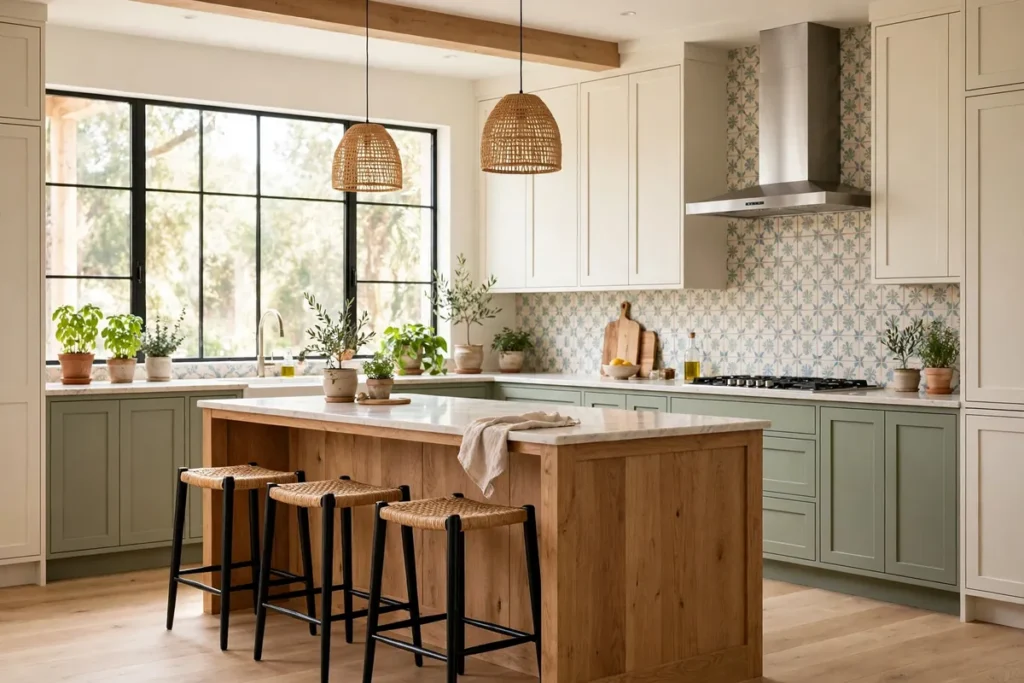
Introduction
My kitchen used to work against me in small ways. The plates lived too high, the pans lived too low, and the counter disappeared under things I used once a month. I did not redo the whole room. I changed one habit at a time, and I watched what other kitchens were doing in photos and in friends homes, and that is how this list grew. These kitchen trends are the ones that made my own cooking days easier, not the ones that only look good in a photo.
I am not going to tell you to gut your kitchen, because I have not done that myself. Some of these ideas cost almost nothing, like moving a shelf or clearing a counter. Some cost more, like a new island or a new cooker, and I will say so plainly. A few of these are my own take on where kitchens seem to be heading, and I will say that too, rather than pretend every idea is already everywhere. Pick the one that fixes your biggest daily annoyance first, and you can always come back to The Inspire Rooms homepage to browse by room.
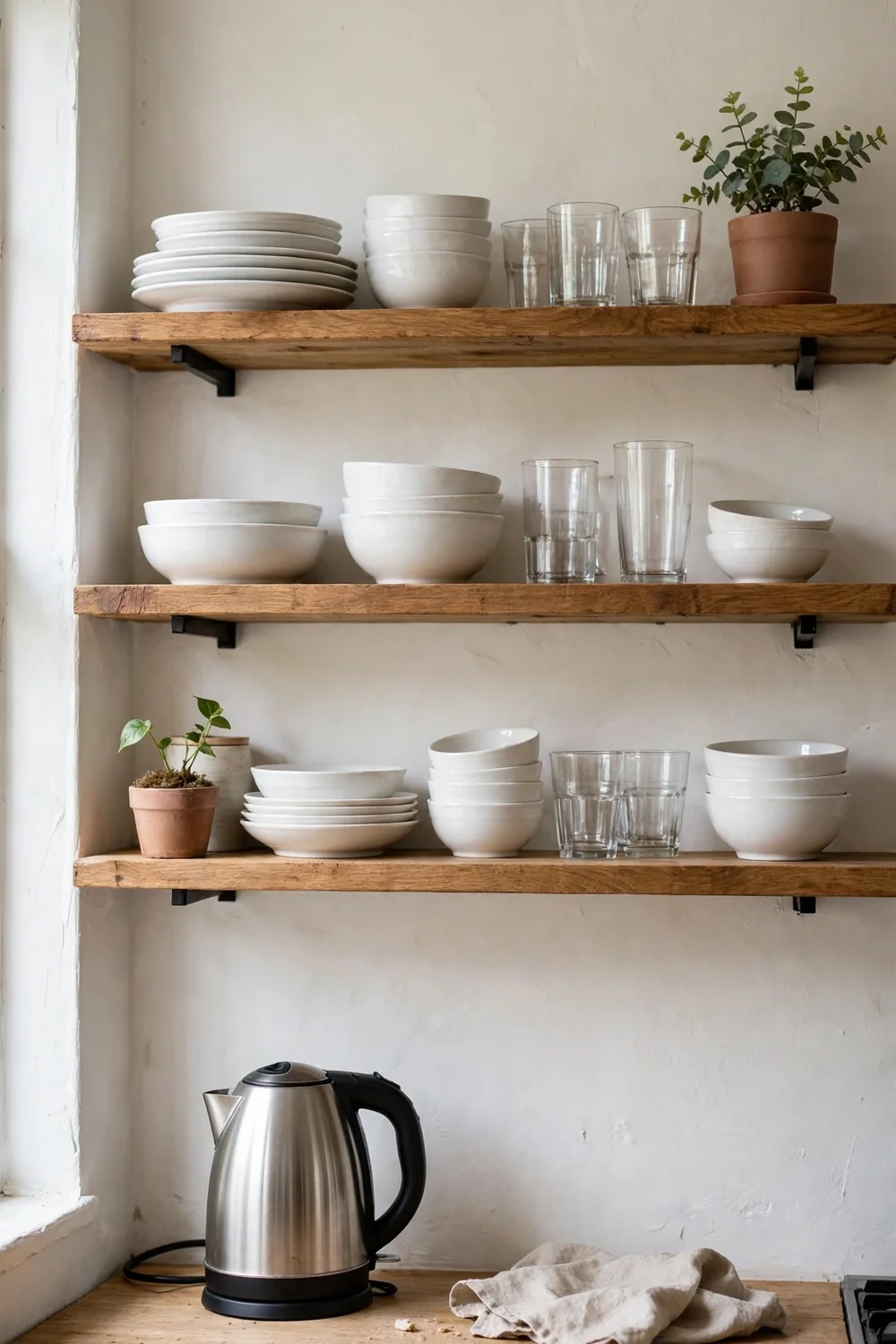
1. Put Everyday Dishes on Open Shelves
Open shelves changed my mornings more than I expected. I took the doors off one wall cabinet, put our everyday plates and bowls on wooden shelves, and suddenly breakfast took half the time. I could see what I needed, grab it, and put it back without opening and closing a door with wet hands. The shelves also forced me to keep fewer dishes, because there is nowhere to hide the chipped ones.
My first try looked messy, because I put everything on the shelves, including tall vases and a stack of baking trays. I took half of it off, kept only the dishes we use every day, and the shelves calmed down at once. Dust does settle on open shelves, so I wipe them once a week, which takes less time than I feared. A shelf that holds only daily dishes stays useful. A shelf that holds everything becomes another cupboard with no door.
Tip: Keep open shelves to one wall, not the whole kitchen. One open wall looks intentional, while open shelves everywhere can look unfinished and dusty.
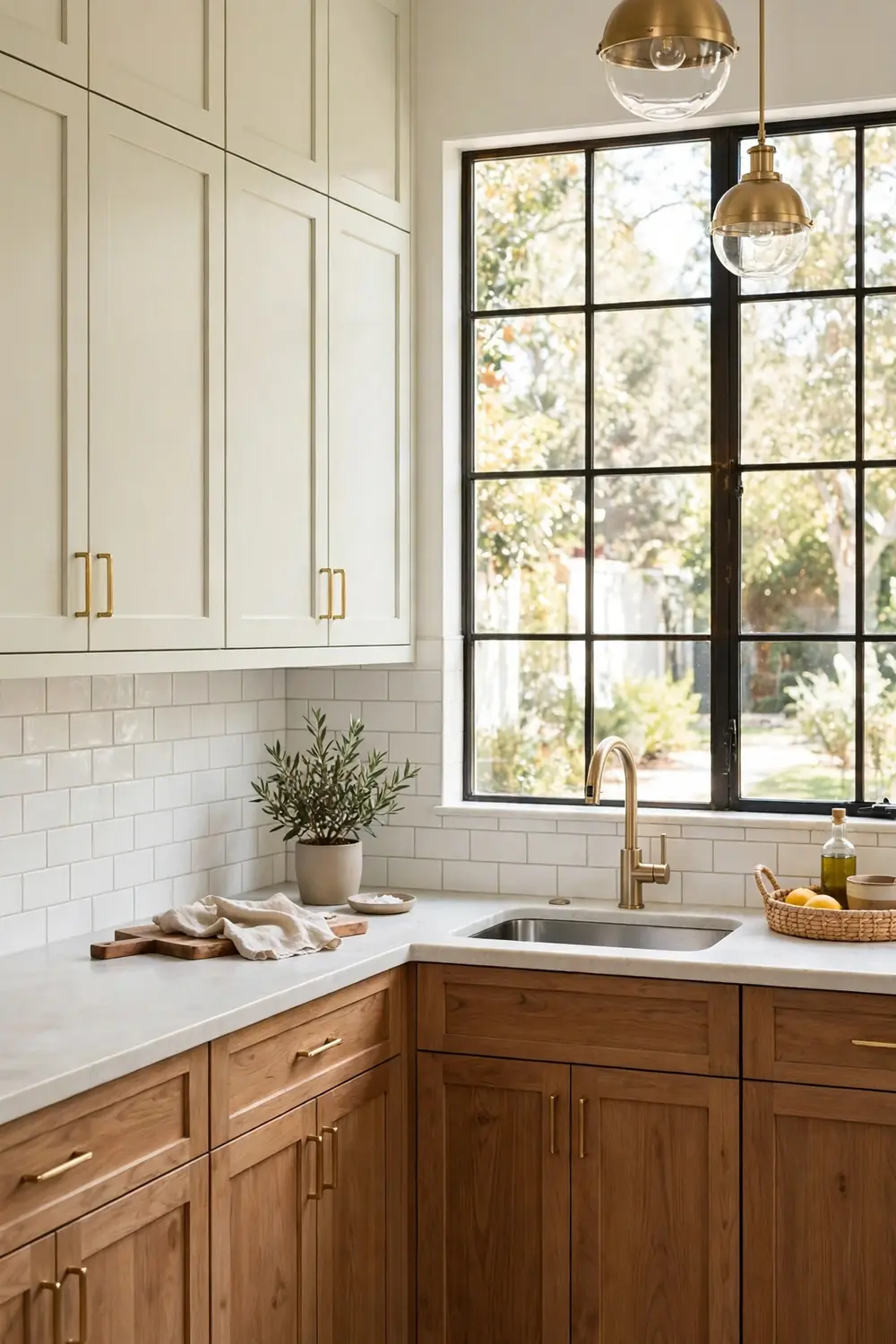
2. Try Two Tone Cabinets for a Softer Look
Two tone cabinets are the change I notice most in kitchens I visit now. Pale cabinets up top keep the room light, and warm wood below grounds it, so the kitchen does not feel like one big block of colour. In my own kitchen I did not repaint everything. I kept the upper cabinets pale and let the lower ones show their wood, and the room felt warmer the same day, without a full renovation.
The mistake I almost made was picking two colours that fought each other. I held paint samples next to each other in daylight, and one pairing looked fine in the shop and loud at home. A pale top and a warm wood bottom is a safe pair, because the wood reads as a natural colour, not as a second paint colour. The House Beautiful kitchen ideas page is a good place to browse cabinet pairings if you want to see more combinations before you commit.
Tip: Test your two colours on one cabinet door first, and live with it for a week. A pairing that looks good for a day can feel tiring after a month.
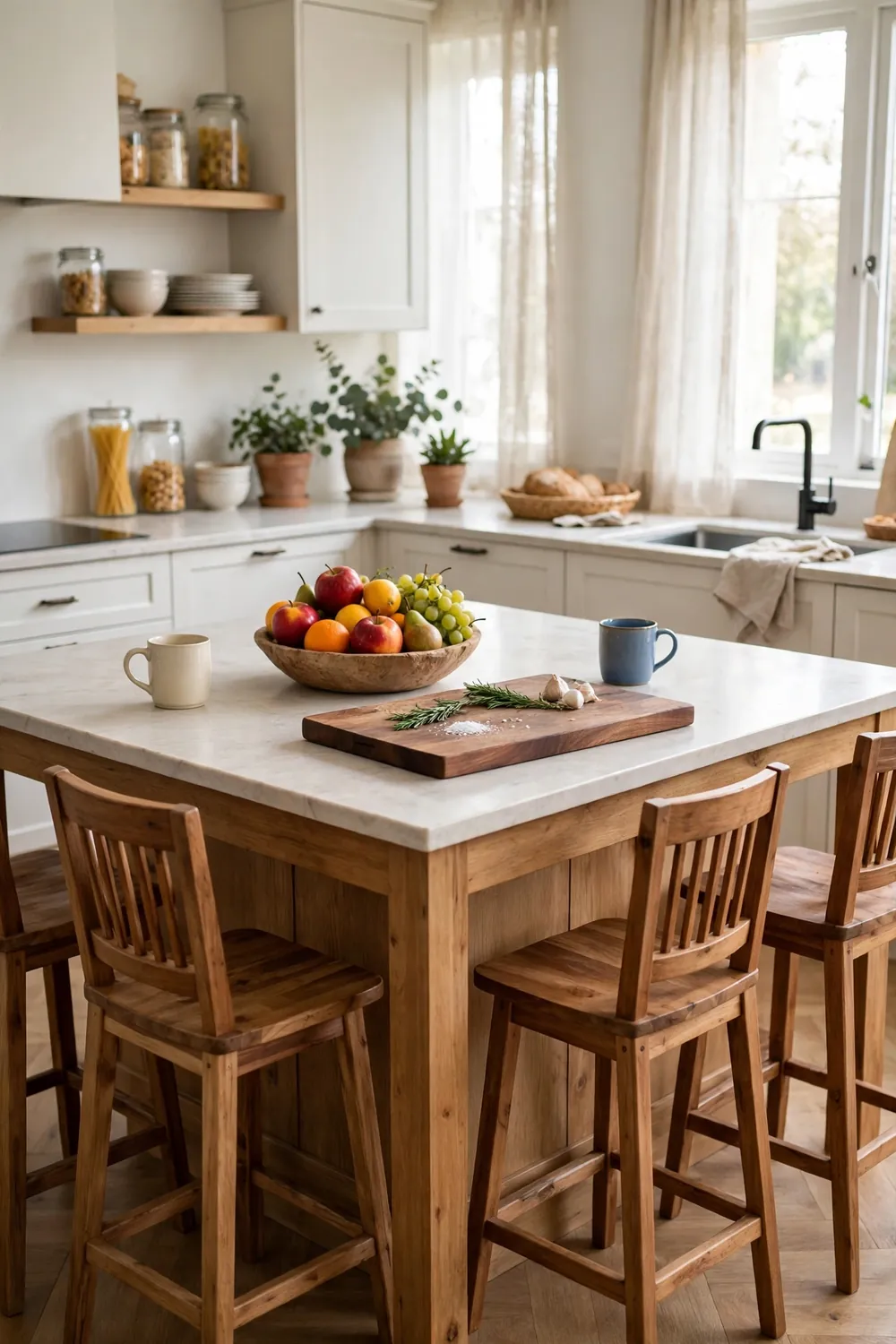
3. Make the Island a Gathering Spot
Our island stopped being just a work surface the day I put stools around it. Now someone sits there while I cook, homework happens on one end, and tea happens on the other. A kitchen island that only holds a chopping board is a wasted island. An island with a place to sit turns cooking from a solo job into a shared evening.
The island I have now is not huge, and that taught me something useful. A smaller island with clear space around it works better than a huge island nobody can walk around. I keep one end clear for chopping, and the other end holds mugs and a fruit bowl, so the island never becomes a dumping ground for mail and keys. Well, almost never. The mail still lands there some days, and I move it before dinner.
Tip: Leave at least enough room to open the oven and the fridge without moving a stool. An island that blocks the main path will annoy you every single day.
4. Warm Up the Room With Brass Hardware
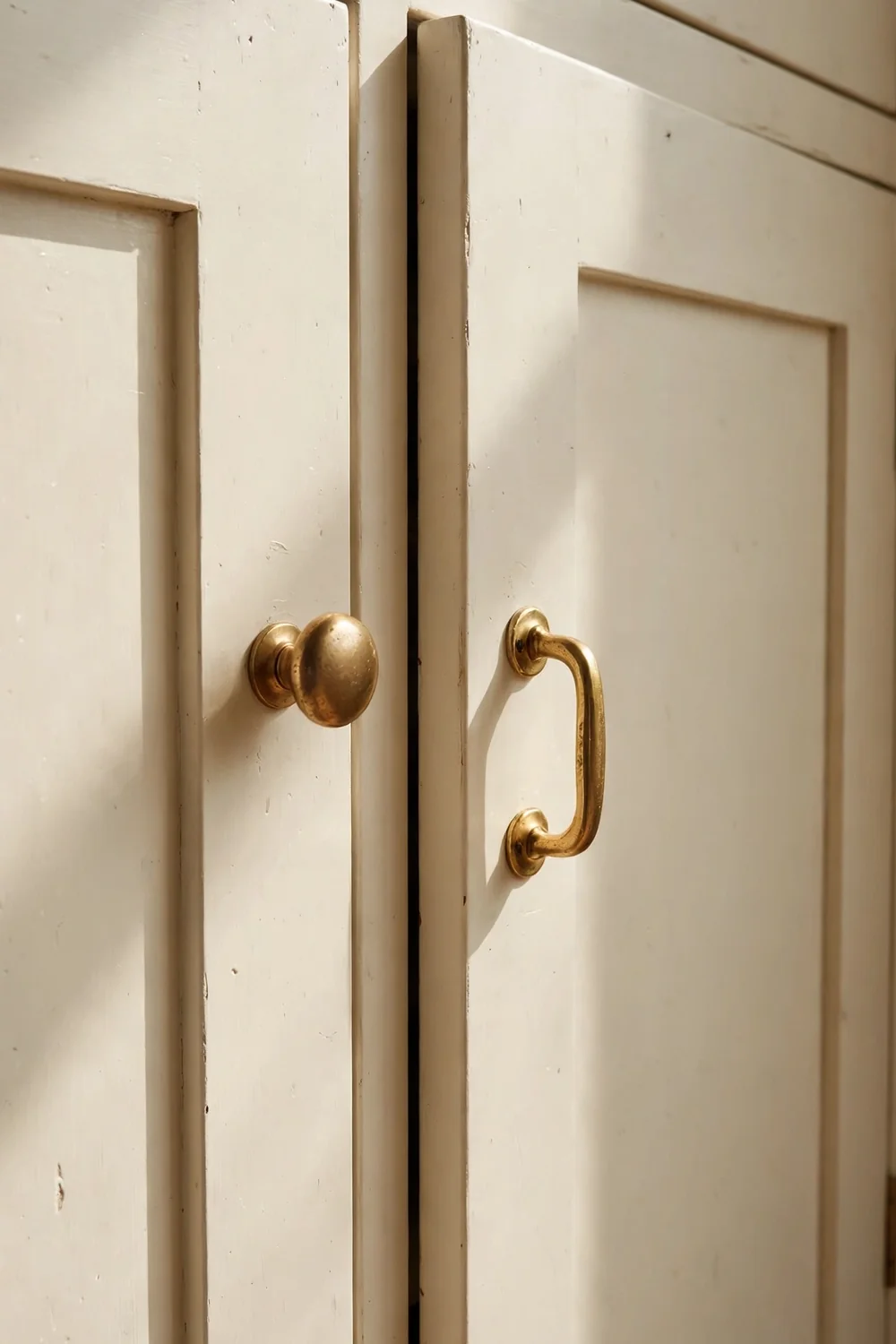
Brass handles were the smallest change on this list, and one of the most satisfying. I swapped plain silver knobs for warm brass pulls on our cream cabinets, and the kitchen looked warmer in an afternoon. Metal is a small detail, but you touch it every time you open a cupboard, so it changes how the kitchen feels in your hands, not just how it looks.
I chose brushed brass, not polished, because polished brass showed every fingerprint in my house within a day. Brushed brass hides marks, and it sits well with wood and cream. I also kept the change to handles and one tap detail, rather than changing every metal thing in the room at once. A little brass warms a kitchen. A lot of brass can make it feel like a showroom.
Tip: Buy one handle first and try it on your most used drawer. If you like how it feels after a week, buy the rest to match.
5. Let a Patterned Backsplash Do the Talking
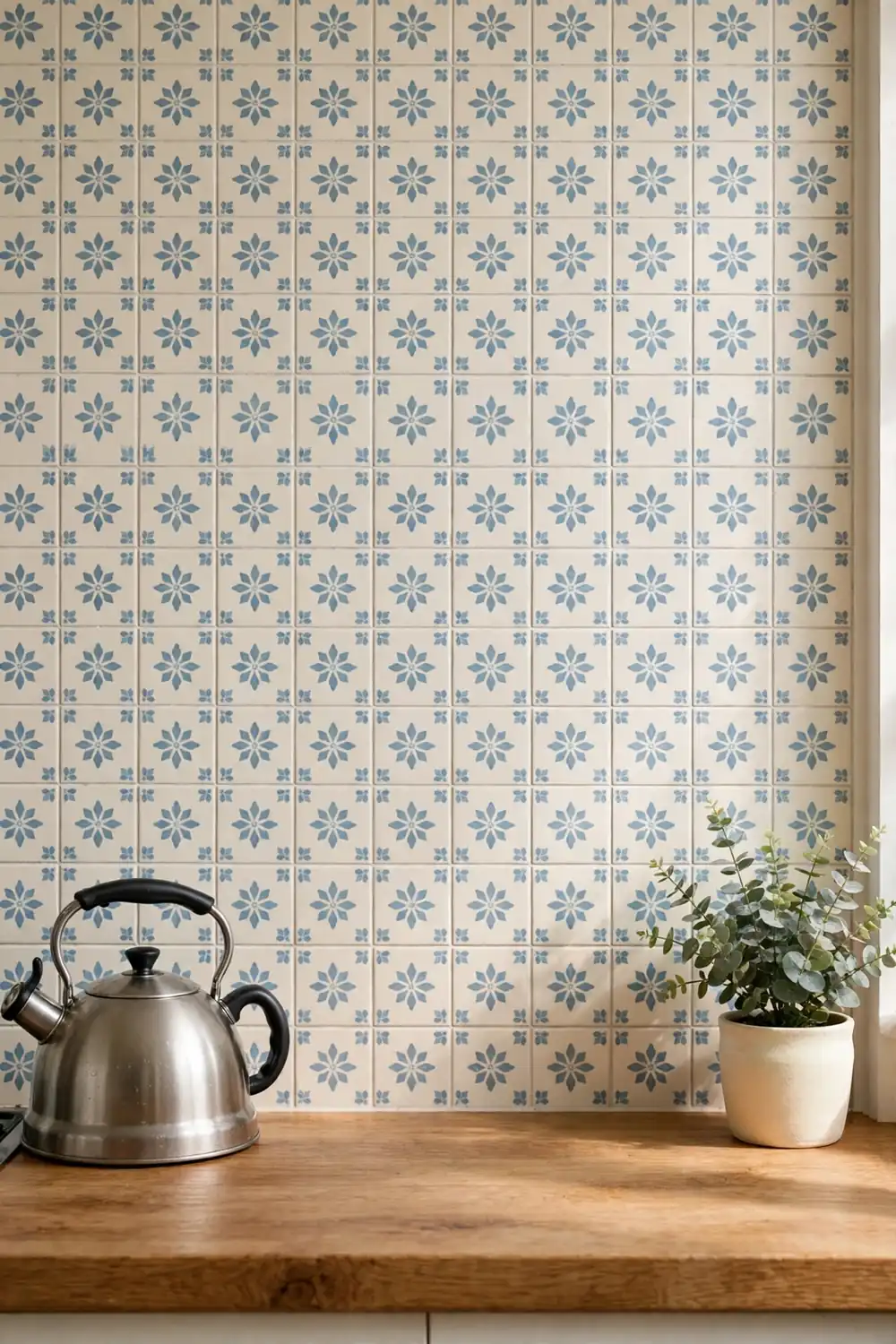
A patterned backsplash is how I added colour without painting a wall. I see this trend most on the wall behind the cooker, where a simple repeated pattern gives the kitchen a focal point, and the rest of the room can stay plain. My own backsplash pattern is quiet, one shape in two soft colours, and that restraint is what keeps it from feeling busy when I am cooking.
Tile is a commitment, so I would not tile a whole wall on a whim. I lived with a patterned tray and a patterned tea towel in the kitchen for a month first, just to see if I liked pattern in that spot at all. The Real Homes kitchen trends guide has more backsplash and tile ideas if you want to compare patterns before you buy. If you do tile, pick a pattern you can live with for years, not one that feels exciting for a week.
Tip: Keep the grout close to the tile colour. Contrasting grout turns a simple pattern into a grid, and a grid is much busier than the pattern itself.
6. Hide the Pantry in a Pull Out Drawer
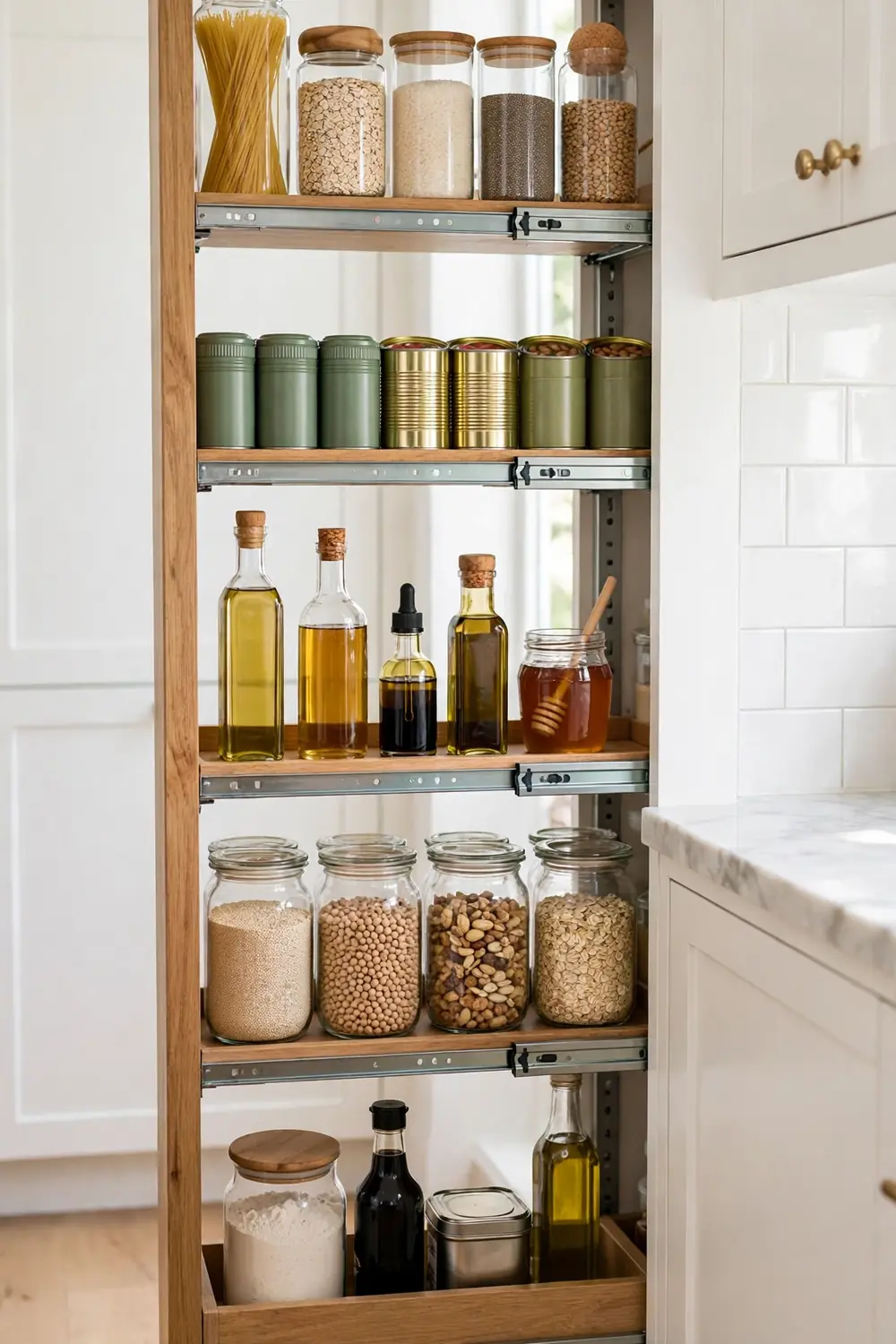
A pull out pantry fixed the most annoying cupboard in my kitchen. Before it, tins hid at the back of a deep shelf, and I bought duplicates because I could not see what I already owned. Now I pull one drawer, see everything at a glance, and put it back with one push. It is a small piece of joinery, but it saves me from that daily hunt at the back of a cupboard.
The drawer works because it is narrow and tall, not wide and deep. A wide deep drawer becomes a jumble again, just in a different shape. I keep heavy tins at the bottom, jars in the middle, and small packets at the top, and I check the drawer once a month for things past their best. That monthly check takes five minutes, and it has stopped the duplicate buying almost completely.
Tip: Measure your tallest jar before you order a pull out unit. A pantry drawer that cannot fit your oil bottle is a pantry drawer you will resent.
7. Carve Out a Breakfast Nook by the Window
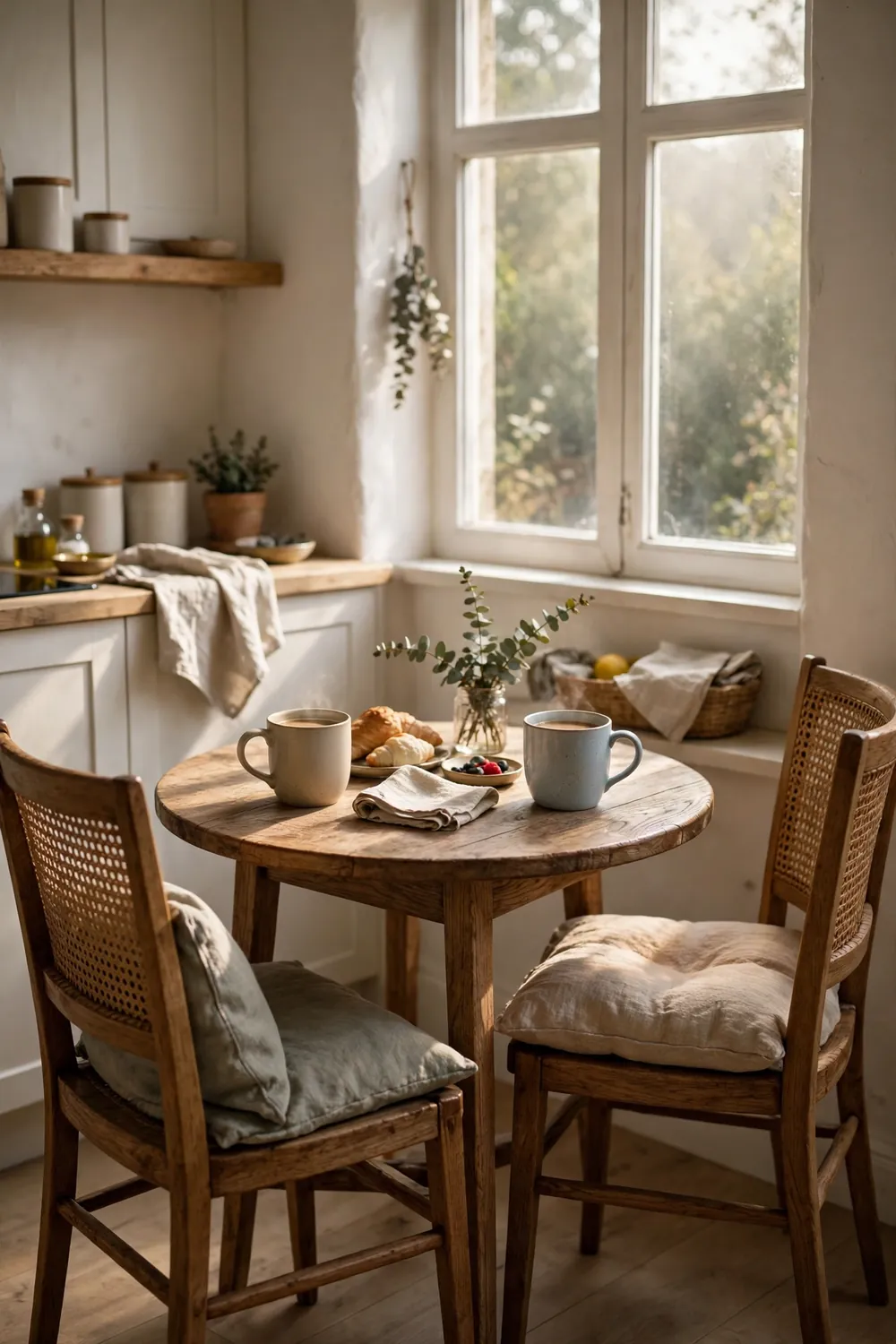
A breakfast nook needs very little, and that is why I love ours. I put a small round table and two chairs by the kitchen window, added cushions, and suddenly breakfast had a place. It is not a dining room, and it does not need to be. It is where I sit with tea in the morning, and where a quick lunch happens without setting a big table.
The table is round on purpose. A square table in that corner left sharp corners to bump into, and a round table lets two people sit without a corner between them. I keep the nook clear, no mail, no school bags, because a nook that collects clutter stops being a nook. The cushions are washable, because breakfast crumbs are a fact of life, and I would rather wash a cushion cover than stare at a stain.
Tip: Face the nook toward the window, not toward the cooker. A seat that faces daylight feels like a break, while a seat that faces dirty pans feels like more work.
8. Hang Statement Pendants Over the Island
Pendant lights over the island did more for evening cooking than a brighter ceiling light ever did. I hung three woven pendants in a row, and the light now pools right where I chop and stir, instead of spreading thin across the whole room. In the evening the kitchen feels warm, and the island becomes the centre of the room, which is where everyone gathers anyway.
I hung the first pendant too high, and the light missed the counter completely. Lowering it by a handspan fixed that, but I kept it high enough that nobody bumps their head standing at the island. The pendants are on a dimmer, so I can turn them down after dinner, and the same warm light idea works over a fireplace too, as these spring mantel decor ideas show. A pendant that hangs over empty floor, by contrast, lights nothing useful.
Tip: Space pendants evenly and centre them over the island, not over the middle of the room. Even spacing looks calm, while uneven spacing looks like a mistake you notice every day.

9. Choose Stone Counters You Can Actually Cook On
Stone counters are everywhere in kitchens I see now, and I understand the appeal. A pale stone surface with soft veining looks calm, it wipes clean, and it does not compete with the cabinets. My own counter is not real marble, and I chose it on purpose, because real marble stains with lemon and tomato, and I cook with both most weeks. A surface that cannot handle real cooking is a surface I would spend my life protecting.
The counter I use now takes hot pans, spilled juice, and a dropped knife without drama, and I wipe it down at the end of cooking. I keep a wooden board for chopping, because even a tough counter deserves a board, and a board is easier to replace than a counter. If you love the look of stone but not the upkeep, look at the surface in a shop, spill water on the sample if they let you, and see how it dries. That small test tells you more than a photo ever will.
Tip: Pick a stone look with soft veining, not bold dark veins. Bold veins can make a small kitchen feel busy, while soft veins fade into the background.

10. Swap Stark White for Warm Neutrals
Warm neutrals are the colour shift I feel most sure about in kitchens. Stark white used to rule, and it looked clean in photos, but in my kitchen it felt cold, especially in winter light. Cream, warm beige, and a touch of clay make the same room feel welcoming, and the light in the evening turns a little golden, which is a change I notice every day when I come home.
I did not repaint the whole kitchen to get there. I started with a warm bench cushion and a clay coloured tea towel, lived with those for a month, and only then painted one wall cream. That slow test saved me from a colour I might have regretted. The same warm palette works in other rooms too, and these spring bedroom ideas show how cream and clay can calm a bedroom in the same way.
Tip: Keep one light colour in the kitchen, like a pale counter or a cream blind, so warm colours have something to sit against. Without a light anchor, warm colours can close a small kitchen in.
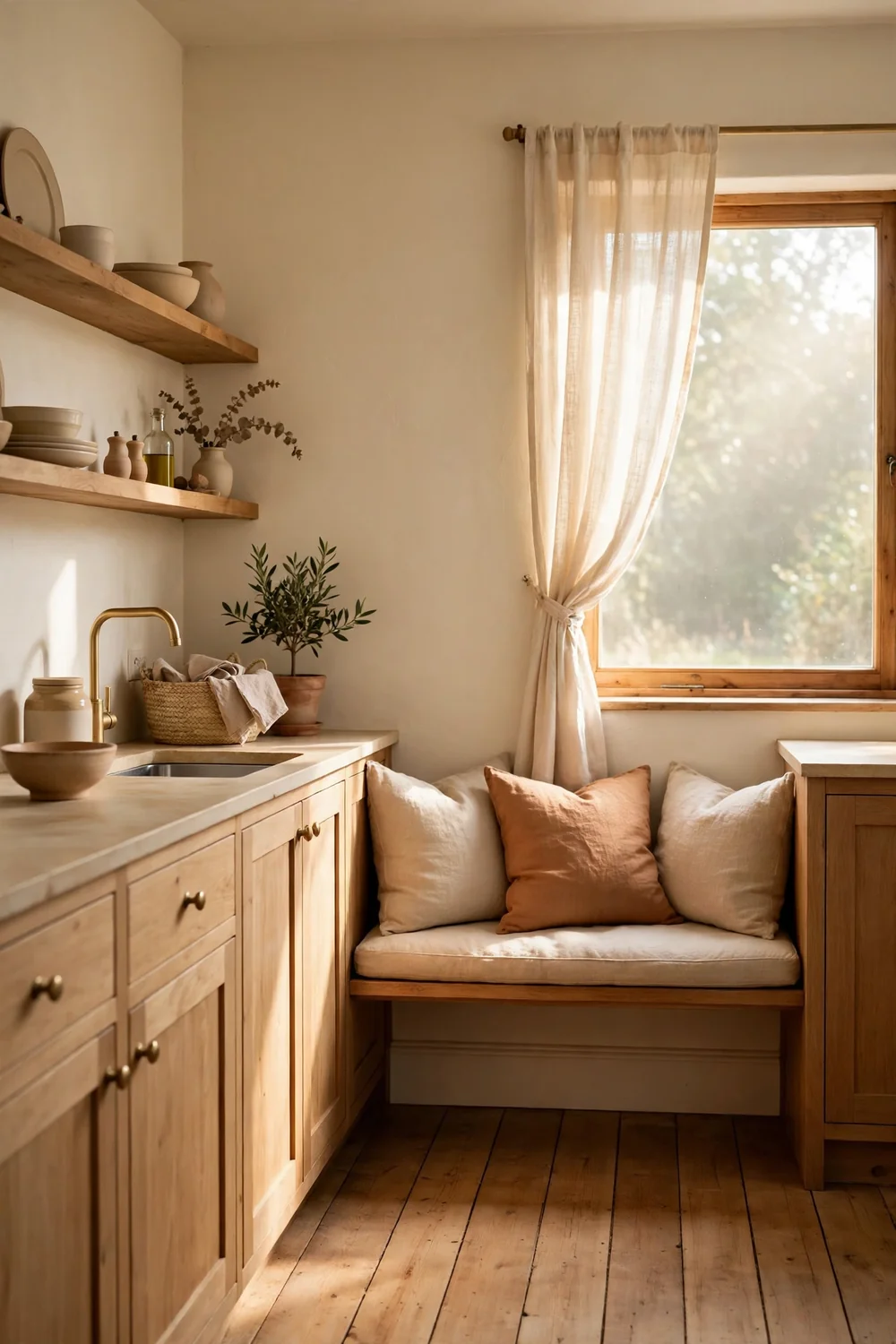
11. Tuck Small Appliances Out of Sight
Tucking small appliances away gave me my counter back. Our counter used to hold a toaster, a blender, a coffee machine, and a food processor, and there was no room left to actually cook. Now the appliances I use once a week live behind a cabinet panel, and only the kettle and a fruit bowl stay out. Cooking feels calmer when the counter is clear, and cleaning takes half the time.
The trick is to keep the daily appliance out and the weekly appliance away. I tried hiding the kettle too, and I lasted two days, because I use it five times a day and opening a door every time drove me mad. A hidden appliance station only works if the door opens easily and the socket is inside, so you do not have to drag a machine out to use it. I also label nothing, because I can see the shapes through the open door, and labels would just add clutter.
Tip: Put the appliance garage near a socket and near where you use the machine. A hidden station across the kitchen from its socket is a station you will stop using.

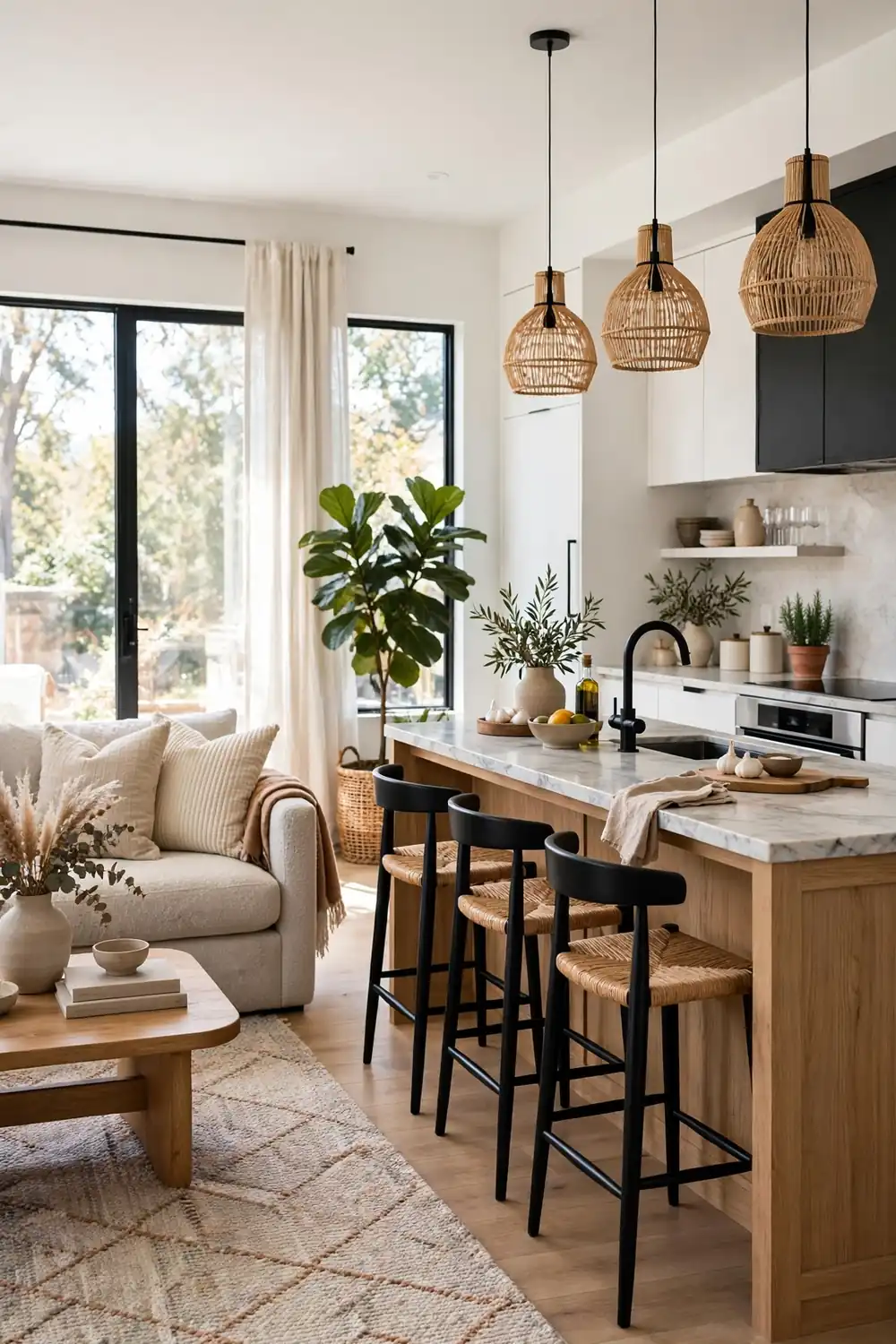
12. Let the Kitchen Flow Into the Living Room
An open plan kitchen suits how we actually live, in my experience. I cook while someone reads on the sofa, and nobody is shut away in a separate room. The kitchen, the dining spot, and the living area share one light and one conversation, and that makes a small home feel bigger, because there are no walls cutting the day into pieces.
Open plan is not perfect, and I will be honest about that. Cooking smells travel, and so does noise, so I run the extractor every time I fry anything, and I keep the living area tidy, because I can see it from the sink. A rug between the kitchen and the sofa helps the eye read the room as two spaces, not one long corridor. In my own take, open plan works best when the kitchen side stays simple, so the living side can carry the colour and the softness.
Tip: Use one flooring or one rug to mark where the kitchen ends and the living room begins. Without a marker, an open room can feel like one big kitchen.
13. Grow Herbs on the Kitchen Window
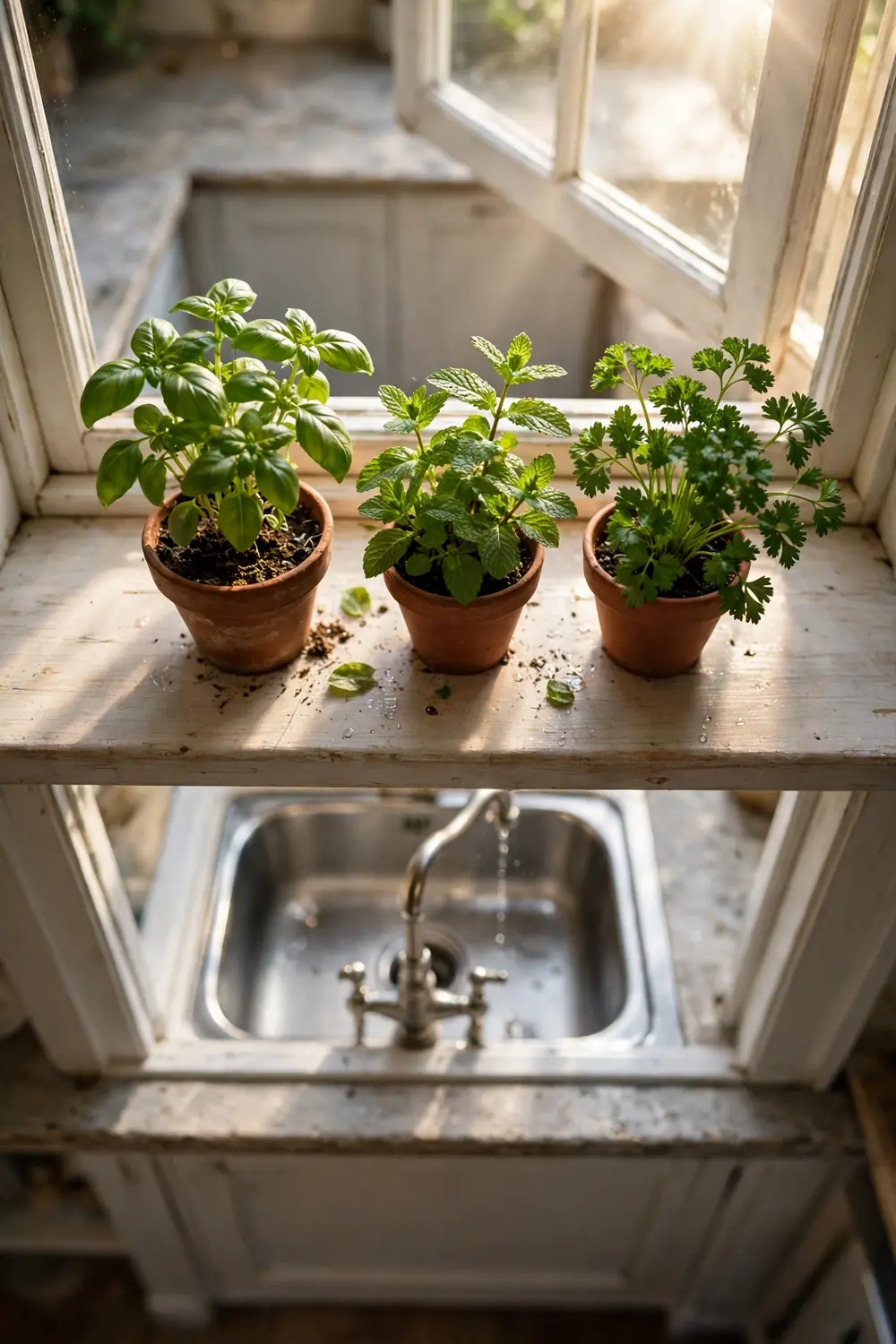
Herbs on the windowsill are the smallest trend here, and the one I use most. I keep basil, mint, and parsley in small pots above the sink, and I snip what I need while I cook, which beats a sad bunch from the back of the fridge. The window gives them light, the sink gives them water, and the whole corner smells fresh when I open the window.
I have killed herbs before, so I keep only three pots, not ten. Three pots I can water and watch. Ten pots I forget, and a dead herb on a windowsill is worse than an empty one. Basil likes sun and regular water, mint grows fast and needs its own pot or it takes over, and parsley forgives me when I forget a day. I learned all of that by killing a few plants first, and I am not embarrassed to say so.
Tip: Keep herbs in separate pots, especially mint. Mint in a shared pot will crowd everything else out within a season.
14. Swap Lower Cabinets for Deep Drawers
Deep drawers replaced the worst cupboard in my kitchen, the one where pans stacked on top of each other and the lid I wanted was always at the bottom. Now I pull a drawer, see every pan at a glance, and lift out the one I need without moving five others. It is a simple change, but it changed how often I cook with the big pan, because I can actually reach it.
The drawers work because they have dividers. Without dividers, a deep drawer becomes a deep jumble, and lids slide everywhere. I keep pans in one drawer, lids upright in a divider in the same drawer, and baking trays in a narrow drawer beside the oven. Heavy pans go at the bottom, so the drawer does not feel top heavy, and I check the dividers once a month, because they shift when I pull the drawer too hard.
Tip: Put the drawer you use most at the height you reach without bending far. A deep drawer that hurts your back to open will not get used.

15. Add One Vintage Piece to a Modern Kitchen
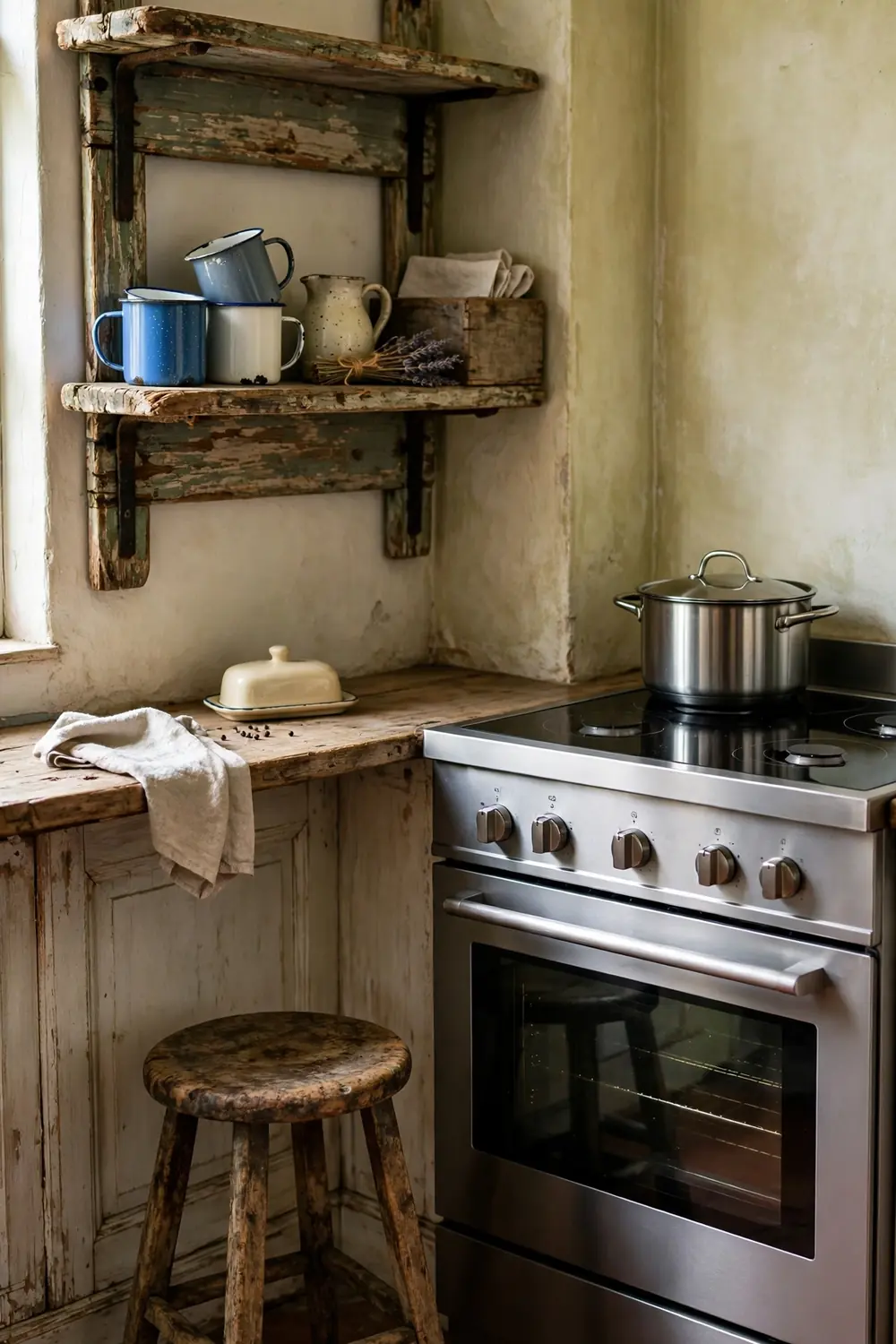
One vintage piece is the fastest way to make a modern kitchen feel personal. I have an old wooden stool in our kitchen, and it cost very little, but it is the piece guests ask about. It has a wobble I fixed with a felt pad, and a scratch I did not fix, and those small flaws are exactly what makes it feel like it belongs to someone, rather than to a catalogue.
The rule I follow is one old piece, not a whole old kitchen. One vintage stool with modern cabinets looks intentional. A room full of old things can look like a storage room, and I have seen that happen in my own first flat. I also check secondhand wood for smell before I buy, because a wobbly leg is fixable, but a damp smell in a closed drawer is much harder to live with.
Tip: Let the vintage piece be the only old thing in its corner. A single old stool with a new mug on it looks curated, while two old pieces stacked together can look accidental.
16. Pick Finishes That Are Easy to Clean
Easy to clean finishes are a trend I wish I had followed sooner. Flat front cabinets, a smooth counter, and a simple sink mean I can wipe the kitchen down in ten minutes after dinner, instead of scrubbing grooves and handles for half an hour. A kitchen that is easy to clean gets cleaned, and a kitchen that is hard to clean gets left, and I know which one I prefer to cook in.
My old cabinets had ridges that caught flour and grease, and I dreaded cleaning them. The flat fronts I have now wipe with one cloth, and the matte finish hides small marks better than a shiny one, which surprised me. I also chose a sink with no fiddly corners, because a sink that traps food at its edges is a sink that smells by morning. None of this looks fancy, and that is the point. It looks plain, and it works.
Tip: Wipe a sample finish with a damp cloth in the shop, if they let you. A finish that smears under a damp cloth will smear in your kitchen every day.

17. Let the Cooker Be the Focal Point
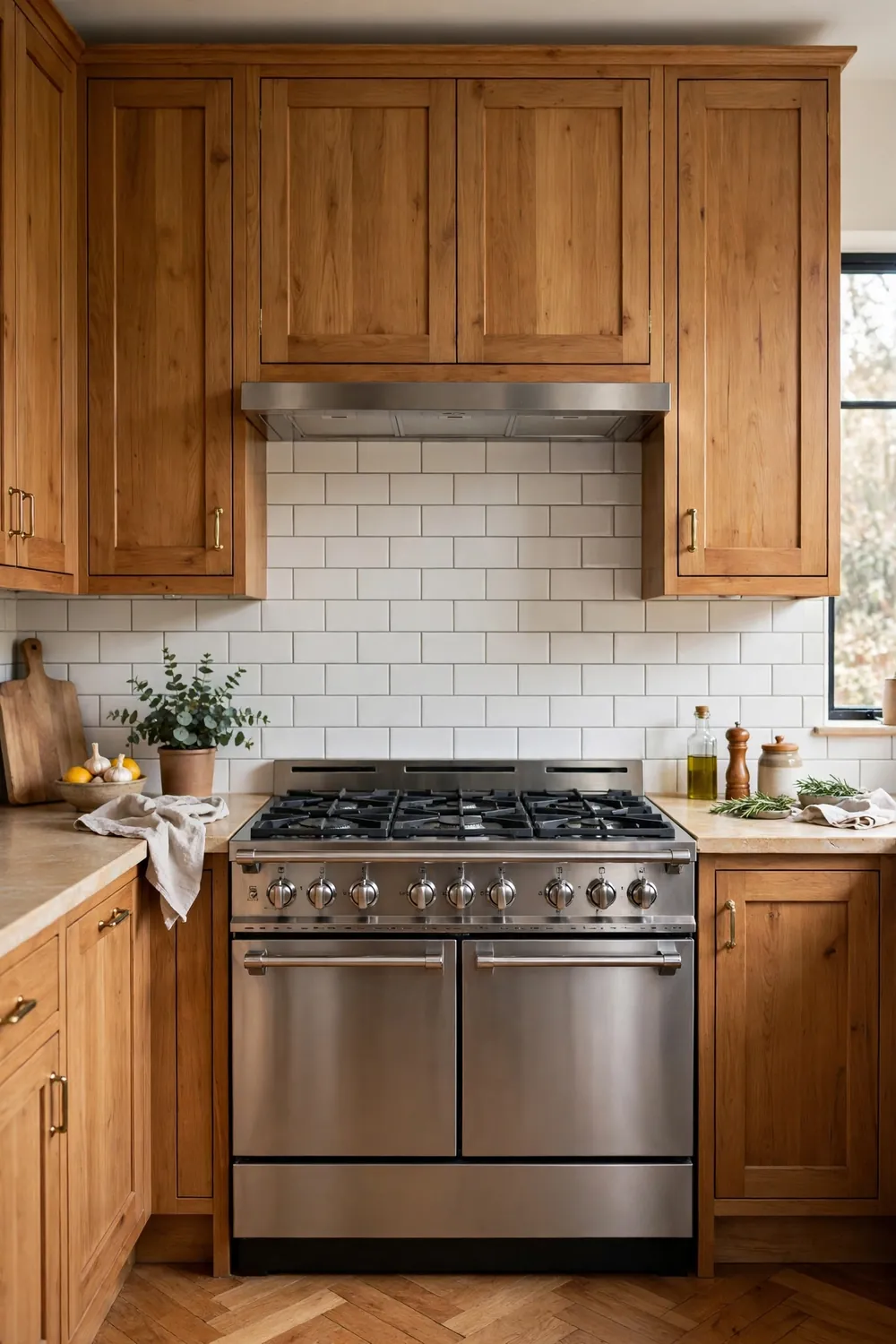
A wide range cooker is the boldest trend on this list, and the one I feel most sure about for people who actually cook. A freestanding range with a simple hood above it gives the kitchen a centre, and it gives you room for two pans and a pot at once, which a small hob never quite manages. In my kitchen, the range is where the eye lands first, and that is fine, because it is also where the work happens.
A range is a big buy, so I would not start there unless your cooker already needs replacing. I lived with a small hob for years, and I cooked around it, but I always wished for one more ring when friends came over. If you do buy a range, measure your doorways and your kitchen width first, because a range that cannot fit through the door is a problem nobody wants. I also keep the wall behind the range plain, so the cooker stands out, rather than competing with a busy tile.
Tip: Keep the area around the range clear of clutter. A focal point cooker surrounded by jars and packets stops being a focal point.
18. Style the Kitchen Table for the Season
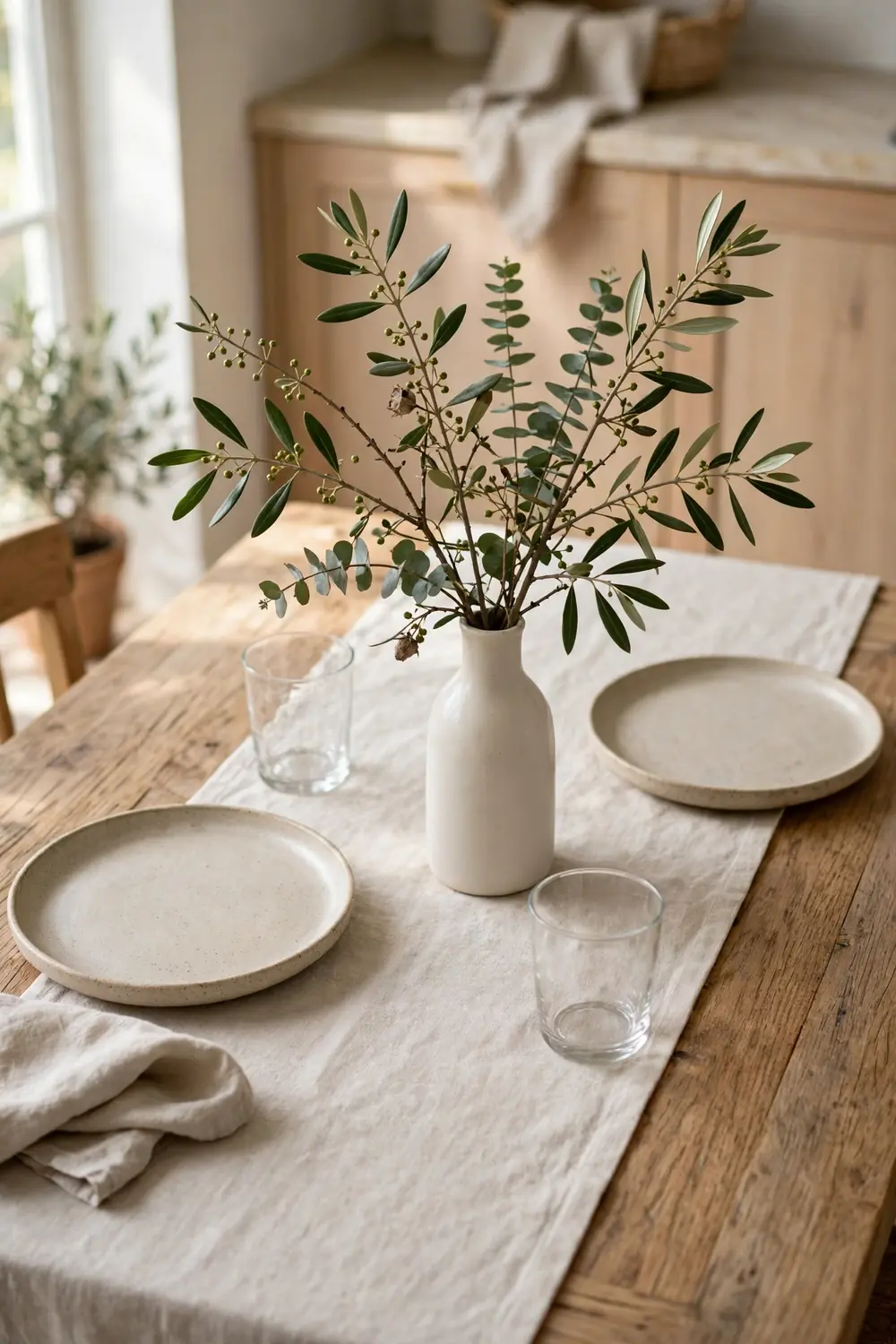
Styling the kitchen table for the season is the gentlest trend here, and the one that makes the room feel cared for without a renovation. I change a runner, a vase, and a few plates with the season, and the kitchen feels new, even though nothing big changed. In spring it is branches in a vase. In autumn it is a warm runner and a candle. The table stays the same, and the season does the work.
The key, I have learned, is to keep the table usable. A table dressed so heavily that nobody can eat at it is a display, not a table. I keep the centrepiece low, so people can talk across it, and I keep the runner plain, so the plates and the food stand out. The same idea works on a bigger table too, and these spring tablescapes show how a few personal pieces feel warmer than a full matching set.
Tip: Change one thing on the table with each season, not everything. One new runner or one new vase is enough to mark the season, and the table stays easy to use.
Frequently Asked Questions About Kitchen Trends
What is the biggest kitchen trend right now?
Warmth is the biggest shift I see. Warm wood, warm neutrals, brass details, and soft light are all pointing the same way, toward kitchens that feel comfortable to cook in, rather than kitchens that only photograph well. If you change one thing, change the lighting, because warm light makes every other trend in this list look better.
Do I need to follow every kitchen trend?
No, and I would not try. Trends are ideas to borrow from, not rules to obey. Pick the one or two that fix a real problem in your kitchen, like a dark corner or a cupboard you cannot reach into, and leave the rest. A kitchen that follows every trend at once usually looks like a shop display, while a kitchen that follows one trend well looks personal.
Are kitchen trends expensive to try?
Most of them are not, if you start small. Open shelves, a new handle, a herb pot, or a table runner cost far less than new cabinets, and those small changes are often the ones you notice most. I always start with the smallest version of a trend, live with it for a month, and only then decide if a bigger version is worth the money.
Will these kitchen trends still look good in a few years?
The warm, practical ideas in this list, deep drawers, clear counters, herbs by the window, and personal touches, have lasted in kitchens for a long time, because they are based on cooking, rather than novelty. Bolder ideas, like a very patterned tile or a very wide range, may date faster, so I try those in small doses first, where a change back is easy if I tire of them.
A kitchen trend is only useful if it makes cooking easier, and that is the test I use before I keep anything from this list. I have tried ideas that looked wonderful in a photo and felt wrong in my kitchen, and I have taken them down without feeling guilty, because a kitchen is not a magazine page. The best kitchen I have cooked in is not the one with the newest cabinets. It is the one where I can reach the pan I need, sit down with tea while something simmers, and not worry about a splash on the counter.
Pick one idea from this list that solves a small annoyance in your kitchen, a cupboard you dread, a counter with no room, a corner with no light, and try it this weekend. Live with it for a week, notice how you actually cook in the room, and then decide. If it makes an ordinary cooking day a little better, keep it. If it does not, change it back. A kitchen that grows one honest change at a time will always feel more like yours than a kitchen that was redone all at once to match a list.