
Introduction
I spent a long time thinking I had to pick one label for my home and then buy everything to match it, and that idea kept me stuck. I would look at room photos, love three different rooms for three different reasons, and then buy nothing because none of them matched the label I had chosen. Popular interior design styles are easier to use when you treat them as starting points, not as rules. You can borrow the light colours from one style, the wood from another, and the plant habit from a third, and still end up with a room that feels like yours.
This list covers the styles I hear about most, and the ones I have actually tried in small ways at home. I have not redone a whole house in any of these styles. I have changed a cushion here, a lamp there, and a whole corner when something finally clicked. If you are starting from a single room, pick the style that fixes a feeling you already have, a room that feels cold, dark, crowded, or bare, and you can always come back to The Inspire Rooms homepage to browse by room. Try one idea, live with it for a week, and then decide if it stays.
1. Scandinavian: Light Colours and Pale Wood
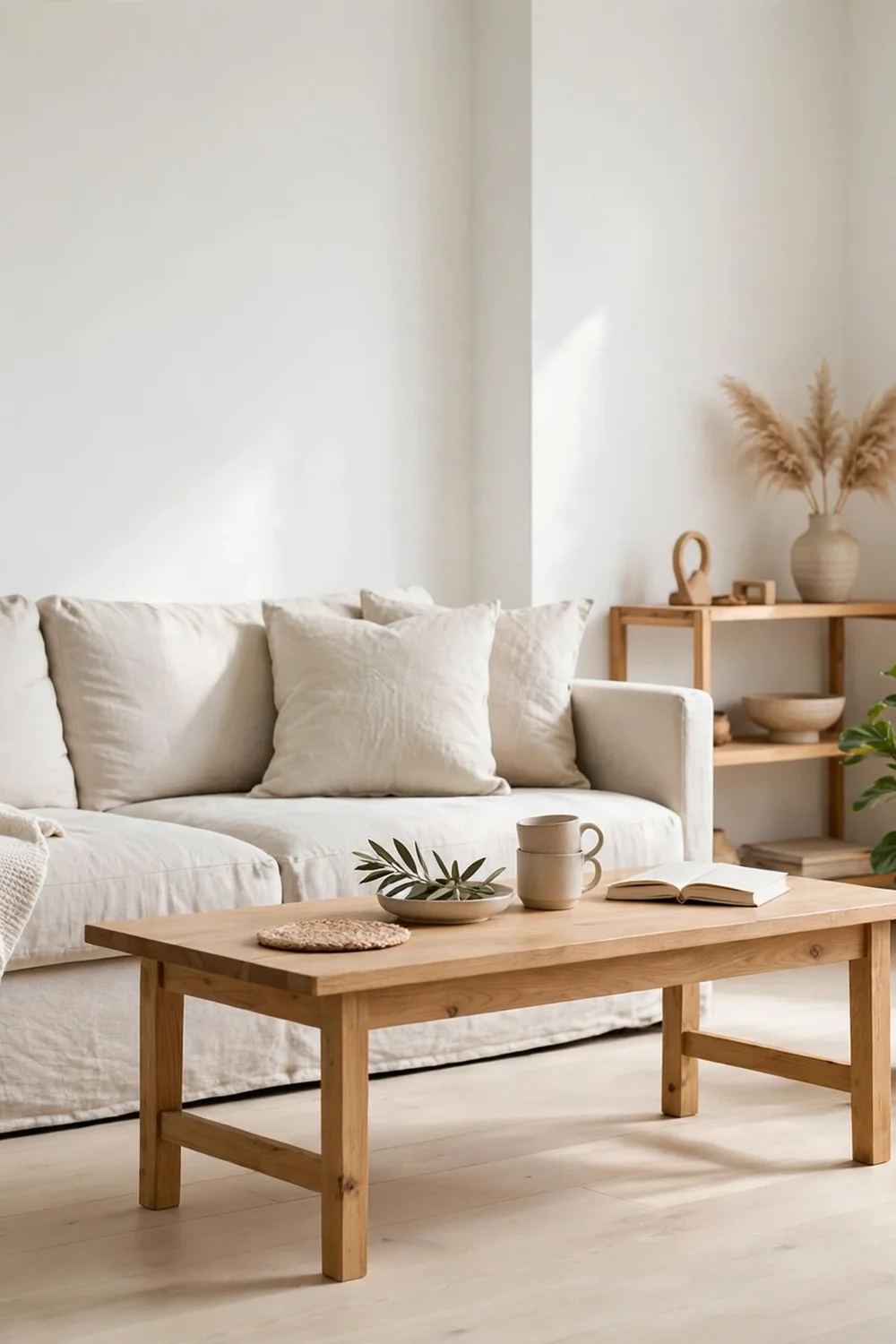
Scandinavian rooms are built around light, and that is why they work so well in rooms that feel dark. The walls stay pale, the floors are light wood, and the furniture sits low and plain, so daylight can move across the room without hitting a lot of heavy shapes. I tried this in a bedroom first, because our bedroom got the least morning light, and a white wall plus a pale wooden bedside table made the room feel awake in a way a darker colour never had. The room did not become empty. It became calm, and I noticed the calm most on busy mornings.
The mistake I made at first was thinking pale meant cold, so I added too much white and the room felt like a waiting area. Warmth in a Scandinavian room comes from texture, not from colour. A wool throw, a linen cushion, a wooden tray, and one green plant do more than a bright wall colour. I also learned to keep the floor clear, because a Scandinavian room loses its calm the moment shoes, bags, and laundry pile up by the door. For bedroom ideas that keep this light feeling without feeling bare, these spring bedroom ideas helped me keep the bed area soft rather than stark.
Tip: Add one warm texture for every pale surface. A cream throw on a white bed, or a wooden bowl on a white shelf, stops the room from feeling cold.
2. Japandi: Calm Rooms With Room to Breathe
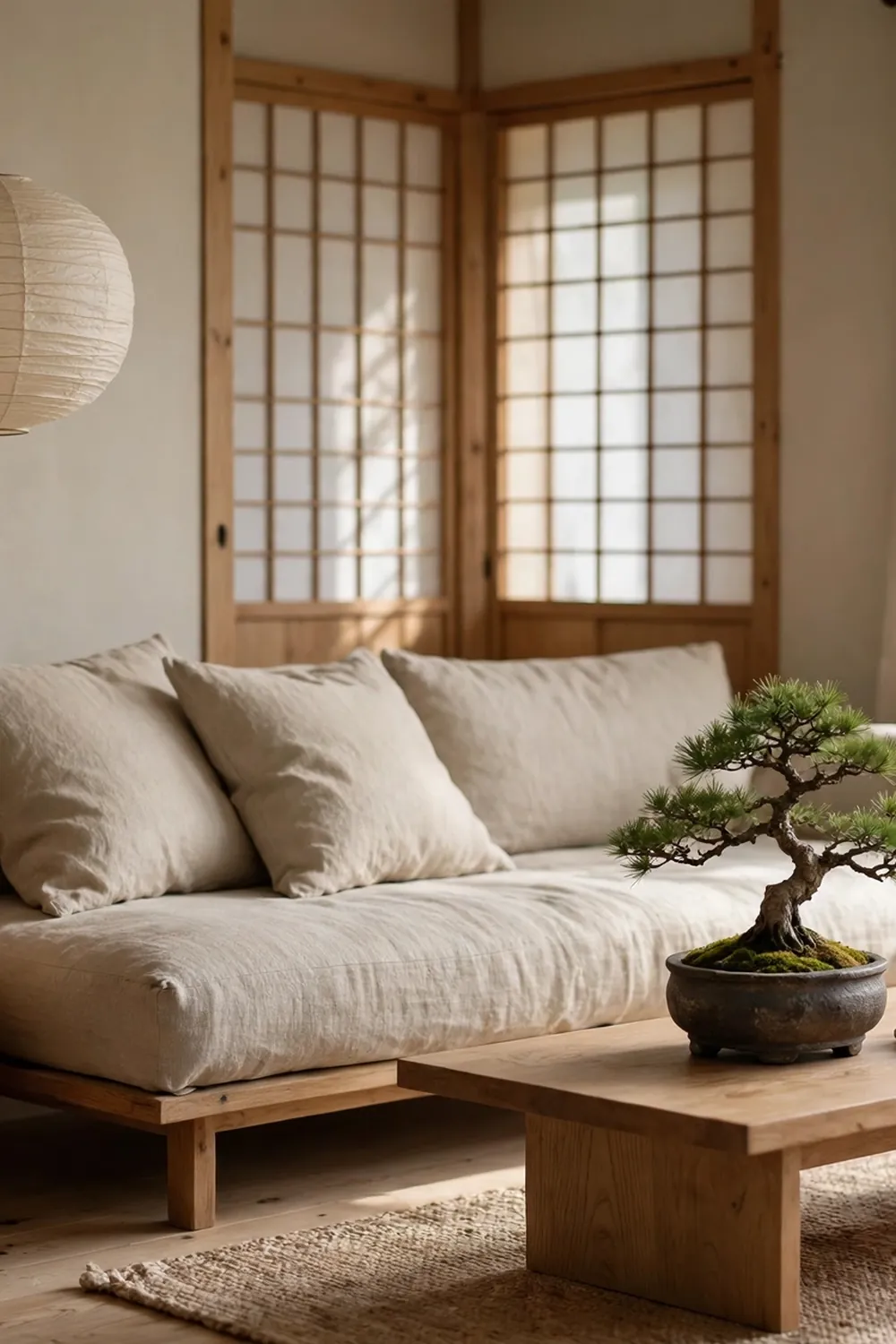
Japandi is the meeting point of Scandinavian lightness and Japanese simplicity, and in my own home it mostly means fewer things, chosen with more care. The furniture sits low, the colours stay muted, and there is empty space left on purpose, not because I ran out of things to put there. I cleared one shelf completely once, just to see what the room felt like, and I was surprised by how much easier it was to find the two things I actually used every day. The shelf stayed half empty after that, and nobody who visits has ever asked where the rest of the things went.
This style asks for patience, because it is tempting to fill a quiet corner the moment it looks bare. I keep a simple test now. If I cannot say what a thing is for, or why I like looking at it, it goes in a cupboard for a month. Most of those things never come back out, which tells me they were filling space, not adding to the room. Natural materials help here too. Wood, linen, clay, and stone age in a way that plastic does not, and a small crack in a clay pot has never bothered me the way a scuff on a shiny surface does.
Tip: Leave one surface in the room completely clear. A clear table or shelf makes the whole room feel calmer, even if the rest of the room is ordinary.
3. Modern Farmhouse: Warm, Simple, and Lived In
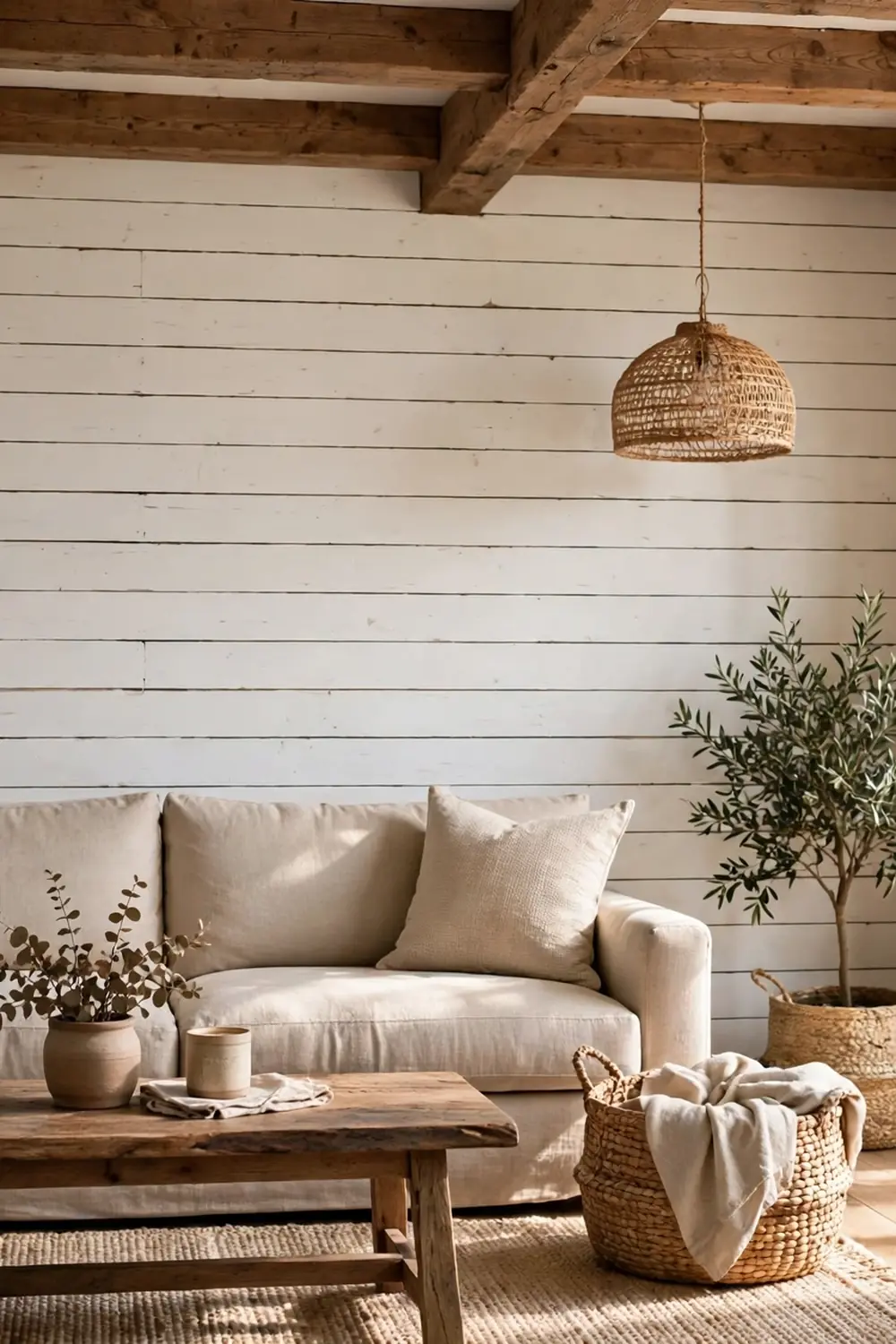
Modern farmhouse is the style I reach for when a room needs warmth but I do not want it to feel fussy. It mixes simple farmhouse shapes, like a wooden table and a linen sofa, with clean modern lines, so the room feels collected rather than themed. Our living room has a plain wooden coffee table that has survived years of mugs, books, and feet, and that table is the reason the room feels used in a good way. A room that looks too perfect makes me nervous about sitting down, and modern farmhouse avoids that by letting wood grain, woven baskets, and soft fabric do the talking.
I did once go too far with the farmhouse look, and the room started to feel like a set, all signs and baskets and no real life in it. I took down the decorative pieces that meant nothing to me and kept the ones I actually used, and the room relaxed immediately. That is my own take on this style now. It works best when the farmhouse pieces are useful first and decorative second. A basket that holds blankets is worth more than a basket that only sits on a shelf. The Architectural Digest guide to popular interior design styles is a good place to compare farmhouse with other styles side by side before you commit to a whole room.
Tip: Keep farmhouse details useful. A wooden crate that holds books, a basket that holds throws, and a tray that holds mugs will always look better than decorations with no job.
4. Coastal: Breezy Rooms Without a Beach Theme
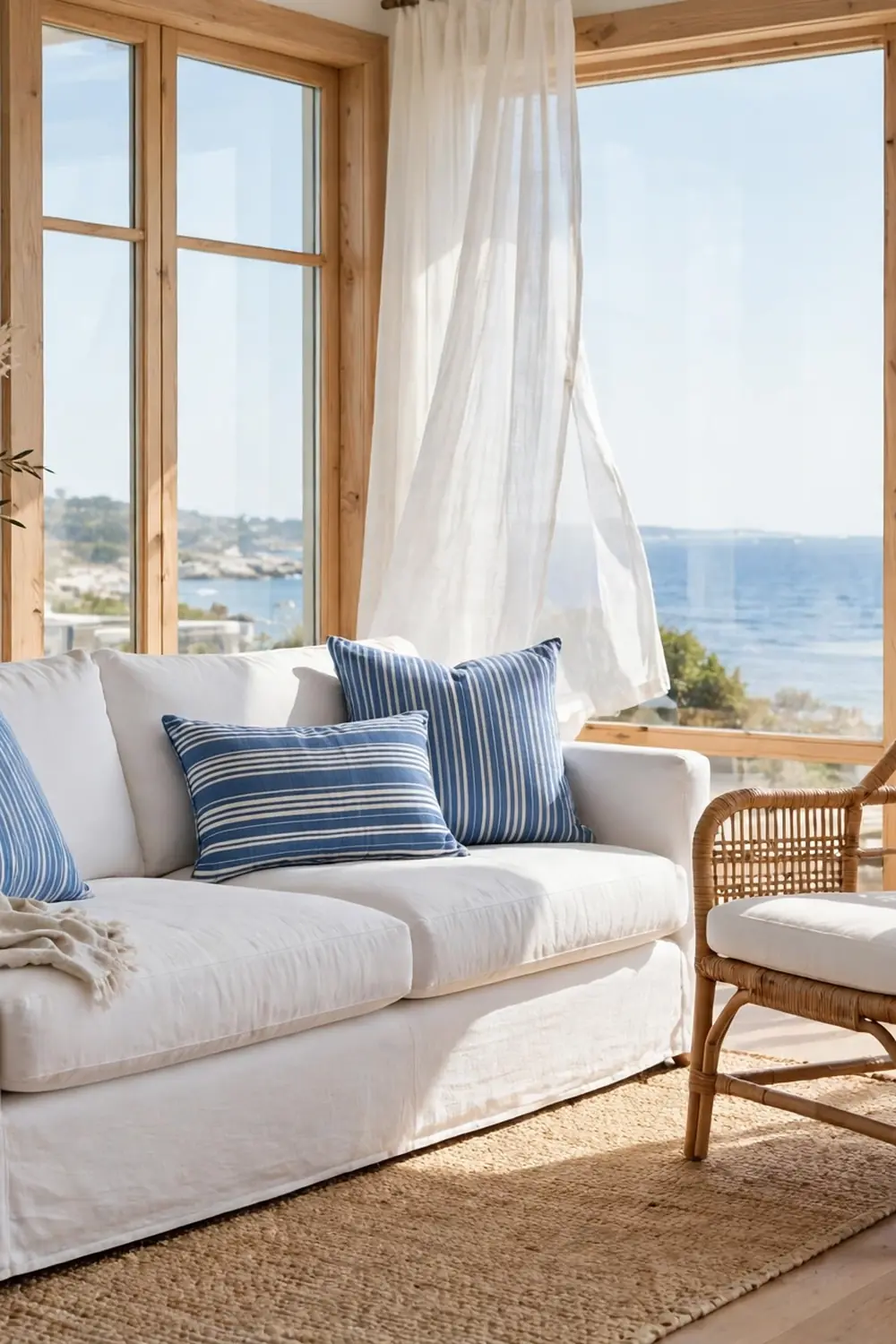
Coastal style, done well, feels like a breeze, not like a gift shop. The colours are white, sand, and soft blue, the fabrics are light, and the furniture is comfortable enough to sit in with wet hair after a shower. I tried a coastal corner in our brightest room, because that room already had good light, and a white slipcovered chair plus a blue striped cushion changed the whole mood without a single shell in sight. The room felt cooler in summer, which surprised me, because nothing about the temperature had actually changed. Light colours and open curtains did that work on their own.
The trap with coastal style is turning it into a theme, and I fell into it once with too many sea related decorations. I removed them one by one, and the room got better each time, which told me the style was never about the decorations. It was about light, air, and easy fabrics. Now I keep the blue to cushions and one throw, and I let the window do the rest. Rattan helps too, because it looks natural and it is light enough to move when I want to rearrange the room.
Tip: Use blue as an accent, not as a wall colour, unless your room gets strong daylight all day. A blue cushion is easy to change. A blue wall is not.
5. Boho: Collected, Colourful, and Comfortable
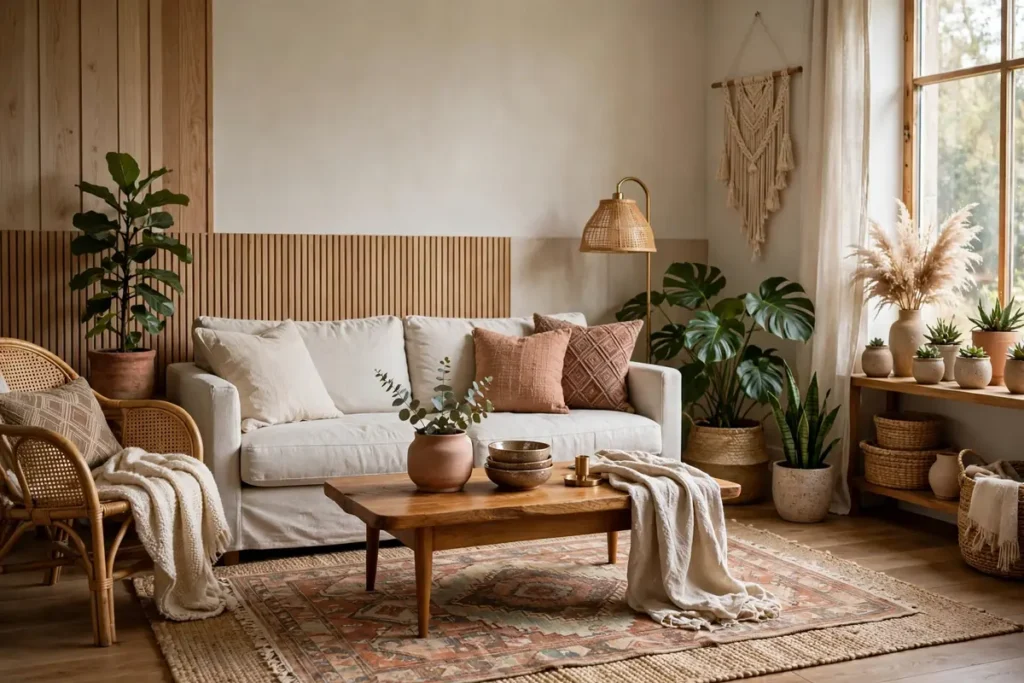
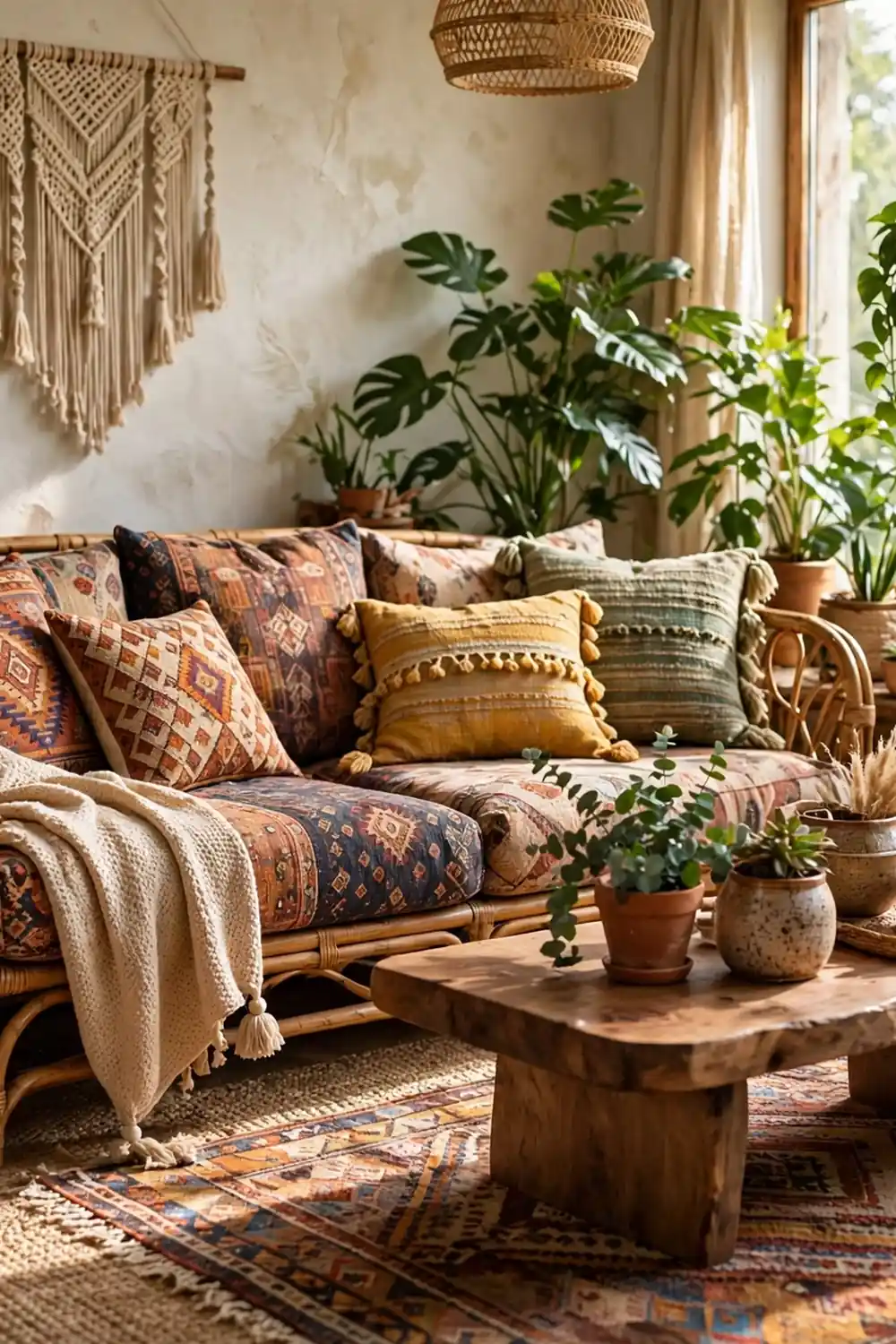
Boho is the style for people who collect things slowly and do not mind a room that looks a little uneven. Rattan, layered rugs, plants, and patterns from different places sit together, and the room feels personal because no two pieces were bought on the same trip. My boho corner started with a secondhand rattan chair, and everything else grew around it over time, a rug I already owned, a plant a friend gave me, and cushions I picked up one at a time. Nothing matches exactly, and that is the point. A boho room that matches too neatly stops looking boho and starts looking like a shop display.
The hard part is knowing when to stop, because boho makes it easy to keep adding. I use a simple rule now. If a new piece does not have a place to sit, and a job to do, it waits in another room for a week. Most of the time I forget about it, which means the room did not need it. Plants are the exception in my house. A boho room with plants feels alive, while a boho room without plants can feel dusty, so I keep the plants even when I edit everything else.
Tip: Pick one colour to repeat across your patterns. On our sofa that colour is rust, and it holds stripes, florals, and plain cushions together without making them match.
6. Minimalist: Fewer Things, More Calm
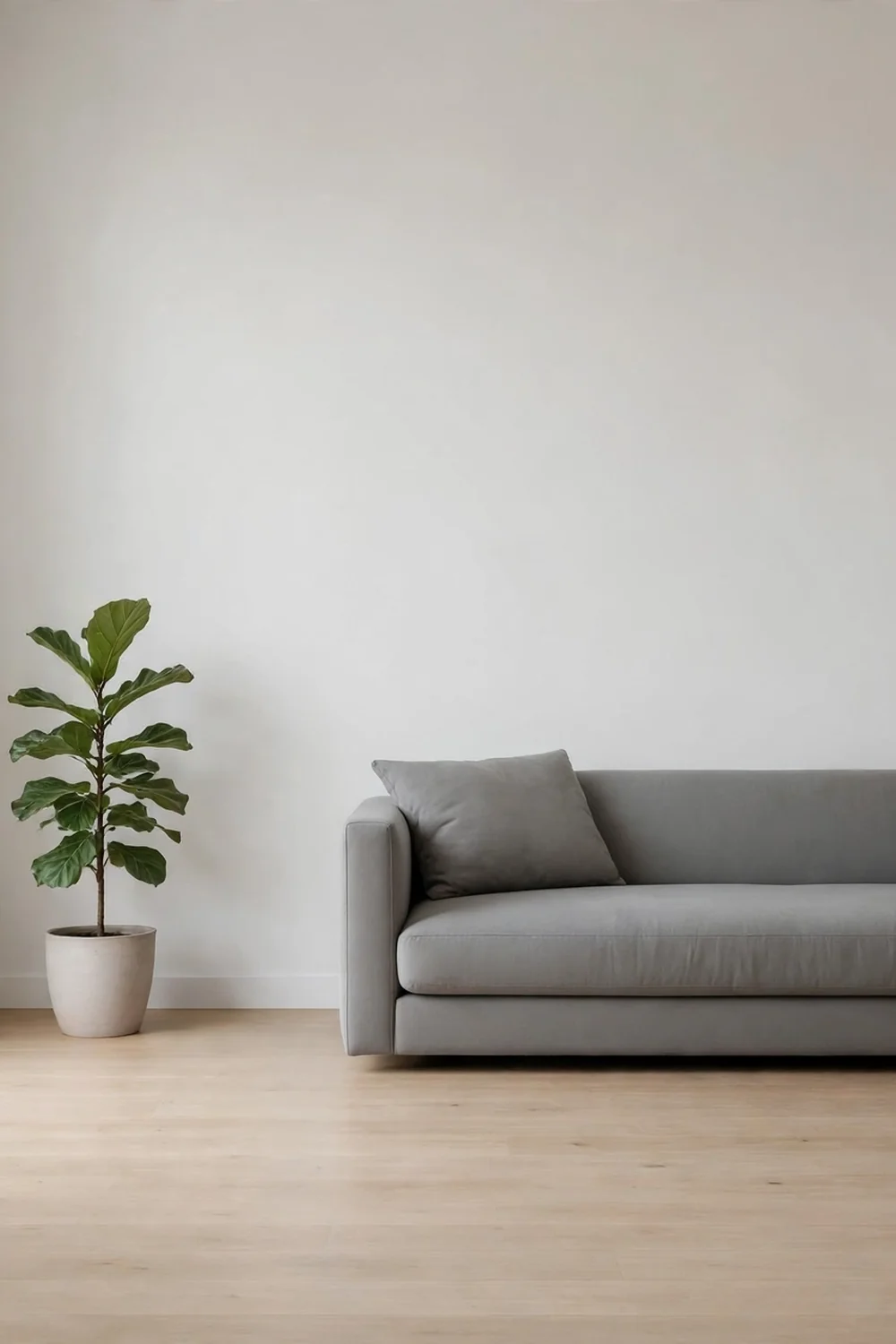
Minimalist rooms can look cold in photos, but in real life the good ones feel like a deep breath. The idea is simple. Keep what you use and love, and let the rest go, so the room has space to be quiet. I tried a minimalist corner in my workspace, because my desk had become a pile of papers, chargers, and things I meant to sort someday. Clearing it down to a lamp, a notebook, and a plant made it easier to start work in the morning, and I did not miss the pile at all. That taught me minimalism is less about owning nothing and more about owning on purpose.
This style is not for every room in my house, and I say that plainly. A minimalist kitchen works for me, because I cook better when the counters are clear. A minimalist bedroom feels too bare to me at night, when I want softness around me. So I use minimalism where it helps, and I leave it out where it does not. That is allowed, even if a style guide would call it inconsistent. A home should fit the person who lives in it, not the label on the style.
Tip: Start with one drawer, not one room. A drawer you can open without digging is a small win, and it shows you whether minimalism suits you before you clear a whole space.
7. Maximalist: More Colour, More Pattern, More Personality
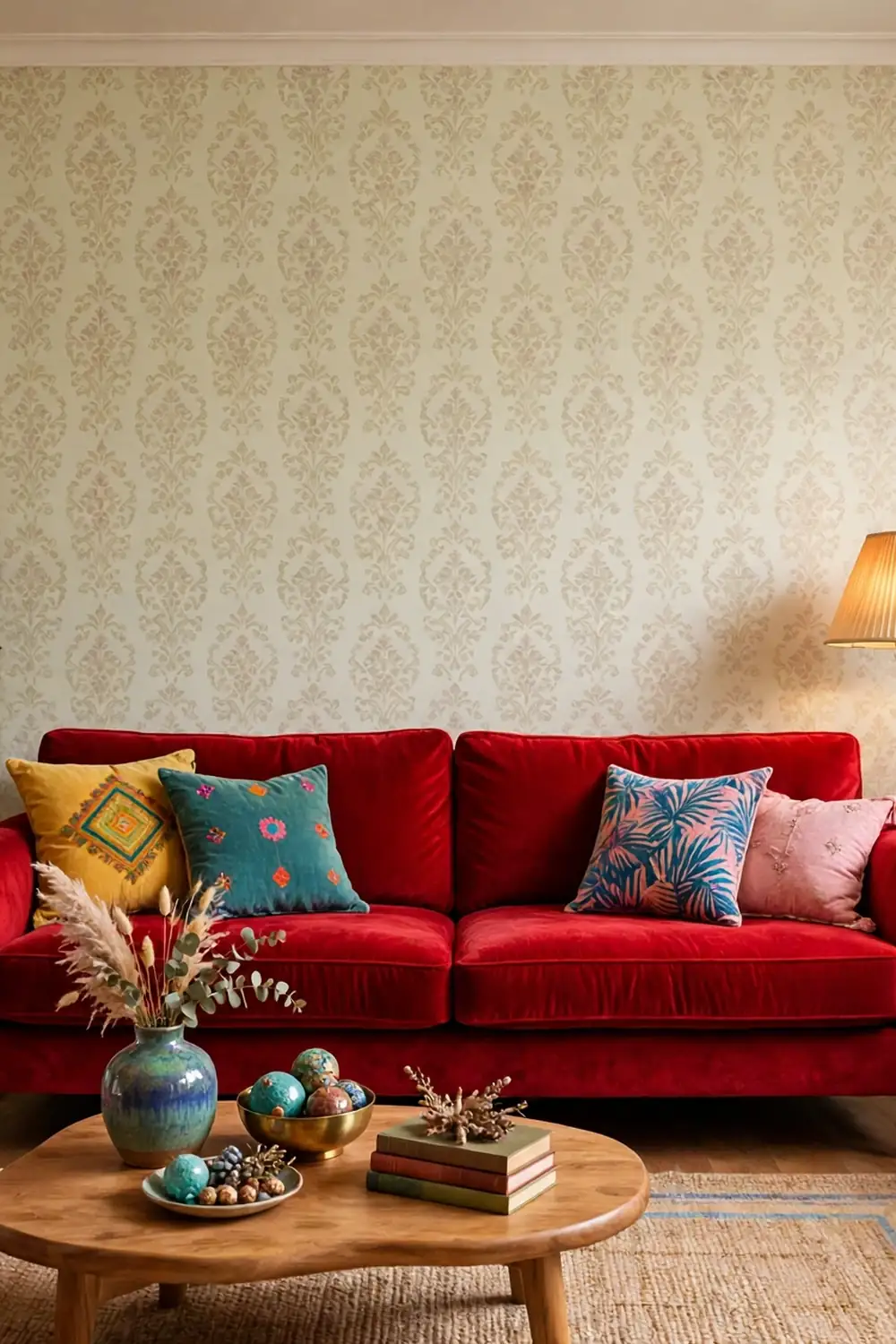
Maximalist style is the opposite of quiet, and I love it in small doses. Bold colour, layered patterns, art on the walls, and objects that mean something to the person who owns them all share one room, and the room feels full in a good way. I tried a maximalist wall in a hallway once, with framed prints I had collected over years, and the hallway stopped being a passage and became a place I actually paused in. The prints were not expensive or matching. They were things I had kept because I liked them, and seeing them together made sense in a way seeing them one at a time never had.
The risk with maximalism is clutter, and I have crossed that line myself. The difference, in my experience, is whether you can still see the wall, the floor, and the shape of the furniture. If every surface is covered and you cannot find a place to put a mug, the room has tipped from full to crowded. I edit maximalist rooms by taking one thing away, living with the room for a day, and then deciding if I miss it. Most of the time I do not, and the room breathes a little better for it.
Tip: Group maximalist pieces by colour family, not by type. Books, art, and cushions in the same warm tones look layered, while the same pieces in clashing brights look noisy.
8. Industrial: Brick, Metal, and Honest Materials
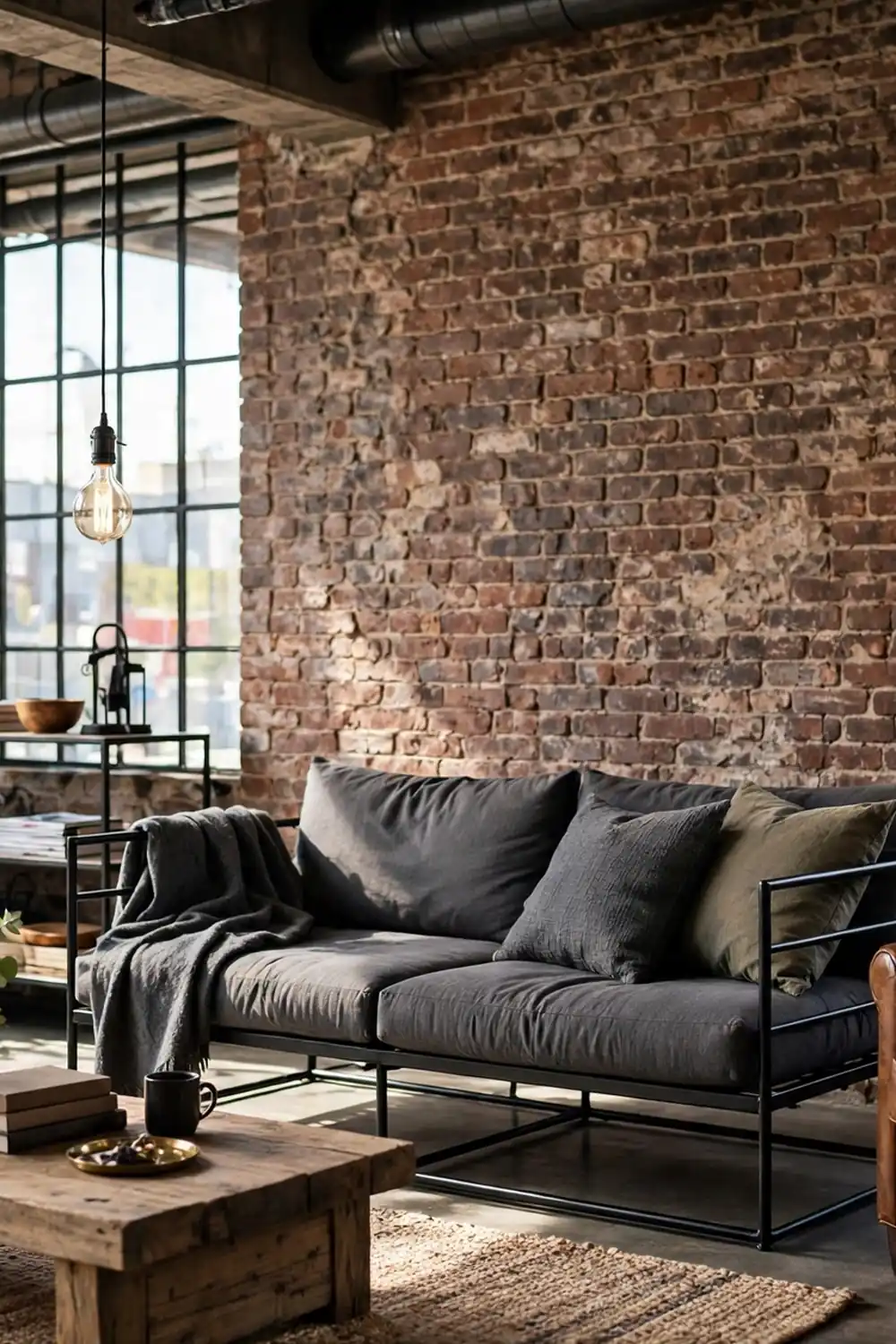
Industrial style takes its look from old workshops and warehouses, and it works because the materials are honest. Brick, metal, leather, and raw wood show their texture, and there is no attempt to hide how things are made. I liked this style the moment I sat on a leather chair in a room with a brick wall, because the room felt solid and unpretentious. Nothing in it was trying to look expensive. It just looked well made, and that feeling stayed with me long after I left.
This style can feel cold if you take it too literally, and my first attempt did. Black metal, grey walls, and no soft fabric made the room feel like a garage, and I avoided sitting in it in the evening. Adding a wool throw, a wooden table, and warm lamps fixed it without losing the industrial feel. The metal and brick stayed, but the room stopped feeling hard. That balance matters. Industrial style needs at least one soft thing in every corner, or it stops being a living room.
Tip: Pair every hard material with a soft one. Brick with wool, metal with leather, concrete with wood, and the room will feel industrial without feeling cold.
9. Mid-Century Modern: Clean Shapes and Warm Wood
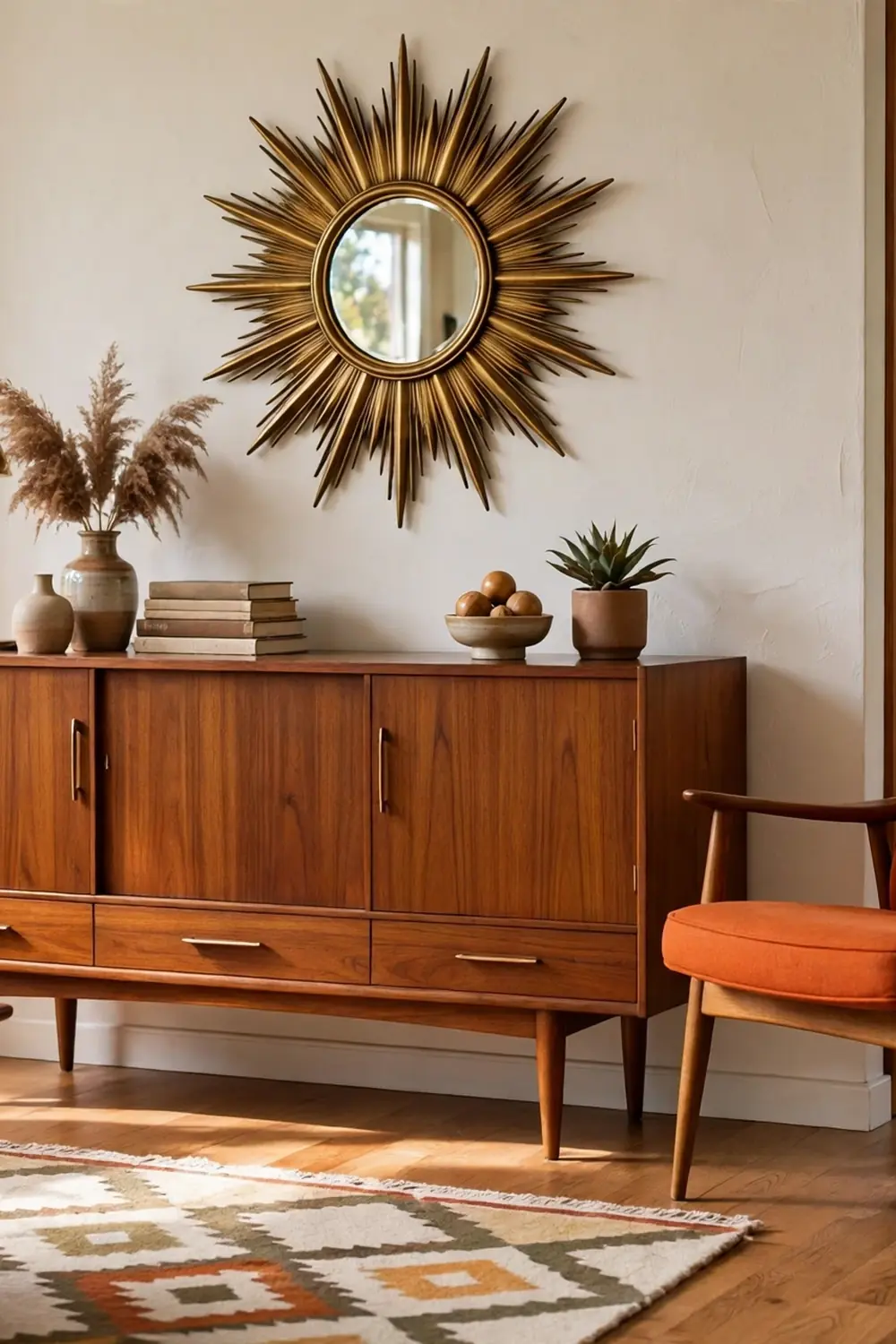
Mid-century modern is easy to recognise, even if you do not know the name. The furniture has clean lines, tapered wooden legs, and warm wood tones, and the shapes feel simple without feeling plain. I found a small teak sideboard at a charity shop years ago, and it is still one of my favourite pieces, because it holds a surprising amount and it looks good from every angle. The legs are the detail I notice most. They lift the furniture off the floor, which makes a small room feel bigger, and they give the whole piece a lightness that a heavy cabinet never has.
The mistake I see most with this style, and I made it myself, is buying too many matching pieces at once. A room full of mid-century furniture can feel like a museum, and a museum is not a comfortable place to watch television. One or two strong pieces, a sideboard or a chair, mixed with plain modern pieces, works better in my house. I also learned to check the size of a mid-century sofa before falling in love with it, because the low, long shapes that look wonderful in a large room can swallow a small one.
Tip: Start with one mid-century piece, not a whole set. A sideboard or a chair gives you the look, and the rest of the room can stay plain around it.
10. Traditional: Classic Shapes That Last
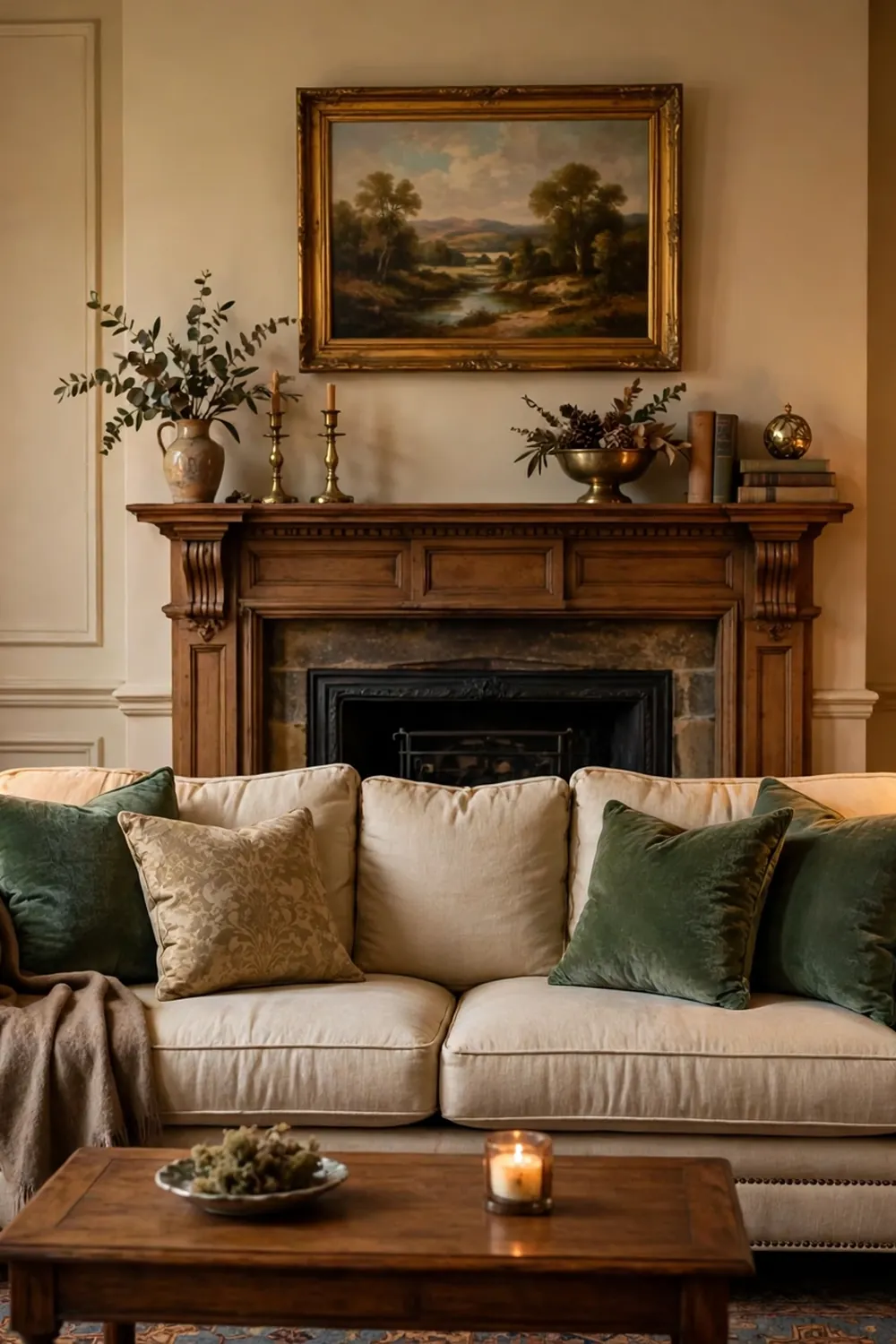
Traditional style is the one I grew up with, and it still feels like home to me. The furniture has classic shapes, rolled arms, wooden frames, and fabrics that feel substantial, and the room is arranged for conversation, not just for looking at. Our family room had a sofa that faced the fireplace, chairs that faced each other, and a rug that tied them together, and that layout taught me more about decorating than any style guide. People sat and talked in that room, because the furniture told them where to sit.
Traditional rooms can feel formal if you keep everything too matched, and I have seen that happen in houses where nobody dares to put a mug down. The fix in my own home was simple. I kept the classic shapes and the good wood, but I chose fabrics I could actually live with, and I let the room show signs of use. A fireplace mantel helps here too, because it gives the room a natural centre, and the same mantel thinking works in other rooms. These spring mantel decor ideas show how a mantel can anchor a room without making it feel stiff.
Tip: Keep the classic shapes, but choose washable, everyday fabrics. A traditional room you can actually live in will always look better than a perfect room nobody uses.
11. French Country: Soft, Rustic, and a Little Romantic
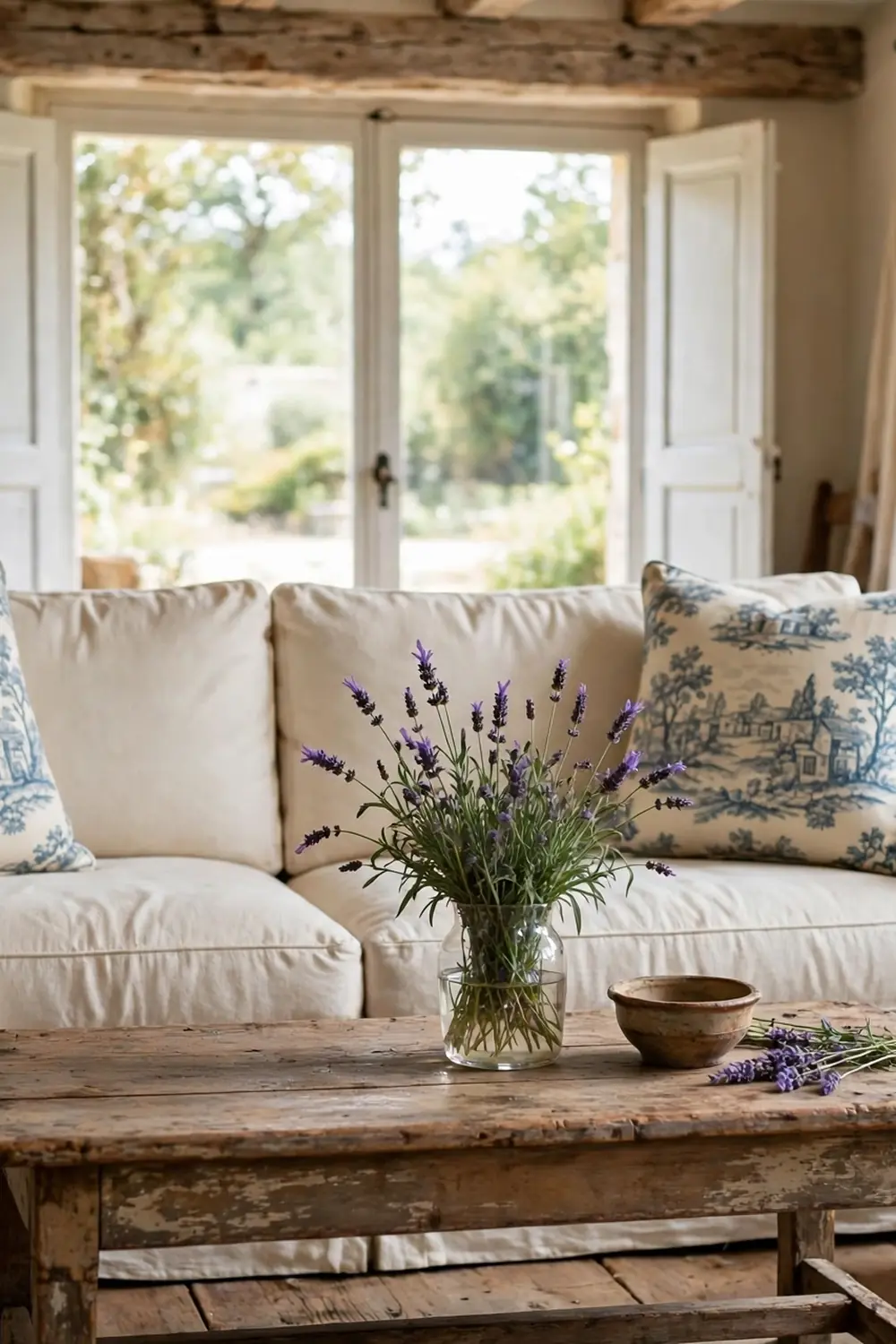
French country style feels like a farmhouse that learned to relax. The colours are cream, sage, and soft blue, the wood is distressed rather than polished, and the fabrics have gentle patterns that do not shout. I tried this style in a reading corner, because I wanted a chair that felt soft and a little romantic without feeling fancy. A cream cushion, a wooden side table with chipped paint, and a small vase of dried lavender did the job, and the corner became the place I reached for a book in the evening.
The trap here is buying too many matching French pieces at once, which can make the room feel like a theme park version of a cottage. I avoid that by mixing one or two French country pieces with plain furniture I already own. A distressed table next to a plain sofa looks collected. A whole room of distressed furniture looks staged. I also learned that cream fabric needs to be washable, because a cream chair in a real house will meet tea, pets, and muddy shoes sooner or later, and a chair you are afraid to sit in is not a good chair.
Tip: Use lavender, sage, or soft blue as your accent colour, and keep the rest cream and wood. One accent colour keeps French country soft. Three make it busy.
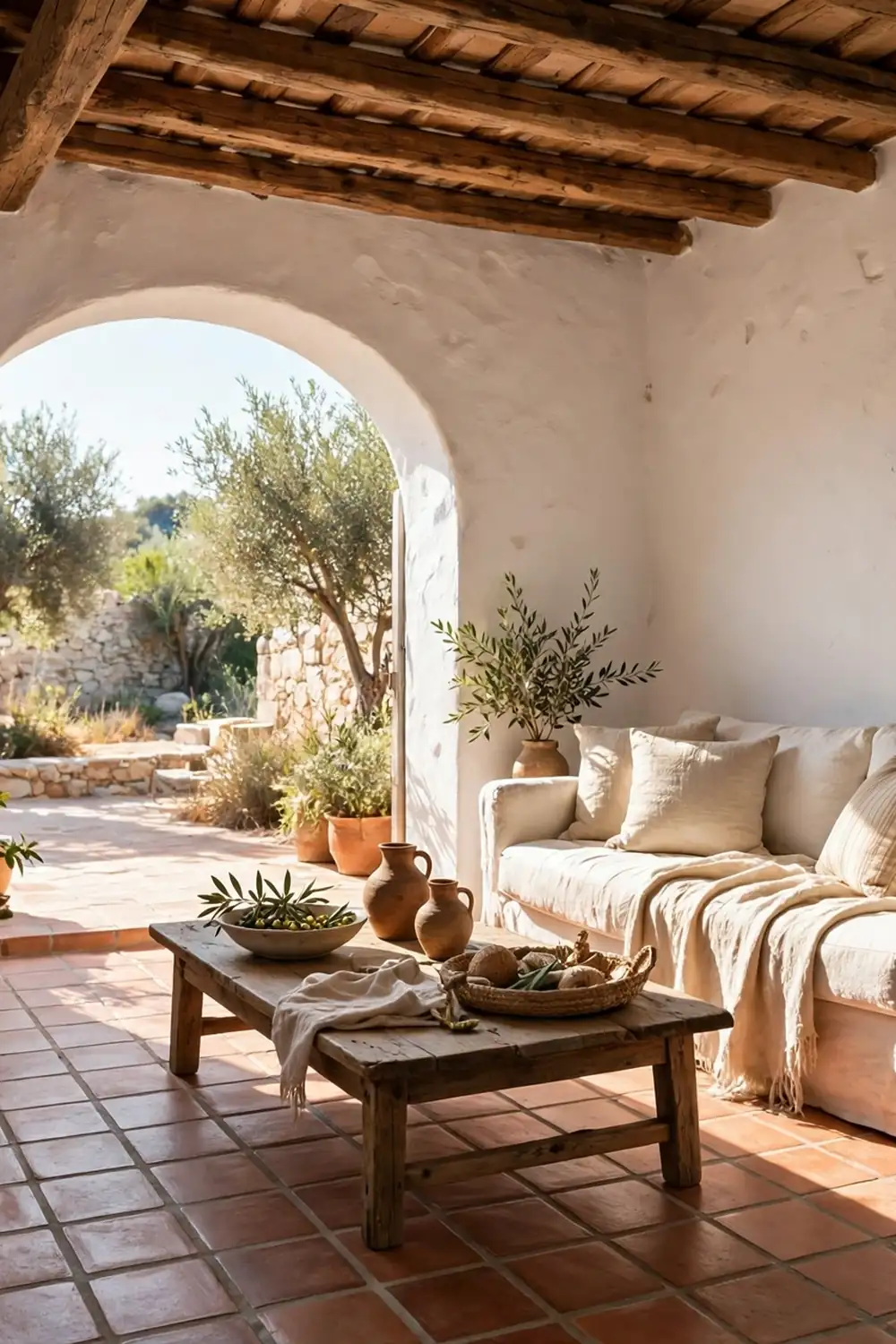
12. Mediterranean: Warm Plaster, Terracotta, and Sun
Mediterranean style brings the warmth of southern Europe indoors, and it starts with materials that feel sun baked. Terracotta tiles, white plaster walls, wooden beams, and wrought iron details all work together, and the room feels warm even on a grey day. I tried a Mediterranean corner in our sunniest room, because that room already had the light this style needs, and a terracotta pot, a wooden tray, and a linen throw made the corner feel like a holiday without changing a single wall. The light did most of the work, and the materials just helped it along.
This style needs sunlight, and I say that plainly, because a Mediterranean room in a dark, north facing space can feel heavy instead of warm. If your room does not get much sun, try the style in a smaller way, with terracotta pots and warm wood, rather than painting a whole room in deep warm colours. A table set for a long meal is where this style shines in my house, because Mediterranean rooms are made for gathering, and a table with room for everyone matters more than a perfect wall colour. For table ideas that keep that gathered feeling, these spring tablescapes show how a few warm pieces on a table feel welcoming without a full room redo.
Tip: Start with terracotta and wood, not with paint. Pots, trays, and wooden bowls give you the Mediterranean warmth, and you can move them if the room feels too dark.
13. Rustic: Rough Wood, Stone, and a Fire
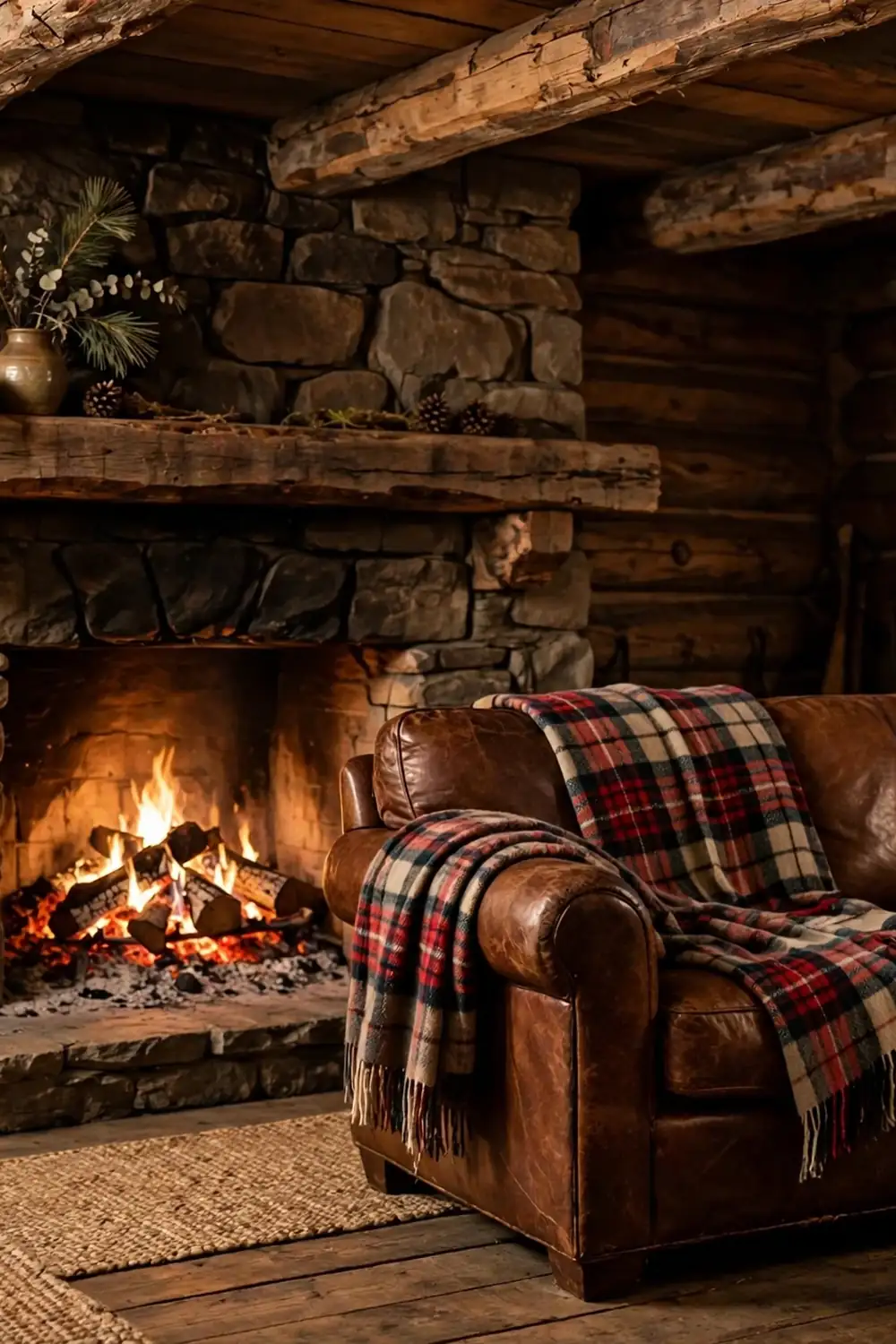
Rustic style is about nature brought indoors without smoothing away all the rough edges. Rough wood, stone, leather, and wool all show their texture, and the room feels sturdy, like it could handle muddy boots and a wet dog without complaint. I love a rustic room on a cold evening, because a stone fireplace, a wool throw, and a wooden table make the room feel like shelter in the best sense. Nothing in a good rustic room feels fragile, and that is a relief when you have guests who actually live in a house rather than just look at it.
The mistake I made with rustic style was thinking rough meant unfinished, and my first attempt looked more like a building site than a living room. The fix was to keep the rough materials but add comfort on top of them. A rough wooden table needs a soft chair. A stone wall needs warm light. A leather sofa needs a wool throw within reach. Rustic style works when the room feels warm and lived in, not when it feels like you are camping indoors.
Tip: Add warm light to every rustic corner. A lamp with a warm bulb softens stone and rough wood in a way daylight alone cannot.
14. Art Deco: Bold Geometry and a Little Glamour
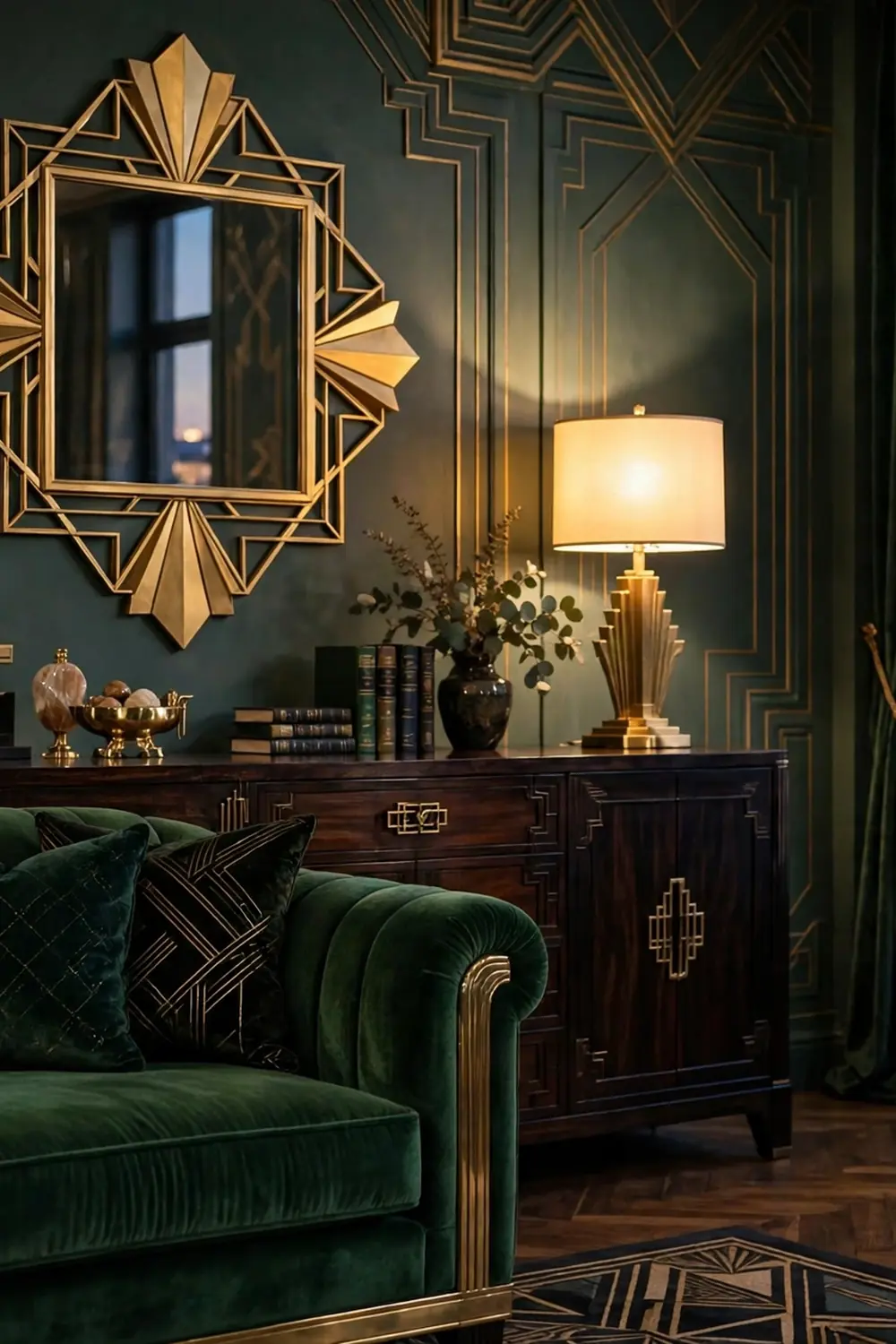
Art Deco grew out of early twentieth century design, and you can spot it by its bold geometry, rich colours, and touches of gold. Emerald velvet, brass, mirrored surfaces, and fan shapes all belong here, and the room feels a little glamorous without feeling overdone. I tried Art Deco in a small way first, with a brass lamp and a geometric mirror, because I did not want to commit to a whole velvet sofa before I knew if the style suited me. The lamp changed the evening light in the room, and the mirror made the wall feel finished, and that was enough to tell me the style was worth keeping in small doses.
This style needs restraint, and I learned that the hard way by adding too much gold at once. One brass piece glows. Five brass pieces compete, and the room starts to feel like a hotel lobby. I keep Art Deco to a lamp, a mirror, or a single velvet cushion now, and I let plain furniture do the rest of the work. That way the glamour feels intentional, not loud, and the room still feels like a place to sit down.
Tip: Choose one metallic finish and one bold colour for an Art Deco corner. Brass with emerald, or gold with navy, looks deliberate. Mixed metals and mixed brights look confused.
15. Contemporary: Clean, Current, and Easy to Live With
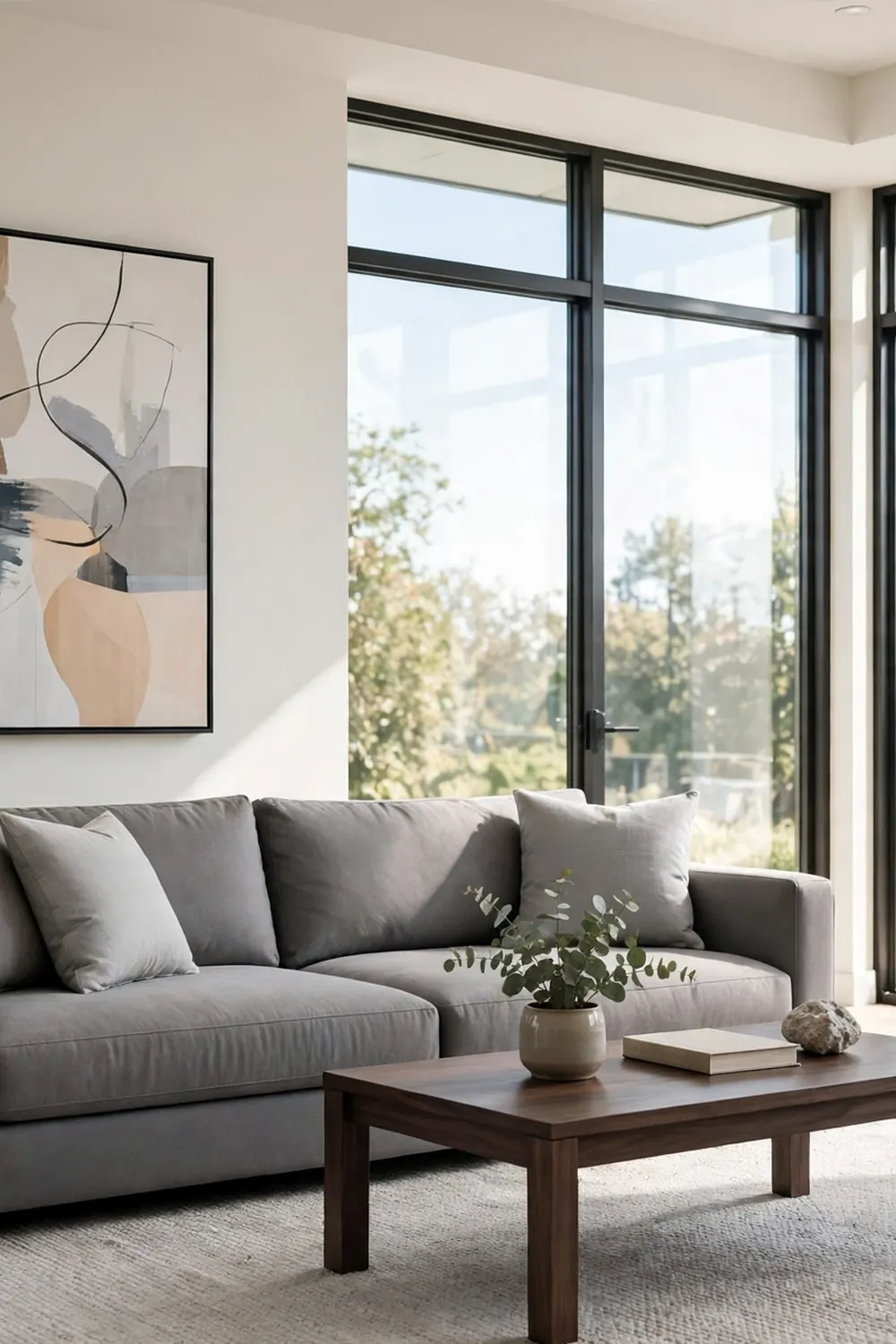
Contemporary style means the look of right now, not a fixed period, and that is why it keeps changing. The shapes are clean, the colours are often neutral with one bold accent, and the furniture is chosen for comfort as much as for looks. I like contemporary rooms because they are easy to update. A new cushion, a new piece of art, or a new lamp can change the room without changing the sofa, and that suits a house where tastes change slowly over time. Our living room leans contemporary for exactly that reason. It is a plain, comfortable base that lets me try other ideas without starting over.
The risk with contemporary style is that it can feel bland if every choice is safe. I fixed that in my own room by adding one bold piece of art that I actually love, not one I thought I should love. The art is the first thing visitors notice, and it gives the whole room a point of view. Without it, the room was clean but forgettable, and I did not realise that until I hung something with real colour on the wall. The Homes and Gardens interior design ideas are a useful place to see how contemporary rooms use one bold piece to avoid feeling plain.
Tip: Give a contemporary room one bold focal point, a piece of art, a coloured chair, or a patterned rug, and keep everything else calm around it.
16. Transitional: Classic Comfort With Modern Lines
Transitional style sits between traditional and contemporary, and it is the style I recommend most to people who cannot decide between the two. The furniture has classic shapes, but the lines are cleaner, the colours are neutral, and there is less decoration than a fully traditional room. I ended up with a transitional living room almost by accident, because I kept a classic sofa I loved and paired it with a plain coffee table and simple lamps, and the room felt both comfortable and current. It did not look like a style from a catalogue. It looked like a room that had grown up sensibly.
This style works best when you do not force it. If you try to make every piece perfectly transitional, the room can feel bland, because nothing stands out. I keep one piece with character in a transitional room, a wooden table with visible grain, or a lamp with a shape I like, and I let the rest stay plain. That one piece stops the room from feeling like a showroom, and it gives visitors something to notice without shouting for attention.
Tip: Mix one classic piece with one modern piece in each corner. A classic sofa with a modern lamp, or a traditional table with clean chairs, is transitional without trying too hard.
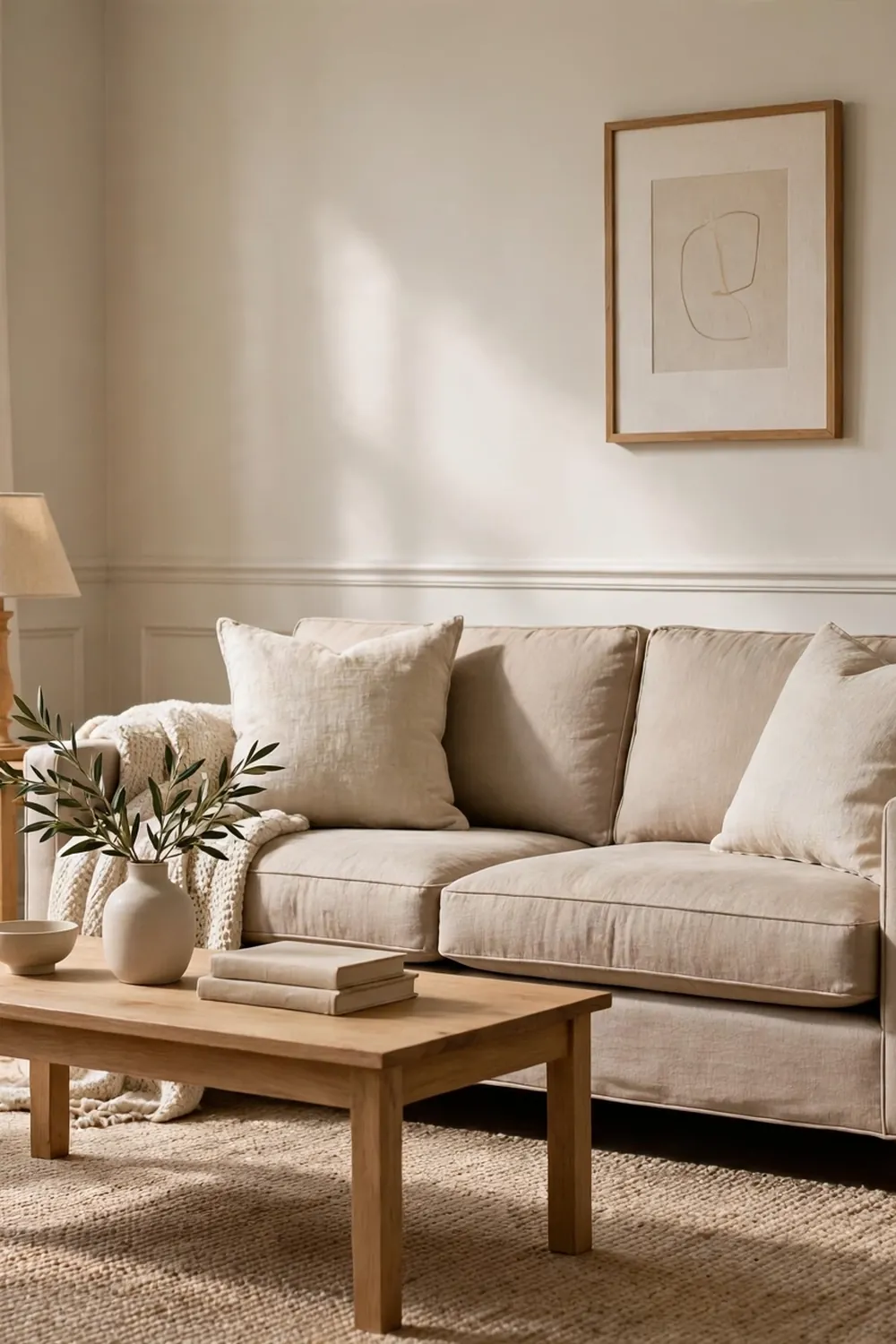
17. English Cottage: Florals, Books, and Cosy Corners
English cottage style is cosy in the truest sense, and it reminds me of houses where the kettle is always on. Floral fabrics, wooden furniture, bookshelves, and small collections all share the room, and nothing feels too precious to use. I tried this style in a small sitting room, because that room already had a fireplace and a bookshelf, and a floral cushion plus a teapot on the table made it feel like a place to stay a while. The room did not need new furniture. It needed warmth, and the floral pattern plus the books gave it that.
The hard part with English cottage style is keeping it cosy rather than cluttered, and I have tipped over that line myself. A bookshelf full of books is cosy. A bookshelf full of books plus ornaments plus papers plus things I meant to put away is not. I edit this style by keeping what I read and love, and moving the rest to a cupboard. The floral pattern also needs a plain partner, or the room can feel busy. A floral sofa with plain curtains works. A floral sofa with floral curtains and a floral rug does not, at least not in a small room like mine.
Tip: Pair every floral piece with a plain one. A floral cushion on a plain sofa, or a floral curtain with a plain rug, keeps the cottage feeling cosy instead of busy.
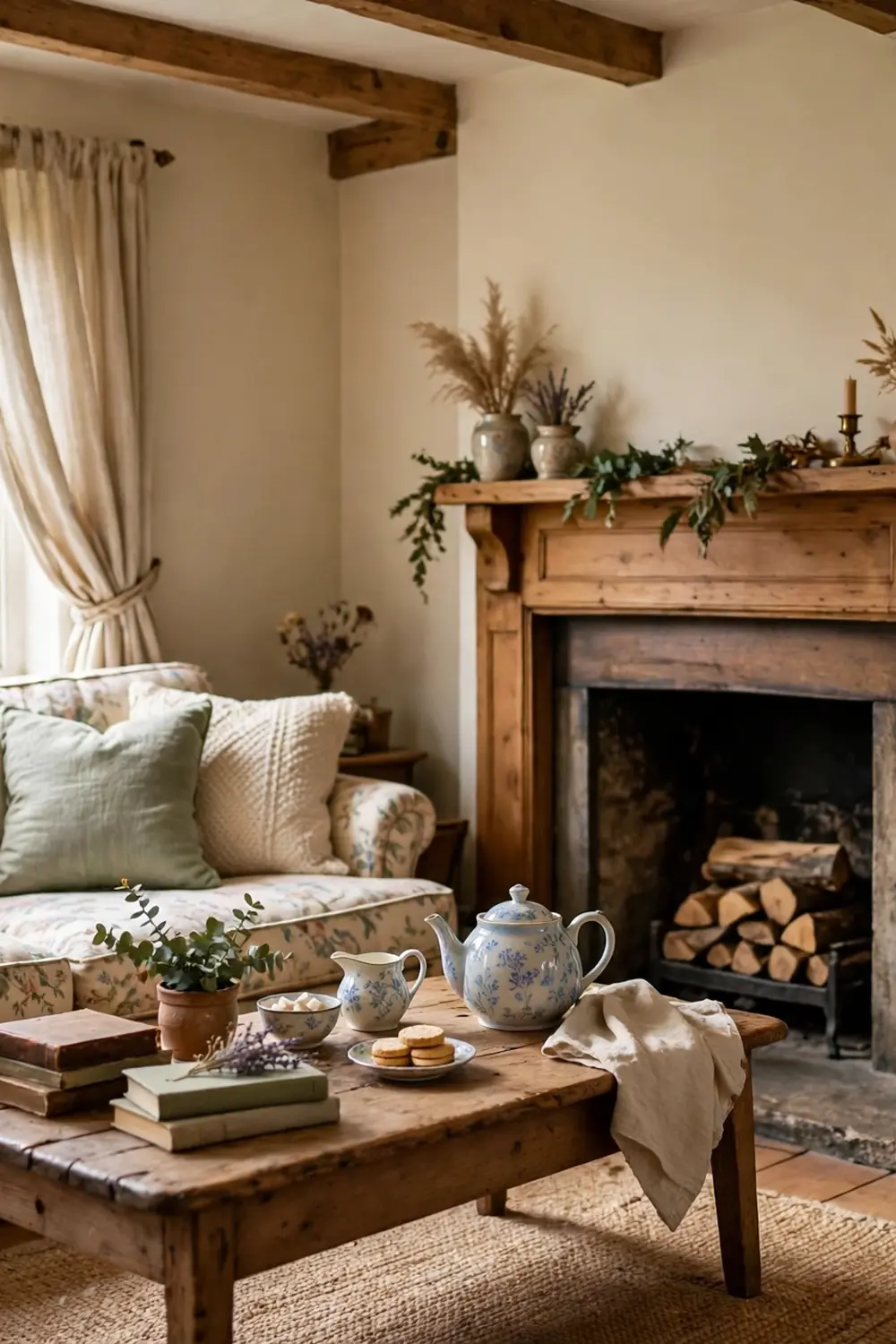
18. Eclectic: Your Pieces, Mixed on Purpose
Eclectic style is the one I end up with most often, even when I start with another style in mind. It means mixing pieces from different styles on purpose, because you like them, not because they match. A vintage chair next to a modern sofa, a colourful rug under a plain table, and art from different years on one wall can all work together, as long as there is something holding them together. In my house that something is usually colour. I keep one warm colour running through the room, and the different styles feel like a collection rather than a mistake.
Eclectic style is often misunderstood as having no rules, and that misunderstanding caused my worst decorating mistake. I once put every piece I liked into one room, and the room felt like a storage unit, because there was no thread connecting them. Now I use a simple test before adding a piece. Does it share a colour, a material, or a mood with at least two things already in the room? If it shares nothing, it waits in another room. That test has saved me from more bad purchases than any style guide, and it is the reason my eclectic rooms now feel intentional instead of accidental.
Tip: Give an eclectic room one thread, a colour, a wood tone, or a material, and check every new piece against it. One thread holds different styles together. No thread, and the room falls apart.
Frequently Asked Questions About Popular Interior Design Styles
How do I choose an interior design style for my home?
Start with a room you already live in, not with a style name. Notice what bothers you about that room, whether it feels dark, cold, crowded, or bare, and pick the style that fixes that feeling first. A dark room suits Scandinavian light colours. A crowded room suits minimalist editing. A bare room suits boho layering. Live with one change for a week before you buy more, and you will learn more from that week than from a whole day of looking at photos.
Can I mix two interior design styles in one room?
Yes, and most homes do, whether they mean to or not. Mixing works best when the styles share something, like a colour, a wood tone, or a love of natural materials. Scandinavian and Japandi mix well because both love light and wood. Traditional and transitional mix well because they share classic shapes. A room that mixes styles with nothing in common can feel unsettled, so pick one thread and let it run through the room.
Which interior design style is easiest on a small budget?
In my experience, the easiest styles to start cheaply are Scandinavian, minimalist, and boho, but for different reasons. Scandinavian needs light paint and one wooden piece, not a whole new room. Minimalist needs editing, which costs nothing, before it needs buying. Boho grows slowly, one secondhand piece at a time, which suits a tight budget. The style that costs most to start quickly is usually the one that needs a whole matching set at once, so avoid buying a full set in any style on day one.
Do I need to follow one style in every room?
No, and I would not try. Rooms have different jobs, different light, and different sizes, so they can wear different styles and still feel like one home. What holds a house together is usually a repeated colour, a repeated wood tone, or a repeated habit, like plants in every room or art at the same height. If those threads run through the house, a coastal bedroom and a traditional living room can sit side by side without clashing.
A style is only useful if it makes your home easier to live in, and that is the test I use before I keep anything from this list. I have tried rooms that looked wonderful in a photo and felt wrong in my house, and I have taken them down without feeling guilty, because a home is not a magazine page. The best room I have is not the one with the newest furniture. It is the one where I can sit with a book in the evening, put my feet up, and not worry about creasing a cushion or moving a vase out of place.
Pick one style from this list that answers a real annoyance in your home, a dark corner, a cold floor, a chair nobody uses, and try it in one corner this weekend. Live with it for a week, notice how you actually use the room, and then decide. If it makes an ordinary evening a little better, keep it. If it does not, change it back. A home that grows one honest change at a time will always feel more like yours than a home that was redone all at once to match a list.