
Introduction
My bedroom used to look tidy and a little bit boring, and I told myself that was the price of keeping it calm. Then I stayed in a friend’s spare room that was full of colour, plants, cushions, and pictures that did not match at all, and I slept better there than I had in my own neat room for months. That room taught me something I had missed. A boho maximalist bedroom is not about buying more stuff. It is about letting the things you already love stay visible, all at once, in a room that still lets you breathe.
I am not going to pretend this style works by magic, because it does not. I have made a boho maximalist bedroom look messy twice, once by adding too much at once and once by using colours that fought each other all day. The 18 ideas below are the ones that fixed those mistakes for me, one small change at a time. You can always come back to The Inspire Rooms homepage to browse by room, but start here with the bed, because that is where this style either works or falls apart.
1. Layer the Bed Until It Looks Slept In
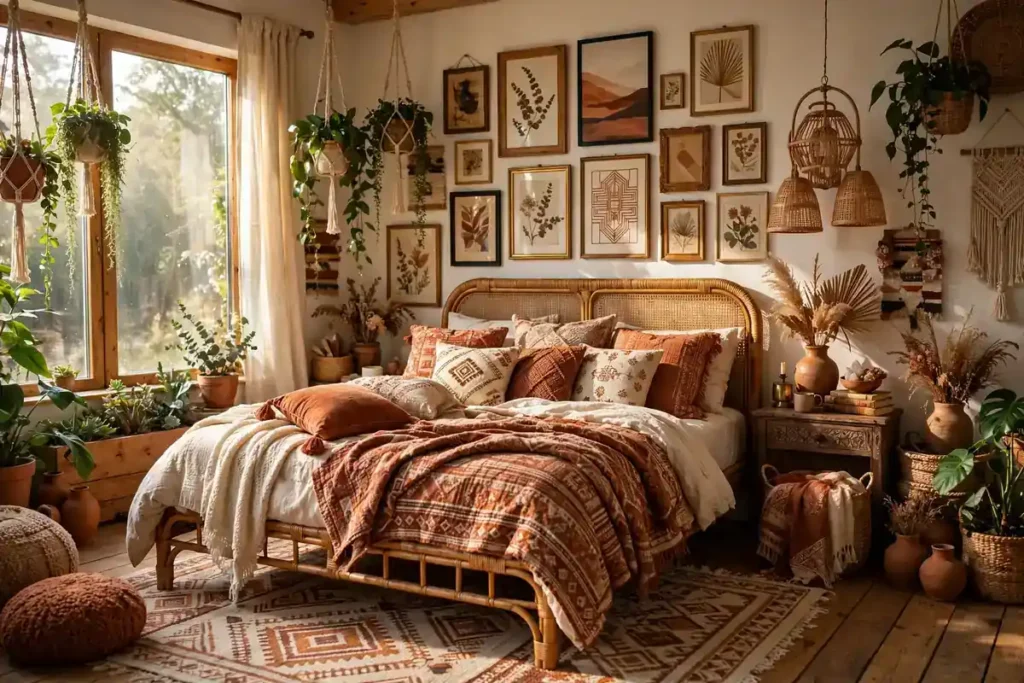
A boho maximalist bedroom starts with a bed that looks inviting before you even get into it. Mine has a rust quilt, a cream knit throw tossed across the foot, and cushions in patterns that share rust and cream but do not match. I stopped trying to make the bed look like a shop display years ago. A bed that looks a little bit rumpled tells you it is a place to rest, not a place to admire from the doorway.
The trick is to layer in an order you can repeat every morning without thinking about it. I put the fitted sheet down, then the quilt, then the throw, then the cushions, largest at the back and smallest at the front. That order takes me about two minutes, and it holds all day. If you want more bedroom layering ideas that keep the same soft feeling, these spring bedroom ideas helped me when my own bed still felt flat and cold.
Tip: Keep one throw within reach of the bed, not folded in a cupboard. A throw you can pull up without getting out of bed gets used. A throw in a cupboard does not.

2. Build a Gallery Wall One Frame at a Time
My gallery wall did not start as a plan. It started with one framed print I loved and a bare patch of wall above the bed that bothered me every morning. I added a second frame a month later, then a small woven basket, then a photograph from a trip I still think about. A year later the wall looked like a collection, because it was one. Nobody can buy that feeling in one shopping trip, and that is the point.
Hang the largest piece first, roughly at eye level when you stand at the foot of the bed. Then fill around it, leaving a handspan between frames so the wall can still breathe. I keep the frames in wood, rattan, and plain black, because one frame material would make the wall look like a set. The same slow approach works on a fireplace wall too, and these spring mantel decor ideas show how a few pieces grouped well beat a wall full of things that mean nothing to you.
Tip: Lay the frames on the bed first and move them around until the grouping feels right. It is much easier to change your mind on a bed than on a wall full of nail holes.
3. Let a Rattan Headboard Do the Talking
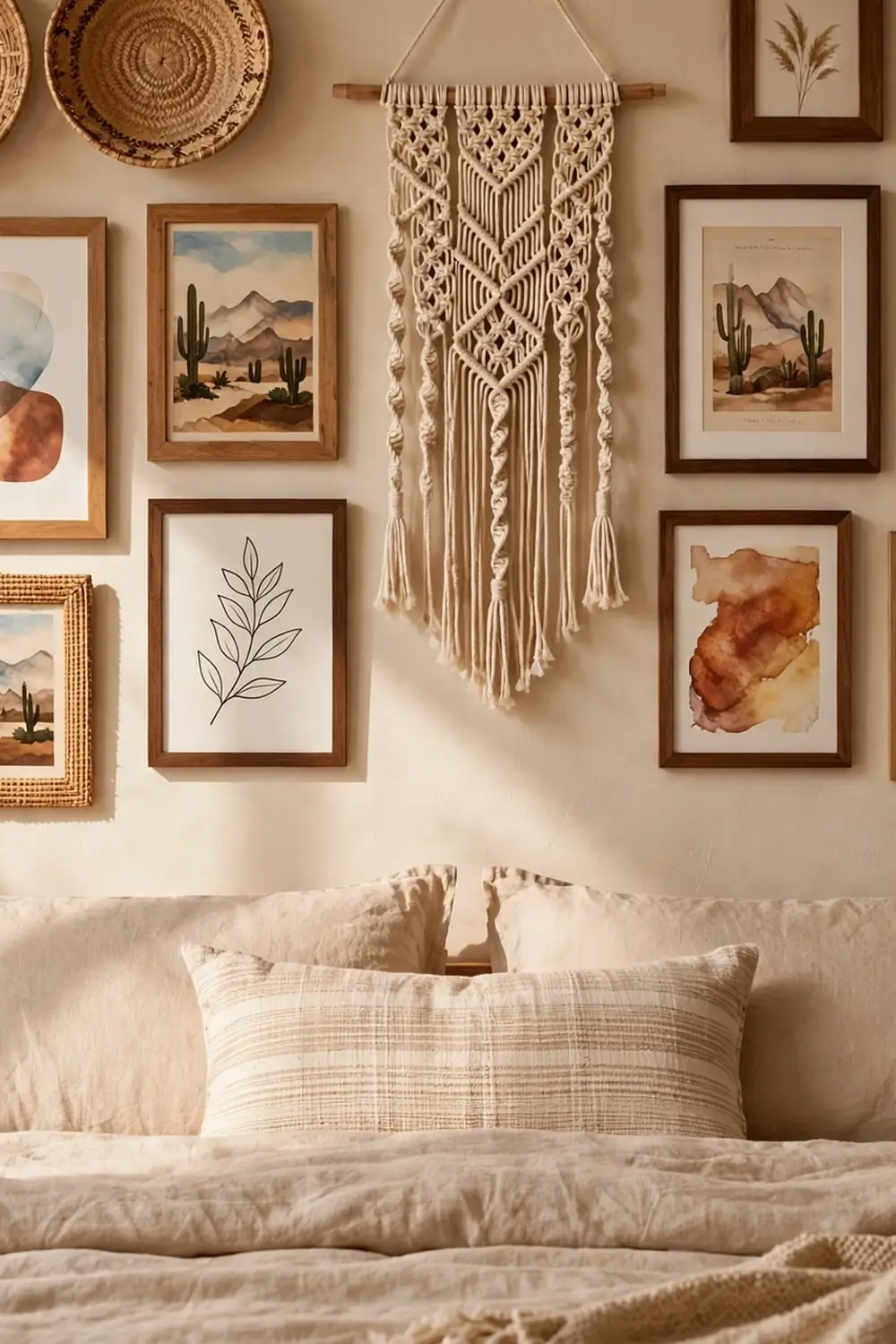
I bought my rattan headboard secondhand, and it was the best money I spent on the whole room. Rattan is light to look at, warm in colour, and full of texture, so it gives a maximalist bedroom a centre without shouting. Before it arrived, my bed just floated against a plain wall. After it arrived, the whole room had a place for the eye to land, and the cushions and throws suddenly made sense around it.
A rattan headboard also forgives a lot of other choices. I have put bright cushions against it, plain linen against it, and a patterned quilt against it, and it has worked every time, because the natural weave sits quietly under all of them. Keep the wall behind it fairly plain, or the rattan gets lost. One woven pendant lamp beside it is plenty. Two would start a competition nobody wins.
Tip: Dust a rattan headboard with a dry cloth once a week. Dust settles in the weave fast, and clean rattan looks warm while dusty rattan looks tired.
4. Give Plants the Best Corner in the Room
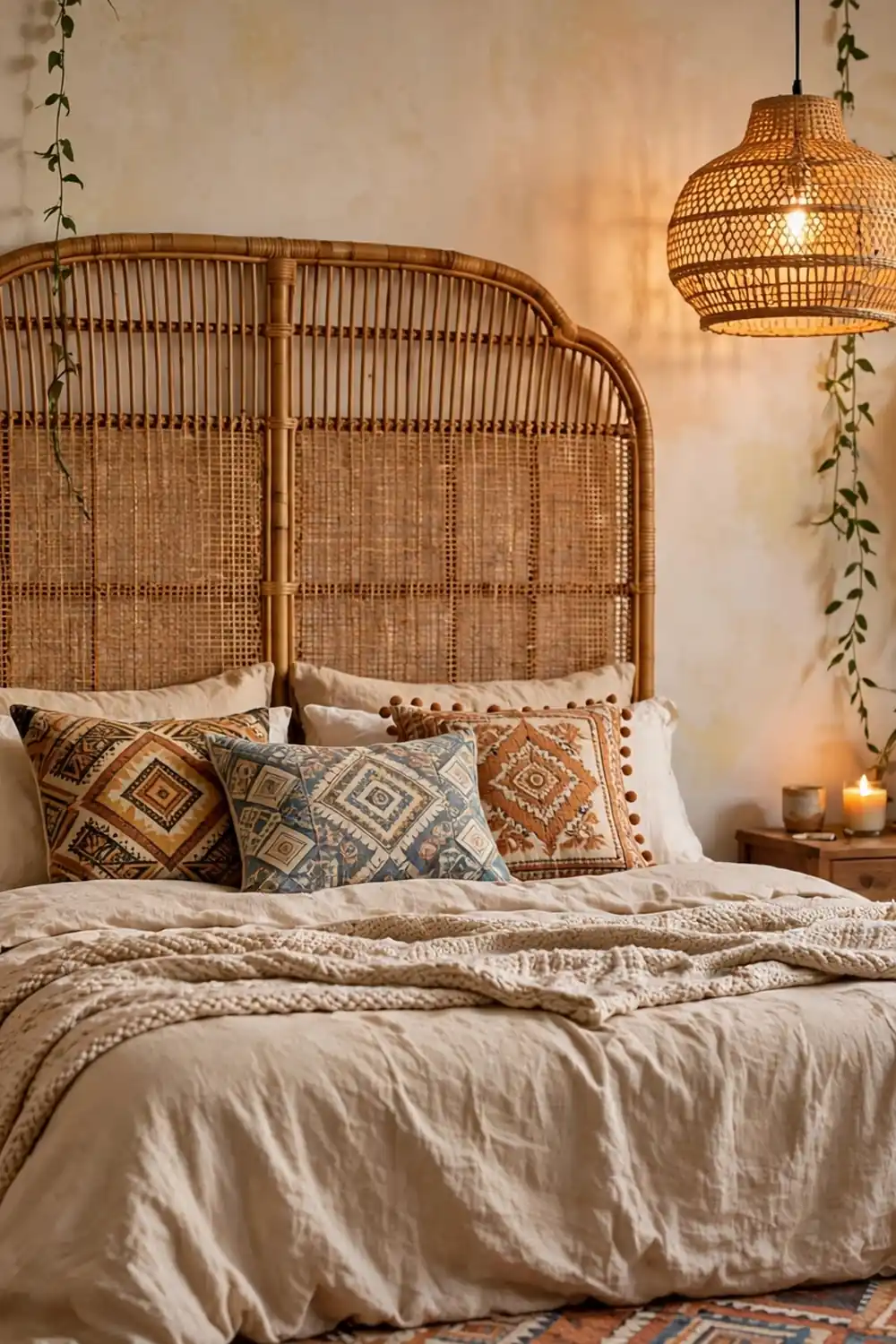
Plants changed my bedroom more than any piece of furniture did. I started with one trailing plant on a shelf, and it looked lonely, so I moved it to a corner by the window and added a tall plant in a clay pot beside it. That corner is now the first thing I see in the morning, and it makes the whole room feel alive before I have even made the bed. Green against rust and cream is gentle, and it stops a colourful room from feeling loud.
Start with plants you can actually keep alive, because a dead plant in a maximalist room looks worse than no plant at all. I killed my share of fussy plants before I settled on the tough ones that forgive a missed watering. Put the tallest plant where it gets light, and let the trailing ones hang from a shelf above it, so the corner reads as one green shape instead of three separate pots fighting for attention.
Tip: Water plants in the morning, not at night. Morning watering gives the soil time to settle before the room cools down, and it becomes part of the same routine as opening the curtains.
5. Layer Two Rugs and Stop There
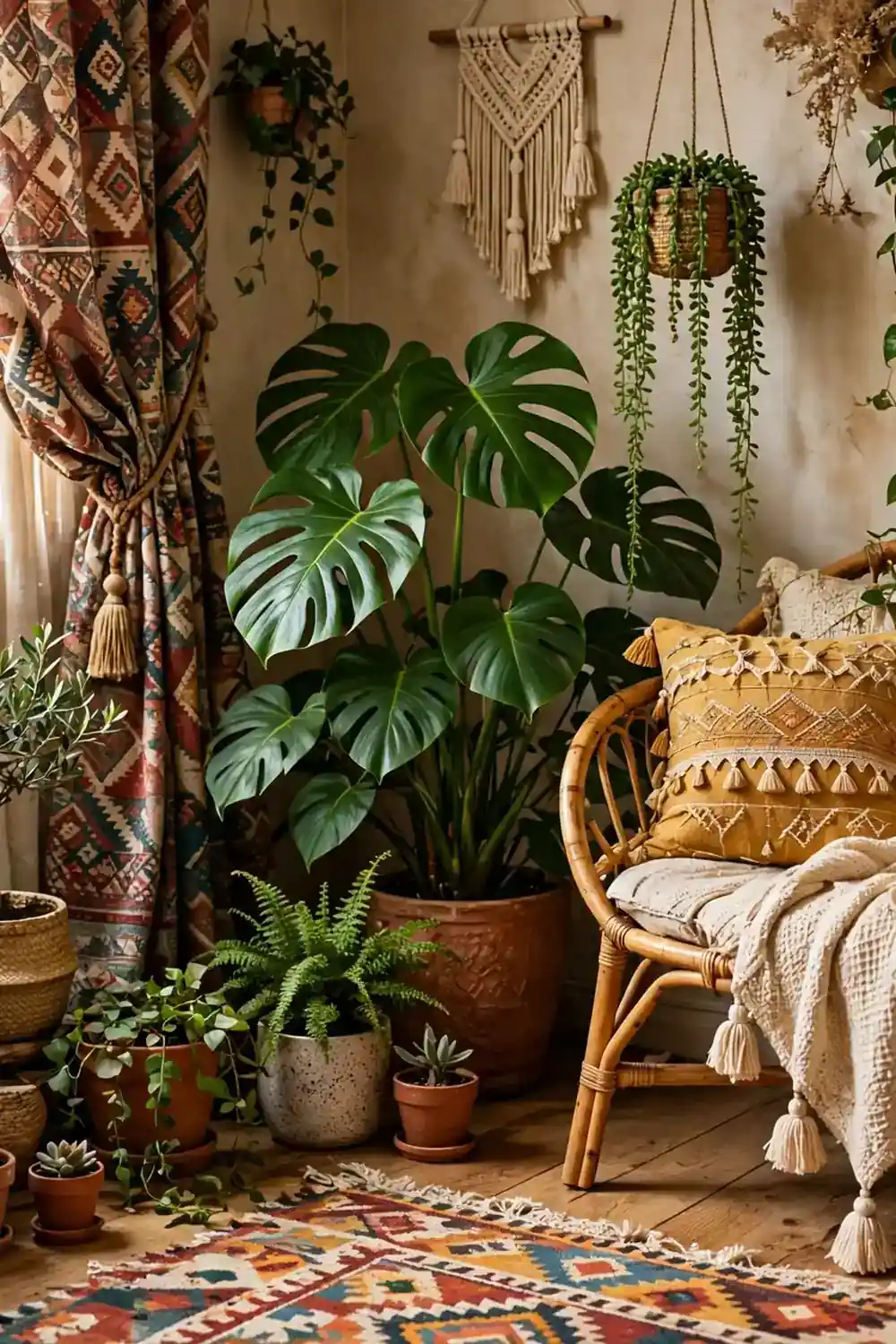
My bedroom floor used to be bare wood, and it looked fine, but it felt cold underfoot in winter. I put a large jute rug down first, then a smaller patterned kilim rug on top of it, slightly off centre, and the room changed at once. The floor felt warm, the bed area felt anchored, and the patterns on the kilim gave the room a second layer of colour without touching the walls. Two rugs are enough. Three rugs start to look like you could not decide, and they bunch up under the bed legs.
Keep the larger rug plain and the smaller rug patterned, or the floor will compete with the bedding. I also learned to put a thin rug pad under both, because a rug that slides every time you step on it will annoy you within a week. Shake both rugs outside once a month if you can. A maximalist room collects dust in its layers, and the floor is where most of it settles.
Tip: Let the top rug show at least a handspan of the bottom rug on two sides. If the top rug covers the bottom rug completely, you have just bought a very expensive rug pad.

6. Pick One Patterned Wall and Leave the Rest Plain
Patterned wallpaper scared me for a long time, because I imagined a room that shouted from every wall. Then I papered one wall behind the bed and left the other three walls in a warm cream, and the room finally made sense. One bold wall gives a maximalist bedroom its energy. Four bold walls give it a headache, and I say that from experience, because I once tried two patterned walls and lived with the mistake for a year before I fixed it.
Choose a pattern with a colour you already own in the bedding, so the wall feels connected to the bed instead of separate from it. My wall has warm rust and deep green in it, and both colours already lived on my cushions. If you are unsure, live with a large sample pinned to the wall for a week first. A pattern that looks exciting for a day can feel tiring after a month, and wallpaper is harder to change than a cushion. For more bedroom wall ideas in a similar spirit, the House Beautiful bedrooms pages are a good place to compare patterns before you commit.
Tip: Paper the wall you see first when you walk in, not the wall behind a wardrobe. A patterned wall hidden behind furniture is money spent on a wall nobody sees.

7. Make a Reading Nook You Actually Sit In
My reading nook failed the first time because I built it for photographs, not for sitting. It had a beautiful chair, a stack of books I never opened, and a lamp that was too dim to read by. Nobody sat there, including me. The second version worked because I put my actual reading chair there, the one with the worn armrest, added a cushion I already loved, and moved a small table close enough for a mug. It is not the prettiest corner in the room. It is the most used corner in the room, and that matters more.
A nook needs three things and nothing else to start. A seat you like, light you can read by, and a place to put a mug down. Books can come later, one stack at a time, from books you have already read and want near you. I keep a plant beside the chair too, because the green softens the corner, but the plant is the last thing I added, not the first. Comfort first, decoration second, every time.
Tip: Sit in the chair for ten minutes before you buy anything for the nook. If your back complains in ten minutes, it will complain for a whole chapter, and no cushion will fix a chair that does not fit you.
8. Hold the Room Together With Warm Colour
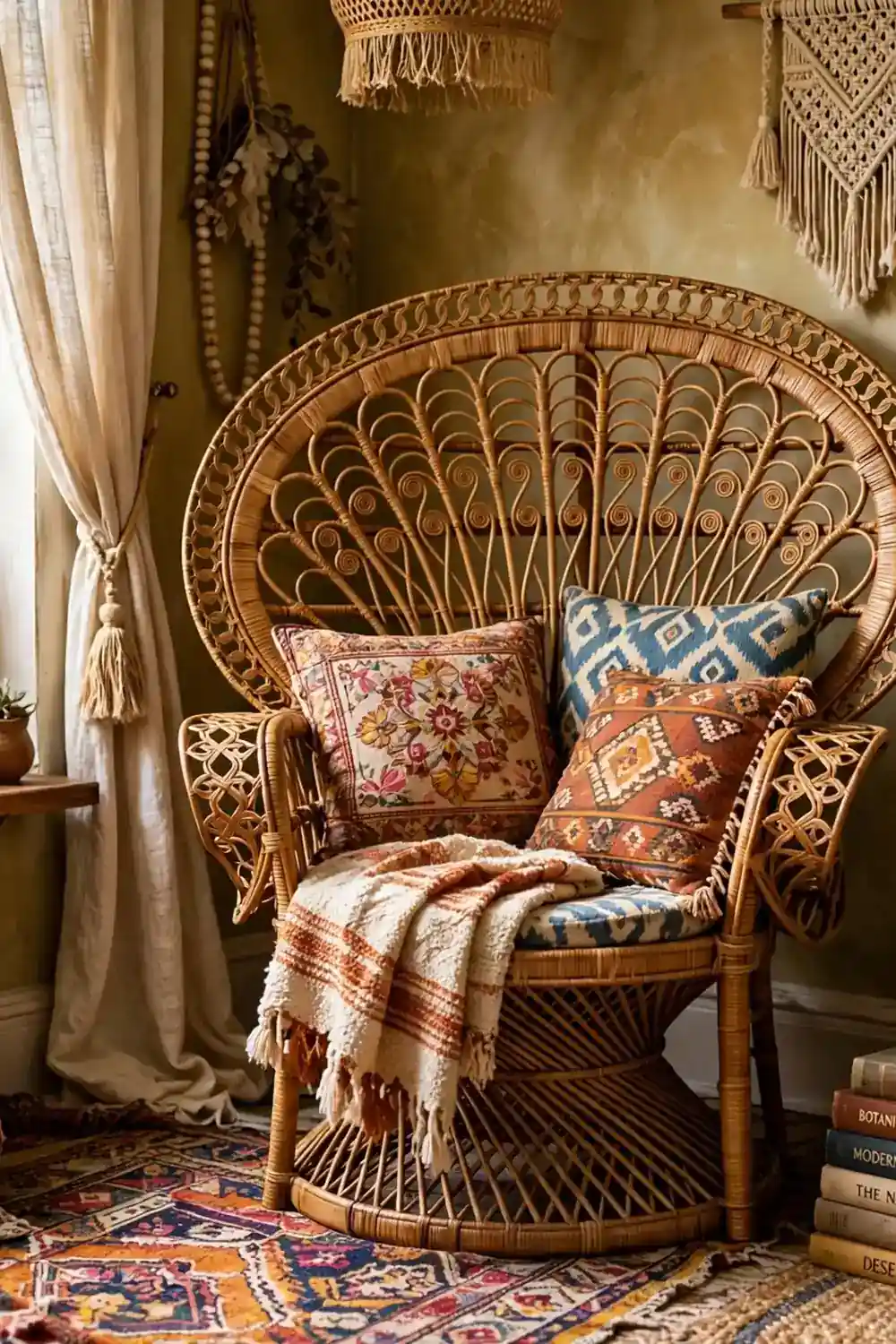
Colour is what stops a boho maximalist bedroom from falling apart into a pile of unrelated things. My room runs on rust, cream, mustard, and a little bit of deep green, and almost everything in it shows at least one of those colours. That rule sounds strict, but it is actually freeing, because once the colours are set, I can mix patterns wildly and the room still holds together. A floral cushion, a striped throw, and a patterned rug all sit happily together when they share rust.
Start with the colour you already own most of, not the colour you wish you owned. I owned rust cushions and a cream quilt, so rust and cream became my base, and mustard joined later through a throw I found at a market. If you start with a colour you do not own, you will end up buying a whole room to support one cushion, and that is how a fun style turns into an expensive mistake. Test a new colour with one cushion first, and live with it for a week before you let it near the walls.
Tip: Repeat your main colour at least three times in different places, on the bed, on the wall, and on the floor. One sighting looks accidental. Three sightings look like a plan.
9. Turn a Dressing Corner Into a Daily Ritual
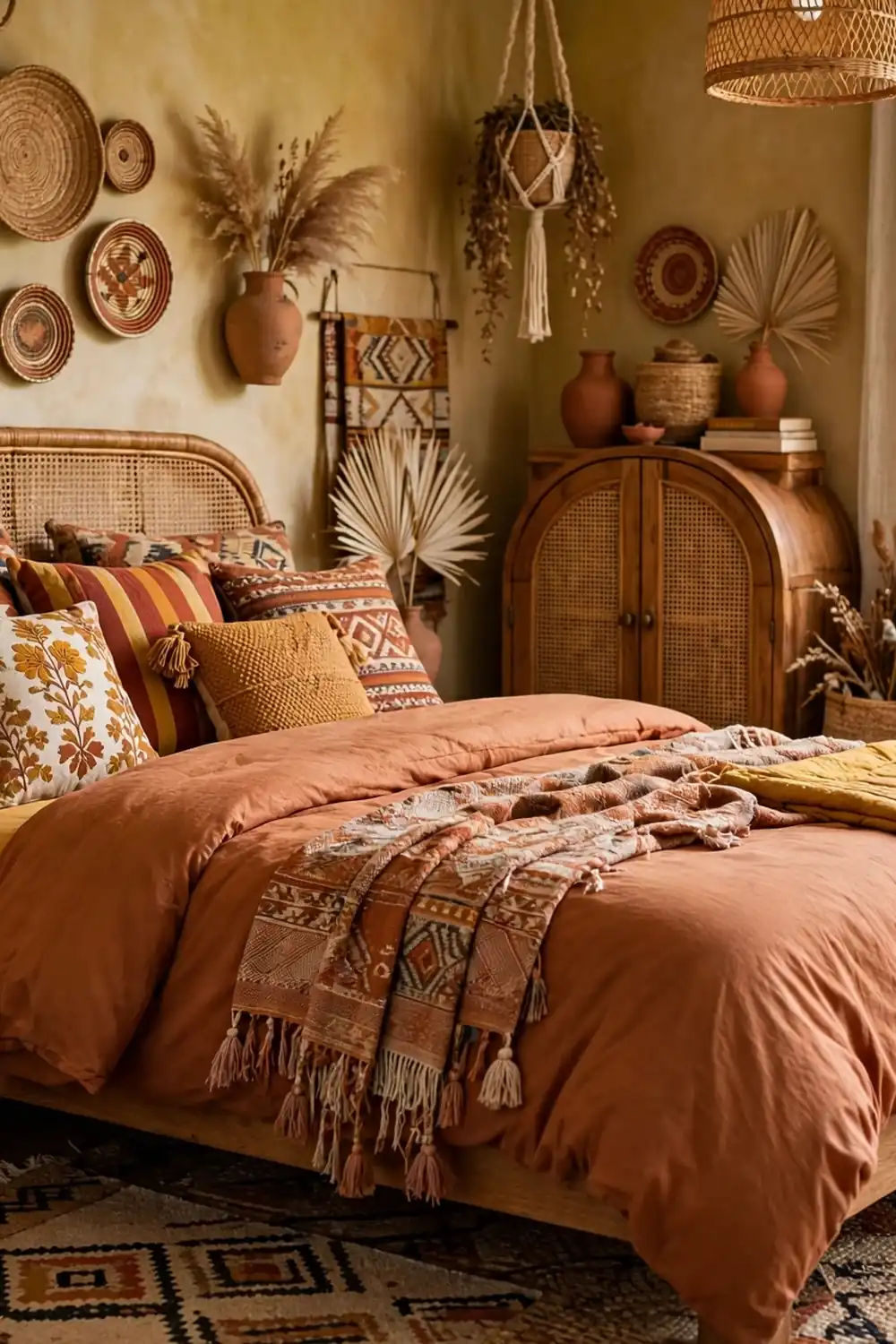
My dressing corner used to be a chair with clothes on it, and I called that a system. It was not a system. It was a pile that grew every evening. The change came when I put a small table by the window, a round mirror above it, and a woven basket underneath for the bits I reach for every morning. Now I sit there for five minutes each morning, and the corner earns its space instead of collecting clutter. A maximalist room needs corners that work, or the abundance turns into mess very fast.
Keep the dressing corner to what you use daily, not everything you own. I keep a hairbrush, a small plant, and one candle on the table, and everything else lives in a drawer. The mirror is the piece that makes the corner feel finished, and a rattan frame suits this room better than a plain one, because it repeats the rattan from the headboard. If the corner starts to collect clothes again, I clear it that same evening, because a one day pile is easy and a one week pile is a project.
Tip: Put a small tray on the dressing table for rings, keys, and loose bits. A tray turns a scatter into a collection, and it takes ten seconds to tidy instead of ten minutes.
10. Light the Room Low in the Evening
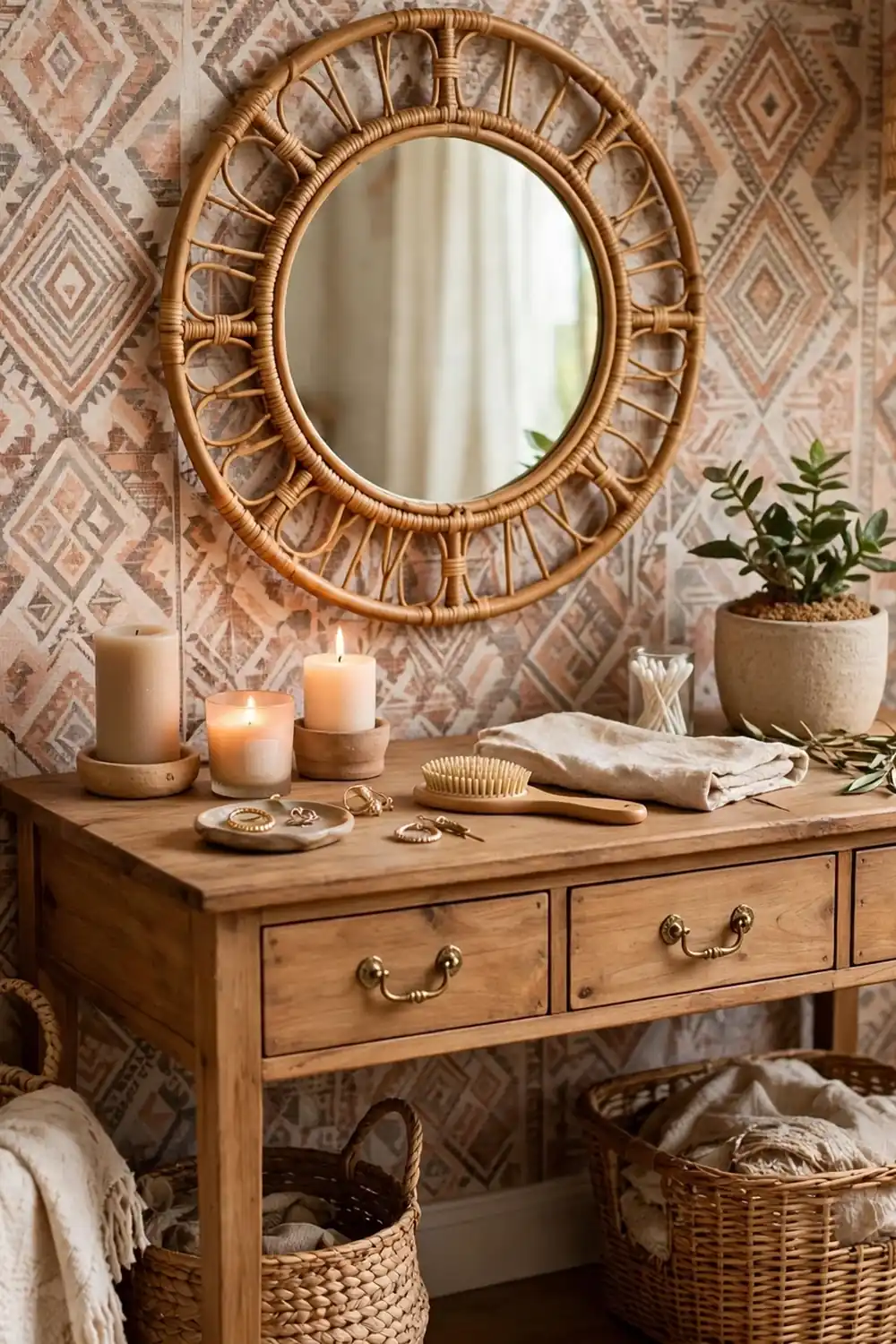
A maximalist bedroom looks completely different after sunset, and that is where lamps earn their keep. I used to rely on one bright ceiling light, and my colourful room looked harsh at night, every pattern shouting at once. Now I use two warm lamps, one on each side of the bed, plus a string of small lights along one shelf, and the room glows instead of glaring. Low light softens patterns, deepens colours, and makes a full room feel cosy instead of busy.
Warm bulbs matter more than lamp shapes here. I keep the bulbs warm, not daylight white, because a cool bulb can turn rust cushions orange and cream walls grey in a way I do not like. Put lamps where you actually sit and read, not in the middle of the room, because light that lands near you feels intimate while light from far away feels like a waiting room. A dimmer helps too, even a simple plug in one, because a maximalist room at low light feels restful in a way a bright room never does.
Tip: Switch the ceiling light off in the evening for a week and see if you miss it. Most people do not, and the room feels calmer from the first night.

11. Make a Small Room Feel Full Without Feeling Cramped
My first maximalist bedroom was small, and I nearly gave up on the style because every idea I saw seemed to need a big room. The room that finally worked kept the bed low, the furniture close to the walls, and the colour on the bedding and the art instead of on every surface. A low bed makes a small room feel taller, because your eye travels over it to the wall behind. A tall wardrobe in the same room would have swallowed the whole corner, so I used low shelves instead, and the room kept its air.
In a small room, abundance has to live in layers you can touch, not in furniture you have to walk around. I layered the bed, layered two rugs, and filled one wall with art, but I left the floor in the middle of the room clear. That clear patch is what stops the room from feeling cramped, and I protect it the way other people protect a rug. If a new piece does not have a wall or a shelf to live on, it does not come into a small maximalist room, no matter how much I like it.
Tip: Keep the middle of a small bedroom floor clear, even if the walls and the bed are full. One clear patch of floor gives the eye somewhere to rest, and the room feels bigger for it.
12. Hang Macrame Where the Wall Feels Bare
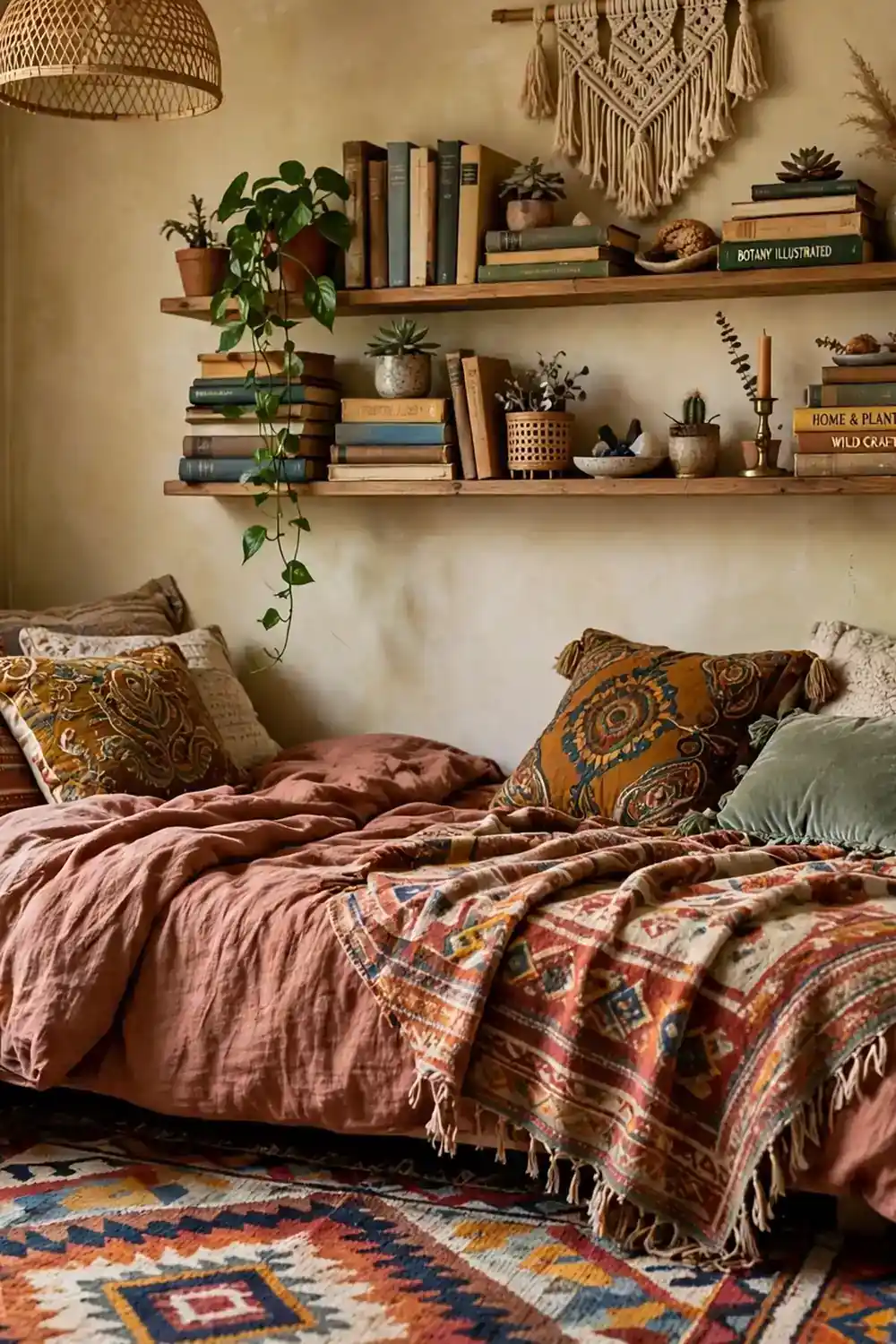
Macrame is the softest way I know to fill a bare bedroom wall. I hung a large macrame piece on the wall beside my bed, and it changed the room in a way a framed print never had, because the knotted cotton catches light and shadow all day. In the morning it looks pale and soft. In the evening, with a lamp nearby, the knots throw small shadows on the wall, and the whole corner feels warmer. A maximalist room needs at least one piece that moves with the light, or all the colour can start to feel flat.
Hang macrame where it can breathe, not squeezed between two busy frames. Mine has a plain stretch of wall around it, and that empty space is what lets the knots stand out. I also keep it out of direct reach of the bed pillows, because tassels that get pulled every night will fray fast. A wooden dowel at the top keeps it hanging straight, and I shake it outside once in a while, because a textile on a wall collects dust just like a textile on a bed does.
Tip: Hang macrame at a height where the longest tassels end above the furniture below it. Tassels that brush a pillow or a plant every day will tangle, and tangled tassels are hard to fix.

13. Let a Vintage Dresser Carry the Room
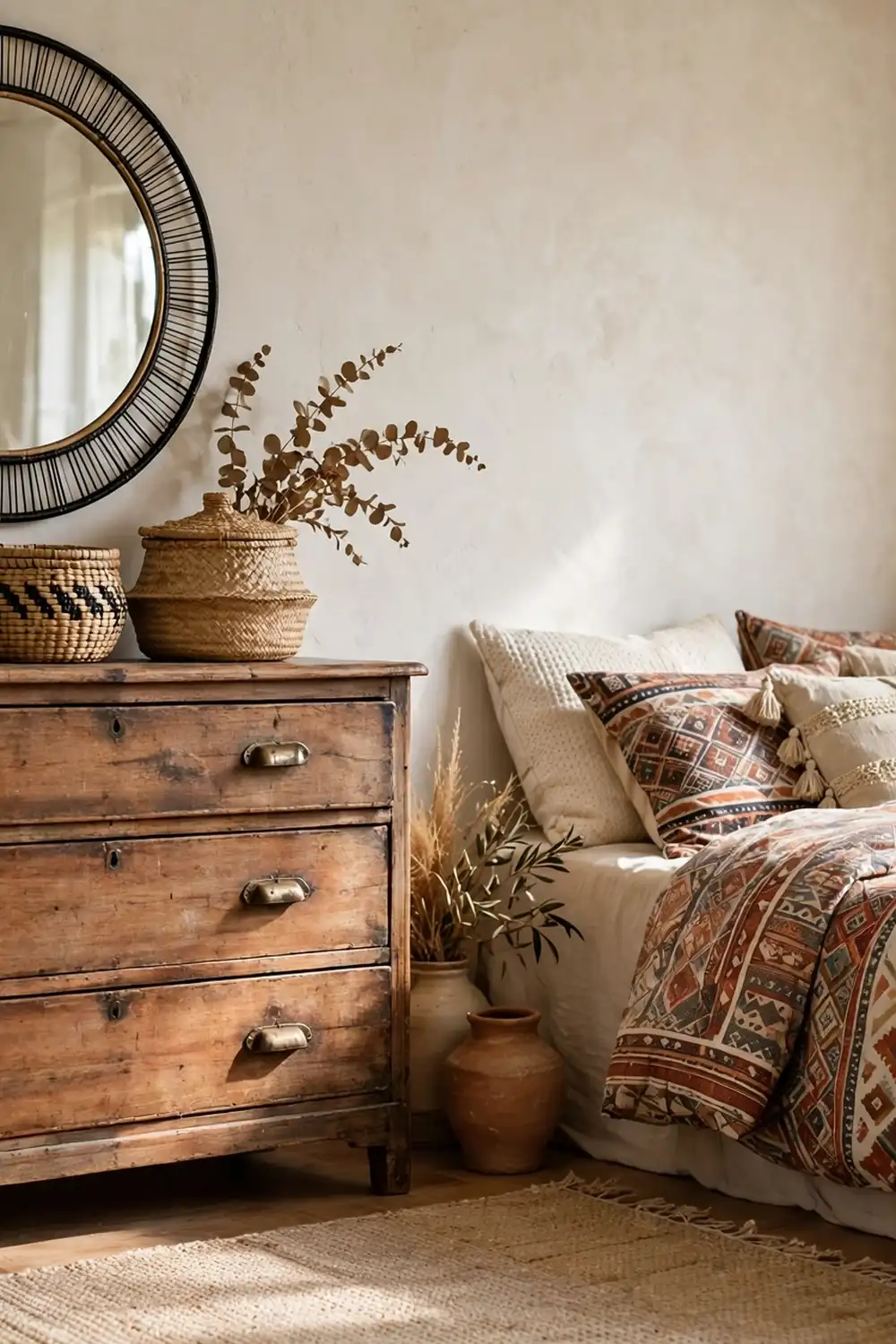
My dresser is older than most of my furniture, and it shows. The wood has scratches, one drawer sticks a little in damp weather, and the handles do not match, because I replaced one years ago with whatever I could find. I love it more than any new piece I own, because it has a history, and a maximalist bedroom needs at least one piece with a past. New furniture can look collected too, but it takes longer to earn the marks that make a room feel lived in.
A vintage dresser works best when you let it be the star of its wall. Mine stands against a plain stretch of wall, with a round mirror above it and two woven baskets on top, and nothing else competes with it. I keep the top fairly clear, because a dresser buried under clutter stops being furniture and becomes a shelf. The drawers hold everyday clothes, not display pieces, because a dresser that works hard is a dresser that stays in a room, while a dresser that only looks good gets moved out within a year.
Tip: Check every drawer of a secondhand dresser before you buy it, and open each one twice. A drawer that sticks in a shop will stick at home too, and you will open that drawer every single day.
14. Dress the Window Seat for Long Mornings
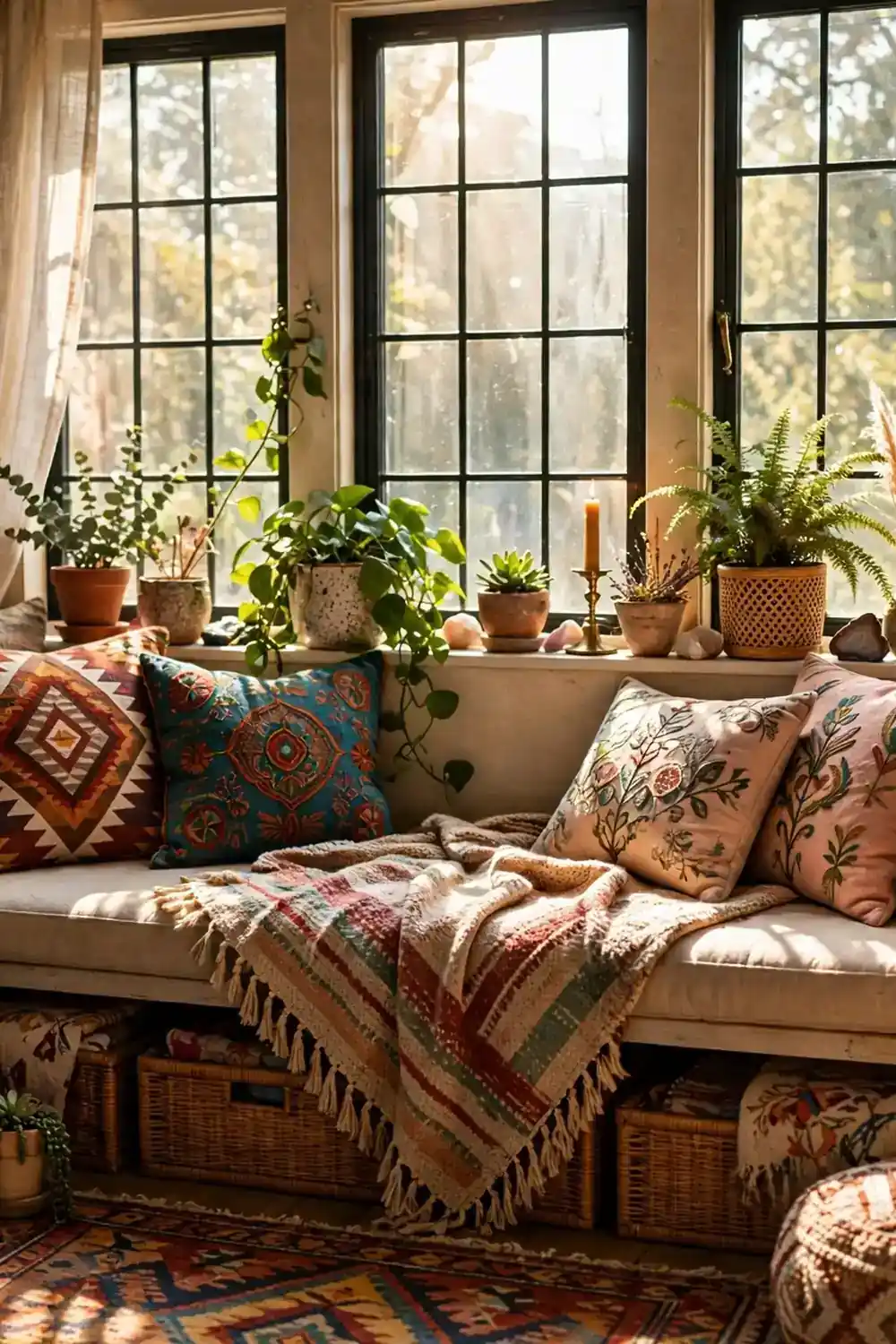
My window seat was a wasted ledge for years, a place where mail and chargers went to hide. Then I put a thick cushion on it, added two patterned cushions in rust and cream, and draped a light throw over one end, and suddenly it became the place I sit with tea before the house wakes up. A window seat in a maximalist bedroom should feel like a small room inside the room, soft, layered, and a little bit separate from the bed.
Keep the seat cushion in a fabric you can wash, because morning tea and a window seat will meet sooner or later, and a stained cushion you cannot wash will ruin the whole corner. I also keep a small plant on the sill beside the seat, not on the seat itself, because a plant on a seat gets knocked over the first time someone sits down quickly. Curtains in a light pattern frame the seat without blocking the light, and that light is the whole reason the seat exists.
Tip: Put a small basket under the window seat for the throw and the book you are reading. A seat that holds its own bits stays tidy, while a seat that borrows from the bed ends up buried.
15. Add a Canopy When the Bed Needs Softness
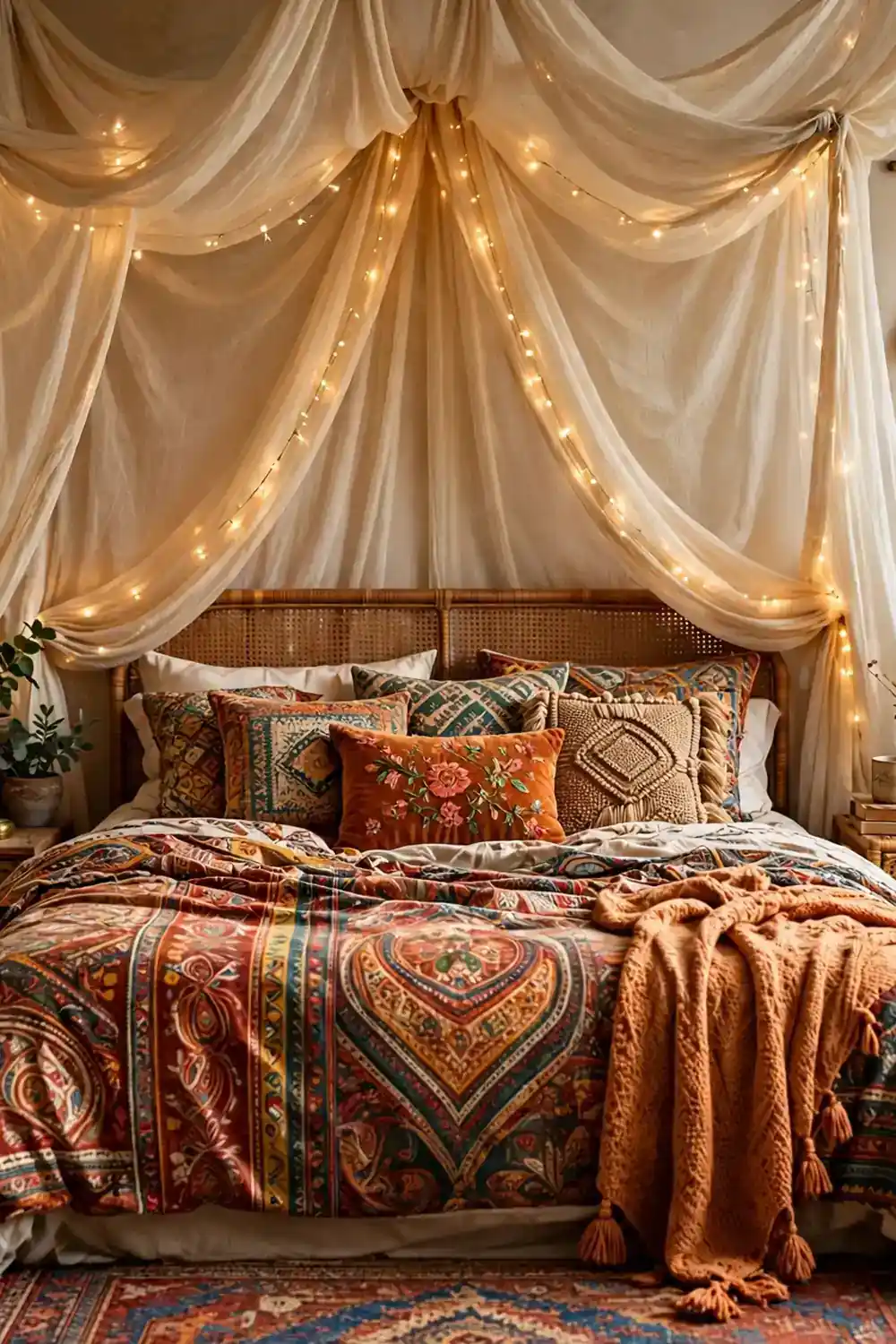
A canopy changed how my bed felt at night more than I expected. I hung sheer fabric from a simple frame above the bed, let it fall softly on two sides, and left the other sides open so the room did not feel closed in. The bed became a softer, quieter place, and the sheer fabric caught the evening lamplight in a way that made the whole room glow. A canopy is not for every maximalist bedroom, and I would not add one to a very small room, but in a room with a little height to spare, it is a gentle way to add drama without paint or wallpaper.
Keep the fabric light and washable, because a heavy canopy will darken the bed and collect dust fast. Mine comes down for a wash every couple of months, and that routine is the price of keeping it soft instead of grey. If you want to see how other people have used canopies in full, layered bedrooms, the Room of Inspo maximalist boho bedroom page has plenty of canopy and layering ideas to compare before you hang anything.
Tip: Leave at least one side of the canopy fully open. A bed you have to push fabric aside to get into will annoy you within a week, no matter how pretty it looks in a photo.
16. Keep a Nightstand Full of Things You Love
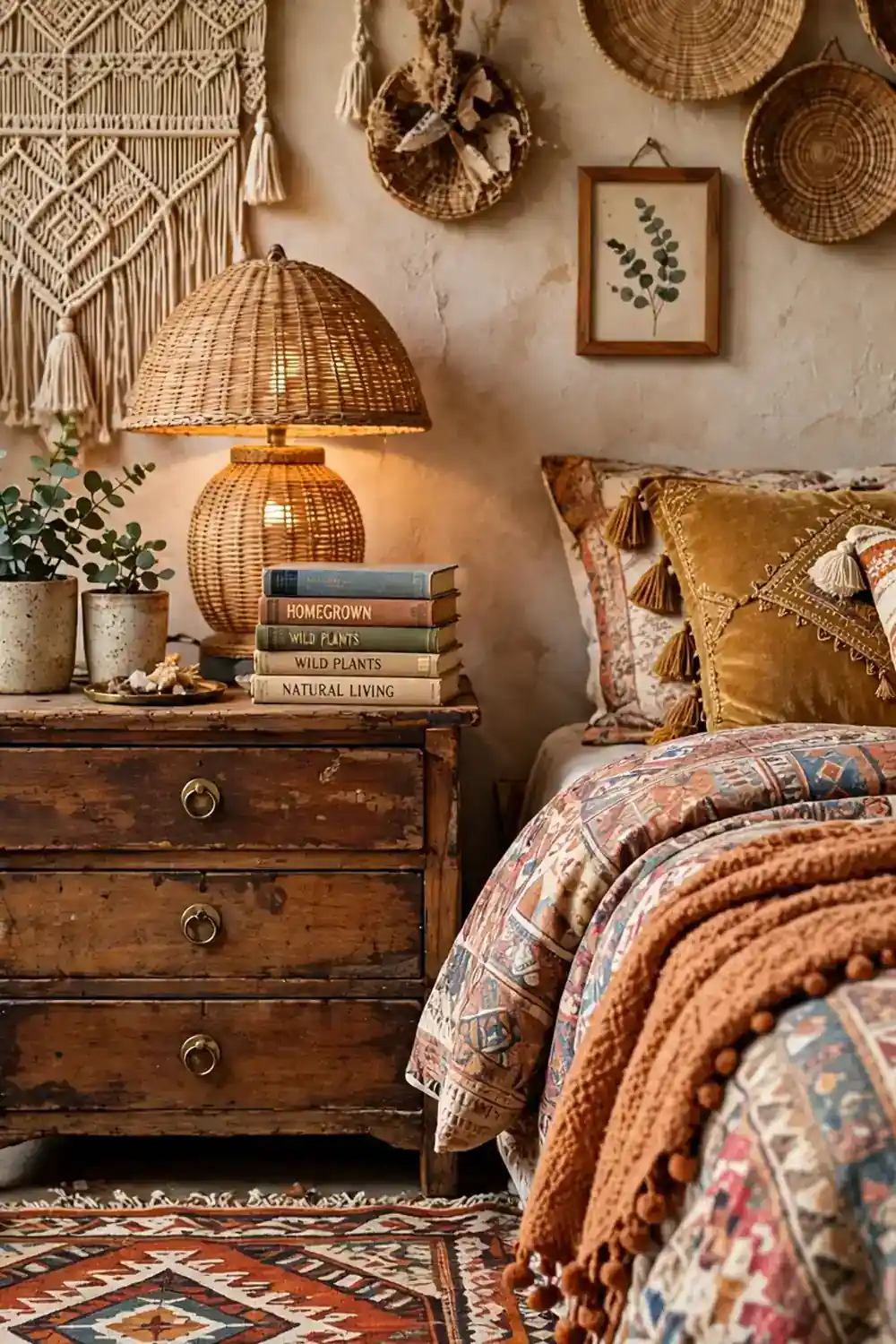
My nightstand is small, but it holds more personality than any other piece in the room. It has a woven lamp, a stack of two books I am actually reading, a small plant in a clay pot, and a mug that has a chip on the rim. None of those things match, and all of them get used every day, which is why the nightstand works. A maximalist nightstand is not a display shelf. It is a working surface that happens to look good because the things on it mean something to the person who uses it.
The rule I follow is simple. If I have not touched something on the nightstand in a week, it moves to a drawer. That rule keeps the surface useful, because a nightstand buried under things you never touch stops being a nightstand and becomes a storage pile. I also keep the lamp low and warm, because a bright lamp right beside the bed at night is the fastest way to ruin a calm evening, no matter how pretty the shade is.
Tip: Put a small dish on the nightstand for the bits you empty from your pockets at night. A dish keeps the surface tidy, and it stops small things from sliding behind the bed.
17. Put Floor Cushions Where Friends Actually Sit
Floor cushions only work if people actually sit on them, and mine sat in a corner untouched for months before I figured out why. They were too far from the tea, too far from the conversation, and too pretty to flop onto. I moved them to the corner by the low table, added a woven tray for mugs, and suddenly friends sat on them without being asked. A maximalist bedroom with floor cushions should feel like a gathering place, not a showroom, and the cushions need to be part of the room, not decoration for it.
Choose floor cushions with washable covers, because floor cushions meet shoes, pets, and spilled tea faster than any other seat in the house. I keep mine in rust and cream, so they match the bed without matching it exactly, and I stack them when they are not in use instead of leaving them scattered. The same low, gathered feeling works around a table too, and these spring tablescapes show how a few personal pieces on a low table feel warmer than a full matching set.
Tip: Put floor cushions near a table, not against a bare wall. A cushion with nowhere to put a mug down is a cushion nobody will sit on for long.

18. End With One Bold Accent and Nothing More
Every maximalist bedroom needs a stopping point, and mine is one bold accent wall of pattern and colour behind the bed. It has deep green, pink, mustard, and rust all at once, and it works because everything else in the room is calmer around it. The bedding is plain cream with a rust throw, the floor is a patterned rug in quieter tones, and the plants are green, not another colour fighting for attention. One bold accent gives the room its energy. Two bold accents give it an argument, and I learned that the hard way when I added a bright chair to a room that already had a bold wall.
If you are unsure whether your bold accent is too much, live with it for a week and watch how you feel in the room in the morning. A good bold accent makes you smile when you wake up. A bad one makes you want to turn the light off and leave. Trust that feeling, because you live in the room, and a style rule cannot tell you what your own mornings feel like. When the accent is right, stop adding. A maximalist room that knows when to stop feels collected. A room that never stops feels like a shop that never closes.
Tip: Step into the doorway and squint at the room. The bold accent should still read clearly when everything else blurs. If nothing reads clearly, the room has too many accents, not too few.

Frequently Asked Questions
What is a boho maximalist bedroom?
A boho maximalist bedroom is a bedroom that mixes bohemian pieces, like rattan, plants, woven textiles, and collected art, with maximalist abundance, like layered patterns, bold colour, and full walls. The difference from plain clutter is the thread holding it together, usually one warm colour family repeated across the bed, the walls, and the floor. If that thread is there, the room reads as collected. If it is missing, the same room reads as messy.
How do I keep a boho maximalist bedroom from looking messy?
Start with one colour family and one clear surface, and protect both. Pick rust, cream, and mustard, or any family you already own, and let every new piece show at least one of those colours. Then keep one surface clear, like the top of the dresser or the middle of the floor, so the eye has somewhere to rest. A room with a colour thread and one clear patch can hold a lot of pattern without looking messy, while a room with neither will look messy with half as much in it.
Can a small bedroom handle boho maximalism?
Yes, if the abundance lives in layers rather than in furniture. Layer the bed, layer two rugs, and fill one wall with art, but keep the bed low and the middle of the floor clear. A small room fails at this style when big furniture eats the floor space, not when the bedding has too many patterns. Start with the bed and one wall, live with those for a week, and only then decide if the room can hold more.
How much colour is too much in a boho maximalist bedroom?
Too much colour is when no single colour can be picked out from the doorway. A good test is to step back and squint. If one warm colour still reads clearly, the room is probably fine, even if it looks full up close. If everything blurs into noise, take one bright piece out and live with the room for a day before you add anything else. Most rooms only need one piece removed, not a whole redo, to find their balance again.
A boho maximalist bedroom is not a room you finish in a weekend, and mine is still changing, one piece at a time. I started with a bed that looked inviting, then a wall that told a story, then plants that made the room feel alive in the morning. Each change taught me something about the next one, and the mistakes taught me more than the successes did. That slow pace is also why the room feels like mine now, instead of like a copy of a room I saw once in a photo.
If you try one idea from this list, start with the bed, and live with it for a week before you change anything else. A bedroom that grows one honest layer at a time will always feel more like yours than a bedroom that was filled all at once to match a list. When you wake up and the first thing you see makes you want to stay in bed for five more minutes, you will know the layers are working, and the room is finally yours.