
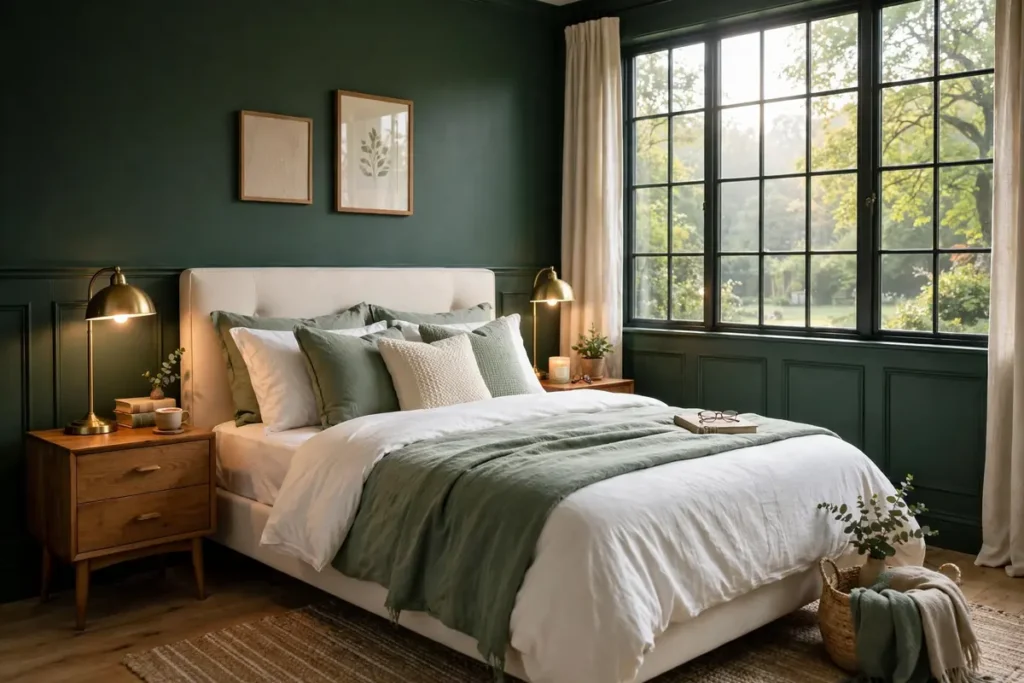
I put off a dark green bedroom for a long time because I was sure it would make the room feel small and gloomy. My bedroom gets decent light in the morning and almost none in the evening, so a dark colour felt like a gamble. Then a friend painted one wall in her spare room, and I stood in that room for a while and felt calmer than I expected. The green did not close the room in. It wrapped around it, the way a thick blanket does on a cold night, and I went home thinking about my own walls in a new way.
A dark green bedroom is not about going dark for the sake of it. It is about pairing a deep colour with warm light, soft fabric, and a bit of wood, so the room feels restful instead of heavy. You can find plenty of home decor ideas on The Inspire Rooms, but this post is about one colour and how to live with it day after day. I will show you 18 practical ideas, from one painted wall to a full room, and I will be honest about the ones that took me a second try to get right.
1. Paint All Four Walls and Let the Colour Do the Work
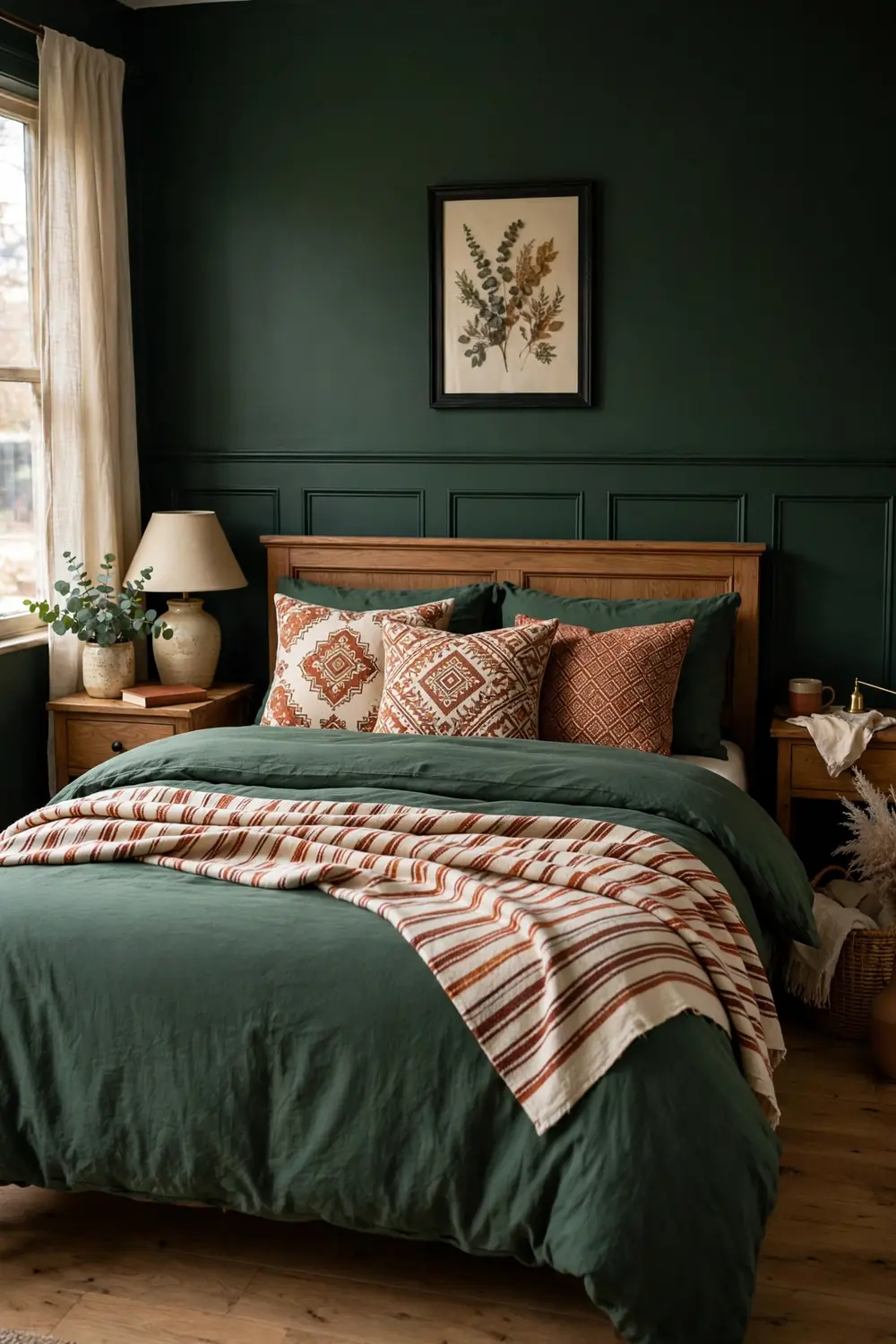
The first time I saw a fully dark green bedroom, I thought the owner must have been very brave. Then I slept in a room like that on a trip, and I understood the appeal straight away. With all four walls the same deep green, there is nowhere for your eye to snag. The room feels quiet, and the bed becomes the softest thing in it. I woke up rested, which surprised me, because I had expected to feel like I was sleeping in a cave.
Painting all four walls works best when the bedding stays light. I would keep the sheets cream or white, and let one darker throw sit at the foot of the bed for contrast. If your room has a white ceiling, leave it white. That pale ceiling lifts the room just enough, and it keeps the green from pressing down on you at night. Try a sample on the wall behind your bed first, and look at it after sunset with your lamps on, because that is when you will actually live with it.
Tip: Paint the wall you see first when you walk in last, not first. You will judge the colour better once the other three walls are done and the room has settled.
2. Layer Bedding So the Bed Stays the Softest Spot
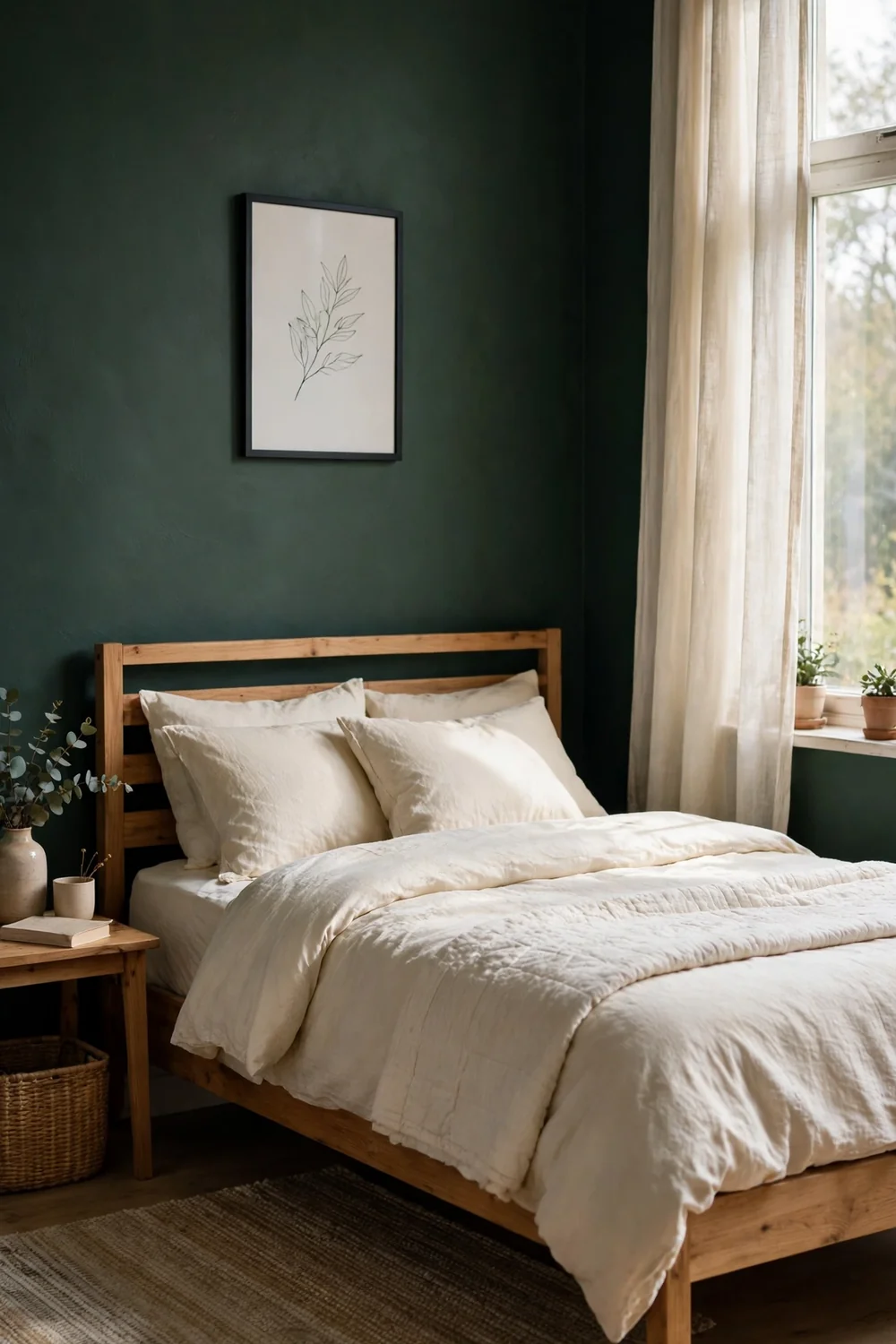
A dark green room can swallow a plain bed, so layering matters more here than in a pale room. I start with white sheets, then a cream duvet, then a sage throw, and the bed starts to glow against the green instead of disappearing into it. The layers do not have to match perfectly. In fact, mine look better when they do not, because the slight differences in cream and sage keep the bed from looking flat.
I learned to fold the top of the duvet back a little in the morning, so the white sheet shows. That one small fold makes the bed look made even on days when I am in a rush. A couple of pillows in a soft green, a shade lighter than the wall, tie the whole thing together without turning the bed into a colour swatch. For more bedroom layering ideas, my spring bedroom ideas post uses the same soft layers in a lighter room, and the habit carries over well here.
Tip: Keep one throw within reach of the bed, not folded away in a cupboard. You will actually use it on cold nights, and it adds a soft shape to the room during the day.
3. Warm the Green Up With Wood
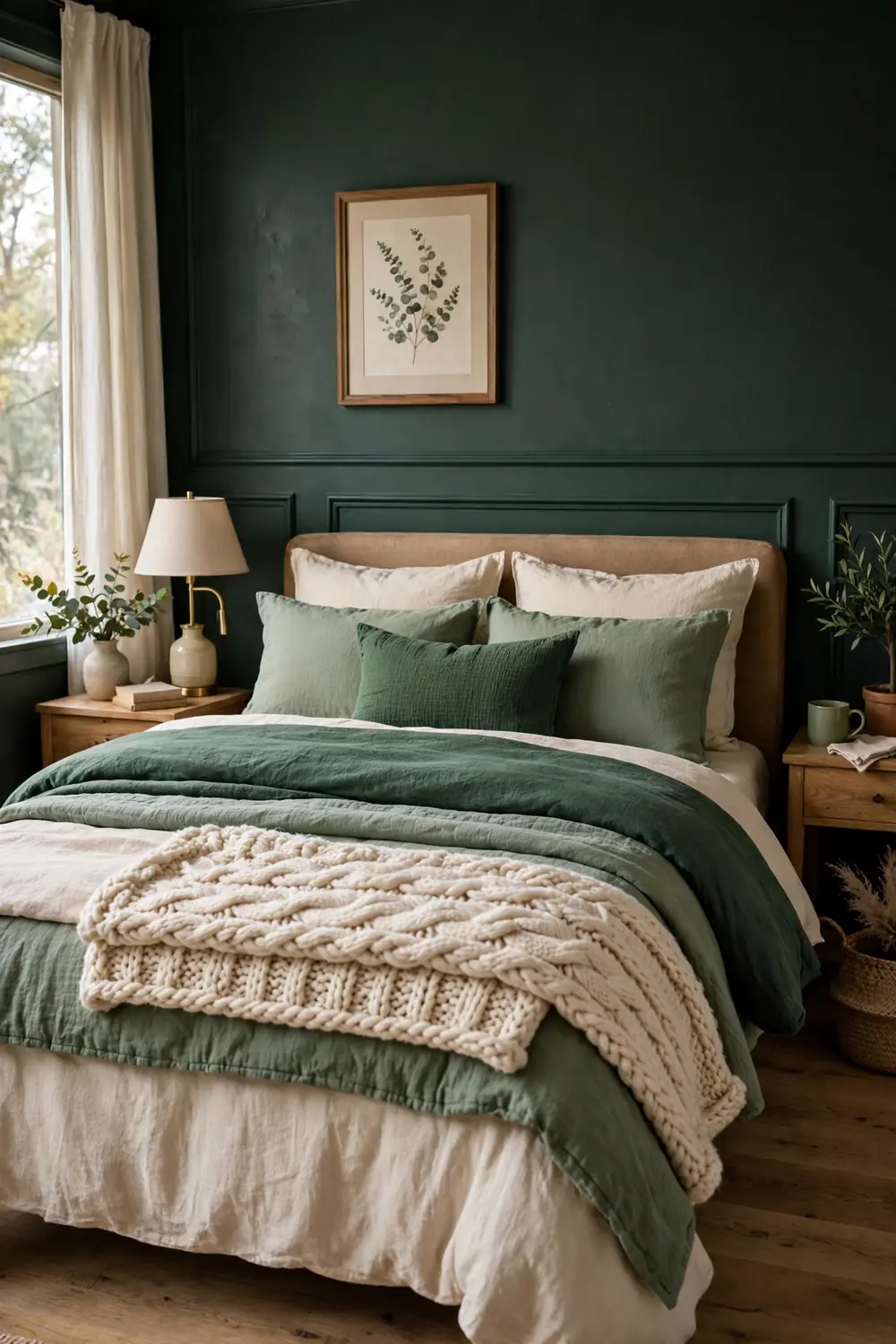
Dark green and cold metal together can feel a bit stern, and wood is the fastest fix I know. My nightstand is plain oak, marked in a few places from years of mugs and books, and it is the piece that stops my green walls from feeling formal. The grain gives the room a story, and the warm tone keeps the green feeling like a forest rather than a library at closing time.
You do not need matching wood everywhere. One warm piece is enough, and a second piece in a different tone is fine too. I have oak next to a darker walnut frame, and they sit happily together because the green around them ties them up. If your floors are already wood, you are halfway there. Just let a little of that floor show instead of covering all of it with a dark rug.
Tip: Oil a dry wooden nightstand once a season if the maker recommends it. The colour deepens a little, and the green next to it looks richer by contrast.
4. Use Brass Lamps for Warm Evening Light
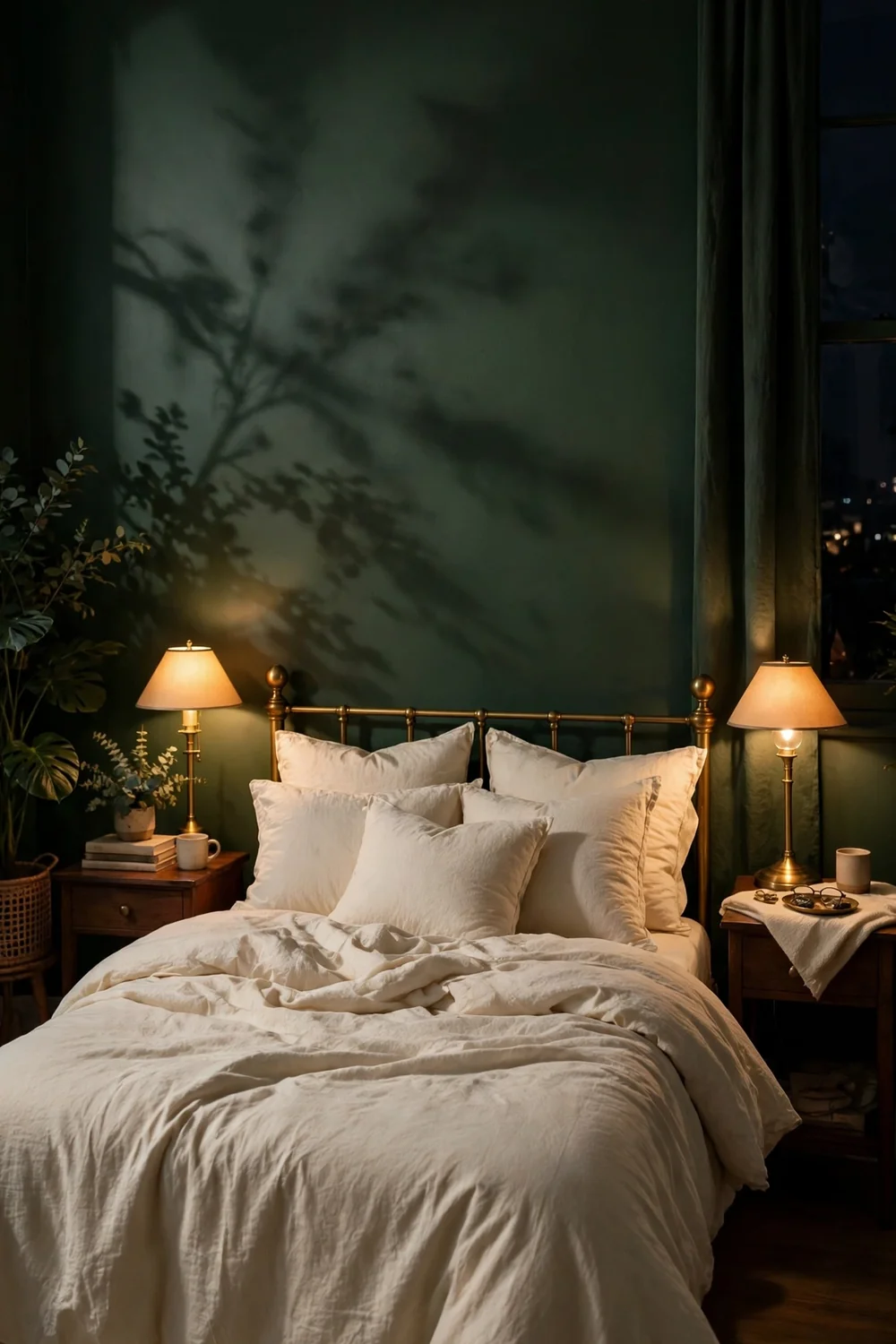
Green walls change completely after sunset, and that is where lamps earn their keep. I used to rely on one bright ceiling light, and my green bedroom looked flat and a bit grey at night. Now I use two brass lamps, one on each nightstand, and the walls glow in a way that feels like evening in a cabin, not like a room with the lights left on too bright.
Brass suits dark green well, because the warm metal adds a gentle shine without a strong colour of its own. I keep the bulbs warm, not daylight white, because a cool bulb can turn a deep green wall almost black at night. Dim the lamps if you can, even a little, because a green room at low light feels restful in a way a bright room never does.
Tip: Put the lamp where you read, not in the middle of the room. Light that lands near you feels cozy, while light from far away feels like a waiting room.
5. Add Plants Before You Add More Colour
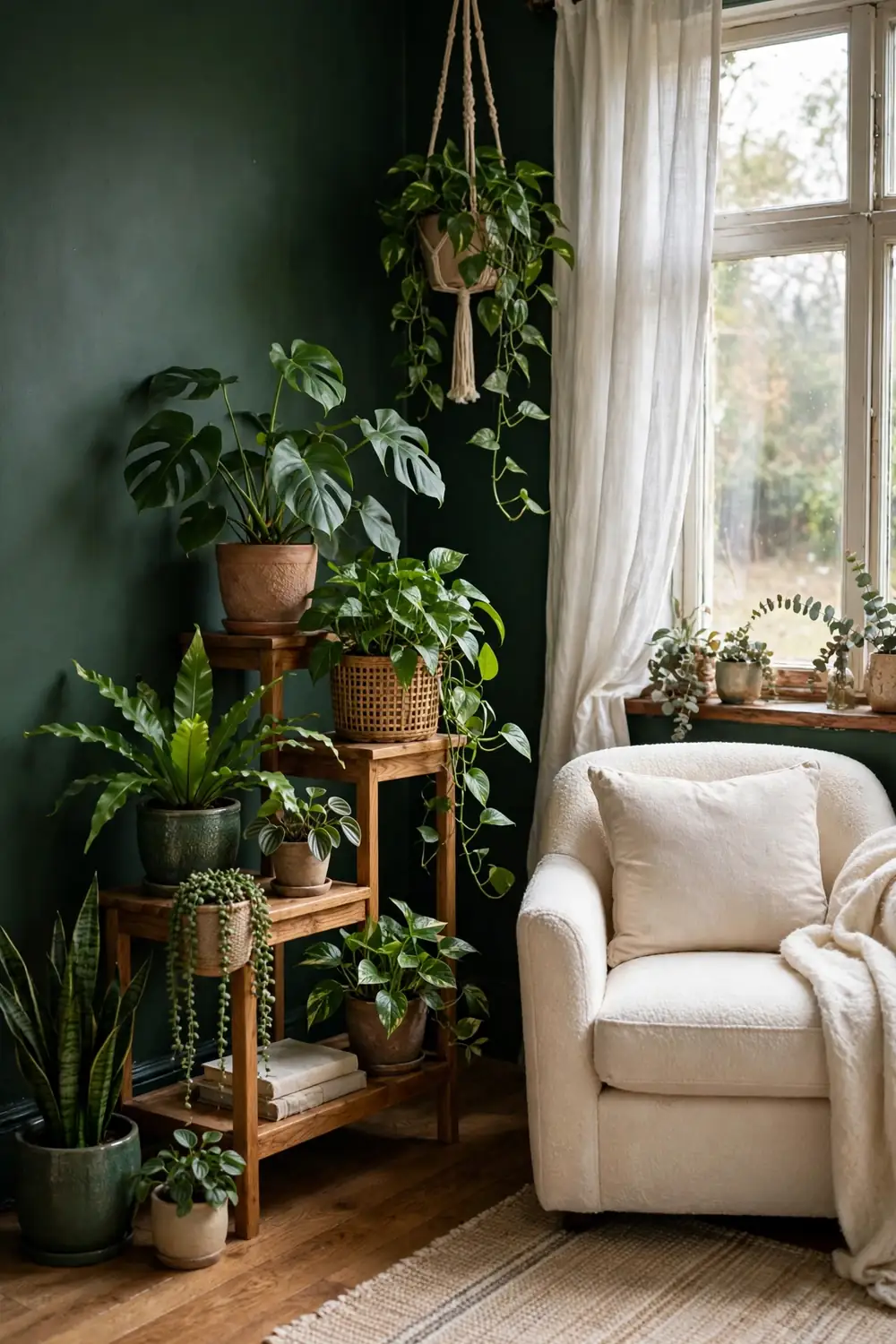
When a dark green room feels heavy, my instinct used to be to buy a bright cushion. Now I move a plant first. Green leaves against a green wall sounds like too much green, but it works, because the plant green is brighter and more alive than the wall green. A tall plant in a clay pot can anchor a whole corner, and a trailing plant on a shelf adds movement without any new colour at all.
Start with plants you already keep alive. I killed my share of fussy plants before I settled on the tough ones that forgive a missed watering. Put the largest plant where you see it first when you walk in, because that first green shape sets the tone for the room. Smaller plants can fill the nightstand and the window sill after that, one at a time, so the room grows slowly instead of turning into a jungle overnight.
Tip: Wipe plant leaves with a damp cloth once a month. Dust dulls green fast, and clean leaves make the wall behind them look fresher.
6. Keep the Trim White So the Green Has an Edge
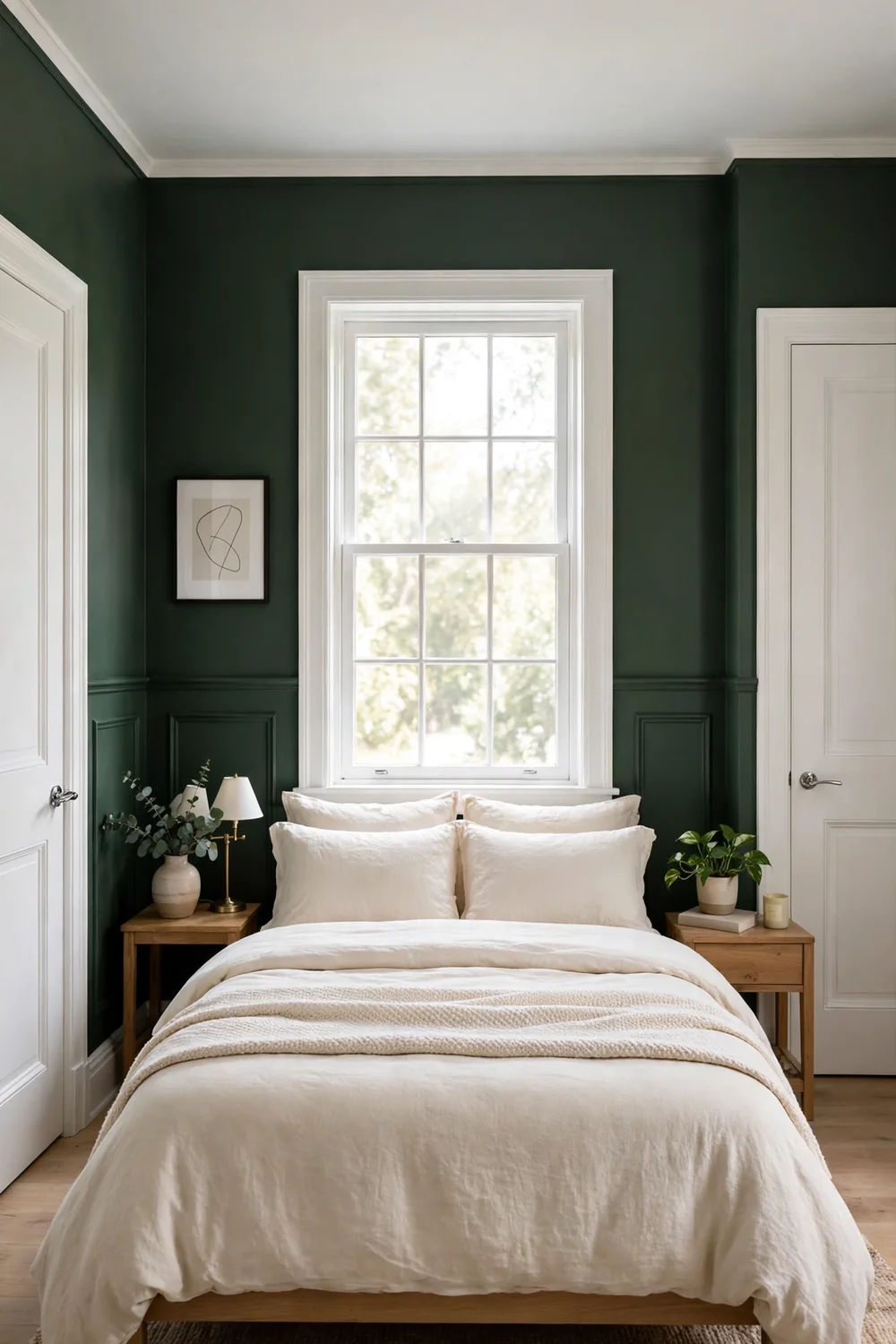
White trim is the quiet hero of a dark green bedroom. My doors and window frames are painted a clean white, and that white line is what stops the green from bleeding into one big dark shape. Without it, the room looked muddy to me in photos. With it, each wall has a clear edge, and the green reads as a choice, not as a shadow.
This is also the cheapest part of the whole look to get right. You do not need new doors. A fresh coat of white on the trim you already have will do it, and it takes an afternoon at most. I painted my window frame first, because the window is where the light comes in, and the white frame made the daylight feel brighter against the green. The ceiling stayed white too, for the same reason.
Tip: Use the same white on the trim, the doors, and the ceiling. One consistent white ties the room together, while three slightly different whites can look untidy up close.
7. Try One Accent Wall Before You Commit to Four
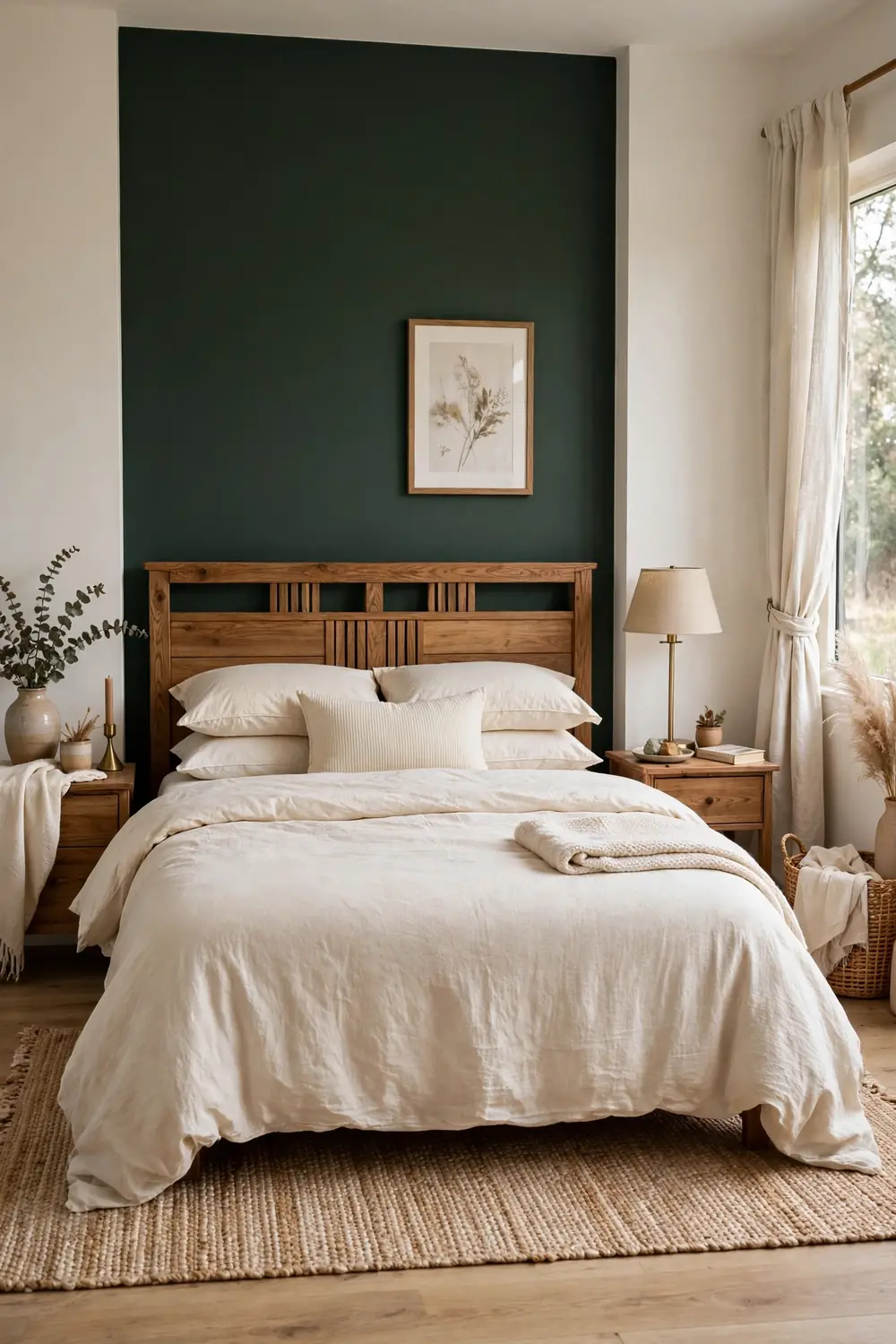
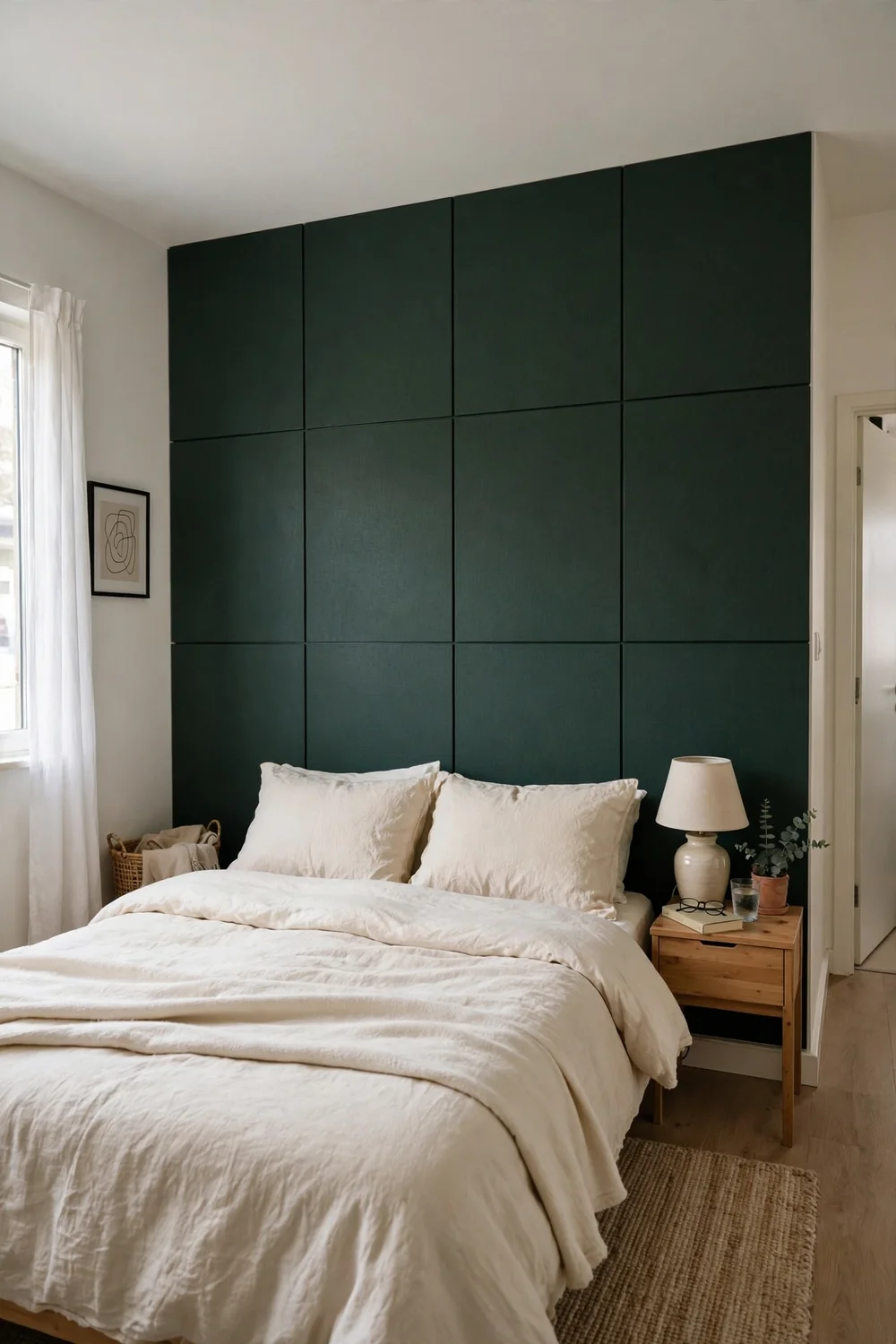
If four green walls feel like too much, one accent wall is the honest middle step. I painted only the wall behind my bed first, and I lived with it for a month before I decided anything else. That one wall gave me the cozy feeling without the worry, and it taught me how the colour behaved in morning light and in lamplight. By the end of the month, I knew I wanted more green, but I also knew I would have been happy stopping at one wall.
An accent wall works best when it is the wall your bed sits against. Your eye lands there first, so the colour has the most impact, and the other walls can stay warm white to keep the room bright. Hang one piece of art or a simple mirror on the green wall, and leave the rest of it bare. A crowded accent wall loses the calm it was meant to give. For more bedroom wall ideas, the House Beautiful bedrooms pages are a good place to compare accent walls side by side before you buy paint.
Tip: Paint the accent wall in a finish one step less shiny than the trim. A flat or eggshell finish looks soft, while a glossy green wall can glare under a lamp.
8. Use a Mirror to Open Up a Small Green Room
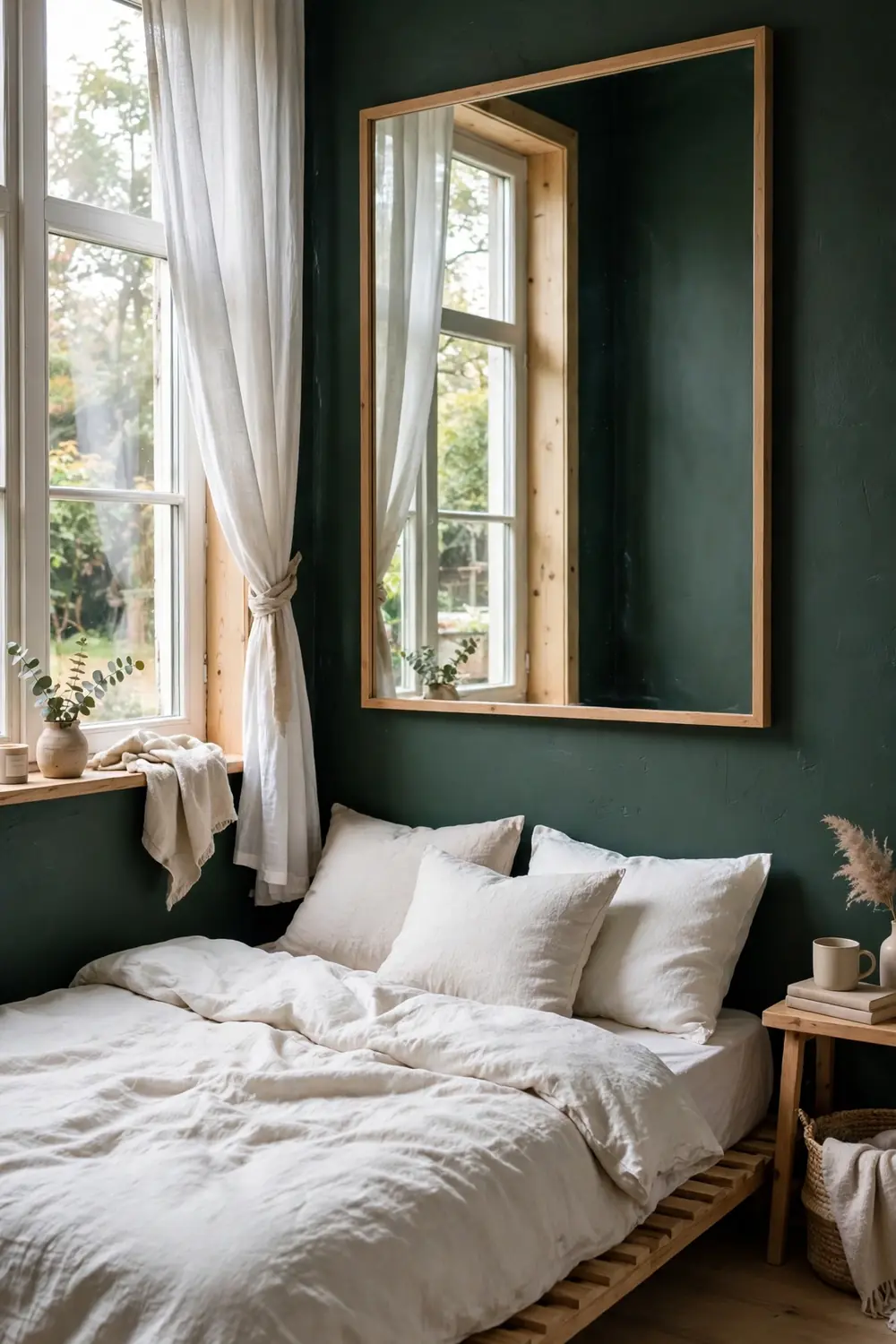
Small rooms taught me the most about dark green. My smallest bedroom once had dark walls and a heavy rug, and it felt like a cupboard. I painted the walls green, swapped the rug for a lighter one, and hung a large mirror opposite the window. The room did not get bigger, but it stopped feeling cramped, and I started using it every day instead of avoiding it.
Mirrors help, but they are not magic. The real change came from keeping the furniture low and the colours close together. A cream bed, a light wood table, and green walls blur the edges of the room, so your eye travels further. I also kept the window clear of heavy frames, because daylight is the best tool a small green room has. One large mirror does this job better than several small ones, which can feel busy on a green wall.
Tip: Hang the mirror where it catches the window, not where it catches the bed. A mirror that reflects daylight doubles the light, while a mirror that reflects the bed just doubles the clutter.
9. Add Gold in Small Doses, Not All at Once
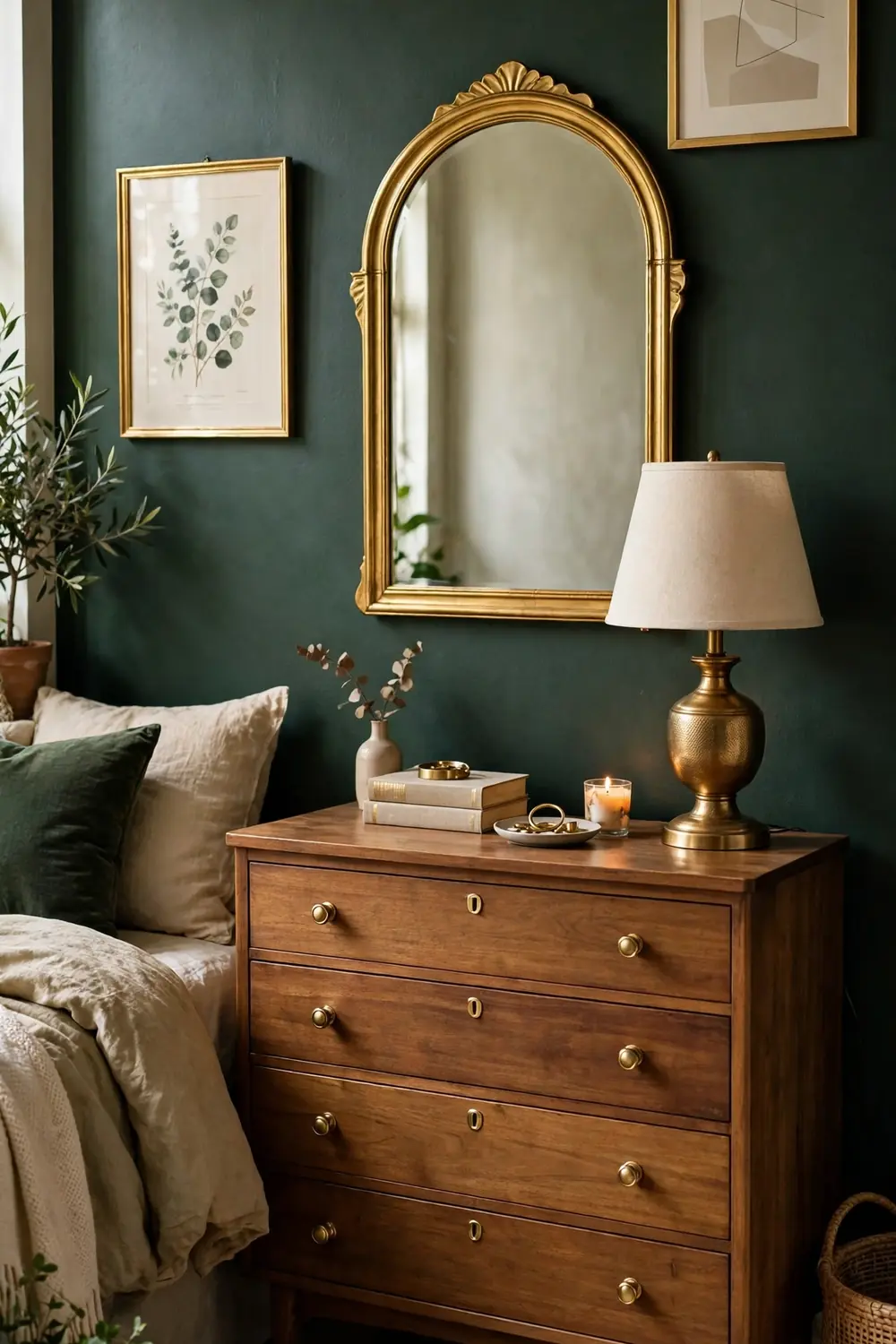
Gold and dark green are a classic pair, and I understand why. A brass frame, a gold mirror, or a small gold lamp adds a warm shine that lifts the green without adding a new colour to think about. My first gold piece was a simple framed print, and it changed the wall above my dresser in an afternoon. The room felt a little more dressed up, but still like a room I could sleep in.
The mistake is adding gold everywhere at once. I tried that in one corner, with a gold frame, a gold lamp, and a gold tray, and the corner started to look like a hotel lobby. One or two gold pieces glow. Five gold pieces compete. I keep gold to a frame and a lamp now, and I let the wood and the plants do the rest of the work. That way the shine feels intentional, not loud.
Tip: Choose one gold finish and stick to it in the room. Brushed brass with polished gold in the same corner can clash, even though both are called gold.
10. Choose a Velvet Headboard for Softness
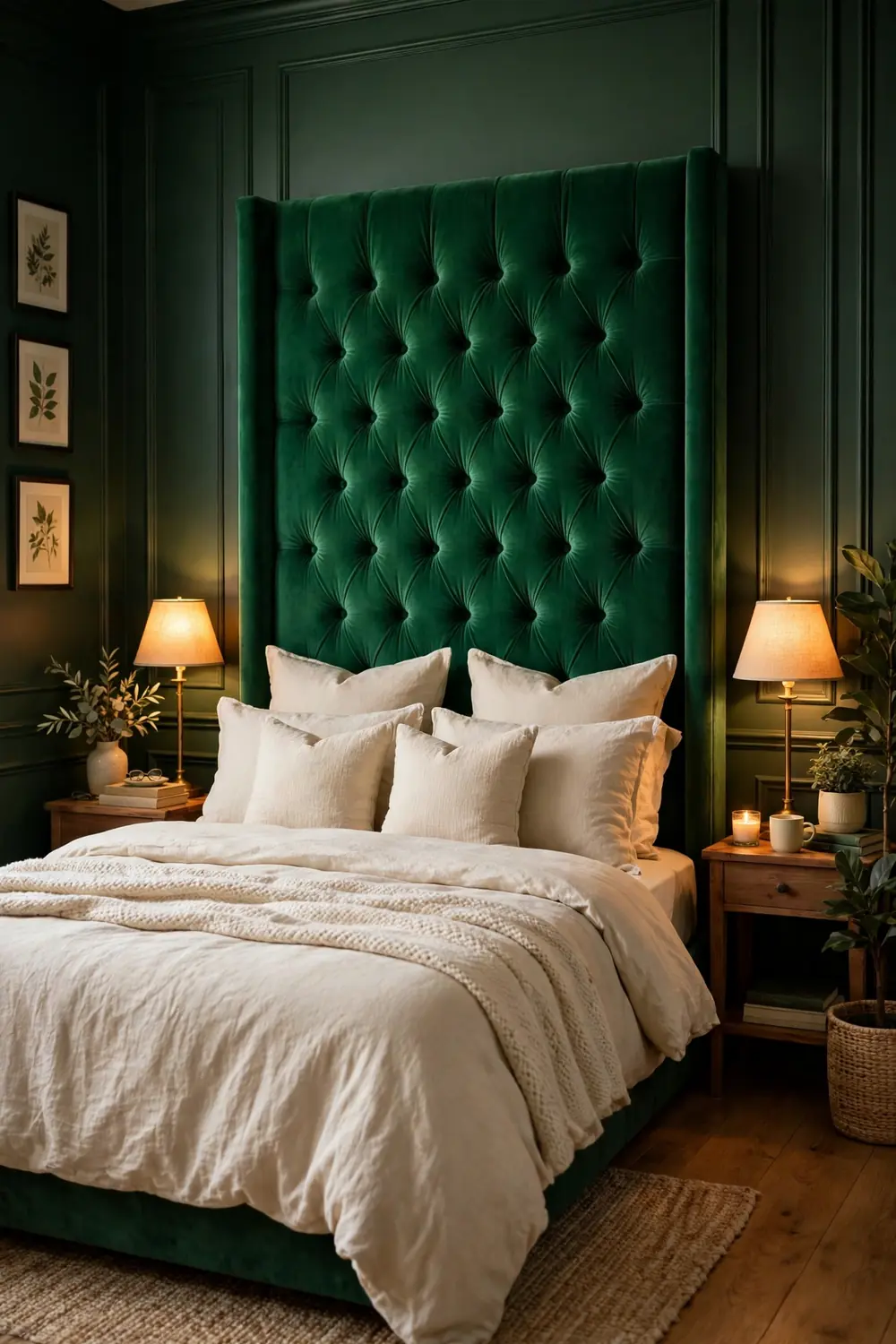
A velvet headboard was the piece that made my green bedroom feel finished. The fabric is soft to lean against when I read, and the deep green velvet sits against the green wall like a slightly darker shadow, so the bed has depth instead of looking flat. I picked a tall headboard, because a short one disappeared against the wall, and the tall shape gives the bed a presence even when the bedding is plain.
Velvet does need a little care, and I will not pretend otherwise. It shows dust if you ignore it, and a pet that sleeps on the bed will leave hair on it. I brush mine once a week with a soft brush, which takes two minutes, and that keeps it looking fresh. If velvet feels like too much upkeep for you, a linen headboard in cream gives a similar soft shape with less care, and it pops against the green in a different, brighter way.
Tip: Test a velvet sample against your wall paint in lamplight before you order. Two greens that match in a shop can clash badly at home under warm bulbs.
11. Soften the Look With Rattan and Natural Fibres
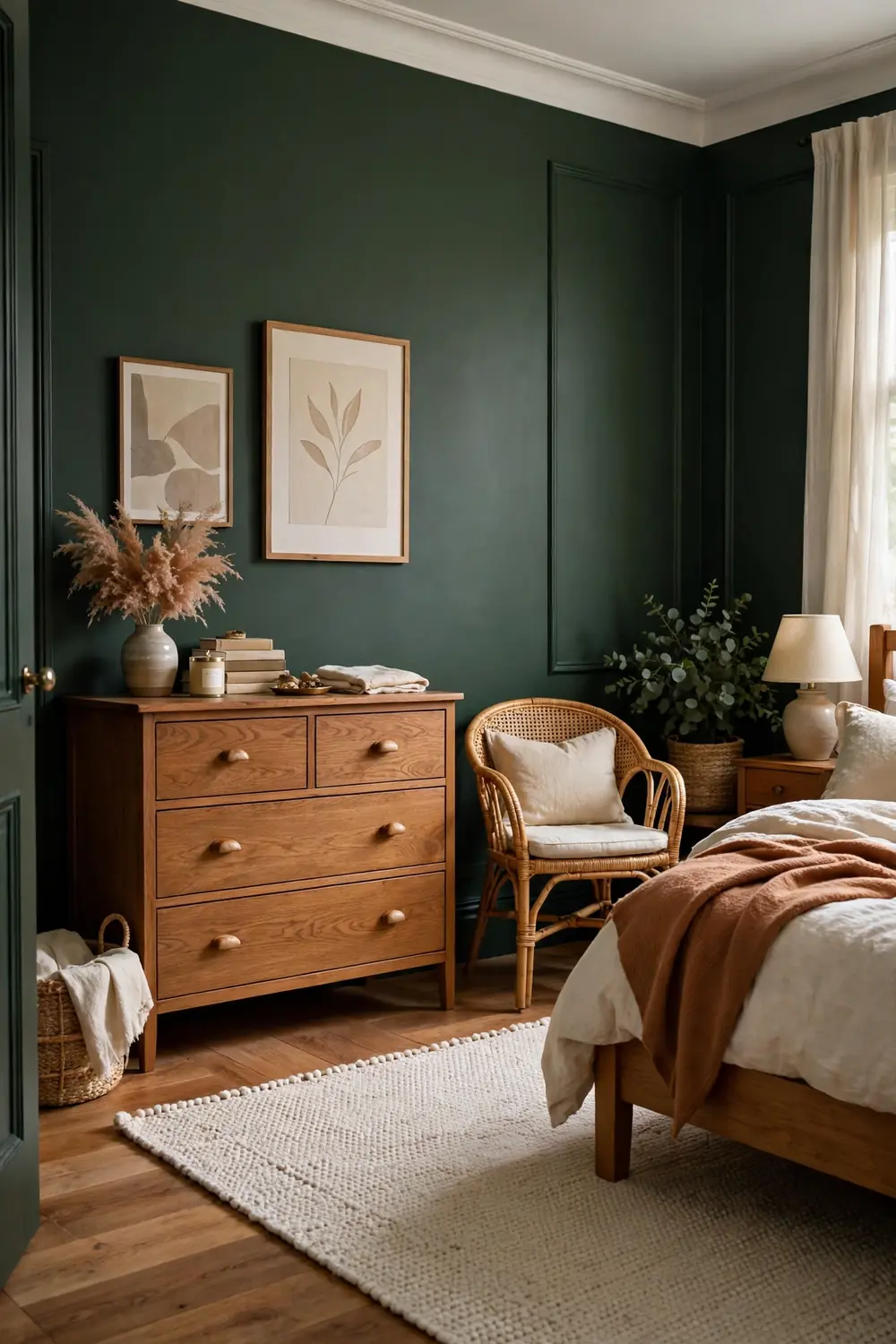
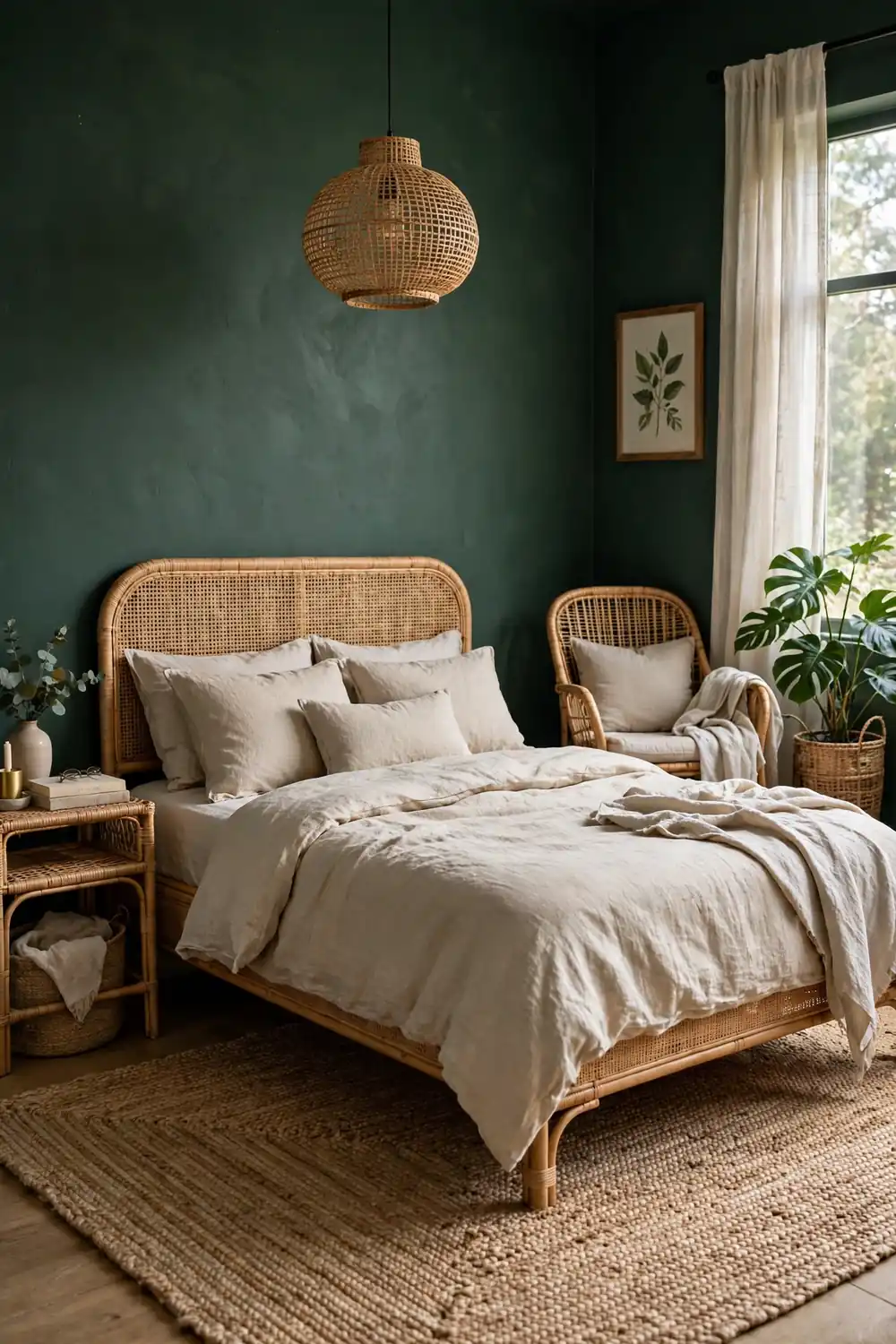
Rattan is the material that keeps a dark green bedroom from feeling too serious. A rattan chair, a woven pendant light, or a jute rug adds a light, airy texture that balances the deep walls. I added a rattan chair to my room first, because I wanted a place to sit that was not the bed, and the chair made the whole room feel more relaxed straight away. The natural colour of rattan also warms the green, the way wood does, but with a lighter touch.
Natural fibres work best when they are not all the same shade. I mix a pale jute rug with a slightly darker rattan basket, and the small differences keep the corner from looking like a set bought in one trip. Linen bedding helps here too. A linen duvet cover wrinkles a little, and that lived in crease suits a green room far better than a stiff, perfectly pressed cover.
Tip: Keep rattan out of direct damp air, like a window that leaks in rain. Rattan handles normal room air fine, but repeated damp can weaken it over time.
12. Mix Patterns, but Keep One Colour in Common
Pattern in a dark green bedroom can go wrong fast, and I have the photos to prove it. My first attempt mixed stripes, florals, and checks with nothing in common, and the bed looked like a charity shop shelf. The fix was simple once I saw it. I kept the patterns, but I made sure every pattern had cream in it. Suddenly the stripes, the floral, and the plain cream throw all belonged together, and the green wall behind them acted like a calm frame.
Start with one patterned cushion, not five. Live with it for a week, and notice whether your eye rests on it or fights with it. If it rests, add a second pattern that shares a colour with the first. If it fights, swap it out before you buy anything else. The Homes and Gardens bedrooms pages show this trick well, with rooms that mix patterns but never lose their calm base.
Tip: Repeat one colour from your pattern in a plain piece nearby. A rust cushion plus a plain rust throw ties a busy bed together without adding another pattern.
13. Make a Reading Corner in the Green
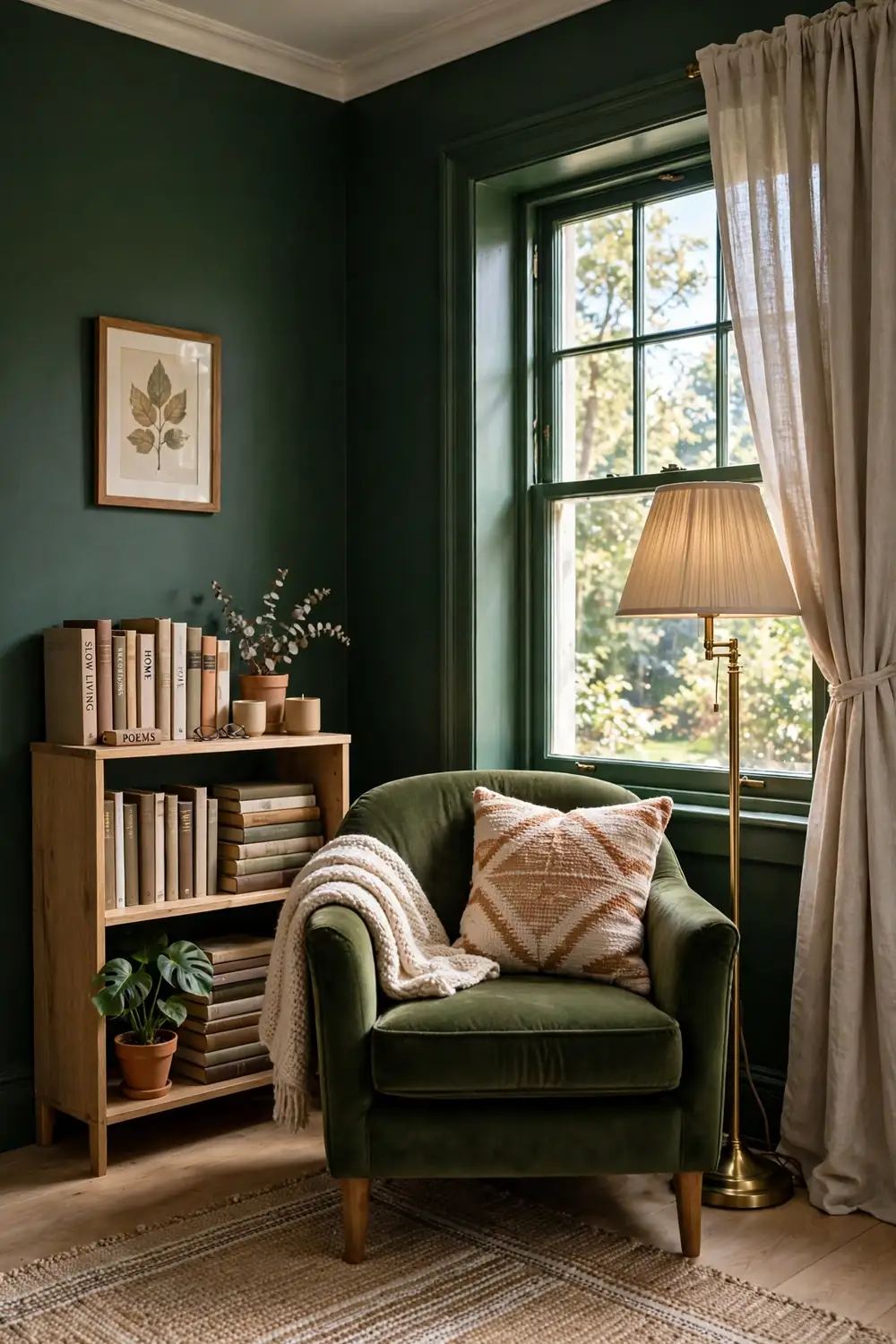
A dark green corner invites you to sit down, and that is half the charm. I put a small armchair in the corner of my green bedroom, with a lamp that points down at the page and a basket for books I am halfway through. It is not a grand reading nook. It is a chair, a lamp, and a basket, and yet it is the spot I use most in the room. The green behind the chair makes the corner feel separate, even though it is just a corner of the same room.
Choose a chair you can sit in for an hour without fidgeting. I tried a beautiful chair once that looked perfect and felt terrible after ten minutes, and it sat empty for months. A plain chair with a soft cushion beats a pretty chair you avoid. Keep a small table or stool beside it for a mug, because a reading corner without a place for a drink is just a chair in a corner.
Tip: Put the reading lamp on the side of your non-dominant hand, so the light falls across the page instead of casting your hand’s shadow over the words.
14. Let the Room Go Moody at Night
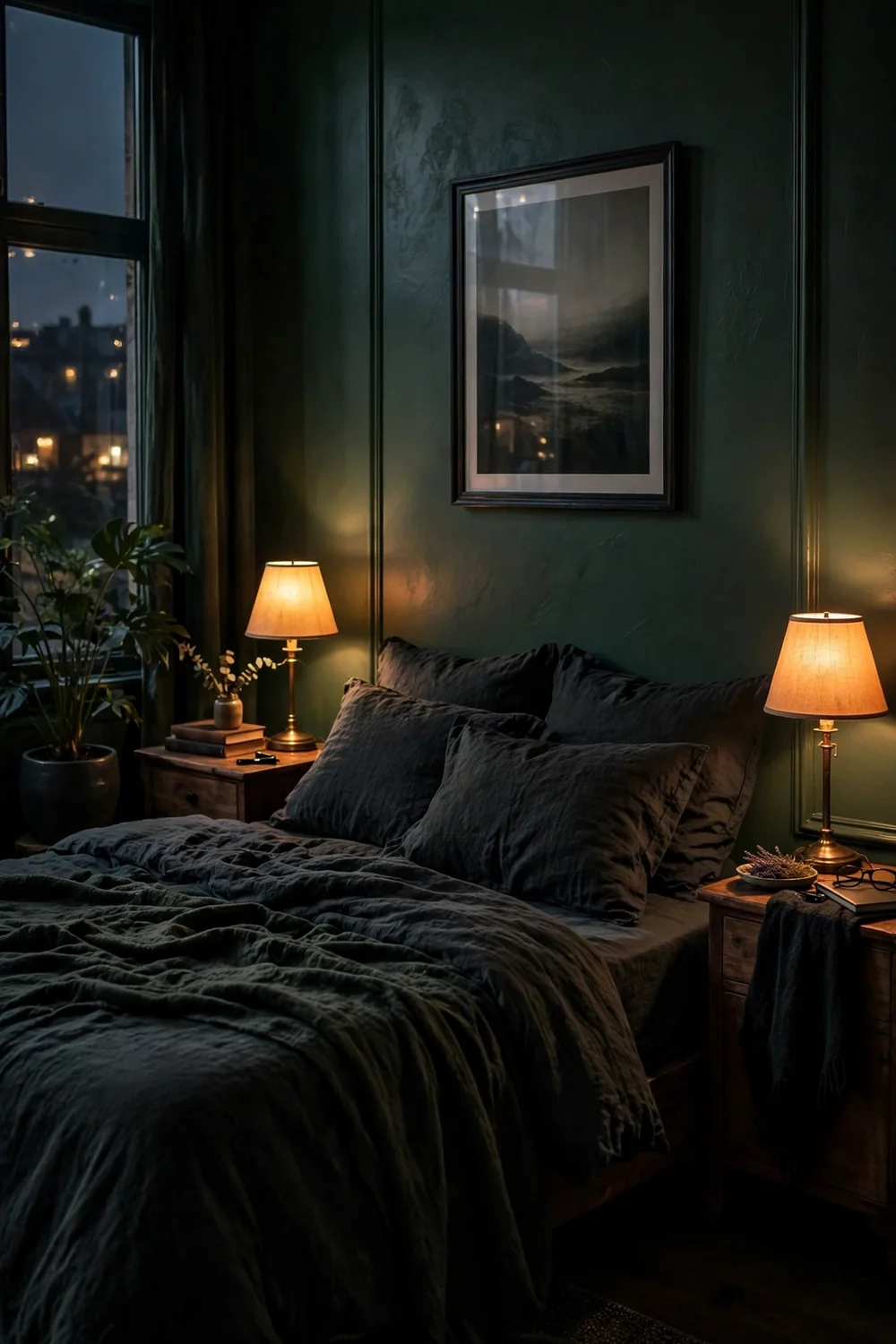
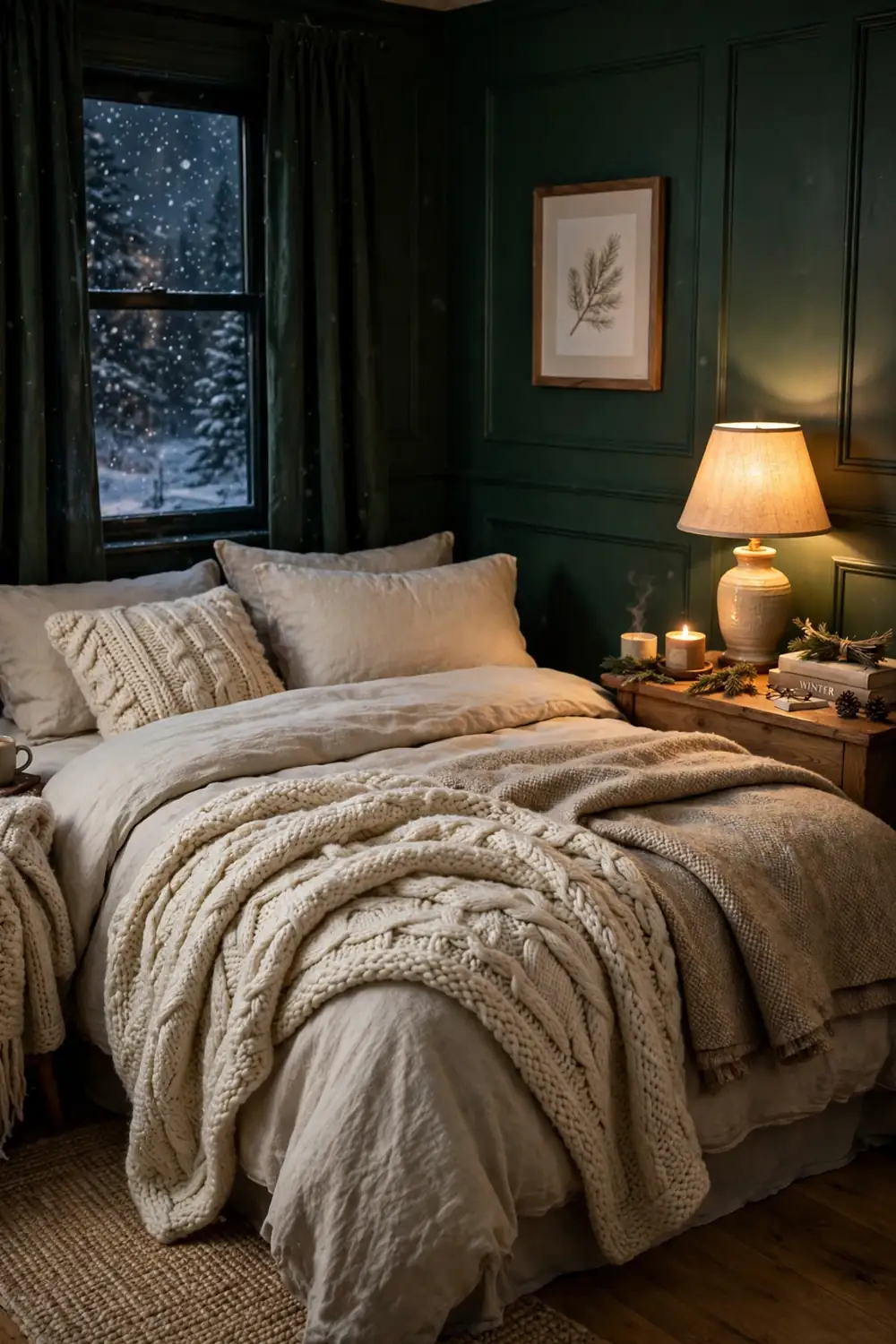
Some rooms are built for daytime, and some are built for evenings. A dark green bedroom is the second kind. In the morning it is calm and fresh, but at night it turns into something softer, almost like a cabin in winter. I used to fight that mood by leaving bright lights on. Now I lean into it, with low lamps and a candle on the dresser, and the room feels like it was designed for winding down.
Moody does not have to mean gloomy. The trick is layers of low light, not one dark room. I use two lamps and a small candle, and I keep the ceiling light off after dinner. The green walls absorb the bright edges, and the soft light pools where I need it. If the room ever feels too dark, I add a white pillowcase or a pale throw, and that small pale shape lifts the whole bed without breaking the mood.
Tip: Try the room at night for a full week before you change anything. Green rooms settle into your eye slowly, and what feels dark on night one often feels perfect by night seven.
15. Give a Guest Room the Green Treatment
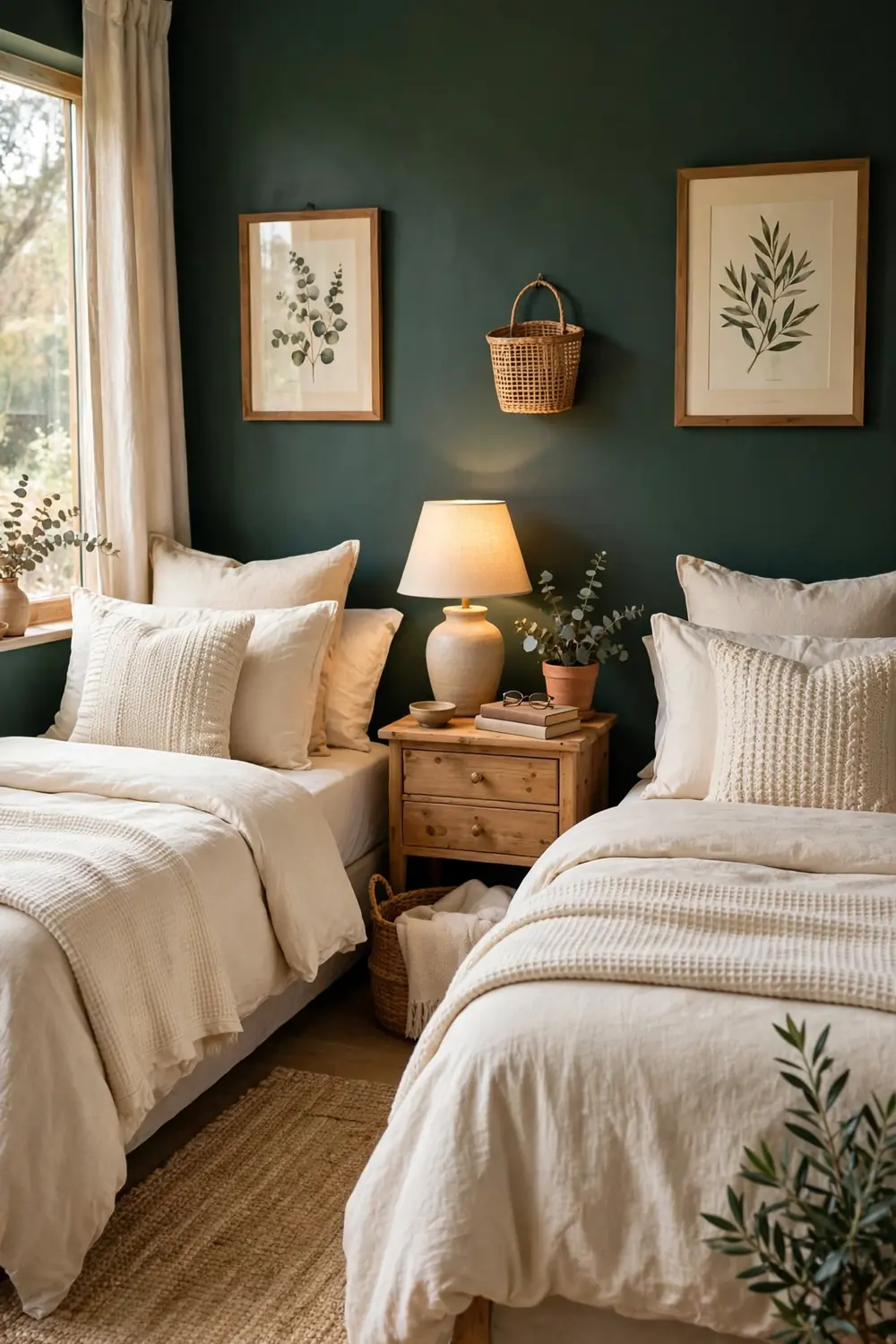
Guest rooms are often the palest rooms in the house, because we want them to feel clean and safe. I painted my guest room dark green instead, and guests now ask about it more than any other room. The green makes the room feel like a small hotel, and a guest who sleeps well remembers that feeling. Two twin beds with cream bedding keep it bright enough, and the green gives it a character that a plain white guest room never had.
Keep guest room green simple. The guest does not know your routines, so the room should explain itself. A clear place to put a suitcase, a lamp that is easy to find in the dark, and a spare blanket folded at the foot of each bed are enough. I leave a small note on the dresser with the wifi details, because a guest room that works well is a room where nobody has to ask for help.
Tip: Put a small basket of spare towels in the guest room, not in a hallway cupboard. Guests will not ask for towels if they are not sure where they are, and a basket solves that quietly.
16. Hang Art That Can Hold Its Own Against Green
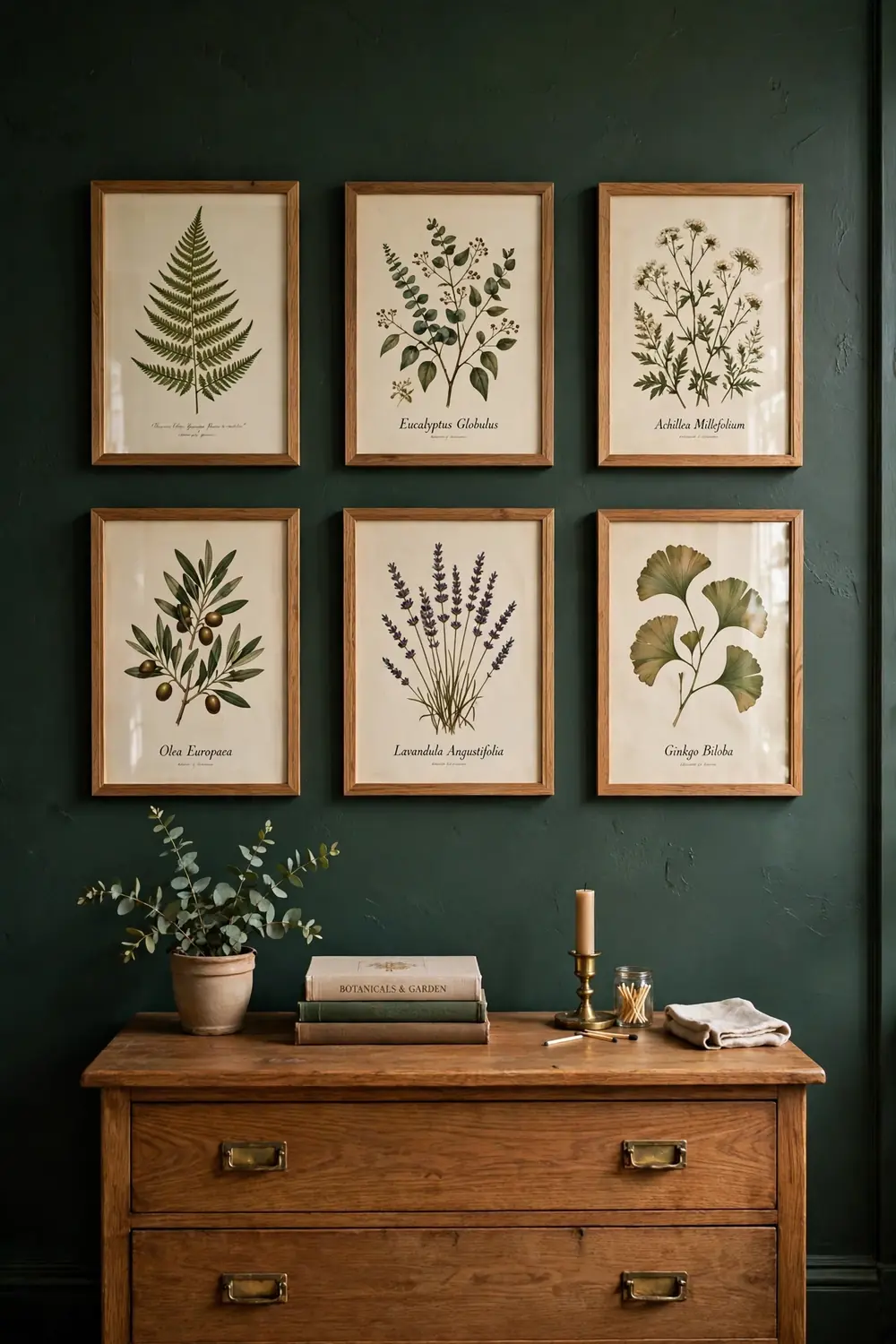
Dark green walls are strong, so art has to be strong too. A small pale print can vanish against a deep green wall, and I learned that the hard way with a tiny watercolour that disappeared completely. Now I choose art with bold shapes or warm colours, and I hang fewer pieces, larger, instead of a crowd of small ones. One large framed print above the bed does more than six small frames scattered around the room.
White mats help a lot here. A wide white mat around a print gives the art a breathing space, so the green does not swallow it. I use simple wooden frames, because an ornate gold frame plus a busy print plus a green wall is a lot to look at before bed. If you love a gallery wall, keep the frames the same colour and leave more space between them than you think you need. For seasonal art ideas, my spring mantel decor ideas post uses the same bold print rule on a lighter wall, and the spacing advice carries over here.
Tip: Hang art at eye level when you are standing, not when you are lying in bed. Art hung too low looks odd from the doorway, which is where you will see it most.
17. Go Rental Friendly With Removable Green
Renters, I have not forgotten you. A dark green bedroom is possible without painting a single wall, and I have done it in a rental with removable wallpaper on one wall. The wallpaper gave me the deep green feeling, and when I moved out, it peeled off cleanly in strips, leaving the original wall untouched. It is not quite the same as paint, but from the bed, you would not know the difference.
Removable green works best on one wall, not four, because the seams show more in a full room. Choose a solid green, not a busy pattern, so the seams disappear into the colour. Pair it with the same cream bedding and warm lamps as a painted room, and the effect is close enough that guests will ask what paint you used. Check your lease first, of course, and test a small piece in a hidden corner for a week before you cover a whole wall.
Tip: Apply removable wallpaper slowly, from the top down, and smooth out air bubbles as you go. A second pair of hands makes this job much easier, and it halves the time it takes.
18. Swap One Thing Each Season and Keep the Green
A dark green bedroom does not need a full refresh every season. The walls stay, and one swap does the work. In summer, I change the heavy throw for a light linen one, and the room feels cooler straight away. In winter, the heavy throw comes back, and I add a warmer candle scent. The green stays the same all year, and that steadiness is part of why I like it. I am not redecorating. I am just letting the room breathe with the weather.
The easiest seasonal swap is the throw and the cushion covers. They are small, they store flat, and they change the room more than you would expect. I keep two sets, one light and one warm, and I swap them when the weather turns. A vase of fresh stems in spring does the rest. For table and room styling that pairs with this, my spring tablescapes post uses the same one swap idea, and the light spring layers work well against green too.
Tip: Store the out of season throw in a cotton bag, not a plastic one. Cotton lets the fabric breathe, and it will smell fresh when you bring it back out.
Frequently Asked Questions
Will a dark green bedroom make a small room feel smaller?
Not if you keep the bedding light and the trim white. A small room feels smaller when everything in it is dark and heavy. Keep the bed cream, keep the ceiling white, and use a mirror opposite the window, and the green will feel cozy instead of cramped. I have seen small green rooms that feel larger than small white rooms, because the green gives the eye a single calm colour to rest on instead of a patchwork of bright walls and busy furniture.
What colours go well with dark green in a bedroom?
Cream, warm wood, brass, and soft white are the safest partners, and they are the ones I use most. Rust and mustard add warmth if you want a little more colour, and a soft blush can soften the room without clashing. Avoid too many strong colours at once. Pick one accent colour besides cream and wood, and let the green do the rest.
Will dark green make my bedroom feel cold?
It can, if the lighting is cool and the bedding is grey. Use warm bulbs, cream bedding, and a wooden nightstand, and the room will feel warm, not cold. A thick throw at the foot of the bed helps too, because it adds a soft shape that reads as warmth even before you touch it. If your room gets little sun, warm lighting matters even more, so do not skip it.
Is dark green a good colour for kids or pets?
Yes, with a washable paint finish. Kids and pets mark walls, and a dark green in a satin or eggshell finish wipes clean more easily than a flat white wall shows scuffs. Keep the lower part of the wall clear of rough furniture if you can, and choose bedding you can wash often. My own green room has survived a muddy dog and a visiting toddler, and a damp cloth has handled most of it.
A dark green bedroom is not a brave choice you have to live with forever. It is a colour that rewards the small things, warm light, soft bedding, a plant that is actually alive, and a chair you sit in. If you are unsure, start with one wall. Live with it for a month, notice how it feels at night, and then decide. You might stay at one wall, and that is a perfectly good room. Or you might do what I did, and paint the rest, one wall at a time, until the room feels like yours in a way it never did before.
However you try it, I hope these 18 ideas give you a place to start that feels doable, not daunting. Pick the one that sounds easiest, try it this weekend, and see how the room feels after a few nights. That feeling, more than any photo, is how you will know if dark green is right for your bedroom.