
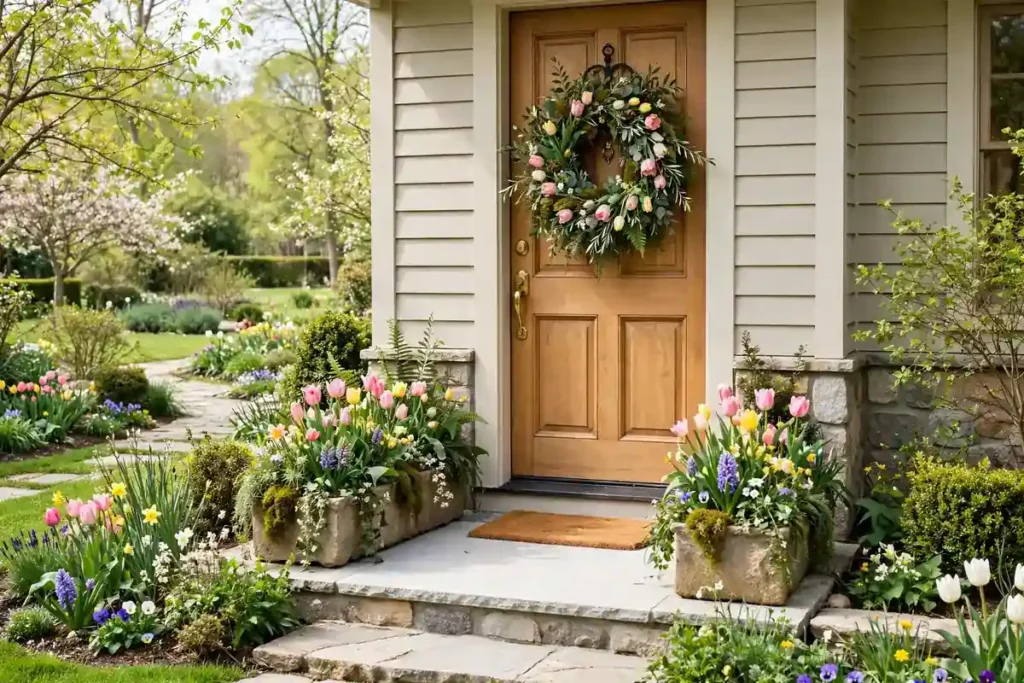
A spring wreath for front door decorating is the smallest change that makes the biggest difference at my house. I learned that one March when I stood on my own step and realized my door had nothing to say. No color, no greeting, just a plain door and a tired mat. I hung a simple tulip wreath that afternoon, and coming home felt different that same evening. Guests noticed it before they noticed anything else, and I did not have to repaint a thing or buy a new planter.
I have tried every wreath in this list on my own front door, or on a door very much like it. My door is not grand, it has no wide porch and no columns, just a hook, a step, and a little light in the morning. That is why these ideas work for real doors. Some wreaths took ten minutes. Some took an afternoon of tying and tucking. A few fought me, a wreath slid, a bow flopped, a dried stem shed all over the step, and I will tell you where that happened, because that is the part that saves you time.
If you want the wider door picture first, these spring front door decor ideas are a good place to start, and you can always come back to The Inspire Rooms homepage to browse. For now, pick one wreath, not all eighteen, and try it this week. A wreath that feels like spring makes coming home feel a little better, and that is really the whole point.
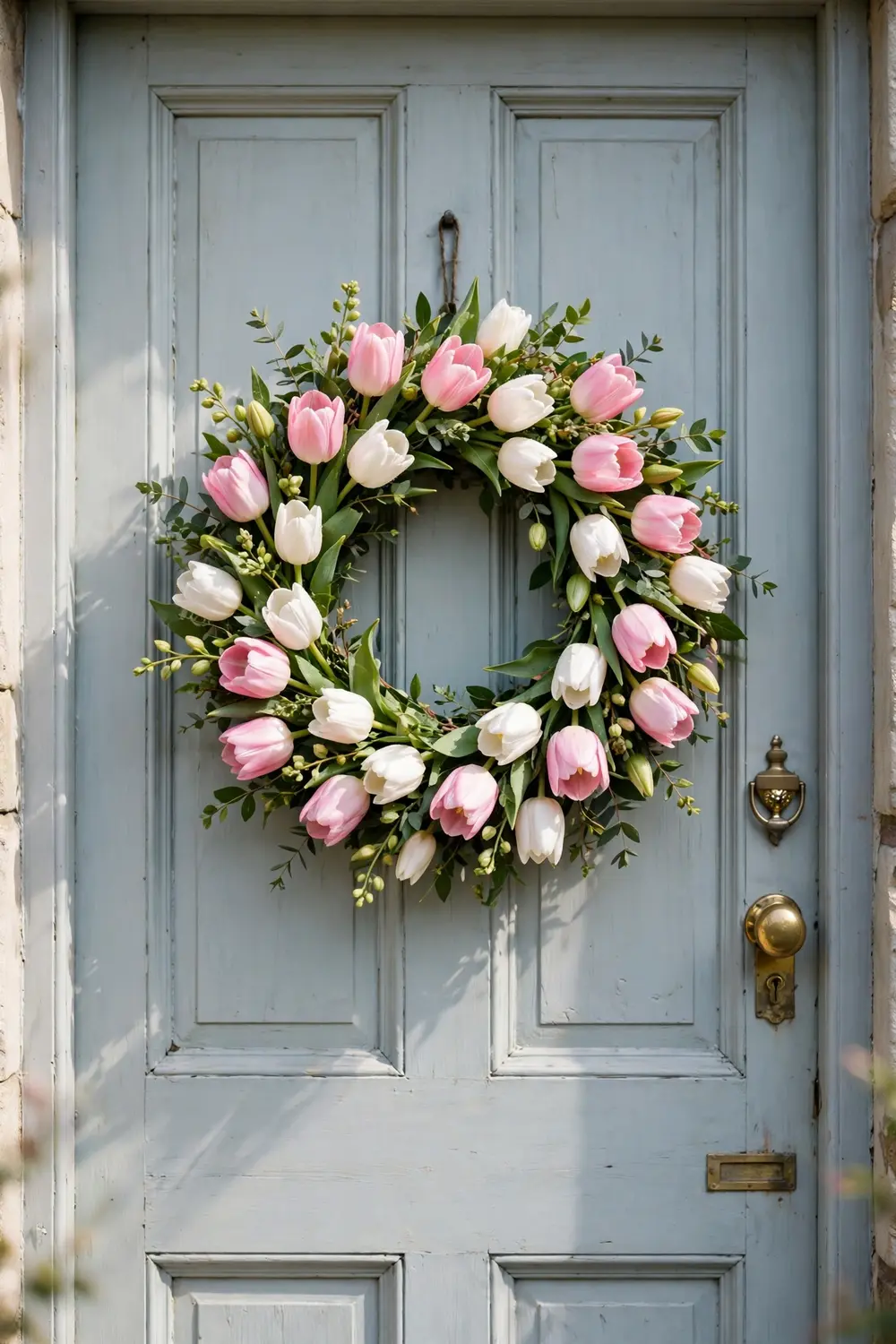
1. Hang a Classic Tulip Wreath Front and Center
A spring front door wreath starts, for me, with tulips. I hang a wreath of pink and white tulips right at eye level, on a simple hook, and the whole entry looks cared for in about two minutes. The tulips do not need anything else around them. A busy wreath plus busy pots plus a patterned mat is too much at once, and the door ends up looking cluttered instead of welcoming.
My first tulip wreath hung too high, up near the top of the door, and nobody really saw it until they stepped back. Eye level is better, roughly where you would look when you knock. I also learned to check the hook the next morning, because a heavy fresh wreath can slide a little overnight, especially if the door gets sun in the afternoon and the stems soften.
Tip: Keep a fresh tulip wreath out of harsh afternoon sun if you can. A shaded door keeps tulips looking fresh for days longer than a door that bakes all afternoon.
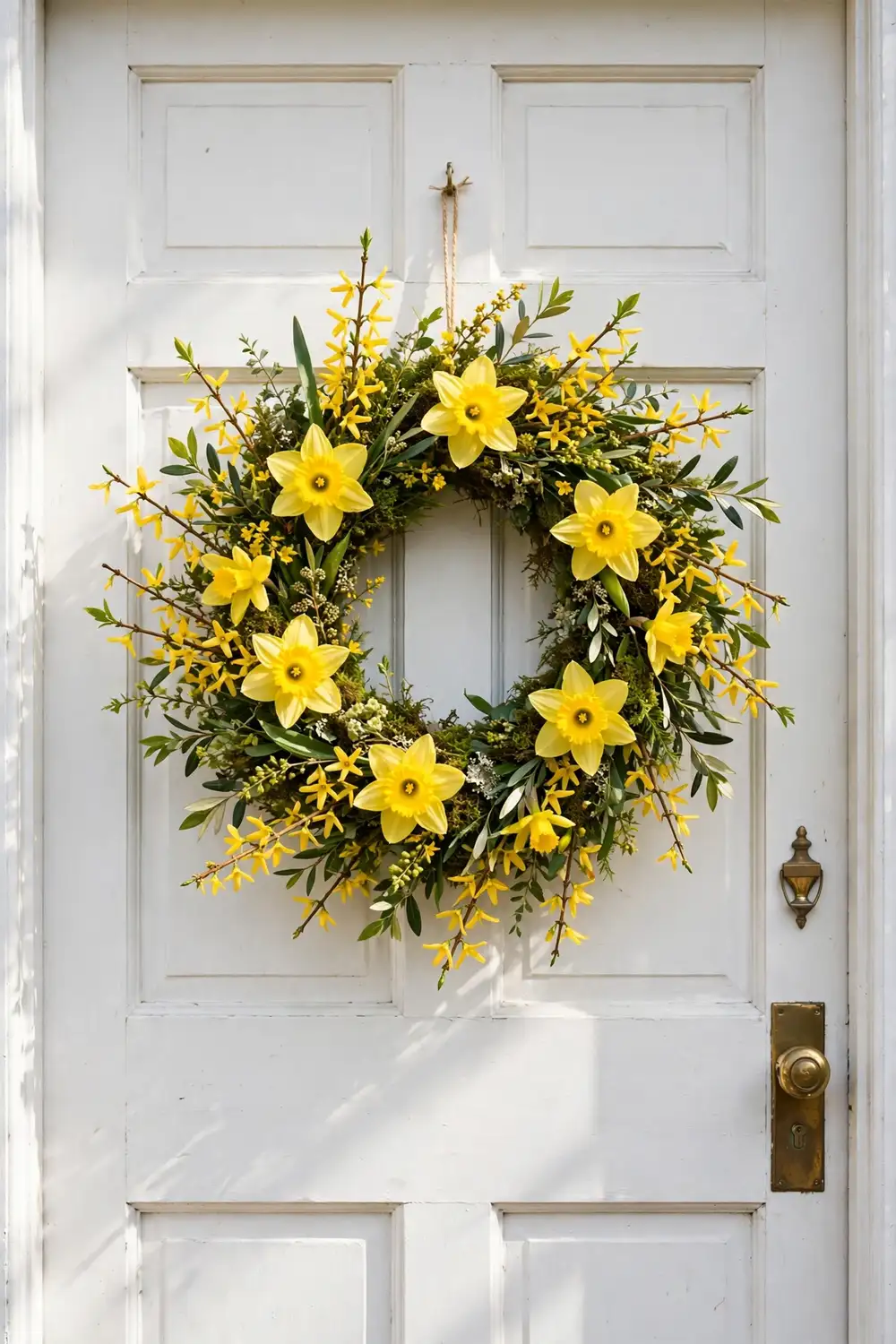
2. Make Daffodils and Forsythia the Cheerful Pair
Daffodils and forsythia belong together in a spring wreath, because they are the same kind of yellow, bright without being loud. I use a grapevine base, tuck in forsythia branches first so they arch a little past the edge, then add daffodils in small groups, not one by one all the way around. Groups look like flowers growing, while single stems spaced evenly look like a pattern someone drew.
I learned to keep daffodil stems short in a wreath. Left long, they flop by the next morning and look tired instead of cheerful. Cut short and tucked deep into the vine, they stand up and look like they mean it. A few green leaves around them hide the stems and make the wreath look full with fewer flowers.
Tip: Wipe daffodil stems before you tuck them in, and keep them away from other fresh flowers in the same water if you want the others to last. Daffodil sap is a little messy, and it shows up fast on a clean door.
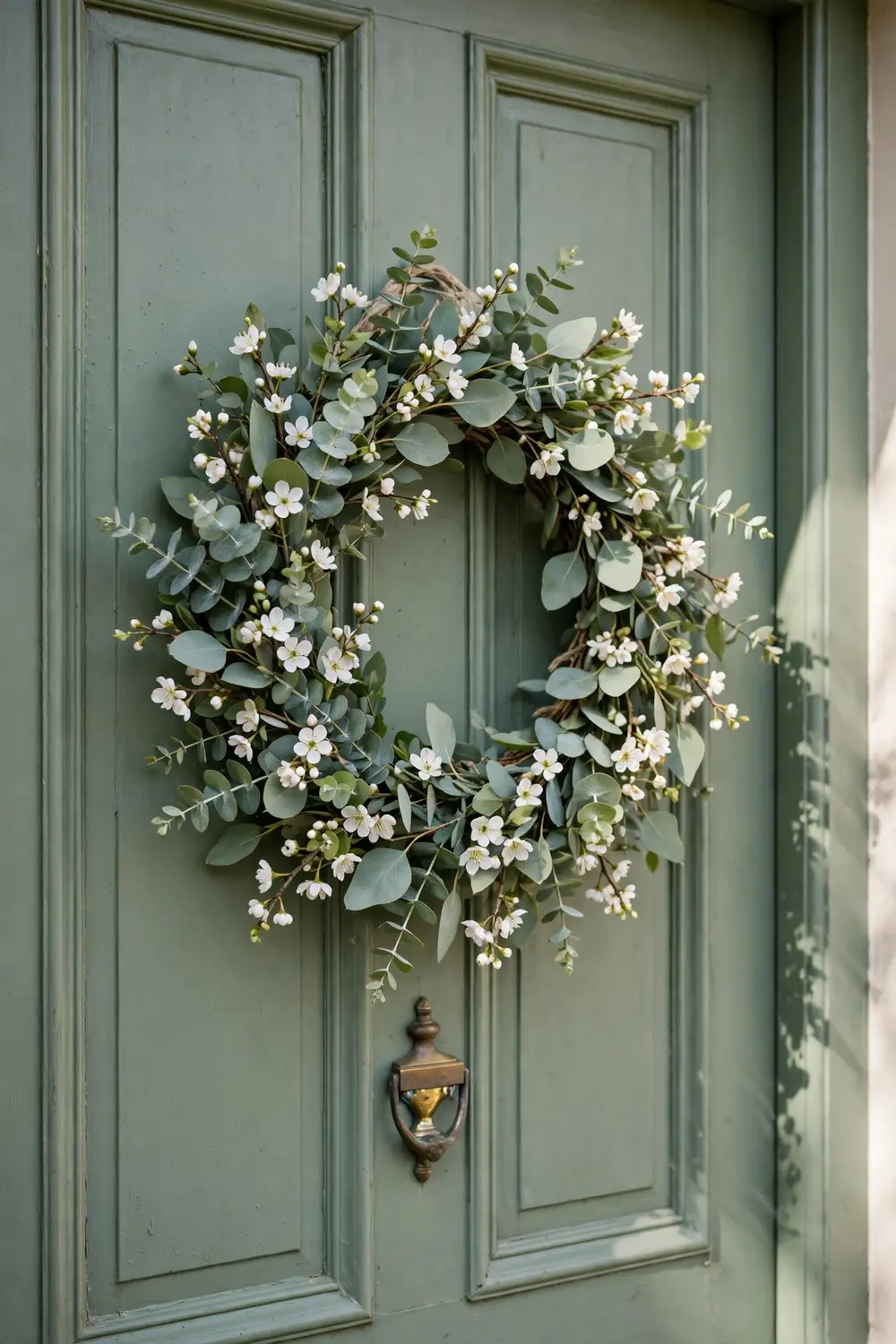
3. Try Eucalyptus and White Blossoms for a Soft Look
A spring wreath with flowers does not have to be colorful to feel like spring. My eucalyptus and white blossom wreath is mostly green and white, with soft silver-green leaves and a few small white blooms tucked in. It smells fresh when you walk past, it lasts longer than most cut flowers, and it looks calm on a painted door, especially a sage-green or blue one.
I build this one on a wire frame, not a grapevine base, because eucalyptus stems are long and a little unruly. I lay the stems in one direction all the way around, overlapping each bunch by about half, so there are no bare patches. The first time I laid them in both directions, the wreath looked tangled, like a nest that had lost its way. One direction, steady overlap, and it looks smooth and full.
Tip: Mist fresh eucalyptus lightly every few days in dry weather. Dried eucalyptus still looks good, but fresh eucalyptus smells better, and the smell is half the point at a front door.
4. Keep an Easter Wreath Elegant, Not Busy
An Easter wreath can tip into busy very fast, and I keep mine to one Easter detail done well. Pastel speckled eggs tucked into greenery, with a few small spring flowers, and nothing else shouting Easter. The eggs say Easter, the greenery says spring, and together they feel like a holiday without feeling like a shop window.
The eggs sit deep in the wreath, not perched on top of it, because eggs on the surface roll and fall when the door moves. I wire each egg in place, or glue it to a small pick first, and I check the wreath after the first day of use. A low, balanced wreath with eggs tucked in looks intentional. A wreath with eggs sliding around looks like it is falling apart, even when it is not.
For more flower combinations that work at Easter, these Easter flower arrangements have helped me when I only had one bunch to work with.
Tip: Keep Easter decorations to one or two pieces on the door. A wreath with eggs plus a bowl of eggs plus a bunny sign is three Easter ideas competing, and the door ends up looking loud instead of lovely.
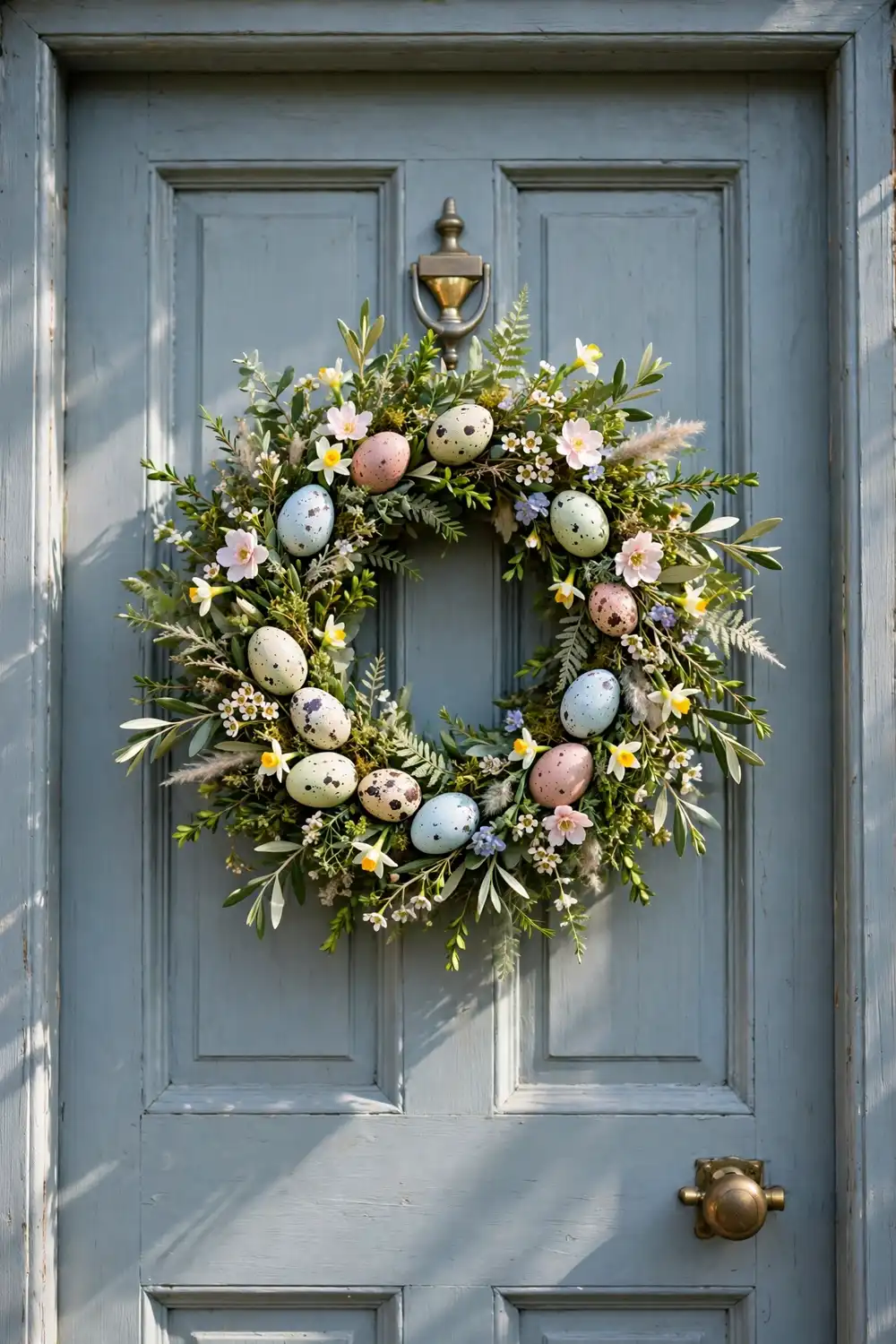
5. Build Your Own Grapevine Wreath Base
A DIY spring wreath starts with the base, and grapevine is the most forgiving base I know. I take a plain grapevine wreath, fluff any flattened sections so it sits round and even, and then I weave in greenery and flowers, tucking stems deep into the vine instead of gluing everything on the surface. Tucked stems hold better, and they look more natural, because you can see the vine peeking through in places.
The trick is working in small sections. I do one quarter of the wreath at a time, step back, and check it before moving on. The first wreath I made, I worked all the way around without stepping back, and one side was thick while the other side was bare. Small sections, frequent stepping back, and a wreath that looks even without looking perfect. For a step-by-step look at working with a grapevine base, the Rural Sprout grapevine wreath guide walks through forming and weaving the vine in plain language.
Tip: Attach your hanging loop to the back of the base before you add flowers. Adding it last means reaching through finished flowers, and you will crush the very blooms you just placed.
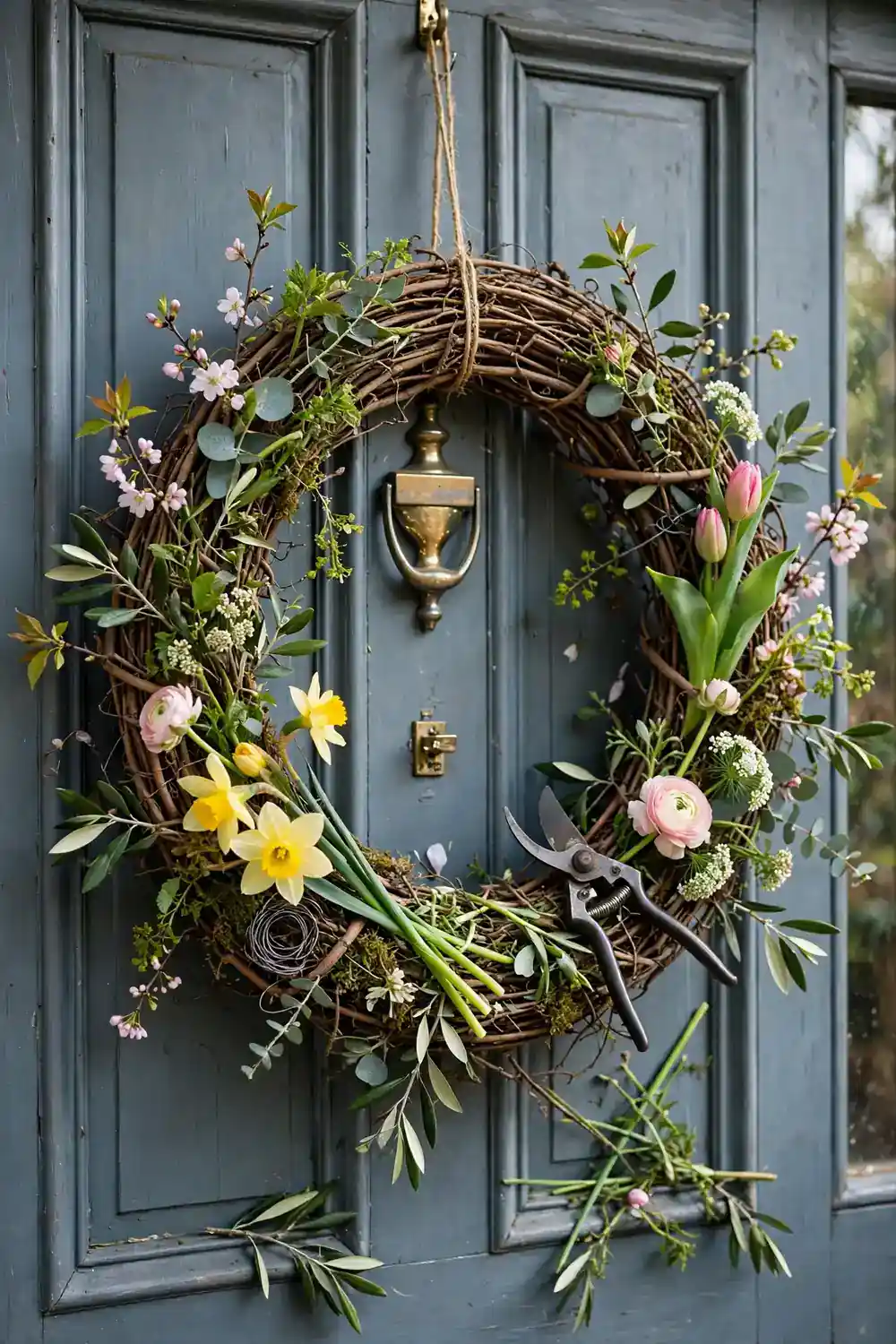
6. Go Neat and Green With a Boxwood Wreath
A boxwood wreath is the neat, green answer when I want spring without a riot of color. It is full, round, and a little formal, and it looks good on almost any door, especially a classic door with white trim. Boxwood gives height and texture without flowers, which is useful when the door itself is already colorful, or when the planters are doing most of the talking.
Boxwood needs a little care, but less than I feared. I mist it lightly in dry weather, and I trim stray shoots with small shears every few weeks, just a snip here and there, to keep the round shape. The first year I let one boxwood wreath go wild, and it looked like a cloud instead of a ball, which was charming for about a week and messy after that. A few minutes of trimming keeps it looking intentional.
Tip: Hang a boxwood wreath where it gets a little shade. All-day hot sun dries the leaves faster, and a dry boxwood wreath sheds, which is a mess on a clean doorstep.
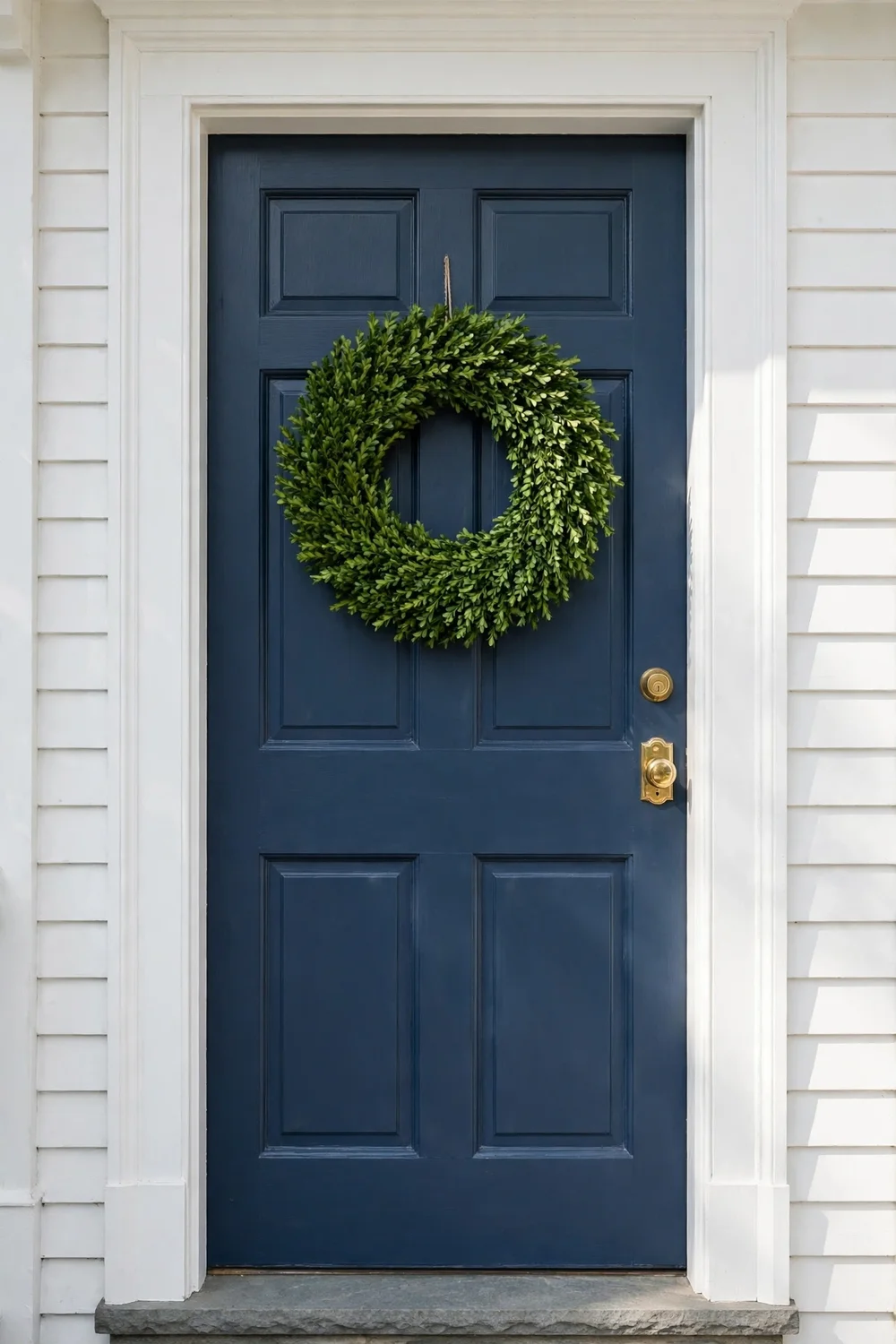
7. Save Peonies for a Special Spring Evening
Peonies are a treat, and I treat them like one in a wreath, which means I do not try to make them do everyday work. A blush peony wreath, with low, full blooms and a little greenery, is the wreath I hang when I want the evening to feel special, not just springlike. The peonies are soft, full, and a little extravagant, and the rest of the door stays simple so they can be the star.
Peonies open fast in a warm room, which is both lovely and a little stressful. I buy them a day early, keep them cool, and put the wreath on the door an hour before guests arrive, so they are open but not dropping petals all over the step. A few petals on the doorstep are charming. A pile of petals on a mat is not, and I have learned to check before I sit down to wait for guests.
Tip: Use a sturdy base for a peony wreath. Peonies are heavy for their size, and a light foam base sags under them by the next day. Grapevine or wire holds their weight better.
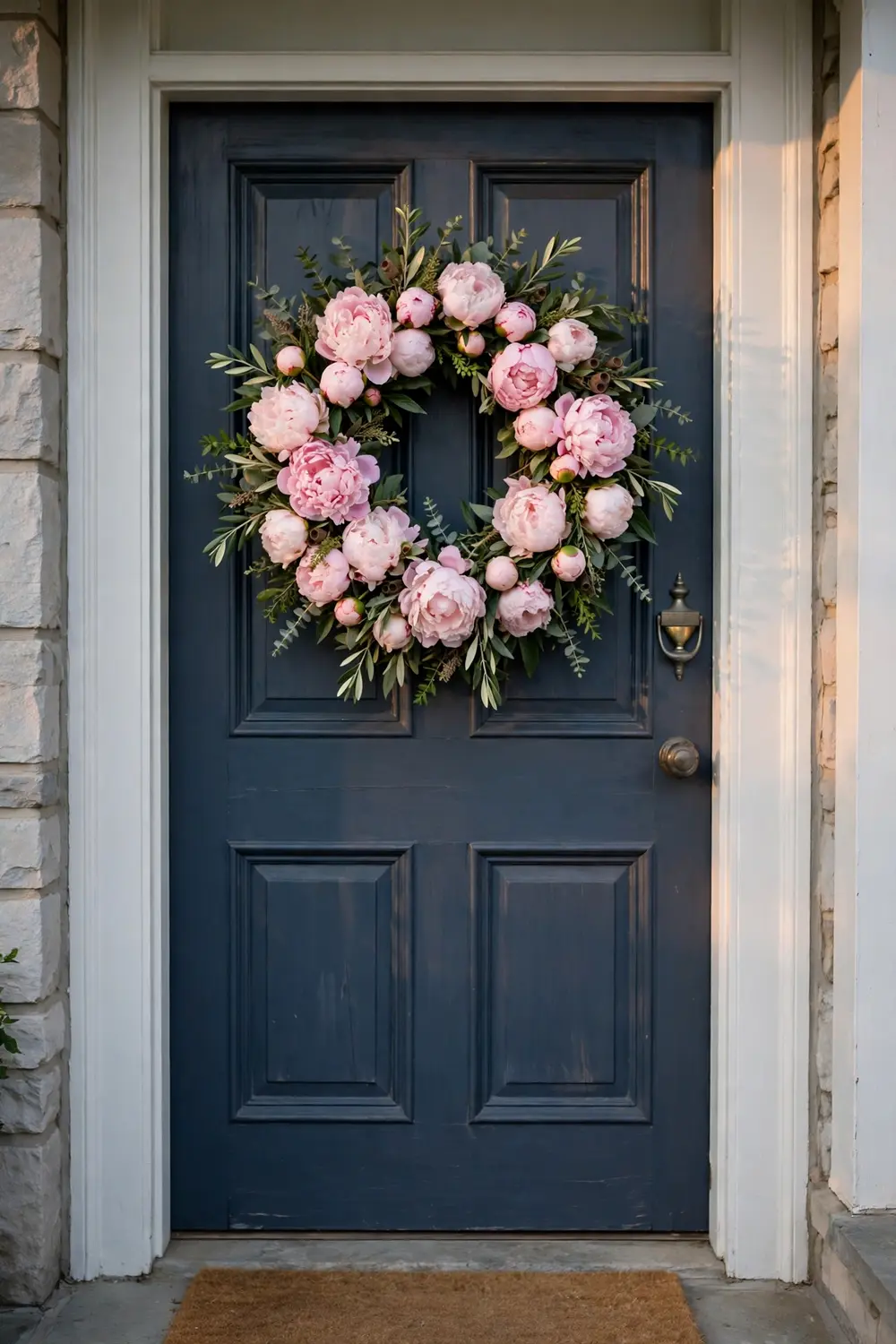
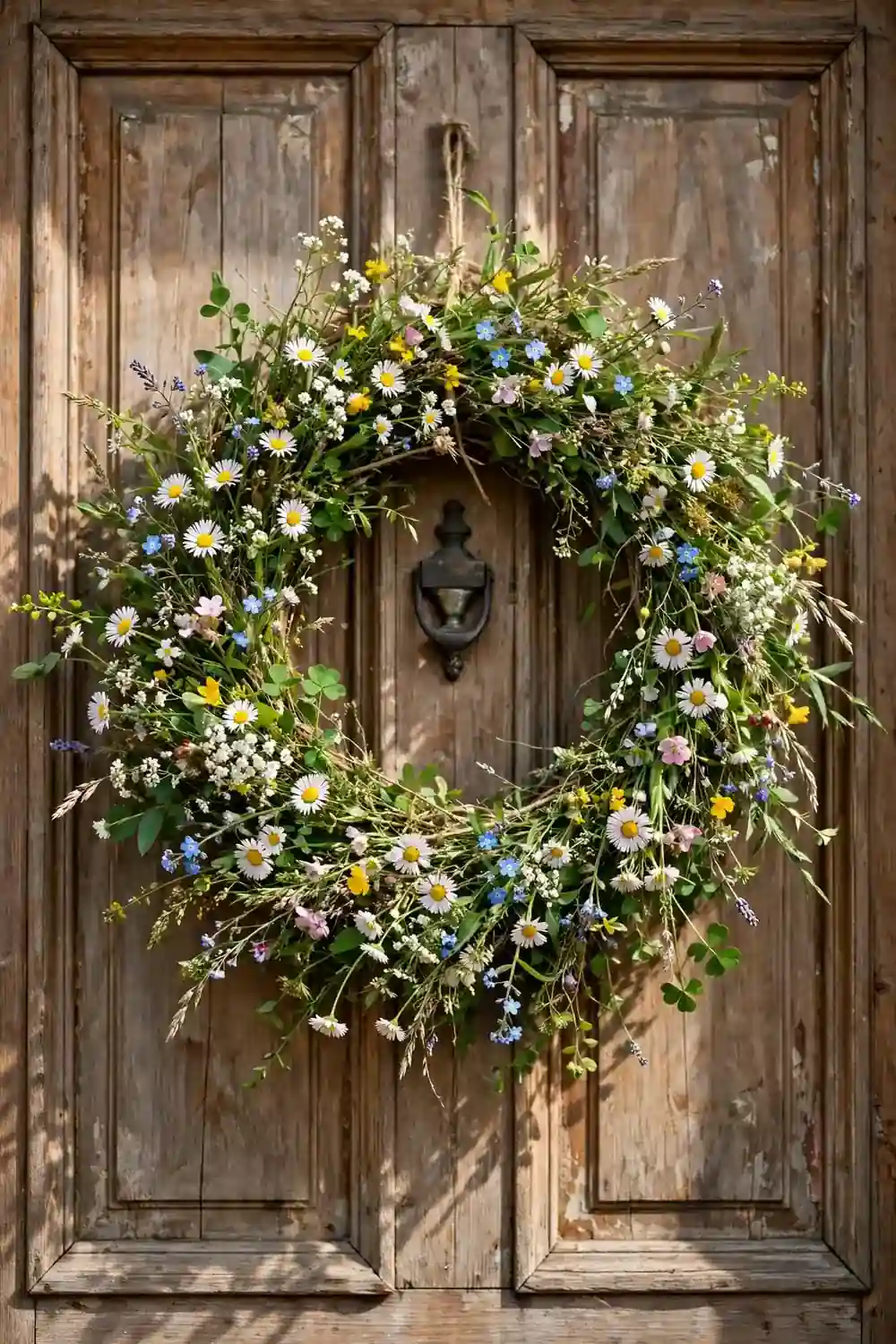
8. Let a Wildflower Wreath Look Gathered, Not Arranged
A wildflower wreath should look gathered, not arranged, and that line is thinner than it looks. Mine uses a grapevine base, small daisies and mixed spring flowers in different heights, and a little greenery, all tucked in loosely. The flowers do not match, and that is the point. It looks like someone walked outside and came back with flowers, which is more or less what happened.
I vary the heights a little, a tall stem here, a short one there, so the wreath has a rhythm to it. Same height flowers all the way around look like a factory line. Different heights look like a meadow, and they also let the door color show through in places, which matters more than perfect symmetry. I also leave a little vine showing, because a wreath with no vine showing looks like a flower ball, not a wreath.
Tip: Fill a wildflower wreath with greenery first, then add flowers. Greenery hides the base and gives flowers something to sit in, and you will need fewer flowers than you think to make it look full.
9. Add Lemons for a Sunny Citrus Wreath
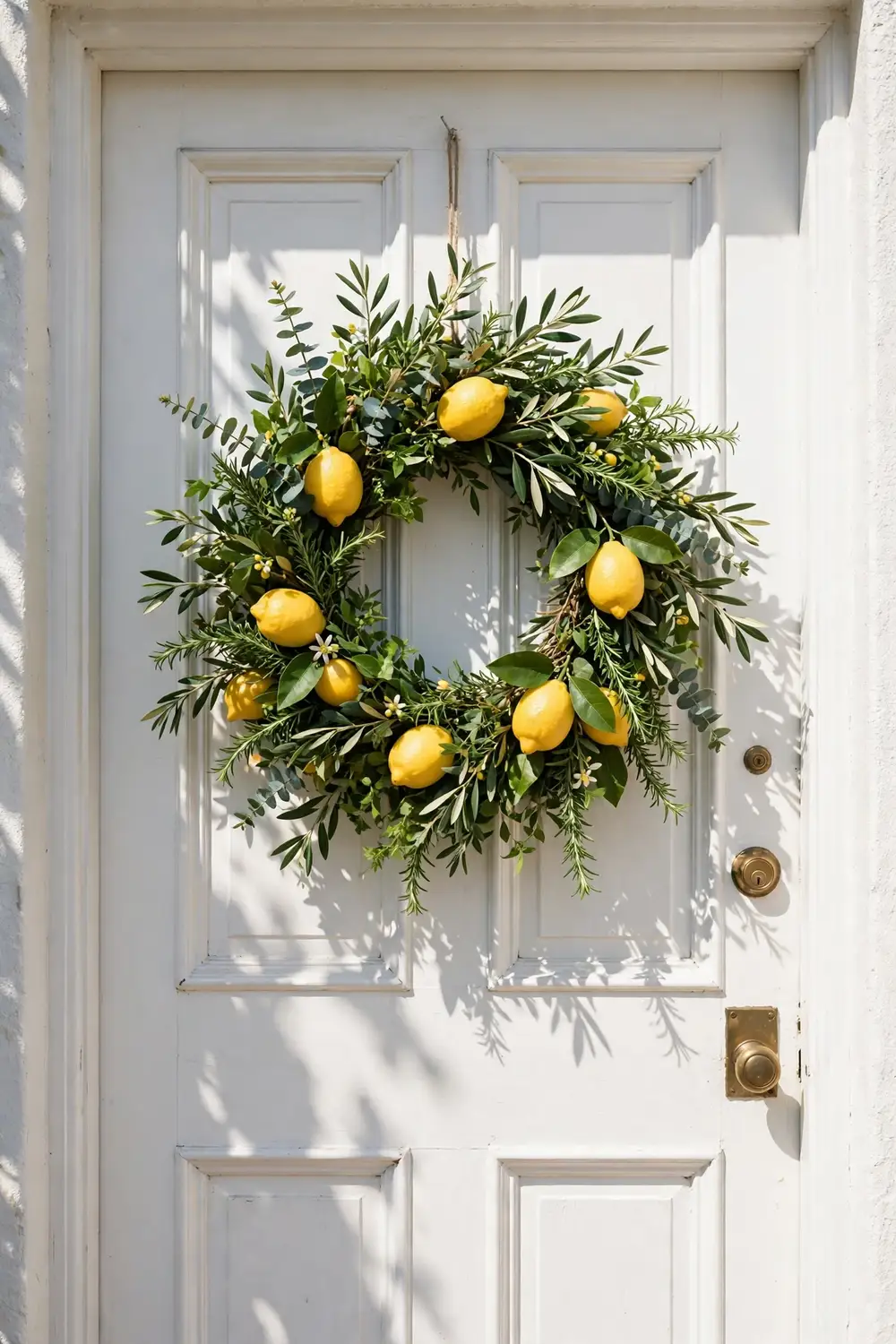
Lemons are the wreath for days when I do not want to arrange flowers at all. Whole lemons tucked into greenery, with a few leaves for contrast, and the door looks sunny before anyone knocks. The lemons smell clean and sharp when you lean in, and I can cook with them later in the week, which feels practical, not wasteful.
I wire each lemon in place, because a lemon glued to leaves falls off the first time the door slams. I also turn the prettiest side of each lemon outward. A dull lemon in the middle of the wreath is the first thing your eye finds, and not in a good way. The rest of the wreath stays plain greenery, because the yellow is already doing plenty of work.
Tip: Mix whole lemons with leaves, not more fruit. A wreath of only lemons looks like a fruit bowl that wandered onto the door. Leaves make it look like a wreath.
10. Hang Lavender for a Calm, Fragrant Door
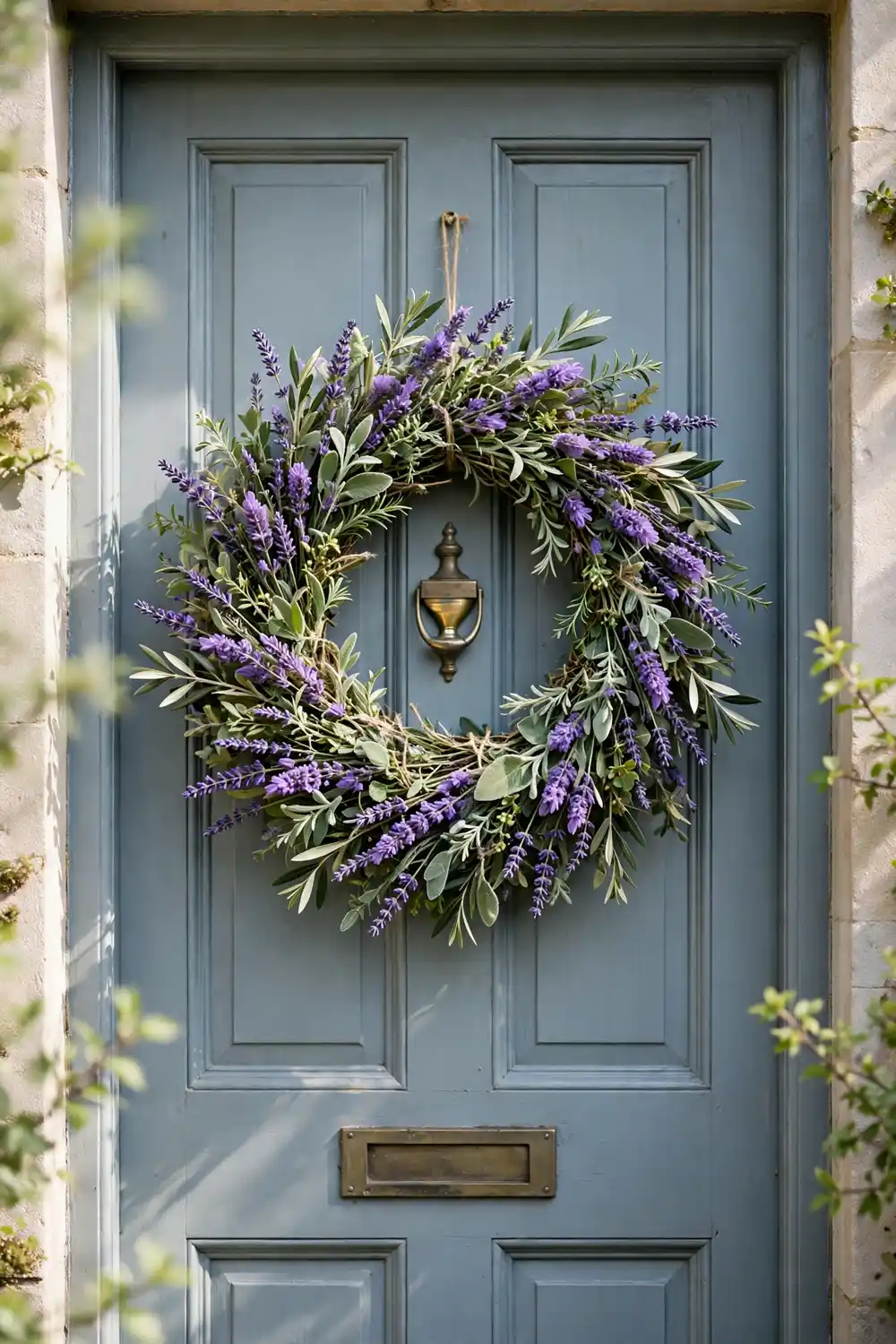
Lavender is the calmest wreath I hang. A wreath of purple lavender with soft greenery smells wonderful when you walk past, and it looks quiet next to a busy porch. It does not shout spring, it whispers it, and on a door that already has colorful planters, that whisper is exactly right.
Lavender dries well, which is part of its charm. I hang it fresh, enjoy the scent for a week or two, and then let it dry right on the door. Dried lavender keeps its color for a long time if it stays out of harsh sun, and it keeps a little scent too. The first lavender wreath I hung, I took it down when it started to dry, thinking it was done. It was not done. It was just entering its second, longer life.
Tip: Handle lavender gently when you hang it. The small buds shed if you shake the wreath hard, and a trail of purple buds on the step is pretty for a day and a sweeping job after that.
11. Let Cherry Blossom Branches Be the Drama
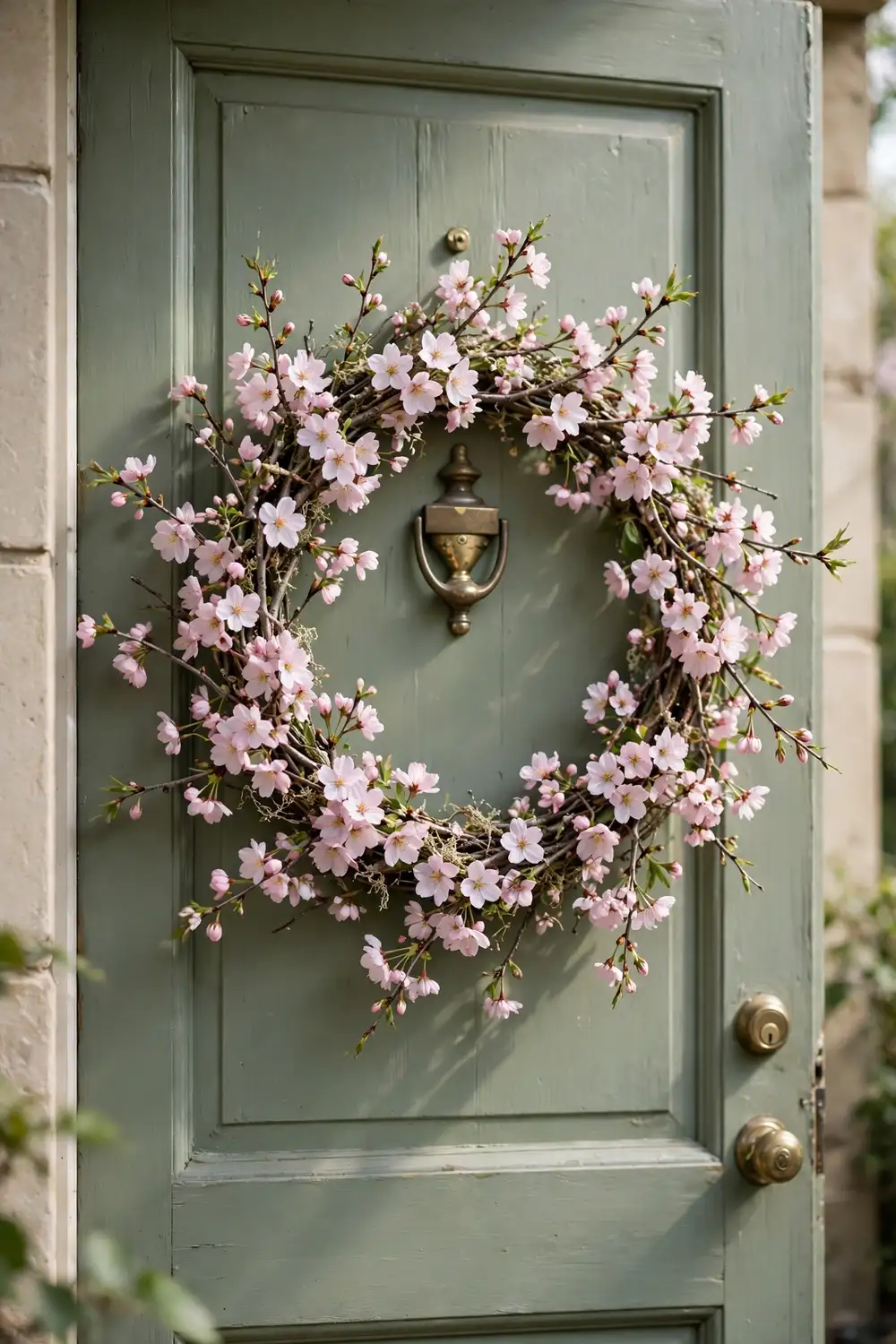
Cherry blossom is the one wreath where I break my own full-and-round rule, and I break it on purpose. A wreath of cherry blossom branches, airy and a little wild, with pale pink blooms and room to breathe between them, gives the door drama without blocking the door itself. You can see the door color through it, and still feel like you are standing under a tree in bloom.
The base has to be sturdy, because branches are top heavy in a wreath that hangs vertically, and a light base tips forward when the door moves. I learned that with branches on the step and blooms everywhere, and I have used a wire frame ever since. A few low green leaves at the base hide the stems and make the branches look like they belong on the door, not like they wandered in from the garden.
Tip: Keep cherry blossom to one wreath, not a wreath plus a branch planter plus a branch vase by the door. One airy statement is drama. Three airy statements is a forest, and nobody can find the doorbell in a forest.
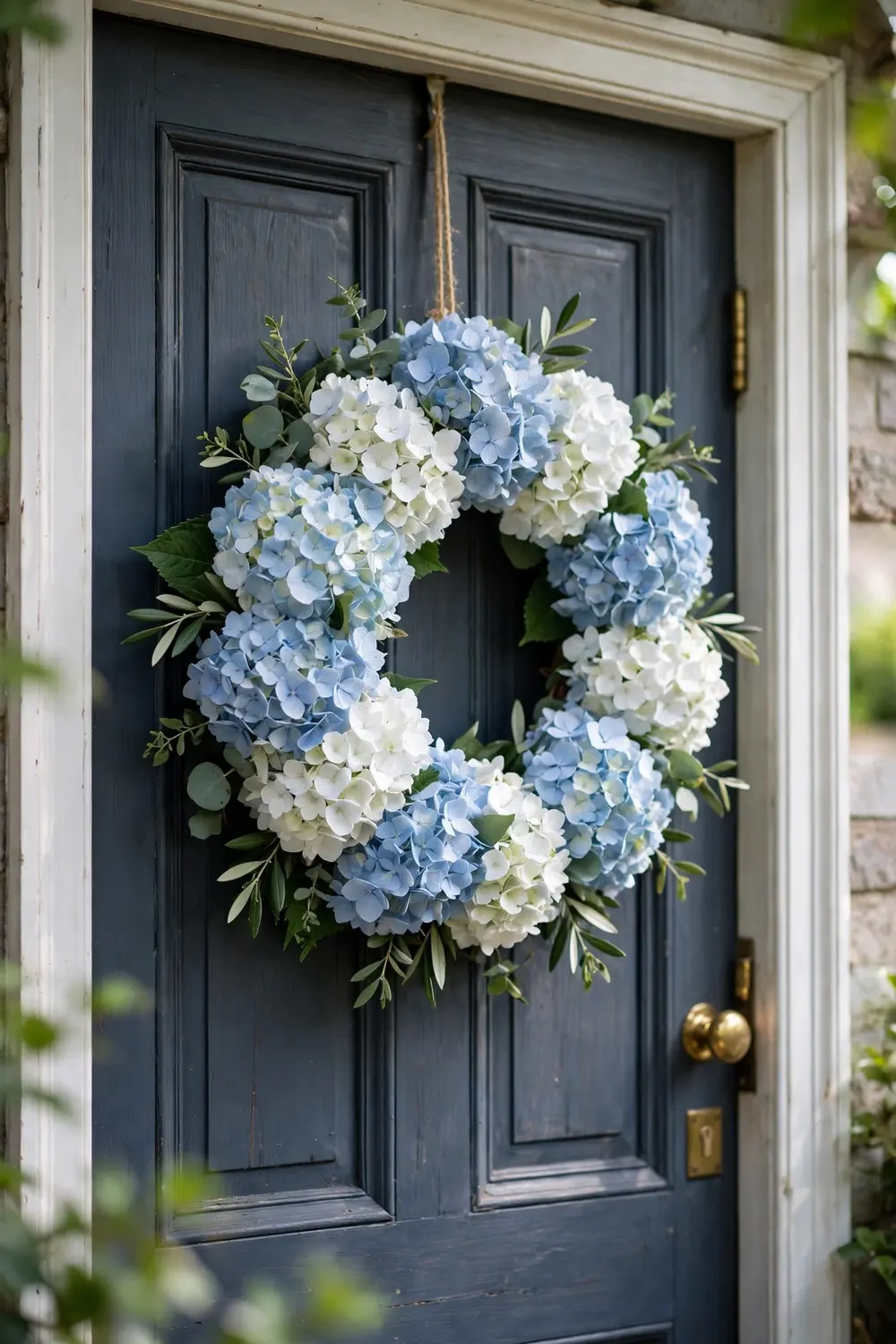
12. Keep Hydrangeas Soft in Blue and White
Hydrangeas make a soft, full wreath that feels like a cloud on the door. I use blue and white blooms together, with a little greenery, and the wreath looks calm and a little formal, even on a casual cottage door. Hydrangeas fill a wreath fast, because each bloom is large, so I need fewer stems than I think, and the wreath looks finished sooner than a tulip wreath does.
I keep hydrangea stems short and tucked deep, because long stems flop and the blooms droop by the next day. Short stems, deep tucking, and a wreath that holds its round shape. I also mist the blooms lightly in dry weather, because hydrangeas wilt faster than most spring flowers when the air is dry, and a wilted hydrangea wreath looks tired in a way that a wilted tulip wreath does not.
Tip: If your hydrangea wreath starts to droop, take it down for an hour and mist it well, or stand the stems in water for a short soak. Hydrangeas drink a lot, and a good drink often brings them back.
13. Try Magnolia Leaves With Cream Blooms
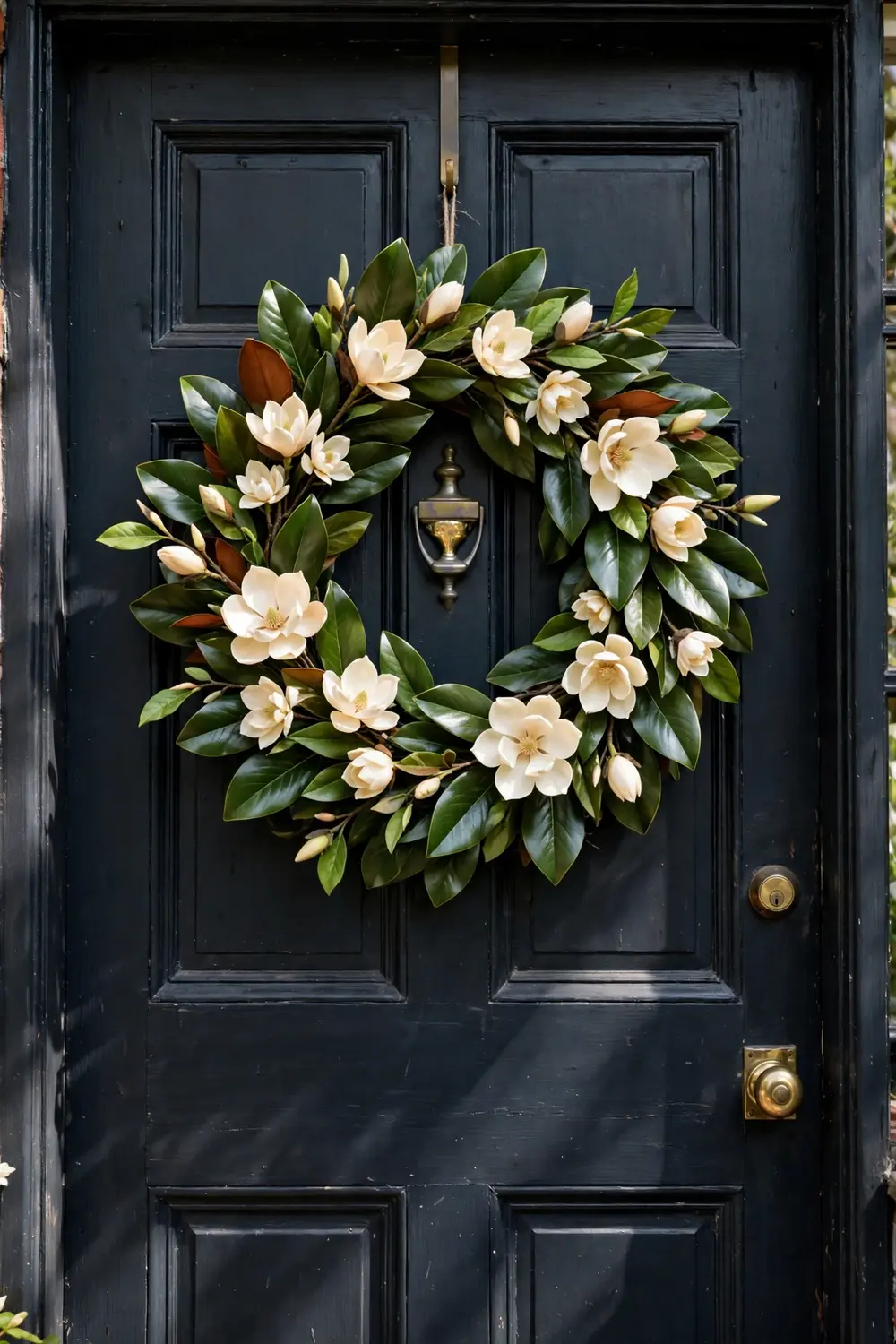
Magnolia leaves are the backbone of a wreath that looks good on a dark door. Their glossy green leaves catch the light, and cream blooms on top of them read clearly even from the street, where pale flowers on a pale door can disappear. This is the wreath I hang when the door is dark green, navy, or black, and I want the wreath to be seen, not just felt.
I lay magnolia leaves in one direction, overlapping like shingles, so the wreath has a smooth, layered look. Leaves laid in both directions look tangled, and the blooms get lost in the tangle. One direction, steady overlap, cream blooms tucked in small groups, and the wreath looks like it was made by someone who knew what they were doing, even when that someone was me learning as I went.
Tip: Wipe magnolia leaves before you hang the wreath. Dust shows on glossy leaves more than on any other finish, and a dusty wreath looks tired before the first guest arrives.
14. Make a Herb Wreath You Can Actually Use
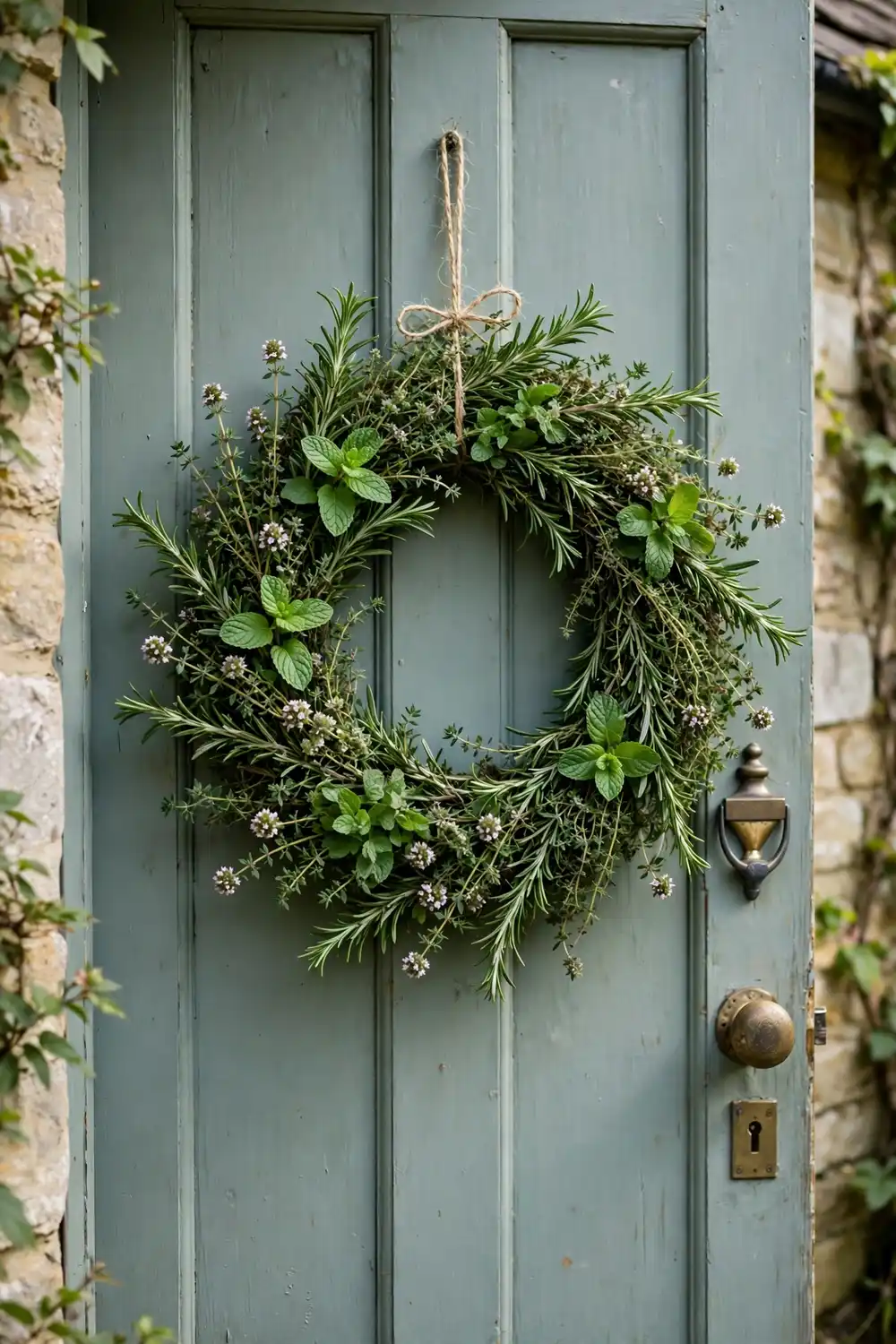
A herb wreath is my favorite practical wreath, because it is a decoration and a kitchen garden at the same time. Rosemary, thyme, and mint, tied in small bunches around a grapevine base, smell wonderful when you brush past the door, and I can snip a little for cooking without ruining the wreath. It smells like a garden, not like a flower shop, and guests always comment on it.
I water the wreath lightly, or mist it, every few days, because herbs in a wreath dry out faster than herbs in a pot. I also keep the bunches small, no bigger than my hand, because a big bunch of herbs on a wreath looks like a bouquet that lost its way. Small bunches, tied tightly, and the wreath holds its shape for weeks. Rosemary lasts longest, mint fades fastest, so I put mint where I can replace it easily, at the front, not buried deep in the back.
Tip: Choose herbs that smell good when brushed, like rosemary or mint, and avoid anything with a strong taste that might put people off before they eat. Rosemary is safe, and it looks good for weeks after.
15. Keep a Small Apartment Door Simple
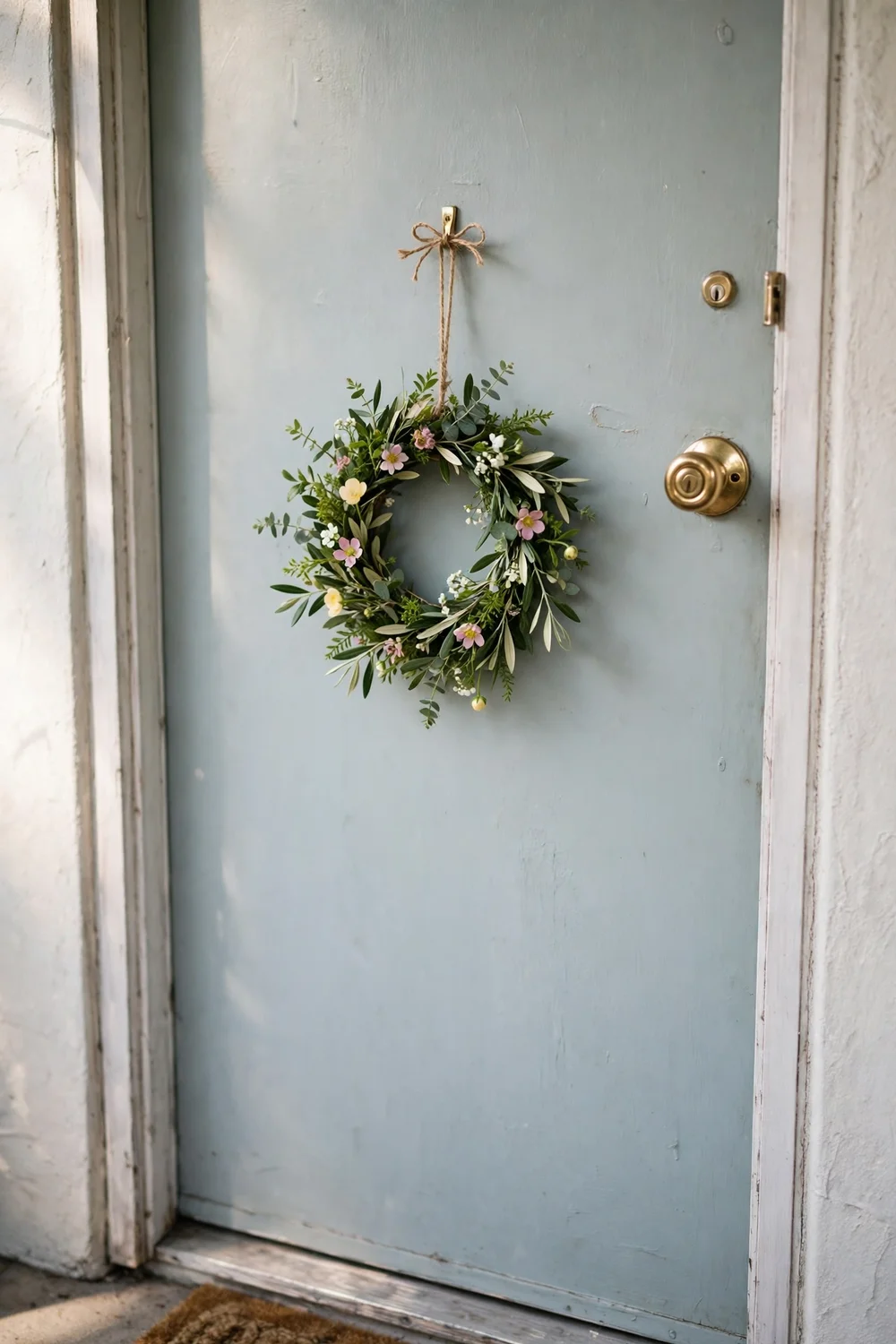
A spring wreath for a small apartment door is my favorite kind of challenge, because it proves you do not need a porch at all. I hung a mini wreath on a friend’s apartment door, just greenery with a few small flowers, on a removable hook, and her hallway entry felt like spring without a single pot, planter, or lantern. A small wreath at eye level is enough, and sometimes it is better than a big wreath, because a hallway has no room for clutter.
We chose a wreath that fit the door, not a porch-sized wreath that stuck out into the walkway. The wreath was light and simple, because a heavy, busy wreath on a small door looks out of proportion, like a big hat on a small person. If you love this simple, door-first feeling, these modern Easter decor ideas use the same light touch inside the house.
Tip: Check your building rules before hanging anything outside an apartment door. Some buildings allow wreaths, some do not, and a quick check saves a notice on your door later.
16. Hang Matching Wreaths on Double Doors
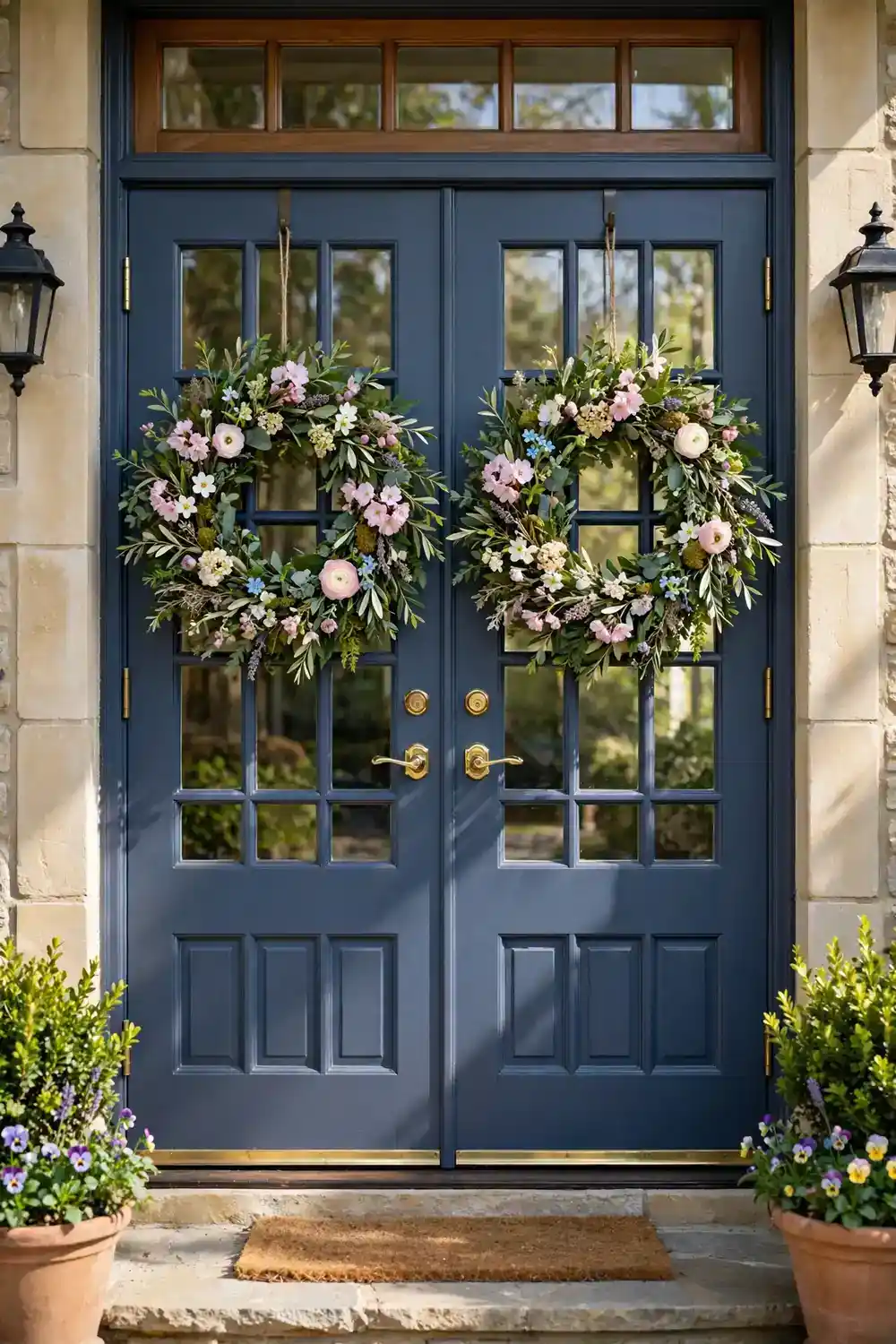
Double doors deserve double wreaths, and matching wreaths are how I do that without making the entry look busy. I hang two wreaths in the same flowers and greenery, one on each door, at the same height, and the doors suddenly look like a pair, not like two doors that happen to be next to each other. Matching wreaths give a wide entry a sense of order, and order is what makes a wide space feel calm instead of crowded.
I hang both wreaths at eye level, measured from the step, not from the top of the door, because doors are not always exactly the same height from the step, and a wreath hung from the top can look uneven even when it is not. A tape measure from the step up, same height on both doors, and the pair looks right from the street. I also check both hooks the next morning, because one wreath sliding a little ruins the pair faster than anything else.
Tip: Make both wreaths at the same time, from the same bunch of flowers. Wreaths made on different days, from different bunches, never quite match, even when you use the same flowers.
17. Refresh an Old Wreath With a Big Ribbon Bow
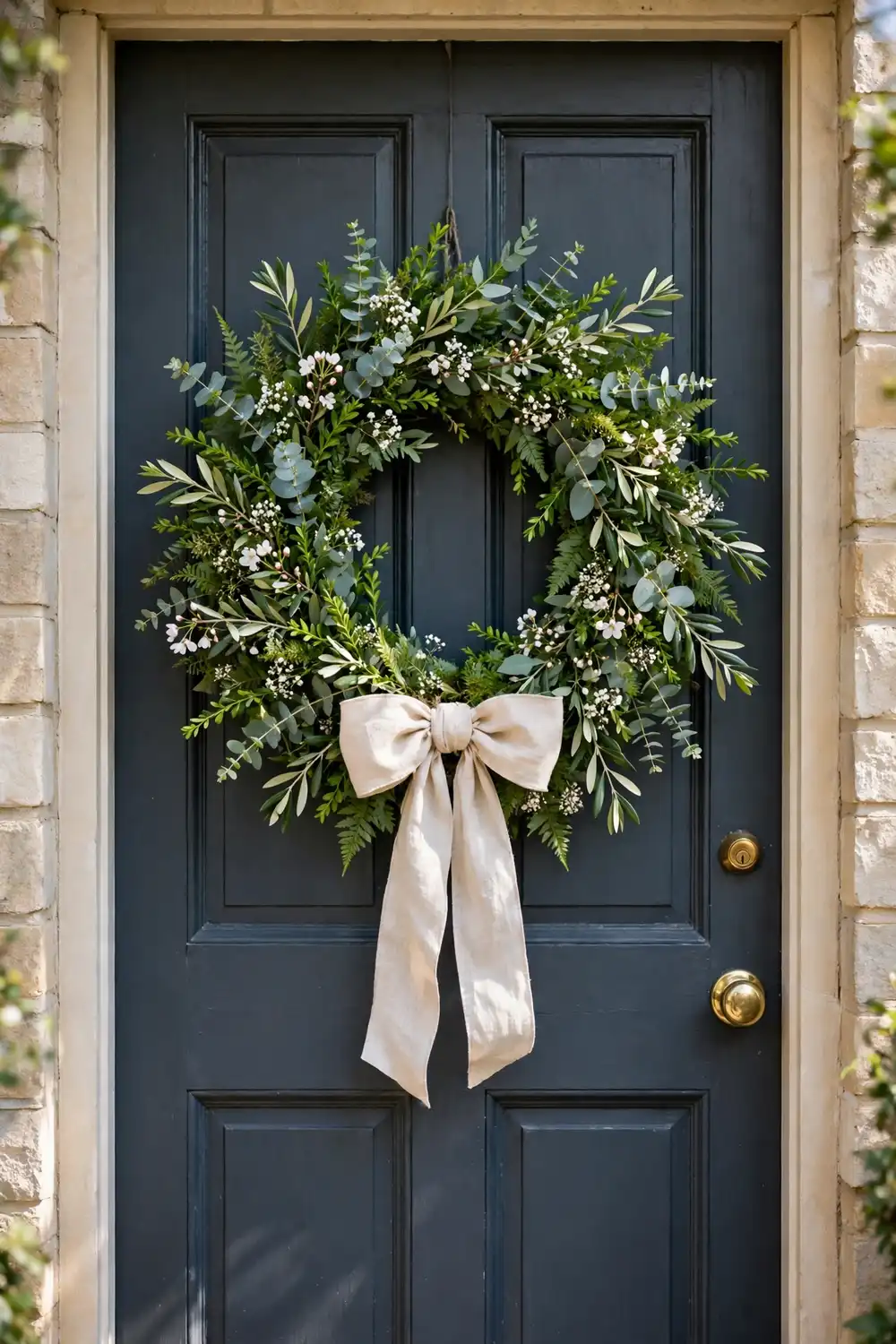
A ribbon bow is the cheapest refresh I know for a spring wreath. I take a plain greenery wreath, one I have used for weeks, and tie a big, simple ribbon bow at the bottom of it, and suddenly the whole door looks new again. The bow adds color and a soft, finished feeling, without buying a new wreath or replanting a single pot. It is the trick I use when guests are coming and I have ten minutes, not a whole weekend.
I use wired ribbon, because plain ribbon flops and loses its loops by the next day, especially outdoors. Wired ribbon holds its shape, and I can fluff the loops after rain without retying the whole bow. I also tie the bow to the wreath frame itself, not just to a few leaves, because a bow tied to leaves pulls them off and leaves a bare patch right where you wanted a bow.
Tip: Keep the bow tails short enough that they do not catch on the door handle. Long tails look pretty in photos and get in the way every single time someone opens the door.
18. Choose Dried Flowers for a Wreath That Lasts
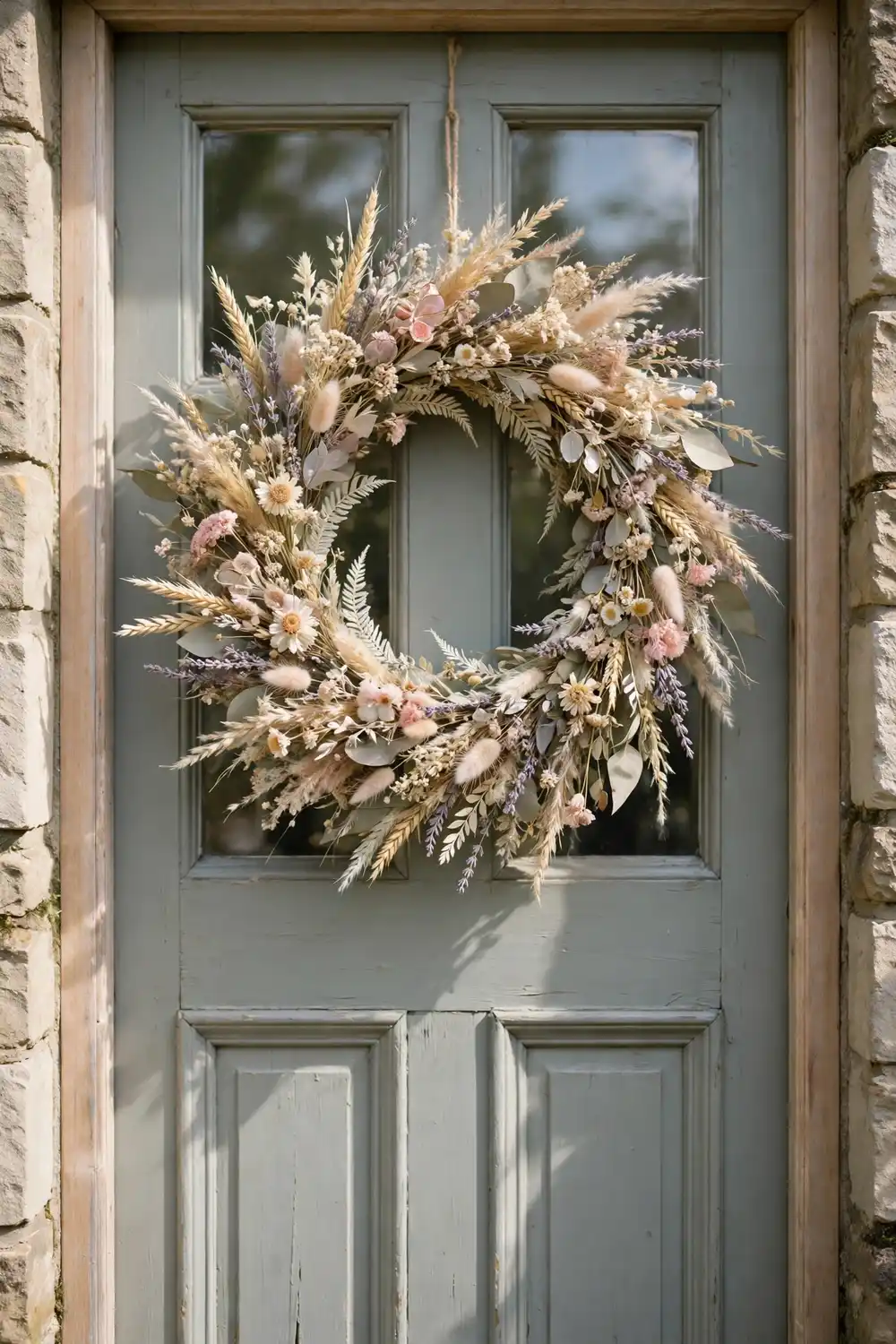
A dried flower wreath is the wreath I hang when I want spring to last, not just bloom for a week. Dried blooms and grasses in soft, muted colors, with a little greenery, look gentle on the door, and they need no water, no misting, and no swapping of tired stems. They are the low-maintenance answer to a fresh wreath, and on a shaded door they can last the whole season and into the next.
I handle a dried wreath gently, because dried stems are brittle and they shed if you shake the wreath hard. I hang it once, in a shaded spot out of harsh sun and heavy rain, and I leave it alone. A light mist of hairspray, from a distance, helps hold the small blooms in place, but a heavy spray makes the wreath look stiff and a little shiny, which is not the soft look I want. For ideas on matching a wreath to your door and porch, the H Potter spring wreath decorating guide covers door colors, styles, and porch pairings in plain language.
Tip: Keep a dried wreath out of heavy rain. A soaked dried wreath goes soft, sheds, and never quite comes back to its first shape, which is a shame for a wreath you liked in March.
Frequently Asked Questions About Spring Wreaths for the Front Door
What wreath works best for a spring front door?
Tulips, greenery, and eucalyptus all work well, because they look like spring and they last. Fresh tulips look best but need shade and water. Greenery and eucalyptus last longer and smell fresh. Choose a wreath that fits your door, not too big for a small door and not too small for a large door, and hang it at eye level.
How do I hang a spring wreath on my front door?
Use a hook made for doors, an over-the-door hook or a removable hook, and hang the wreath at eye level, roughly where you would look when you knock. Attach the hanging loop to the back of the wreath frame, test it by opening and closing the door slowly, and check the hook the next morning, because a heavy fresh wreath can slide a little overnight.
How long does a fresh spring wreath last on a front door?
Fresh flower wreaths usually last one to two weeks on a shaded door, less in hot sun or heavy rain. Greenery and eucalyptus last longer, often several weeks. Dried and preserved wreaths last the whole season and longer, if they stay out of heavy rain. Mist fresh wreaths lightly in dry weather, and swap tired stems instead of waiting for the whole wreath to fade.
Can I make a spring wreath for my front door on a budget?
Yes. Start with a plain grapevine or wire base you already own, use greenery from your garden if you have it, and spend on one thing only, usually a bunch of flowers or a spool of wired ribbon. A ribbon bow refreshes an old wreath, a few fresh stems refresh a greenery base, and a clean door and step cost nothing and make any wreath look better.
A spring wreath does not need to be perfect, and mine never are. A stem always sticks out a little, a bow always leans a touch, and a flower always droops by the end of the week. That is not a failed wreath. That is a wreath that was actually hung, by a real person, on a real door, in real weather, and that is the best kind of wreath there is.
Pick one wreath from this list, try it this week, and see how it feels when you come home. If it works, keep it. If it does not, change one thing, the flowers, the ribbon, the height on the door, and try it again. Spring wreaths are meant to be tried, not just looked at, and the wreath that feels like spring is the one you walk past every day.