
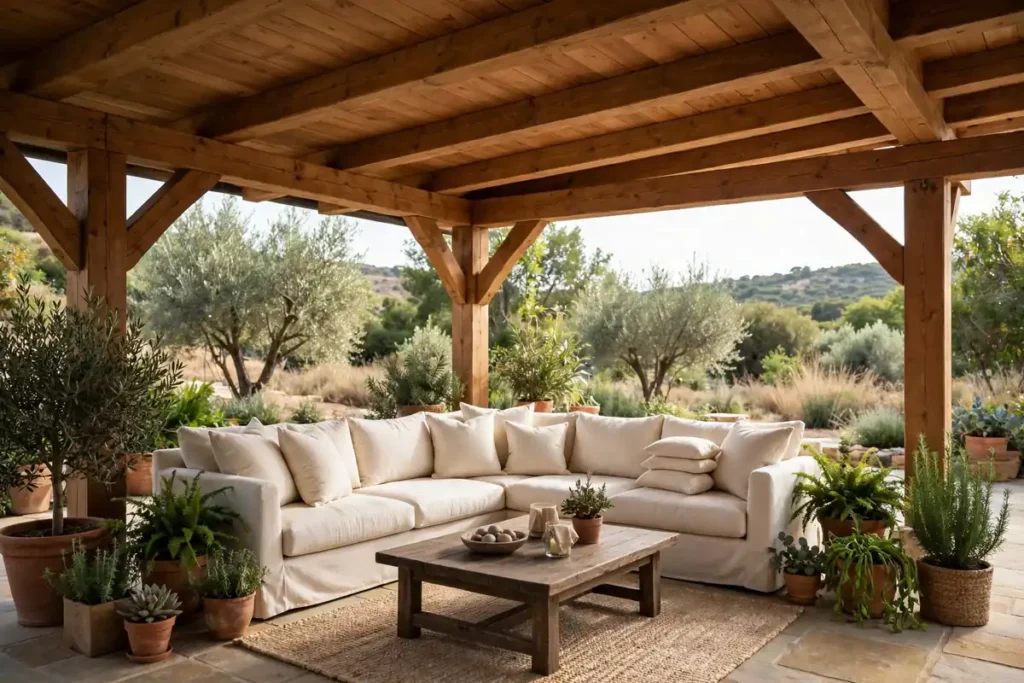
A covered patio changed how we use our back door. Before the roof went up, our patio sat empty on hot afternoons and wet mornings, and we only stepped out to water a plant or bring in a chair before rain. Now it is the first place I go with my tea, and the last place I sit before bed in summer. The roof does not need to be fancy. It needs to keep rain off the cushions, give shade at noon, and leave enough open air that the space still feels outside.
I have learned most of these ideas by fixing small mistakes on our own patio. Cushions got soaked once because the roof was too short at the front edge. A rug curled up because I bought one made for indoors. A string of lights fell down because I hung it from a hook that was too small. Nothing here asks you to rebuild your house. Each idea is one change you can try, and most of them cost less than a new set of chairs. If you are still shaping the entry to your house, these spring front porch decor ideas use the same simple approach at the front door, and you can always come back to The Inspire Rooms homepage to browse by room. Pick the idea that solves your biggest problem first, whether that is sun, rain, privacy, or a place to sit, and start there.
1. Start With a Solid Roof That Sheds Rain
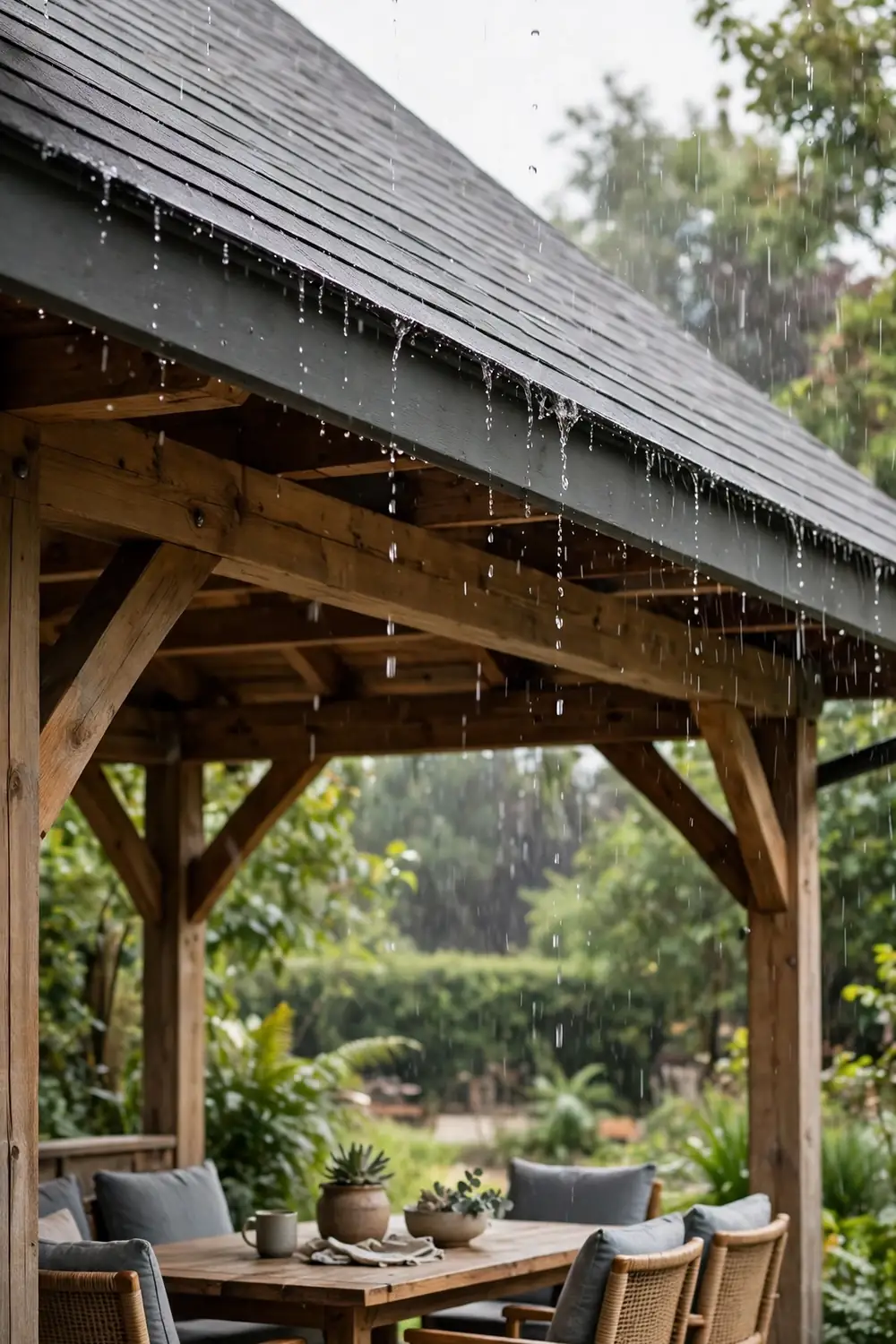
A solid roof is the one part of a covered patio I would never skip now. Our first cover was a shade cloth, and it kept the sun off but let rain straight through, so every storm meant dragging cushions inside. A solid roof with a slight slope sends rain to the front edge and off the patio, and the seating stays dry even in a steady shower. I check the slope by watching where water runs in the first rain after a change, because a flat roof holds puddles and starts to sag.
The roof on our patio is not wide, and the front edge hangs past the chairs by about a foot. That extra foot matters more than I expected. Rain blows in sideways, and a roof that ends right above the chairs still leaves the front cushion damp. If your roof is already up and too short, a clear gutter board or a small valance at the front edge can catch the worst of the blow in rain. It is not perfect, but it kept our cushions dry through the last wet week.
Tip: Stand under the roof during rain once and watch where drips land. Move the chairs back from any drip line before you buy anything else, because no cushion cover beats a dry spot.
2. Show the Wooden Beams Under the Roof
Wooden beams made our patio feel finished before we bought a single cushion. The roof used to be a flat white ceiling, and it looked like the underside of a shed. Once the beams were in, the space felt like a room, and guests started sitting out there without being asked. I stained the beams a warm brown, not dark, because dark beams made the patio feel low in the evening, and I learned that the hard way on a test board first.
Beams also give you places to hang things without drilling into the roof itself. Our lights, a small hanging planter, and a curtain rod all hang from the beams, and nothing has pulled loose. The This Old House patio guide (opens in a new tab) shows how patio roofs and beams are put together, and it helped me ask the right questions before we changed ours. If your beams are already painted white, leave them. White beams look clean against a green garden, and paint is easier to wash than stain.
Tip: Wipe the beams down once a month with a damp cloth. Dust and spider webs collect on the top edge, and a quick wipe keeps the whole ceiling looking cared for.
3. Hang Sheer Curtains on the Open Sides
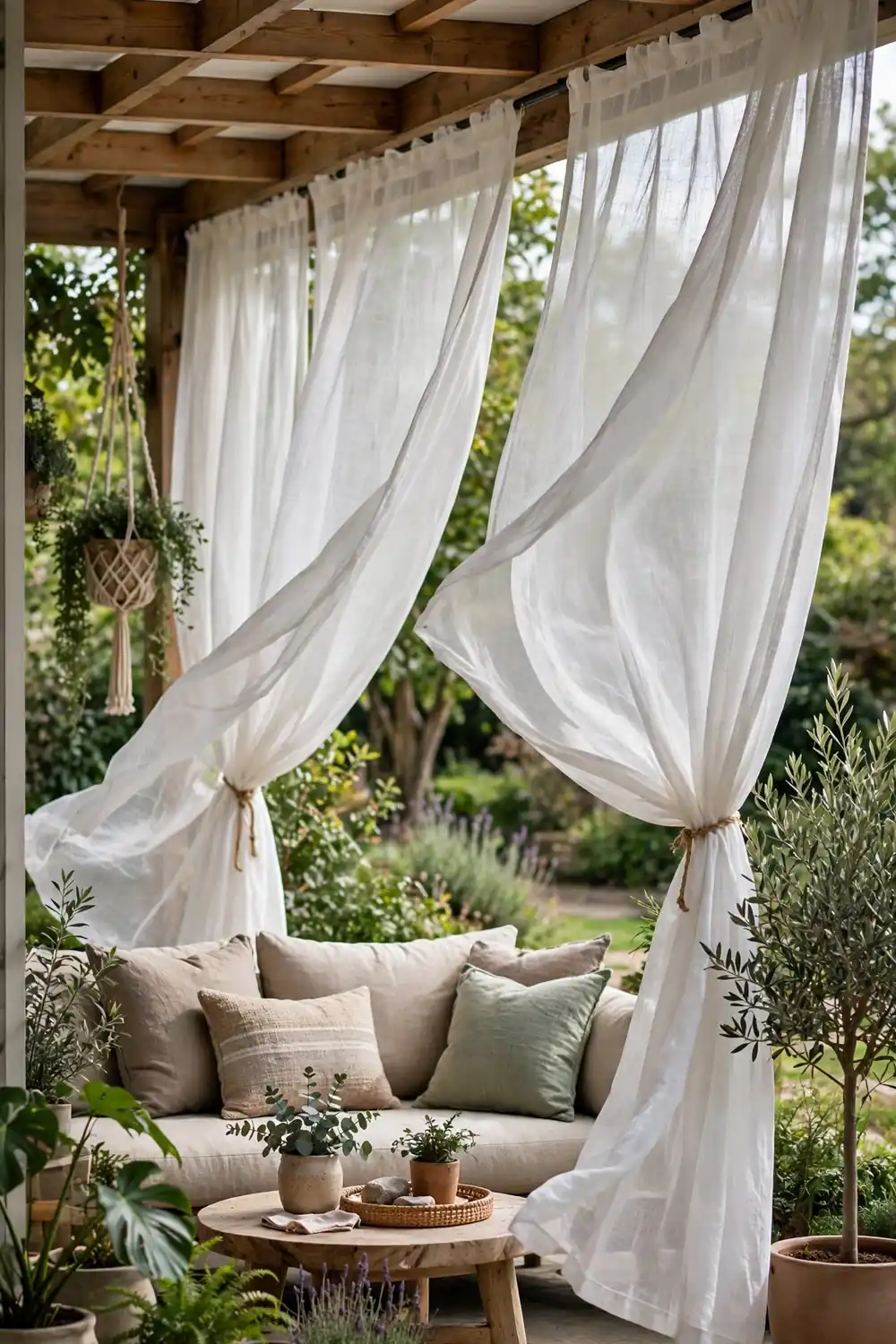
Sheer curtains are how I keep the breeze without letting the sun hit the sofa at four in the afternoon. I hung them on the two open sides of our patio, and on hot days I pull the west side closed and leave the other side open. The light comes through soft, the air still moves, and the sofa cushions do not fade as fast as they did before. I tie them back in the morning when I want the garden view, and it takes less than a minute.
My first curtains were indoor sheers, and they went grey after one wet month. Outdoor fabric costs more, but it dries fast and does not hold a damp smell. I wash ours twice a season in a gentle cycle and hang them back up while they are still damp, so they dry straight. In strong wind I tie them down low, because a loose curtain whips around and knocks over a plant pot, which happened twice before I learned.
Tip: Use a curtain rod with a small end cap on each side. A rod without caps lets the rings slide off in wind, and you will find curtains on the floor after a storm.
4. Choose Deep Seating You Can Sit In for Hours
Deep seating is what turned our patio from a place to pass through into a place to stay. Our old chairs were upright and hard, and nobody sat in them for more than ten minutes. The sofa we have now is deep enough to tuck a leg under, and the cushions are thick enough that I do not feel the frame. I sit out there with a book for an hour and only get up because my tea is cold.
I check seat depth by sitting down and seeing if my feet still touch the floor. If they dangle, the seat is too deep for me, and I add a firm cushion behind my back instead of buying a new sofa. The cushions on our sofa have zips, and I take the covers off at the end of the season to wash them. A sofa without removable covers looks good for one summer and then shows every spill, and I did not want to live with that.
Tip: Sit on any outdoor sofa for at least five minutes before you buy it, in the position you actually sit in. A sofa that feels fine for thirty seconds can feel hard after an hour.
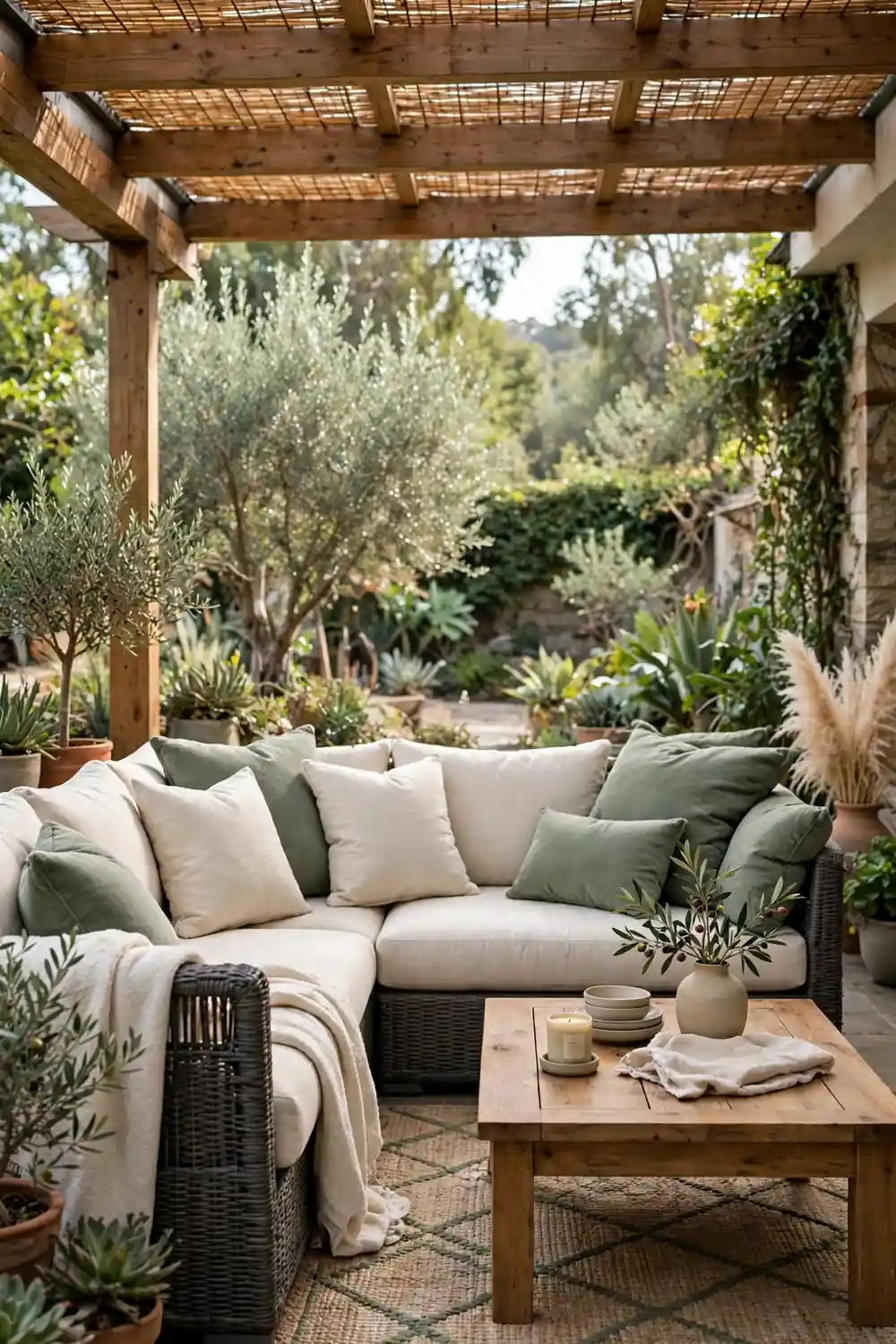
5. Set a Dining Table for Slow Meals Outside
A dining table under the roof means we eat outside far more often than we used to. Before it, meals outside meant balancing a plate on my knee, and we gave up after one windy evening. Now the table stays set with a simple cloth and a jug, and dinner moves outside on any evening that is not too cold. The table is wood, and it has a few marks from hot plates, which I stopped worrying about after the first one.
I keep the table near the house door, not at the far edge of the patio, because carrying food across a wet patio in rain is a chore. The chairs have arms, which sounds small, but arms make it easier to sit down with a full plate, especially for older guests. We have six chairs even though we are usually four, because two extra chairs mean nobody has to bring one out from inside when a friend stops by.
Tip: Put a small tray on the table for salt, oil, and napkins, and bring it in at night. A tray keeps the table clear, and you stop hunting for things in a kitchen drawer at dinner time.
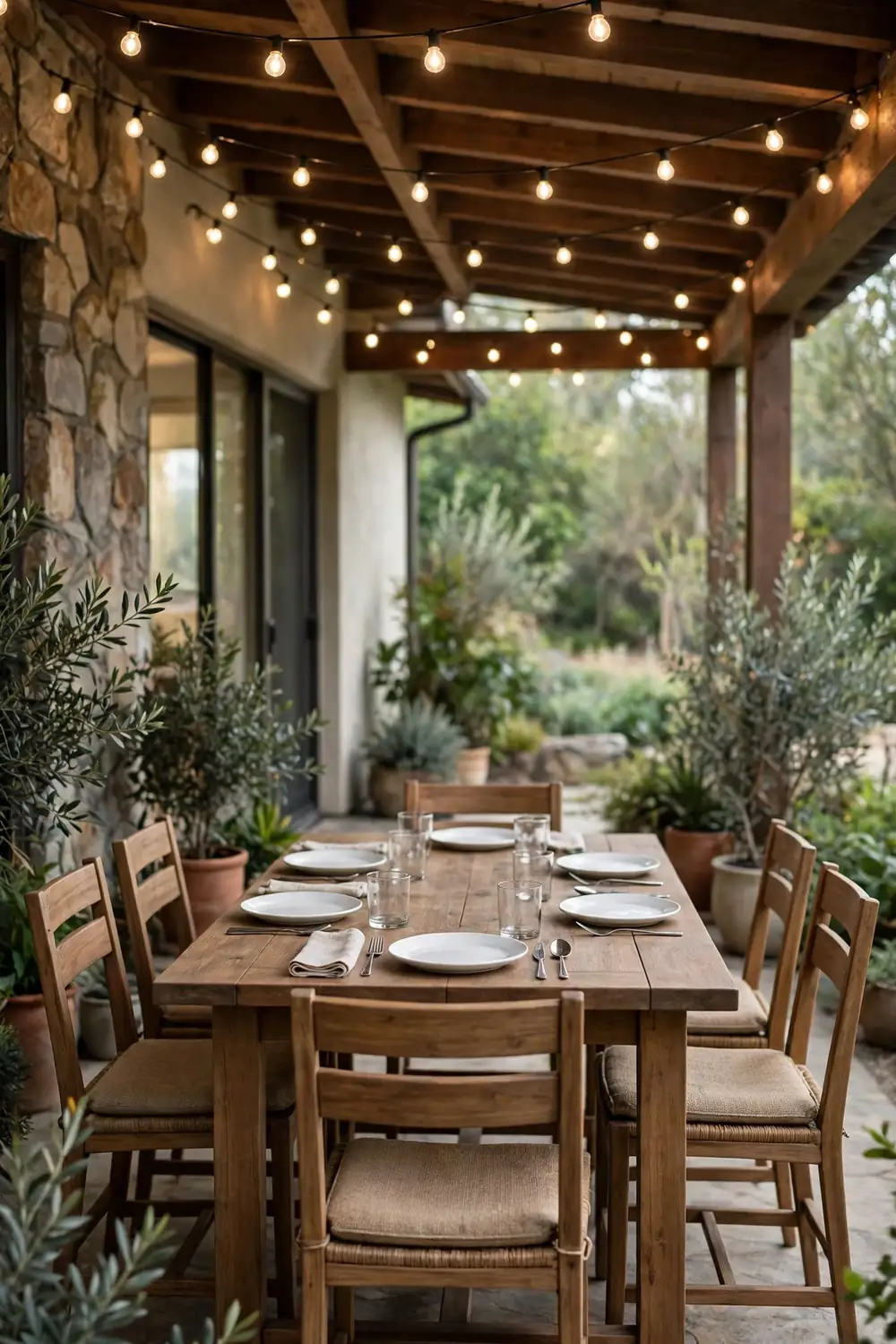
6. Lay a Large Outdoor Rug Under the Seating
A large rug is what makes the seating area feel like a room instead of furniture left on concrete. Ours is big enough that the front legs of the sofa and all four legs of the coffee table sit on it, and that one change made the whole corner look planned. Before the rug, the chairs drifted apart over a week, and the space always looked a bit scattered. The rug holds the layout in place.
I bought an indoor rug first, and it curled at the corners and smelled damp after rain blew in. An outdoor rug dries in a few hours and lies flat, and I hose ours down twice a season and let it dry in the sun. The pattern is simple, a soft stripe, because a busy pattern fights with the cushions and the plants. A rug that is too small looks like a mat in front of the sofa, so I measure the seating area first and buy the next size up. The Real Homes covered patio ideas guide (opens in a new tab) also shows rugs used to mark out seating zones under a roof, which is exactly how ours works.
Tip: Put a thin outdoor rug pad under the rug, even on a flat floor. A pad stops the rug sliding when you pull a chair out, and it keeps the rug from bunching at the corners.
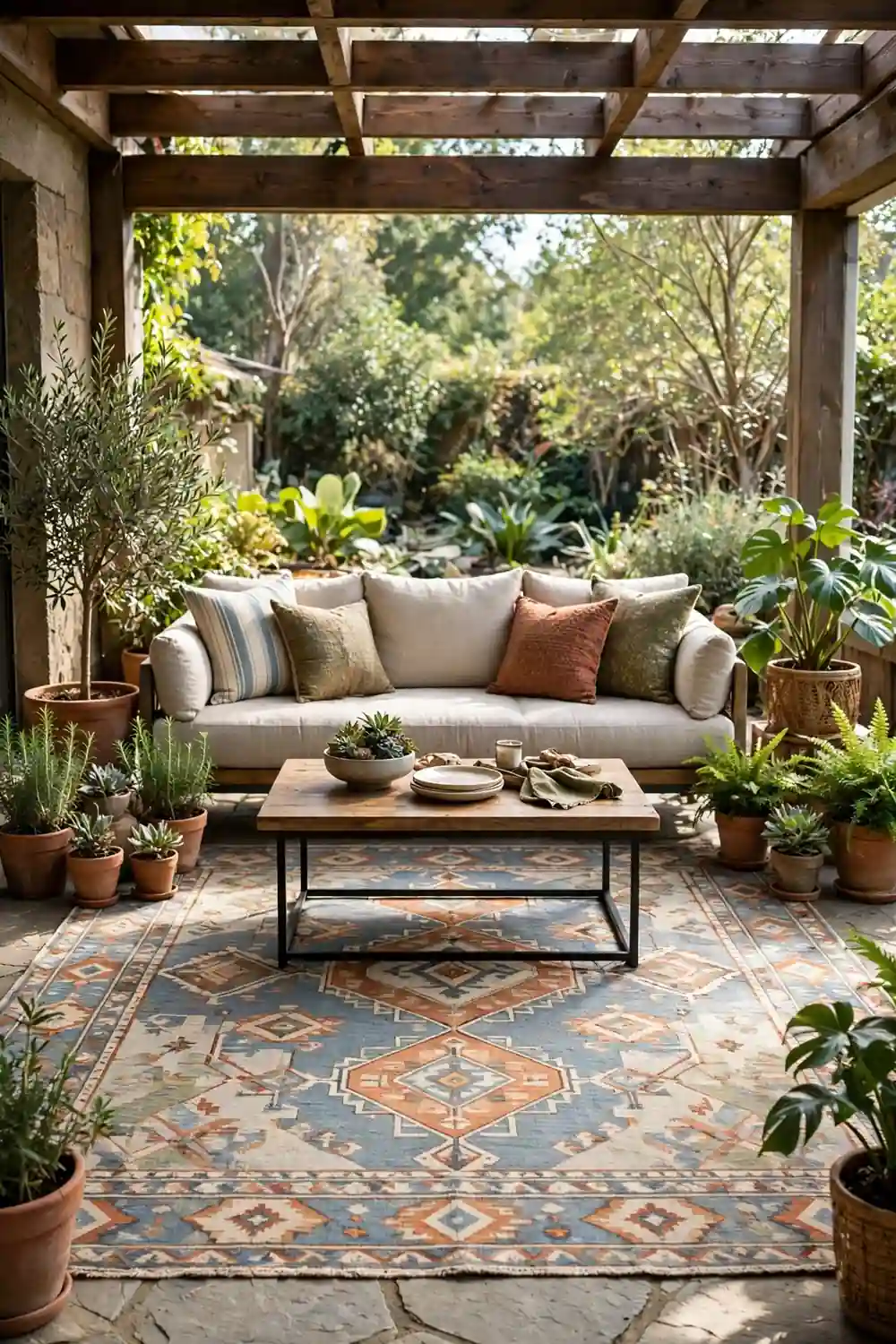
7. String Warm Lights Under the Roof
Warm string lights are the reason we stay out after dark. Before them, the patio went dark at sunset and we moved inside, even on warm nights. Now the lights come on at dusk, the sofa glows softly, and an evening outside feels like a plan instead of an afterthought. I use warm white lights, not bright white, because bright white lights make the patio look like a car park, and nobody relaxes under that.
I hang the lights from the beams in a loose zigzag, not in a straight line, because a straight line leaves dark corners. The string has a timer plug, so it switches on at dusk and off before bed, and I never have to remember it. One string failed in the middle last year, and I learned to keep a spare string in the storage bench, because a patio with half a string of lights looks worse than a patio with none.
Tip: Check the plug and the first bulb after rain, even if the lights are rated for outdoors. Water in a plug trips the whole string, and a dry plug is a two minute fix.
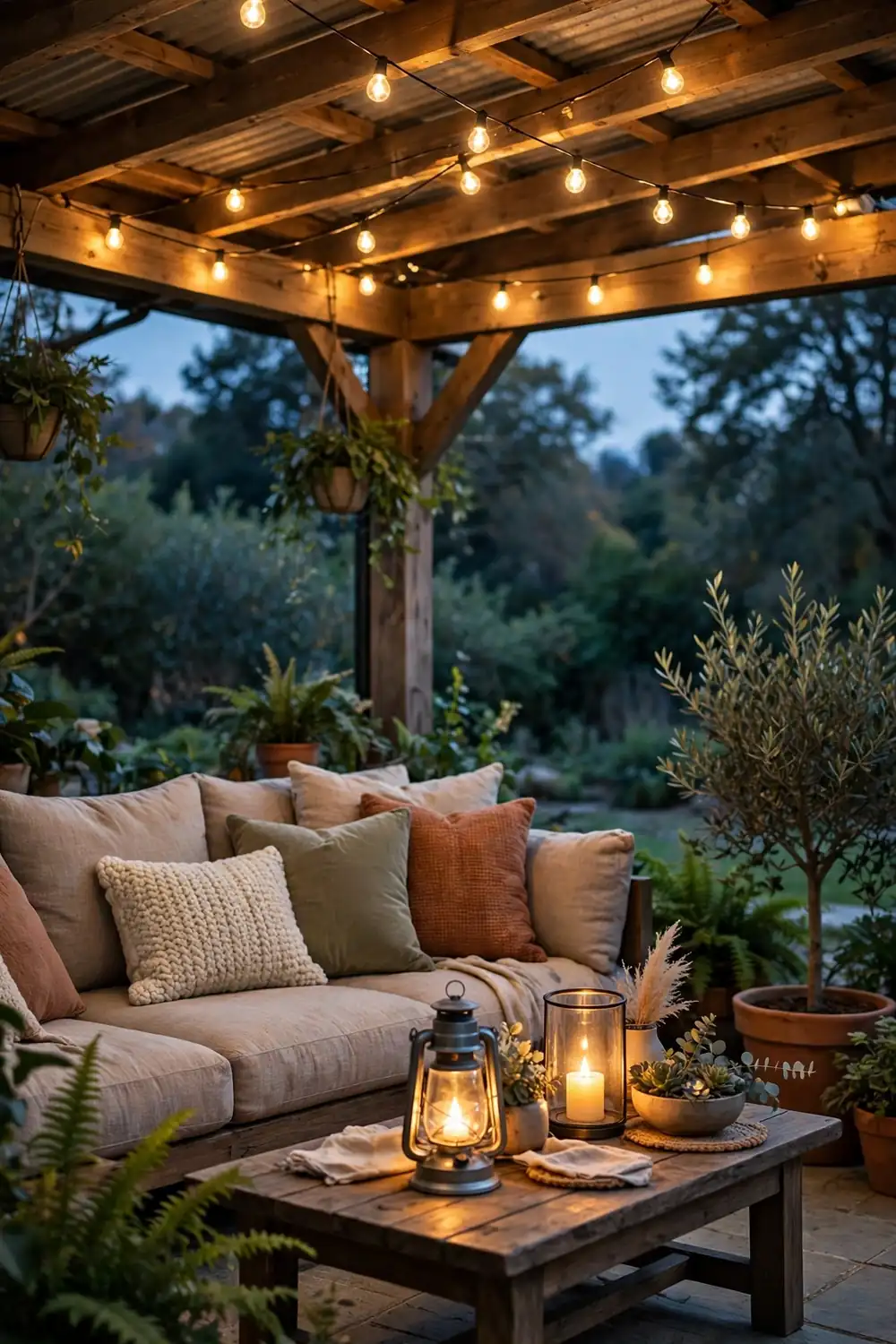
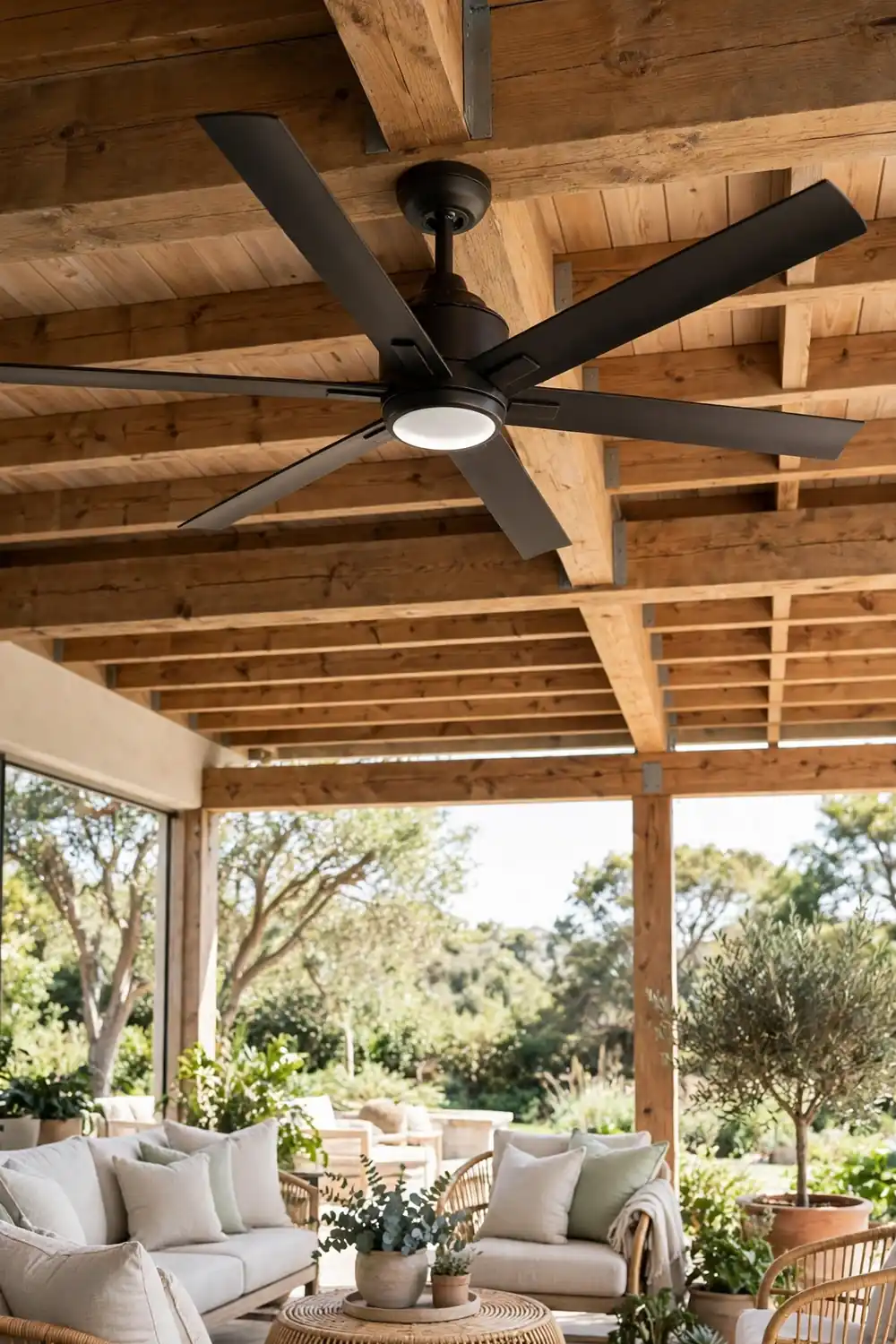
8. Add a Ceiling Fan for Still Air
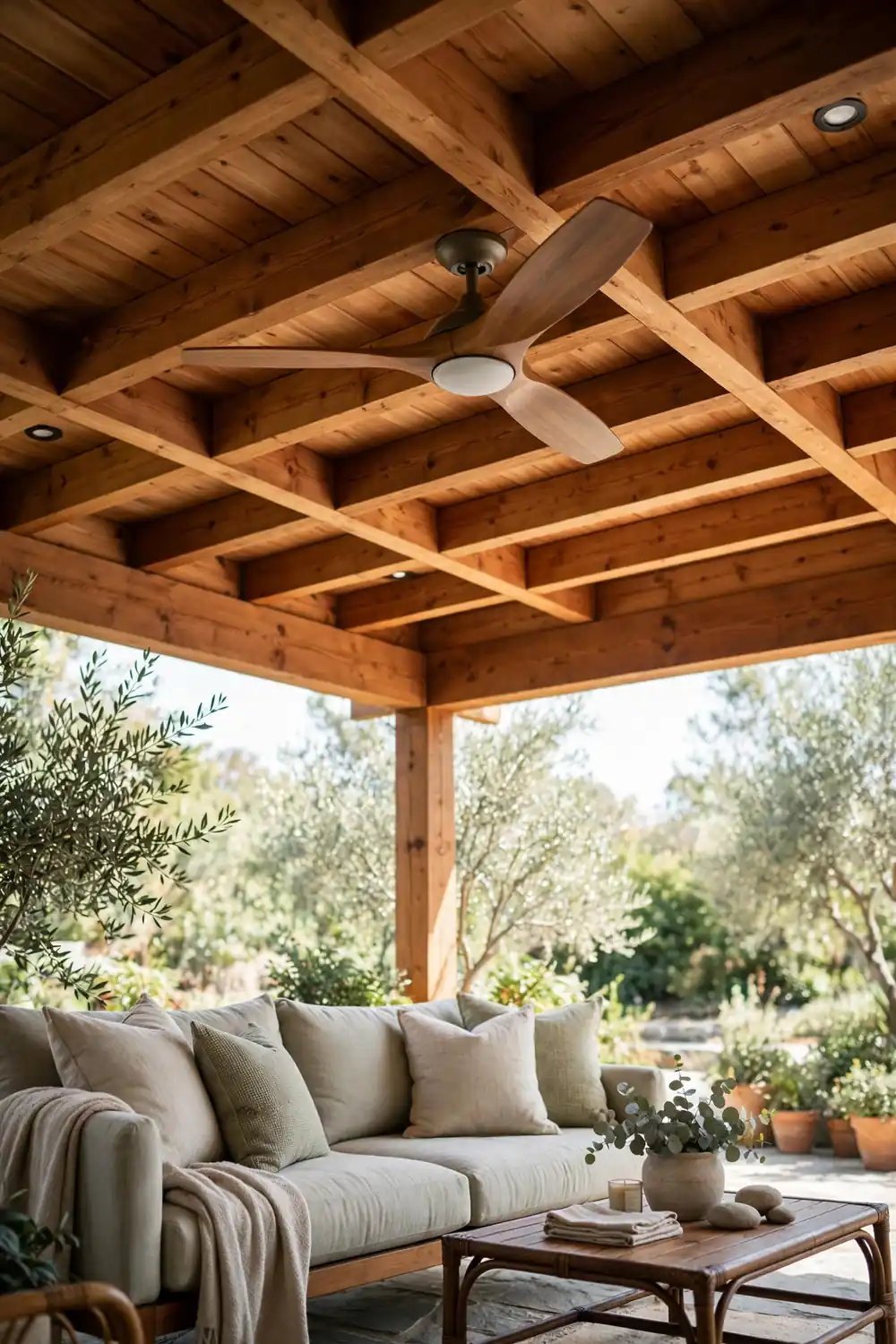
A ceiling fan fixed the still, heavy air on our patio in July. The roof keeps the sun off, but on a windless day the air under it just sits there, and sitting out felt sticky. The fan moves the air without making papers fly, and it also keeps flies from settling on the table, which I did not expect but now rely on. I run it on the lowest setting most days, and that is enough.
I had the fan fitted by an electrician, because a fan under a roof still needs the right outdoor rating and a safe mount on a beam. The blades are a plain wood colour, and they wipe clean with a damp cloth. In winter I leave the fan off and just let it hang, because taking it down each year is more work than it is worth. If your roof is low, measure the drop before you buy, because a fan that hangs too low over a table is a bump waiting to happen.
Tip: Run the fan for ten minutes before you sit down on a hot day. The air under the roof cools faster than you think once it starts moving.
9. Place a Fire Table for Cool Evenings
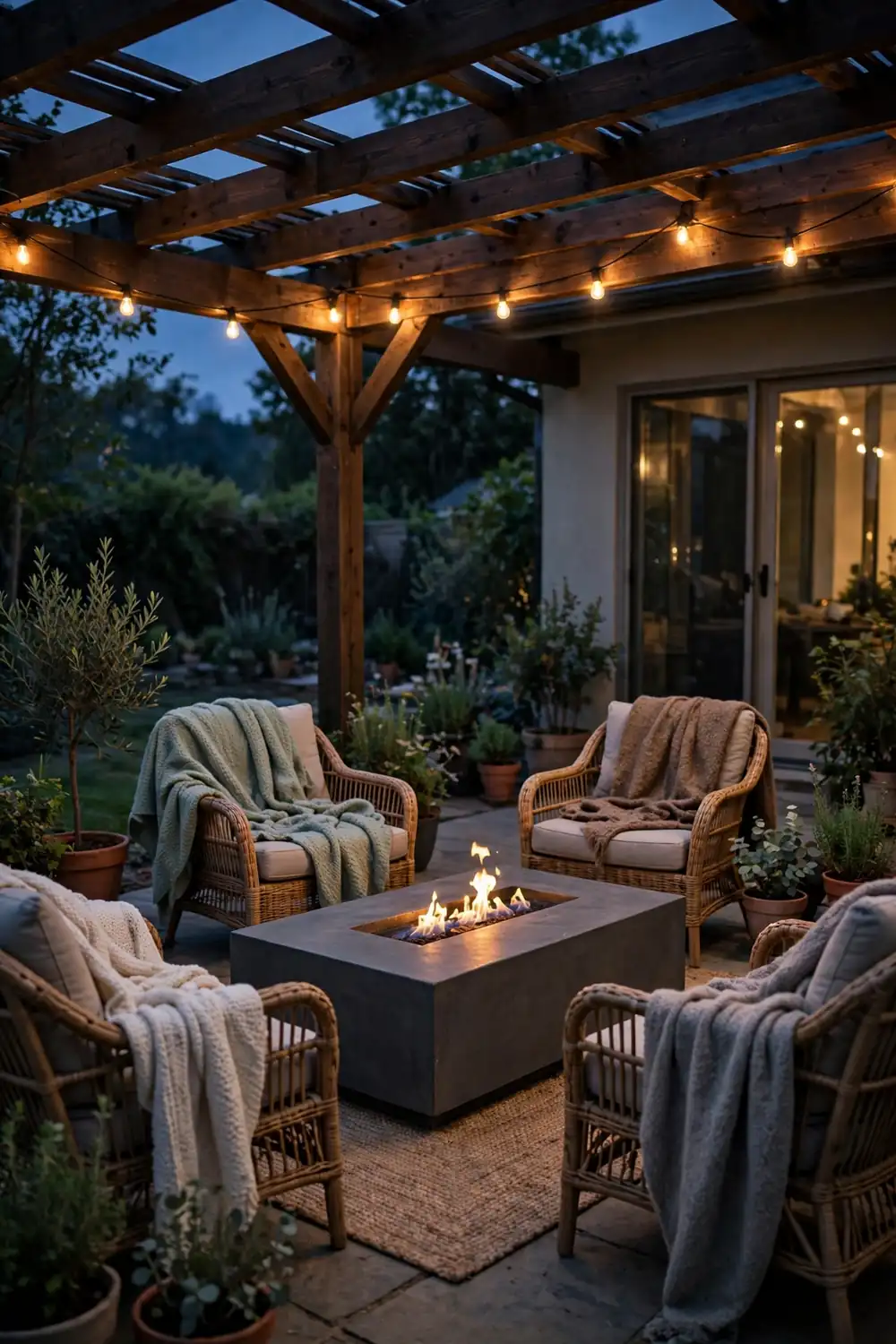
A fire table stretched our patio season by a good two months. Before it, we stopped sitting out in October, because the evenings got cold fast. Now we sit out with a blanket and a small flame in the middle of the table, and the patio stays usable into late autumn. The flame is low and steady, and it gives light as well as warmth, so we do not need as many lanterns.
I keep the fire table well away from the curtains and any hanging fabric, because a flame and cloth are a bad pair, and I never leave it lit when we go inside. The table has a lid that covers the burner when it is off, and I put the lid on every night, because leaves and rain get into an open burner fast. This is also the kind of warm evening corner I think about when I look at our spring mantel decor ideas, where one warm light makes a whole room feel lived in. On the patio, the fire table does the same job.
Tip: Keep a small basket of blankets by the fire table, not in the house. Guests take a blanket when they feel cold, and nobody has to get up and go inside for one.
10. Fill Large Planters at the Corners
Large planters at the corners made our patio look planted instead of paved. I used to have six small pots scattered around, and they dried out fast and looked lost. Two large planters, one at each front corner, hold water longer, and the shrubs in them have grown into proper shapes. The terracotta colour suits the wood and the stone, and it does not fight with the cushion colours.
I water the planters twice a week in summer and once a week in cooler months, and I check the soil with a finger before watering, because overwatering killed my first shrubs. The planters have drainage holes and a small tray underneath, so water does not stain the stone floor. In winter I move the tender plants closer to the house wall, where the roof gives a little extra shelter, and they have survived two winters that way.
Tip: Put a layer of small stones at the bottom of each planter before the soil. The stones help water drain, and the roots do not sit in wet soil after rain.

11. Train Climbing Vines Up the Posts
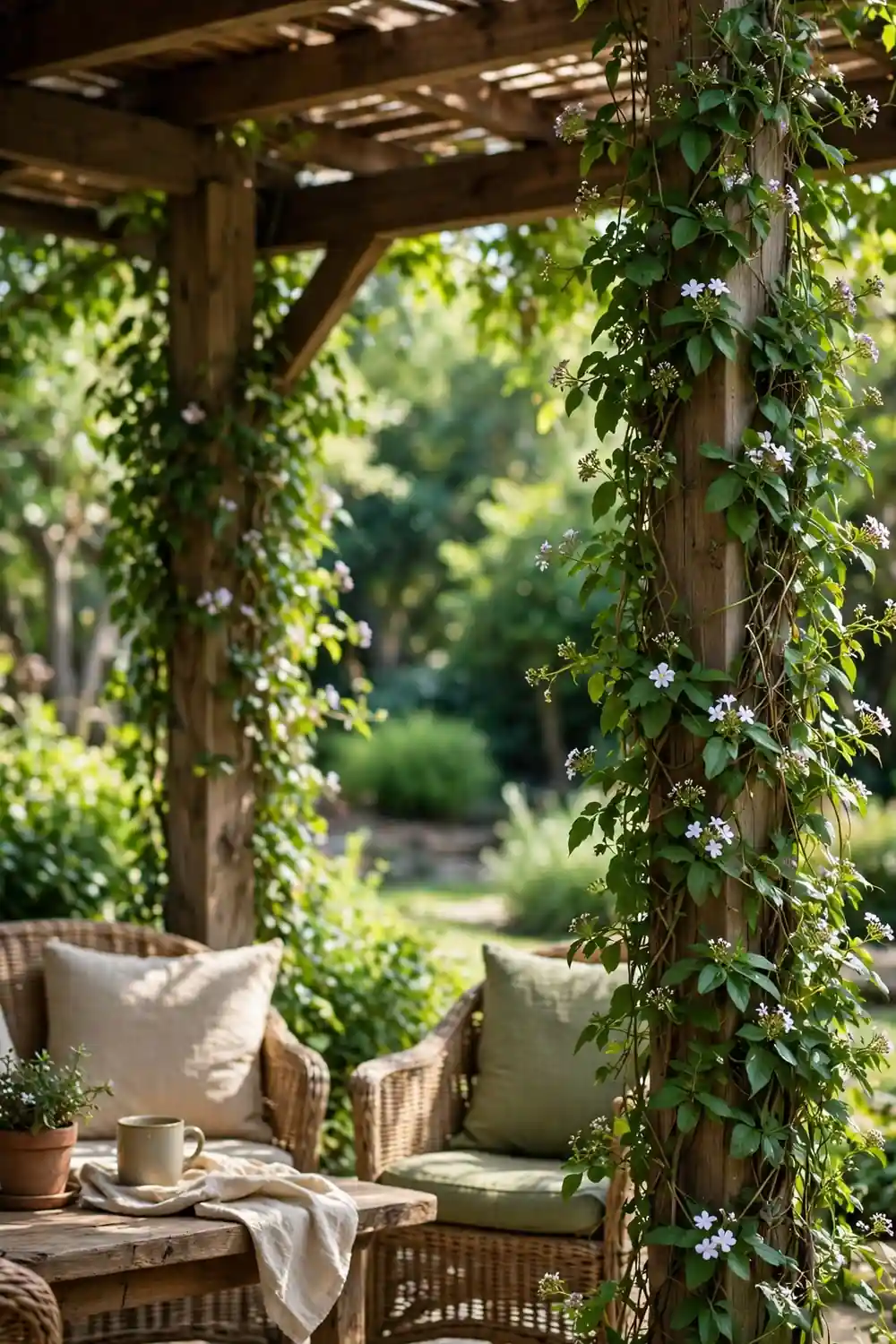
Climbing vines softened the posts on our patio in a way no paint could. The posts used to look bare and new, and now they are green from the ground up to the roof, with small flowers in summer. The vines give shade on the sides without closing the patio in, and they smell faintly sweet in the evening. I tied the first shoots to the posts with soft twine, and after that they found their own way up.
I trim the vines twice a season, because left alone they grow across the roof and block the gutter. A pair of secateurs and ten minutes is enough, and I check for stems growing into the roof joints, because a stem in a joint holds water and can stain the wood. The vines drop leaves in autumn, and I sweep them up once a week, which is a small job for the shade they give all summer.
Tip: Train vines up the posts, not across the roof. Vines on posts give shade and look tidy, while vines across the roof hide leaks and block light.
12. Add a Lattice Screen for Privacy
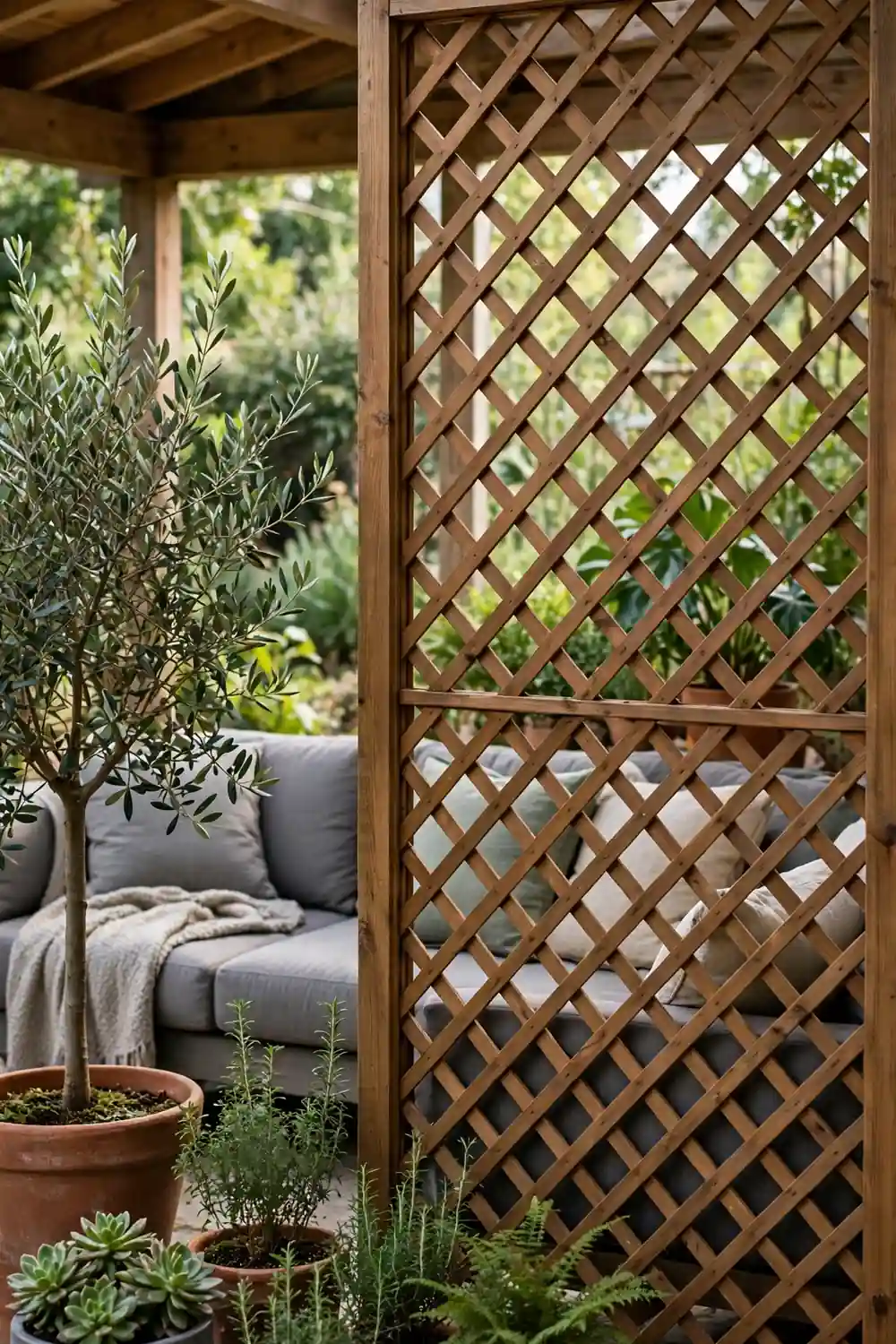
A lattice screen gave us privacy without making the patio feel boxed in. Our neighbours can see straight into the patio from their garden, and for a long time we just did not sit out when they were out too. The screen sits on one side only, the side facing their garden, and it breaks the view while still letting air and light through. I can see the garden through the gaps, and that matters, because a solid wall would have made the patio feel like a box.
I planted a tall grass in front of the screen, and the grass moves in the wind, which softens the straight lines of the lattice. The screen is fixed to the posts, not just leaning, because a leaning screen falls in the first strong wind, and ours did once before I fixed it properly. In winter the screen stays up, and it still gives privacy even when the grass dies back, which is when we need it most.
Tip: Fix a lattice screen to at least two posts with screws, not hooks. A screwed screen stays put in wind, while a hooked screen rattles and eventually falls.
13. Set Up a Small Grill Station in One Corner
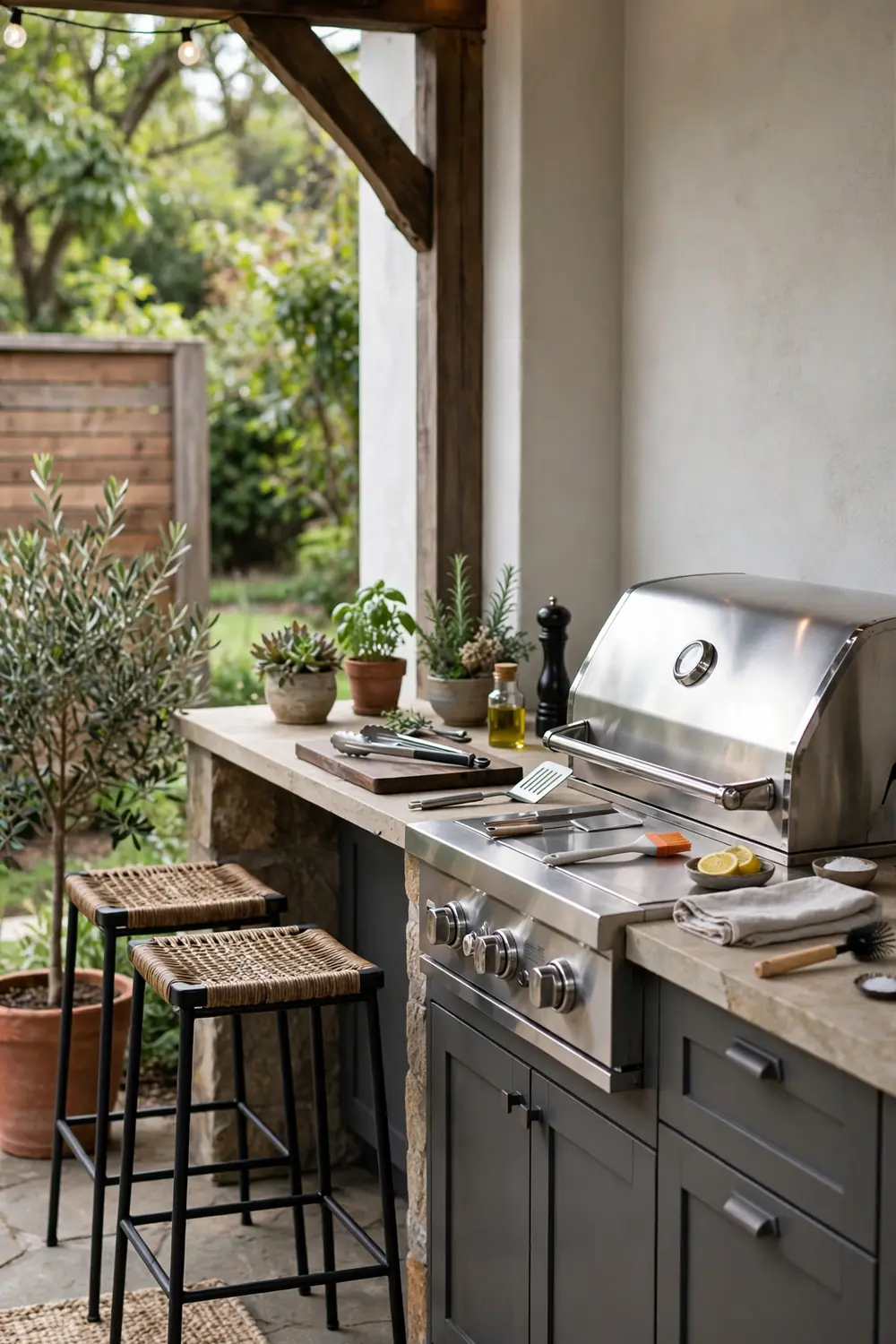
A small grill station in one corner means cooking outside does not take over the whole patio. Before it, the grill sat in the middle of the seating area, and smoke blew straight onto the sofa. Now the grill and a short counter sit in the corner nearest the house door, the smoke drifts out past the roof edge, and the seating stays clear. The counter holds plates and tools, so I stop carrying things back and forth to the kitchen.
I keep the grill station tidy by putting tools back on hooks after each use, because a messy grill corner smells of old grease and looks worse every week. The stools by the counter are for whoever is cooking, not for guests, and that keeps people out of the way of a hot grill. I also keep a small fire extinguisher in the storage bench nearby, because a grill under a roof deserves more care than a grill in an open garden, and I would rather have it and never use it.
Tip: Clean the grill grate while it is still warm, not after it cools. Warm grease wipes off, cold grease needs scrubbing, and a clean grate makes the next meal taste better.
14. Hang a Chair for Quiet Reading
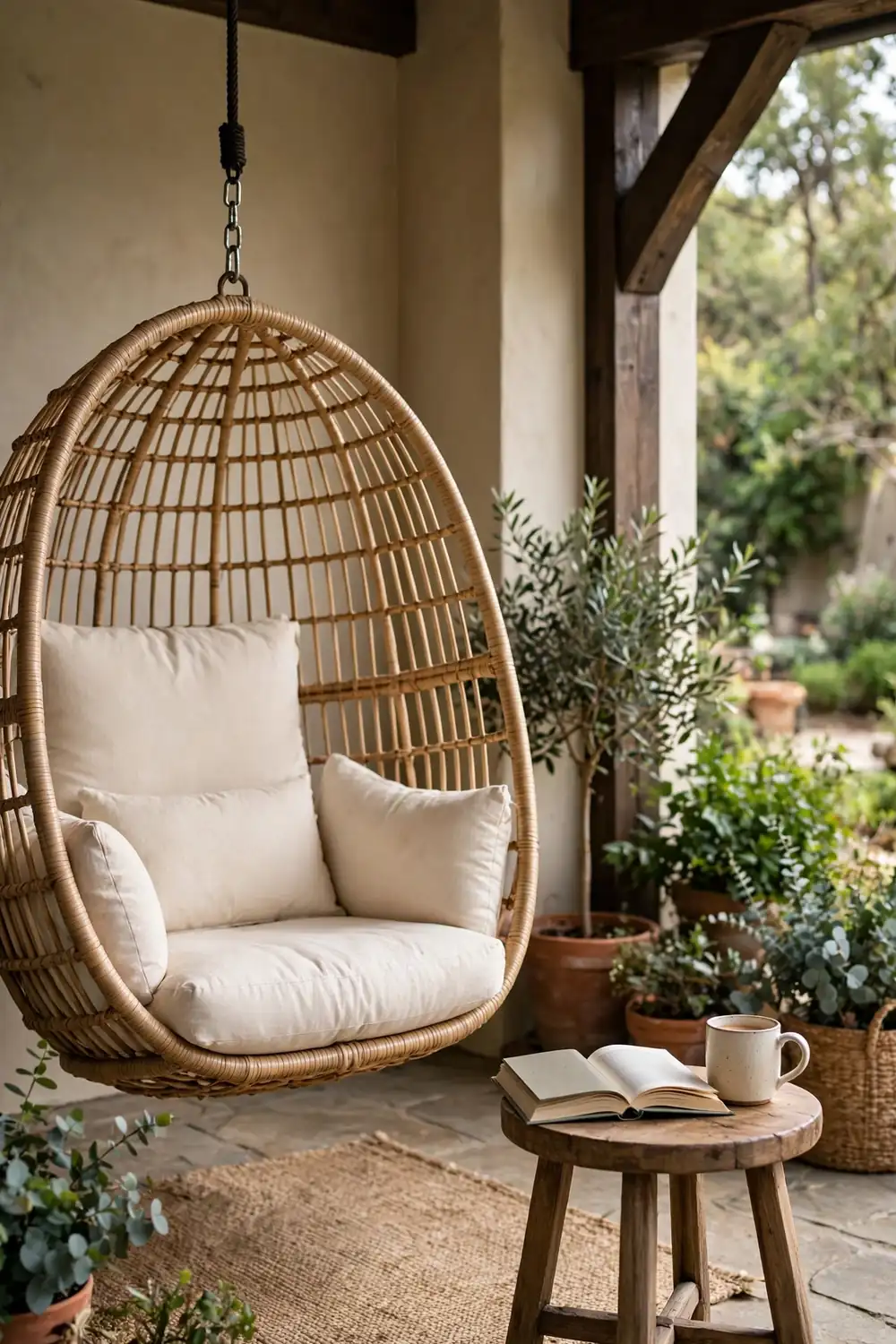
A hanging chair is my quiet corner on the patio, and it is the seat everyone fights over. It hangs from a beam in the far corner, away from the dining table, and it swings just a little when I sit down. I read there in the morning before the house wakes up, with a mug on the side table and a blanket over my knees in cooler months. The chair is deep, and the cushion wraps around me, so it feels private even though it is outside.
I check the hanging point every spring, because a chair that swings puts steady strain on one beam, and I want to know the mount is still solid. The cushion covers come off for washing, and I bring the whole cushion inside in heavy rain, because even under a roof, wind blows rain sideways onto a corner chair. If you have small children, keep the chair low, because a high hanging chair tips when a child climbs in from the side, and ours did once before I lowered it.
Tip: Hang the chair so it clears the floor by a hand width when you sit in it. A chair that touches the floor does not swing, and a chair that hangs too high is hard to get into.
15. Place Lanterns and Small Side Tables
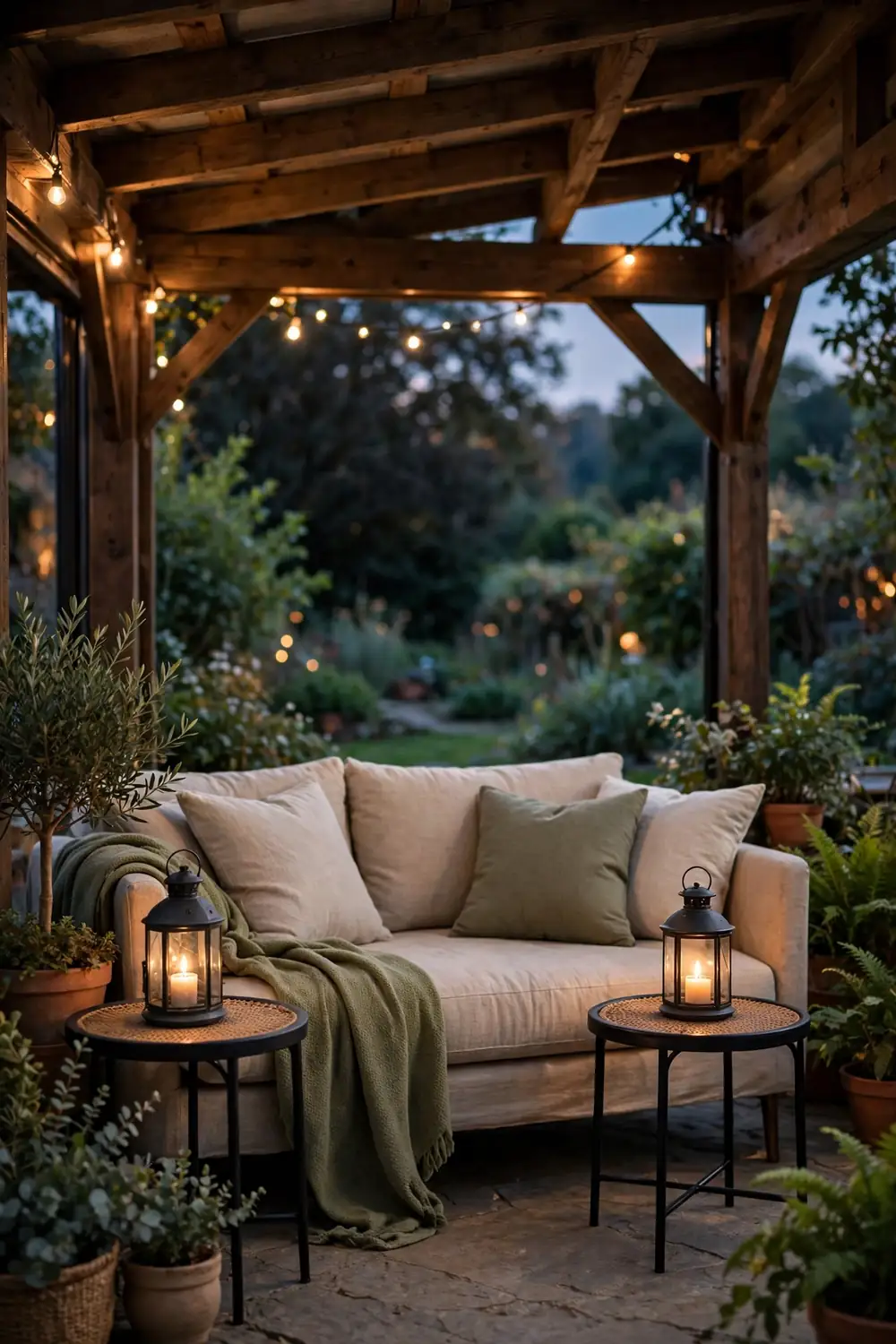
Small side tables and lanterns solved the problem of where to put a mug on our patio. For a long time the only surface was the coffee table, and it ended up crowded with mugs, books, and a plant. Now each seat has a small table beside it, and a lantern sits on one of them in the evening. The light is soft, the mugs have a home, and the coffee table stays clear for a board game or a plate of food.
I use battery candles in the lanterns most nights, because real candles blow out in a breeze and drip wax on the table. The lanterns are metal, not glass only, because a glass lantern on a patio floor breaks the first time it gets knocked, and I have broken two. The side tables are light enough to move, so I pull one closer when I read and push it back when guests come, and that flexibility is worth more than a matching set.
Tip: Put a small coaster on each side table and leave it there. A coaster that lives on the table gets used, while one in a drawer never does, and wood rings are hard to remove.
16. Add a Storage Bench for Cushions and Toys
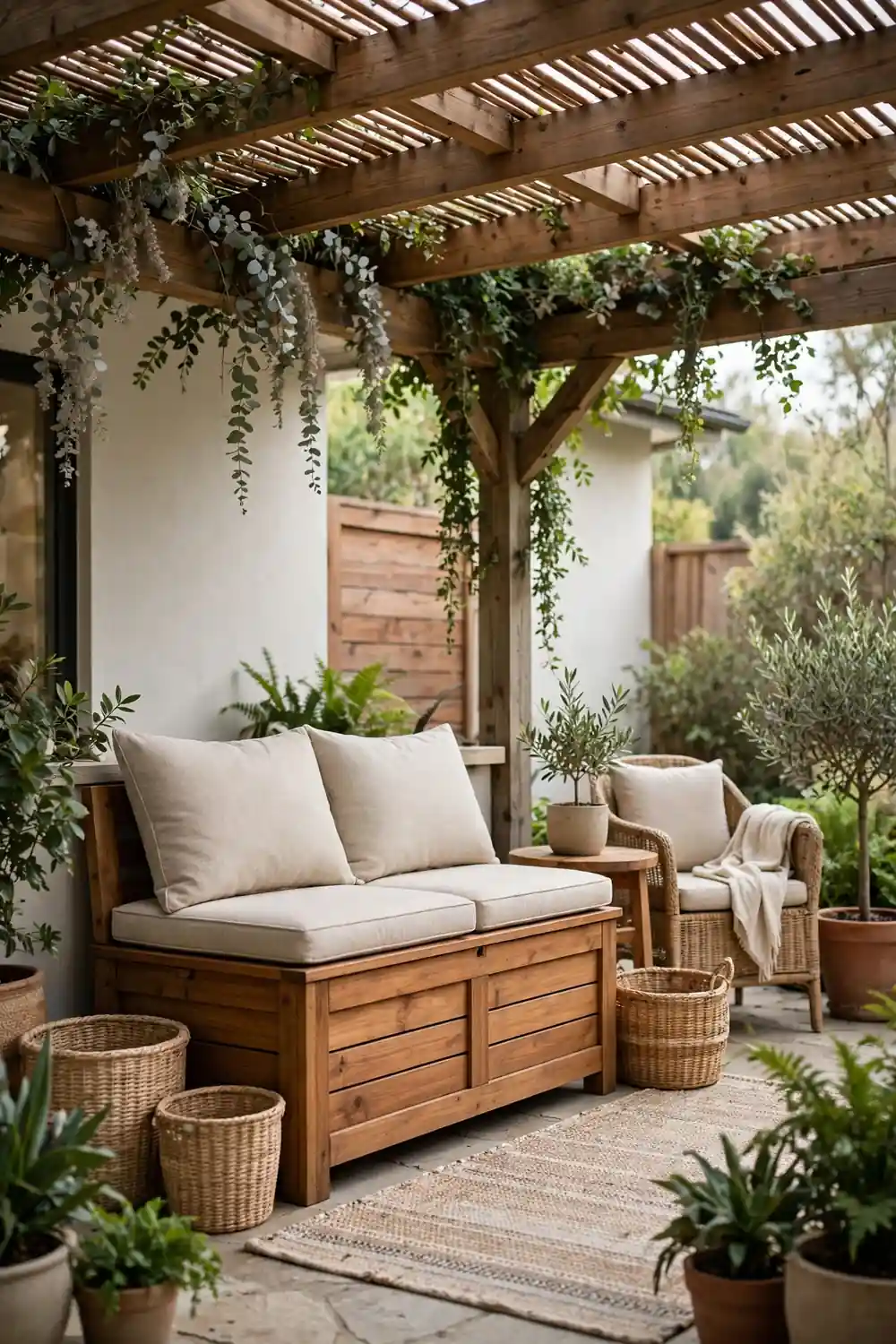
A storage bench is the most useful piece of furniture on our patio, and it does not look like storage at all. It sits against the house wall with a cushion on top, so it works as extra seating, and inside it holds spare cushions, throws, and the children’s outdoor toys. Before the bench, those things lived in a pile by the door, and the patio always looked half tidied. Now I open the bench, take out what I need, and close it, and the patio stays clear.
I line the inside of the bench with a dry cloth, because damp gets in through the lid in heavy rain, and a damp cushion smells musty for weeks. The bench lid stays open on its own, which matters, because a lid that falls shut on your fingers while you reach for a cushion is a pain I only needed once. At the end of the season I wash the bench and leave the lid open for a day to dry, and it has lasted three years without a mark.
Tip: Label nothing, but keep one side of the bench for cushions and the other for toys. A bench with a simple split stays tidy, while a bench where everything mixes becomes a box you dread opening.
17. Swap Cushions and Throws With the Season
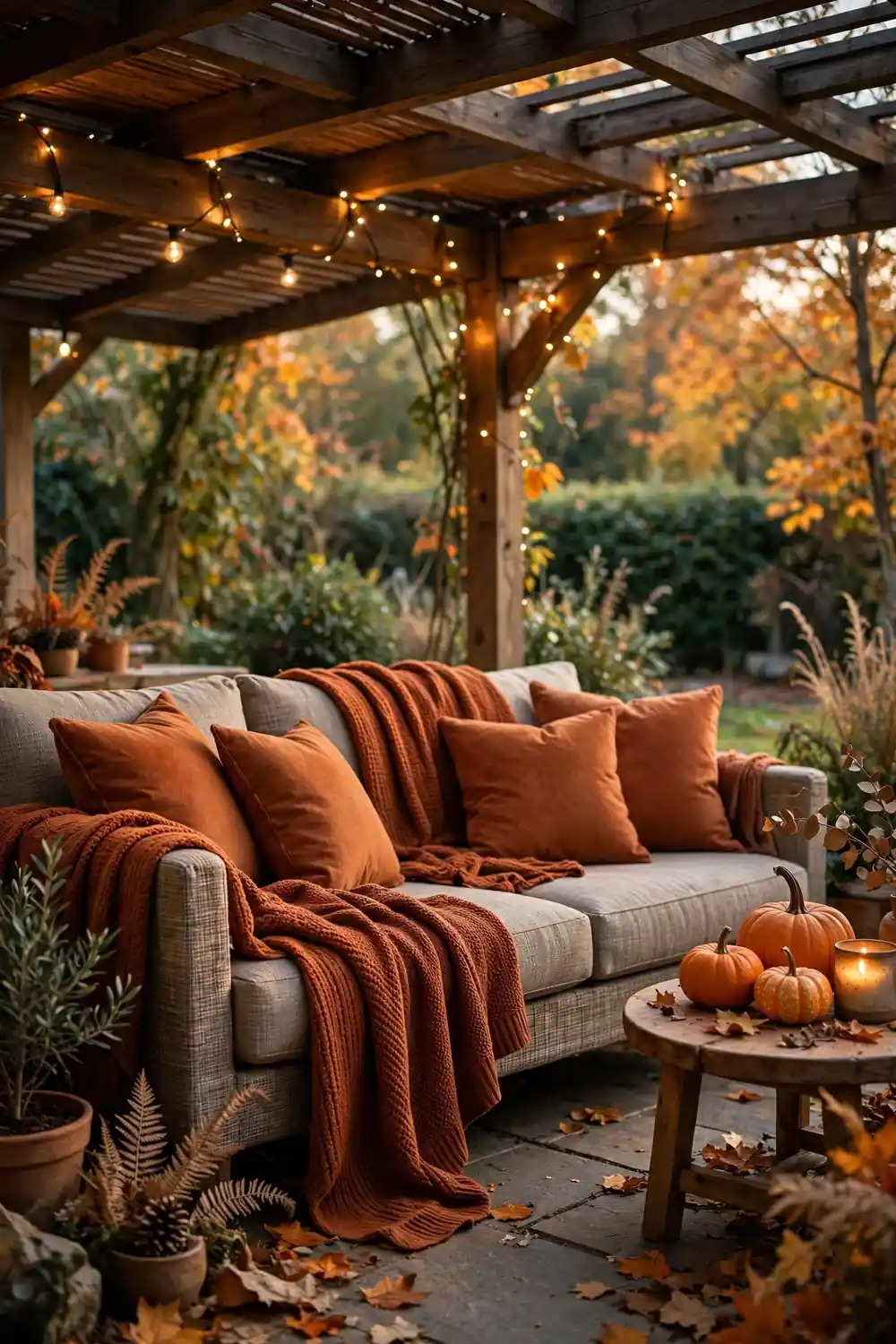
Swapping cushions and throws with the season is the cheapest way I know to make the patio feel new. In summer the sofa has cream and sage cushions, and in autumn I swap in rust and warm brown, with a thick throw folded over one arm. The sofa is the same, the roof is the same, but the whole patio feels different, and guests notice the change even though they cannot always say what changed. I store the off season cushions in the storage bench, so the swap takes about ten minutes.
I learned not to buy a whole new set each season, because that fills the bench and wastes money. Two cushion covers and one throw per season are enough, and I wash the covers before I pack them away, because a stained cover stored for six months comes back with a mark that will not wash out. The pumpkins on the side table in autumn are real, and they last about three weeks before they soften, so I replace them once, not every week.
Tip: Swap only the cushion covers, not the whole cushions, if your cushions have zips. Covers pack flat, cost less, and the bench stays half empty for other things.
18. Keep the Floor Easy to Clean and Dry
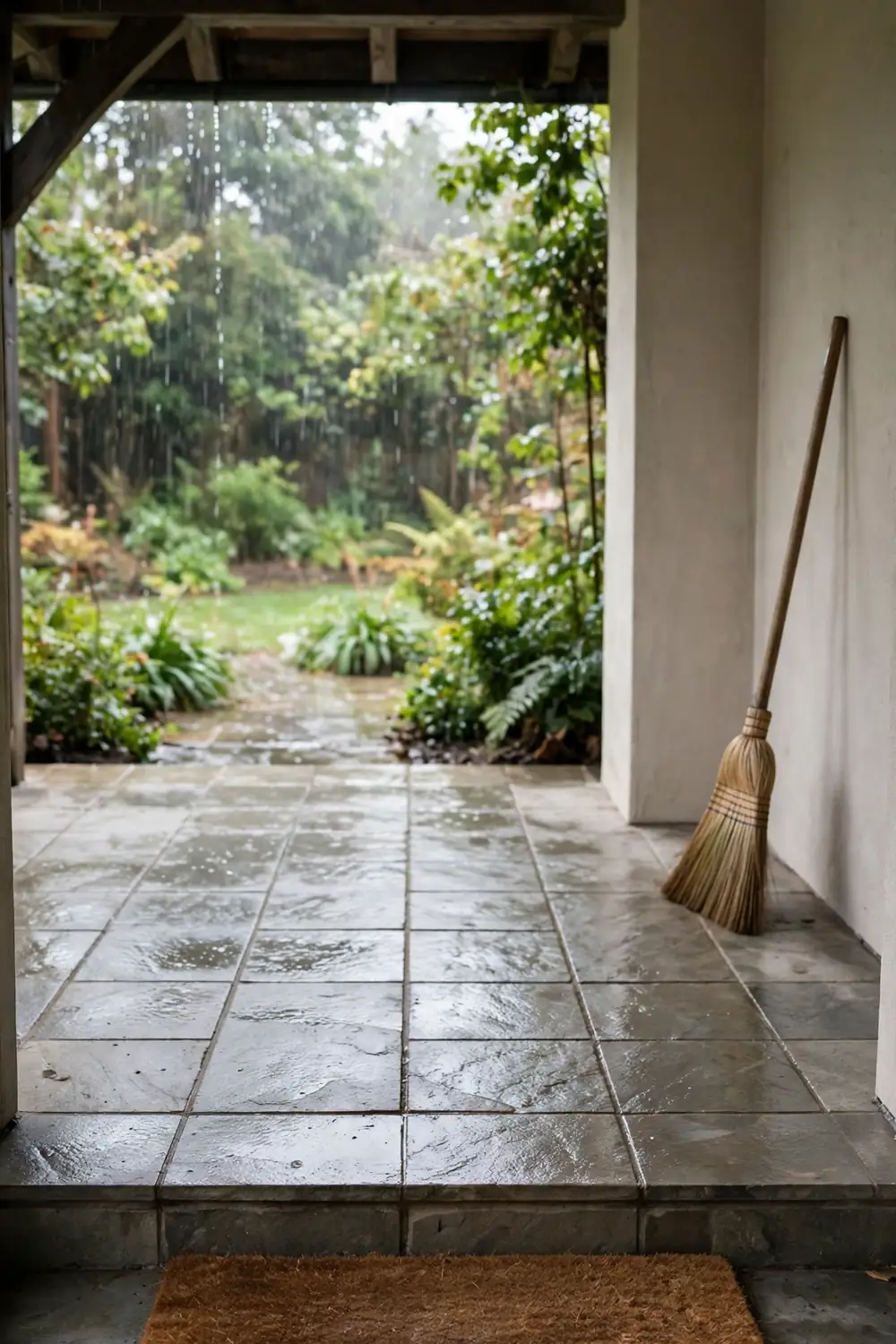
An easy floor is what keeps a covered patio usable after rain, not just during it. Our floor is stone tile, and it dries fast, sweeps clean, and does not show mud the way a pale concrete floor did. I sweep it once a week and mop it once a month, and that is the whole routine. A floor that needs scrubbing every week is a floor you stop using, and I wanted a patio that stayed inviting without constant work.
The doormat at the step does more work than any other small thing on the patio. It catches mud from shoes before it reaches the rug, and I shake it out twice a week. The step and doormat are the same first impression I think about in our spring front door decor ideas, where a clear entry makes the whole house feel welcoming. The step itself is slightly higher than the garden, so rainwater runs away from the patio instead of pooling under the chairs, and I check that step after heavy rain, because leaves block the gap and water backs up. If your floor is wood decking, sweep leaves off it weekly, because wet leaves stain wood and make it slippery, and a slippery patio is one nobody trusts in rain.
Tip: Keep a stiff broom by the patio door, not in the garage. A broom that lives by the door gets used after every muddy day, while one in the garage stays there.
Frequently Asked Questions About Covered Patio Design
What is the difference between a covered patio and a pergola?
A covered patio has a solid roof that keeps rain off, while a pergola has open slats that give shade but let rain through. I chose a solid roof because I wanted to sit out in rain, and a pergola would not have done that. A pergola suits a garden where you only need shade, and it costs less to build, but it will not keep cushions dry.
How much shade should a covered patio give at noon?
It should shade the seating area fully at noon in summer, because that is when the sun is strongest and the patio is hardest to use. I check this by sitting in the usual seat at noon and seeing if sun hits my face or my book. If it does, I add a curtain on the sun side or move the seating back under the roof, rather than buying a whole new cover.
Can I use indoor furniture on a covered patio?
You can, but it will not last as long as outdoor furniture, even under a roof. Rain blows in sideways, damp air gets into fabric, and indoor wood swells in wet weather. I moved an indoor chair out once, and it warped in one season. Outdoor furniture costs more at first, but it survives rain and sun, and you do not replace it every year.
How do I keep a covered patio from feeling dark?
Keep the roof light in colour underneath, leave at least two sides open, and use warm lights in the evening instead of bright ones. Our roof is white underneath, and the open sides let daylight in from the garden, so the patio feels bright even on a cloudy day. If your patio still feels dark, sheer curtains help more than a solid wall, because they soften light without blocking it.
A covered patio earns its keep on the days you did not plan to use it. I think of the mornings I stepped out with tea because the roof kept the chair dry overnight, and the evenings when friends stayed longer because the lights and the fire table made leaving feel like a chore. Those unplanned hours are the real test, and they are why I would fix the roof and the drainage before I bought anything pretty. Start with shelter that works in rain, then add the seating you actually sit in, and let the rest grow slowly. A patio that is dry, shaded, and easy to clean gets used every week, and a patio that only looks good in a photo gets used twice a year.
If you only do one thing this weekend, go and sit on your patio at noon and again after dark, and write down what bothers you. Sun in your eyes, a damp cushion, nowhere to put a mug, or a view you would rather soften will tell you more than any list can. Fix that one thing first, live with it for a week, and then pick the next. That slow way of building is how our patio stopped being a project and started being the room we use most, and it is a far better result than buying everything at once and hoping it all fits.