Introduction
If you’ve ever looked at your bed and felt it was missing something, you’re not alone. The good news is that a bed without headboard can look just as polished as one with a frame behind it. It also saves space, makes the bed easier to move, and gives you more freedom to change your room later. The trick is giving the wall behind the bed a little attention, so the whole setup feels planned. In this post, you’ll find 21 ideas that look finished, from quick weekend fixes to bigger projects, with tips for small rooms and rentals. Pick what suits your space and your budget. The same wall-focused styling works beyond the bedroom — our Contemporary Coastal Living Room Ideas and Modern Rustic Living Room Ideas show more ways to make walls do the talking.
1. Anchor the bed with a deep painted wall
A bold wall color can do the job of a headboard without adding any furniture. Deep navy, forest green, or warm terracotta all work because they give the bed a strong backdrop and make it feel anchored. Paint brands like Benjamin Moore and Sherwin-Williams both carry rich shades in these families.
Paint the wall in a matte finish, since it hides small bumps and looks softer in lamplight. Sample two colors first and check them morning and night.

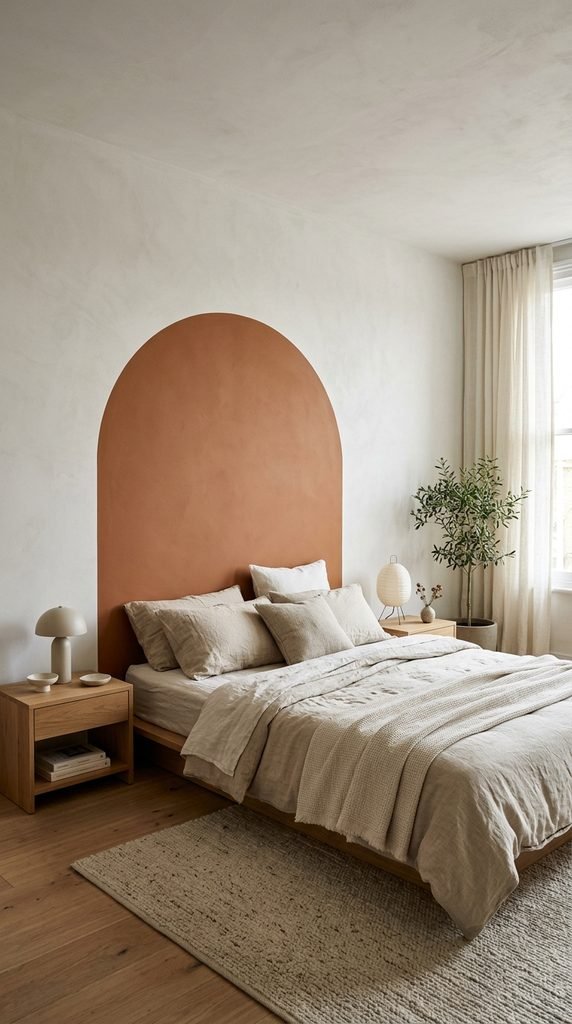
2. Paint a headboard shape right on the wall
If you love the look of a headboard but not the price, paint one. An arch, a rectangle, or a soft curve behind the bed gives the illusion of a headboard and costs only a sample pot of paint.
Make it a little wider than the bed, so it frames the pillows properly. A strip of painter’s tape makes the edges crisp. It’s a lovely idea for renters too, since a coat of the original color covers it later.
3. Hang one oversized piece of art
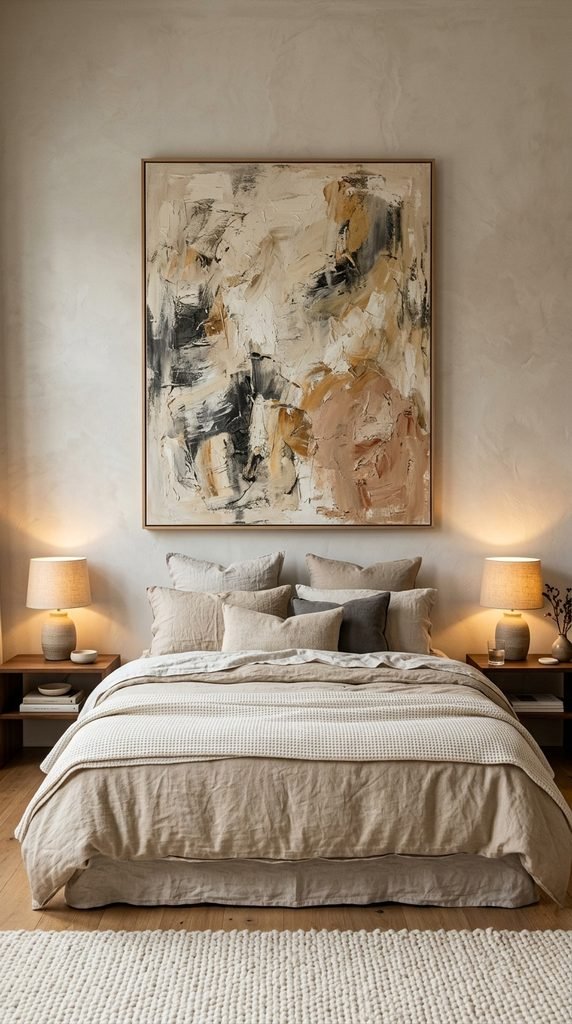
One big piece of art above the bed instantly replaces the need for a headboard. It becomes the focal point, and the bed feels framed even without any structure behind it.
Choose art that’s about two thirds the width of the bed, and hang it a hand’s width above the pillows. Use proper wall anchors, since it hangs above where you sleep. A calm piece in colors from your bedding usually looks best.
4. Build a gallery wall above the bed
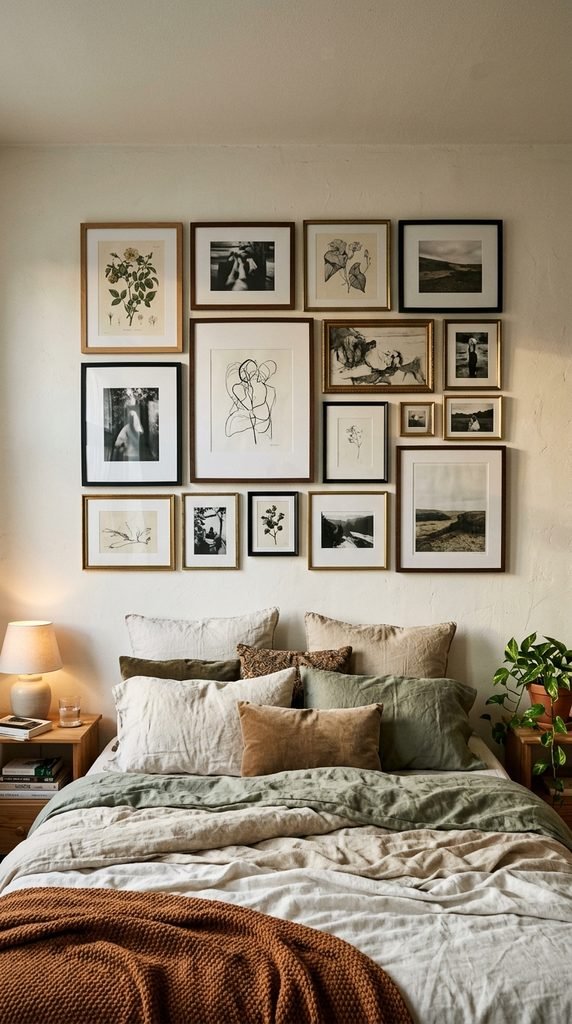
A gallery wall adds personality in a way a plain headboard can’t. Mix framed prints, family photos, and small sketches, and keep the frames in two or three matching finishes so it feels collected, not chaotic.
Lay everything on the floor first and arrange it into a rough rectangle roughly the width of the bed. Then trace each frame on paper and tape the templates to the wall. It saves a lot of extra nail holes.
5. Add a bold wallpaper moment
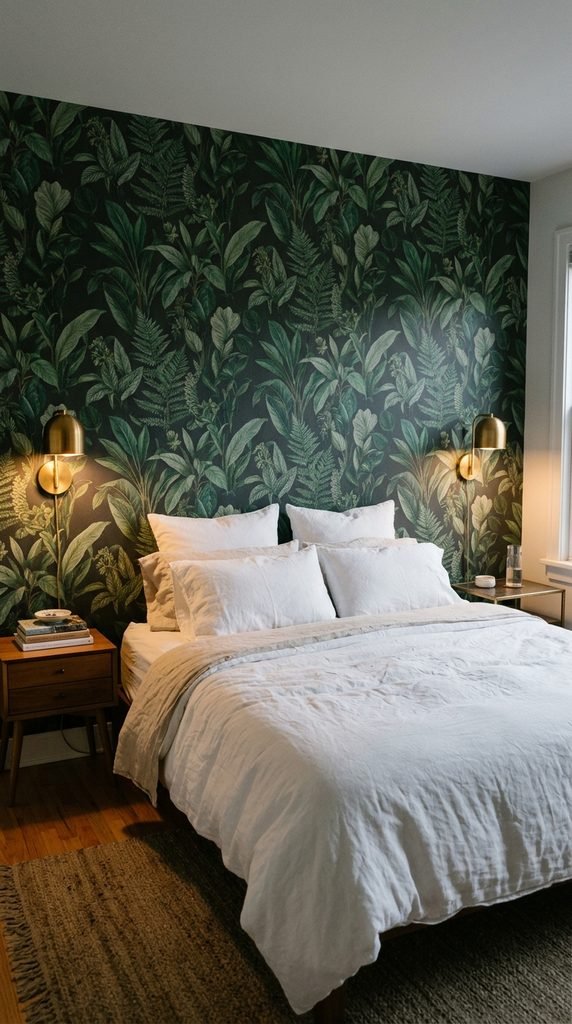
Wallpaper behind the bed still draws the eye to it, and it adds a fun element a headboard can’t. A botanical, a soft stripe, or a bold pattern all work well on one wall.
If you rent, peel-and-stick wallpaper is the easy way to go, since it comes off without damaging the paint when it’s applied to a smooth, painted wall. Keep the rest of the room calm, so the pattern gets to be the star.
6. Warm up the wall with wood slats
A wood slat wall adds warmth and texture, and it looks custom without any headboard at all. The vertical lines make the ceiling feel taller, and the natural wood works with almost any palette.
You can buy ready-made slat panels or build the look with thin wooden strips on a painted backing. Keep the wall at least as wide as the bed, and let warm lights wash down the slats for a hotel feel.

7. Use shiplap or board and batten for a classic frame
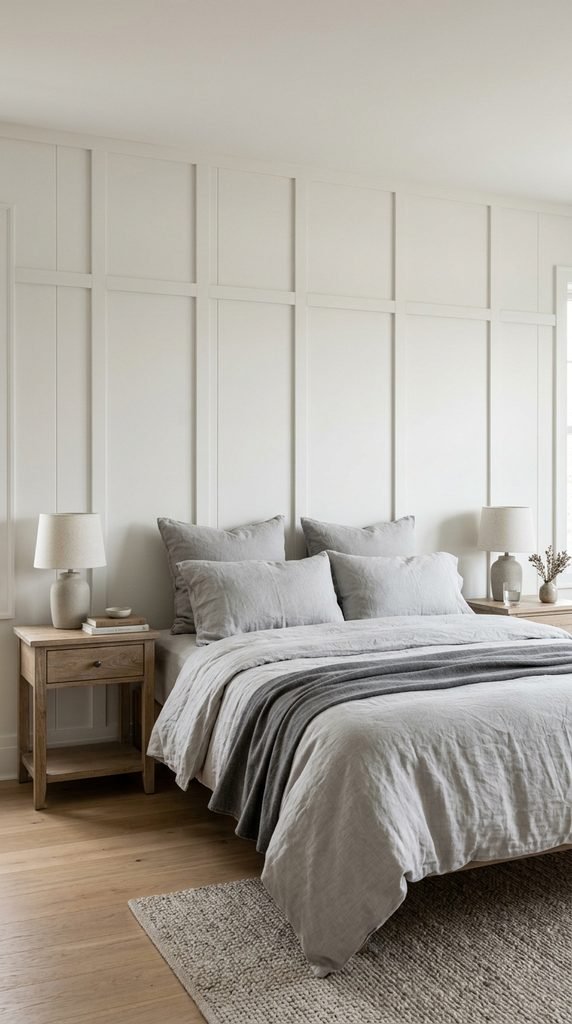
Paneling gives the bed a defined zone without adding any furniture. Shiplap, board and batten, or simple molding frames all create a headboard effect, and they look good in both modern and traditional bedrooms.
Painting the panels the same color as the wall keeps things calm, while a deeper color makes them stand out. It’s a weekend project that adds real character to the whole room.
8. Upholster a wall panel for a soft, hotel feel
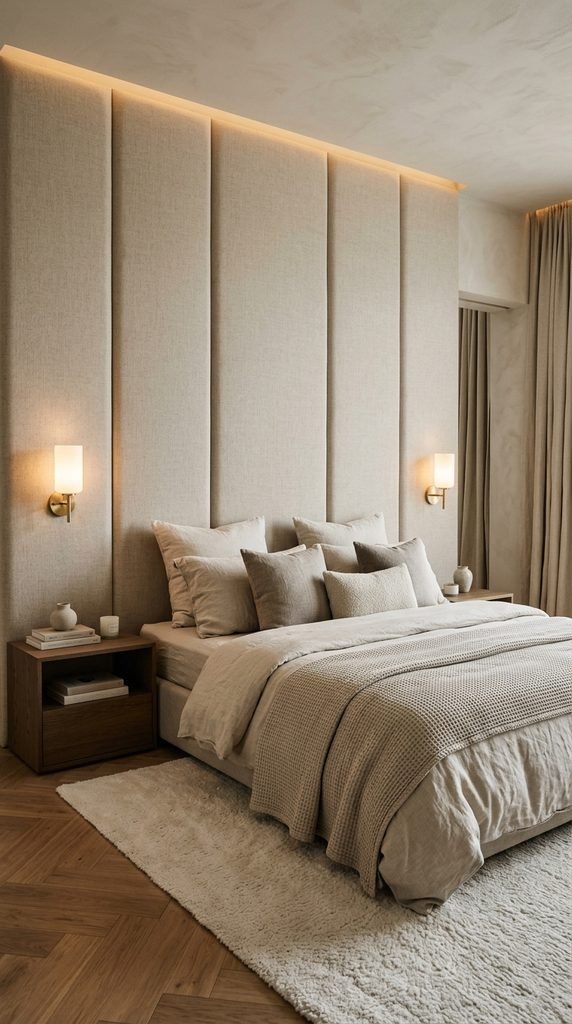
If you want the comfort of a headboard without buying one, upholster just a section of the wall. A panel of padded fabric behind the pillows feels soft to lean against and makes the bed look high end.
You can make one at home with a plywood board, thick foam, batting, and a fabric you love, then mount it on the wall with a French cleat. Choose a performance fabric so it’s easy to wipe clean.
9. Hang curtains behind the bed
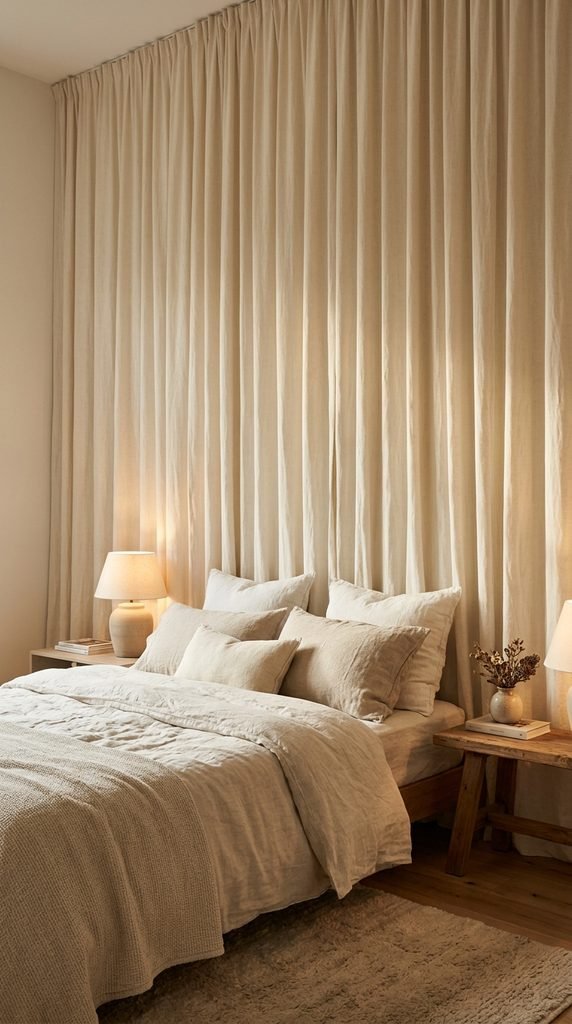
Curtains behind the bed are one of the softest headboard ideas around. Hang a rod near the ceiling and let the fabric fall to the floor. It adds height, texture, and a gentle backdrop in one go.
Linen or a heavy cotton drapes best. Choose a color that matches your walls for a quiet effect, or go a little deeper for contrast. Stores like IKEA carry affordable curtain panels and rods.
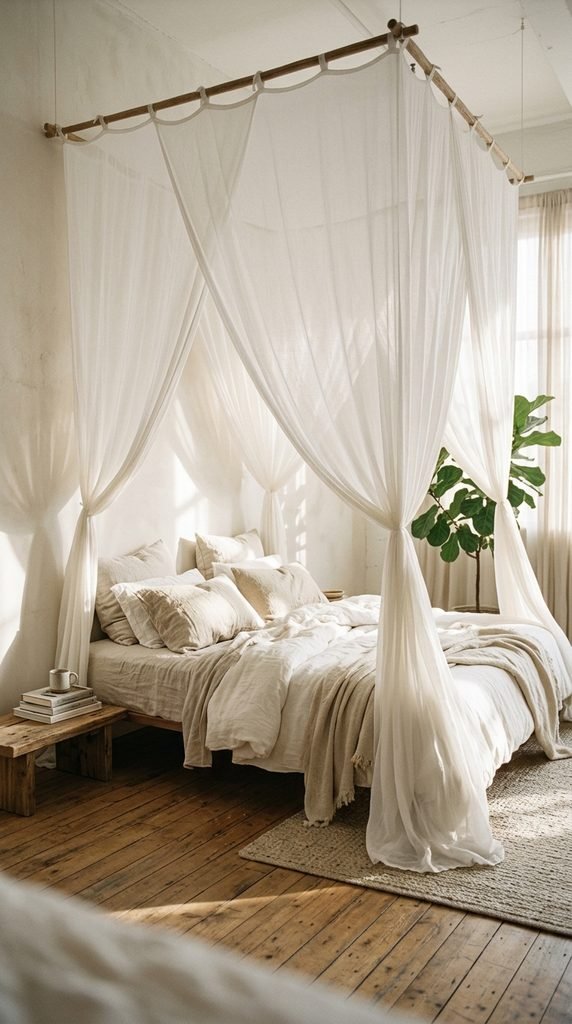
10. Create a cozy canopy
A canopy gives the bed height and a cocooned feel, and it needs no headboard at all. A simple frame with sheer fabric looks dreamy and light, while heavier linen feels cozy and private.
If you plan to add fairy lights, use LED ones, since they stay cool, and keep them well away from the fabric edges. A small canopy ring hung from the ceiling is the easiest and least expensive version.
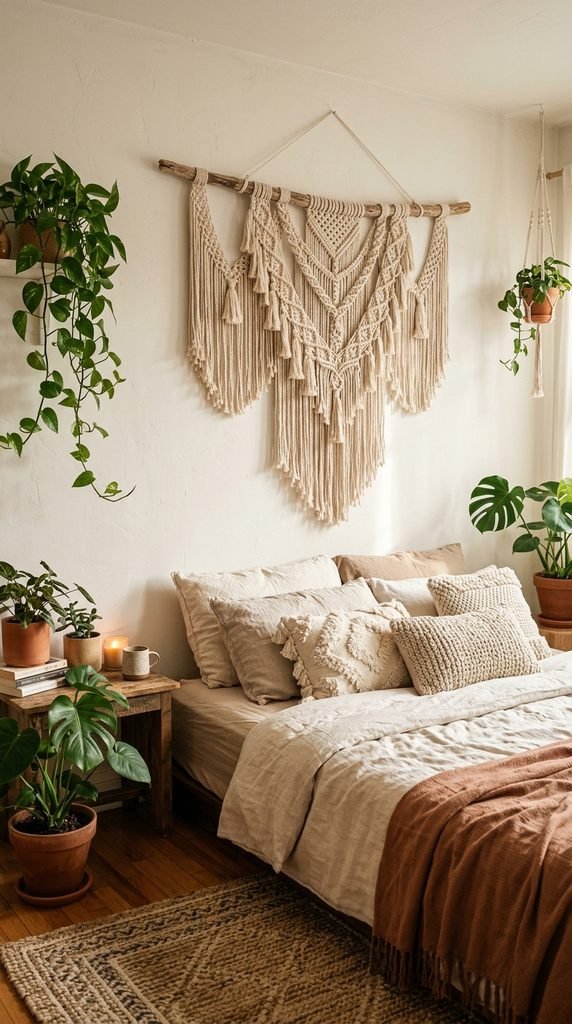
11. Hang a woven tapestry or wall hanging
A tapestry or woven wall hanging adds texture and softness right where a headboard would be. It’s lightweight, easy to hang, and simple to swap when you want a change.
Choose one that’s roughly as wide as the bed, and hang it from a wooden dowel so it sits straight. Natural fibers like cotton and jute fit boho and Scandinavian rooms beautifully.
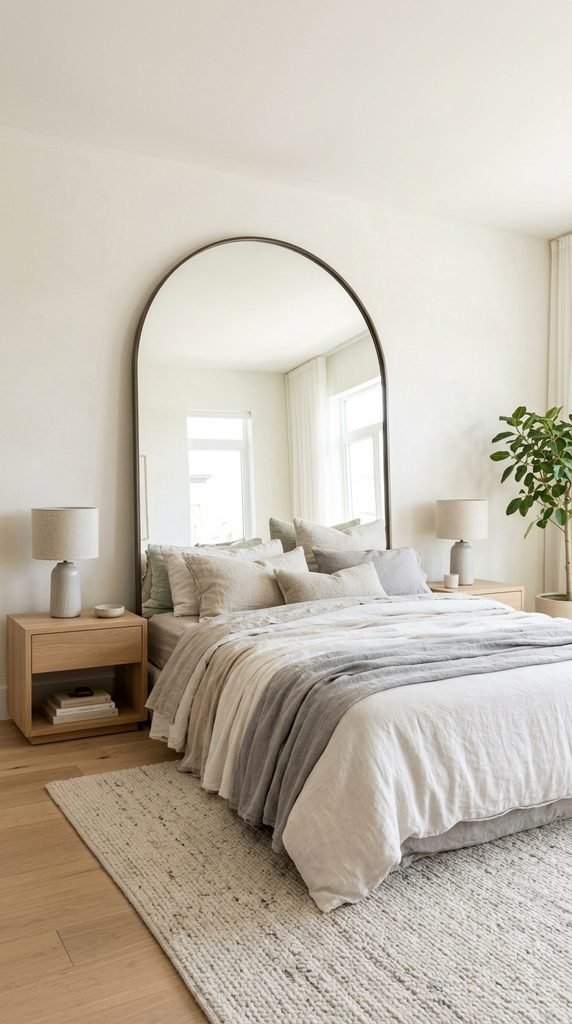
12. Place a large mirror above the bed
A large mirror bounces light around and makes a small bedroom feel bigger. It also acts as a frame for the bed, so a missing headboard is hardly noticed.
For safety, don’t hang a heavy mirror right above your head unless it’s properly anchored into studs. A mirror that leans on the wall behind a dresser or console is a safer way to get the same look.
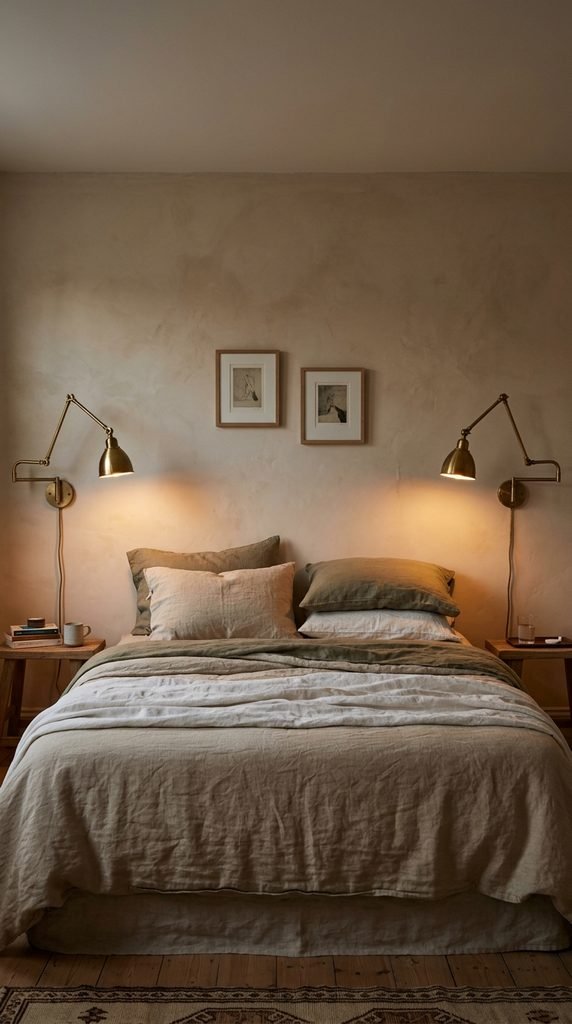
13. Light the wall with sconces on each side
Wall lights frame the bed beautifully, and they make a plain wall look finished. A matching pair on each side creates a clean, symmetrical look, and it frees up space on your nightstands.
Plug-in sconces mean no electrician is needed, and the cord can run neatly down the wall in a cord cover. Choose warm bulbs, since soft light makes everything feel calmer at night.
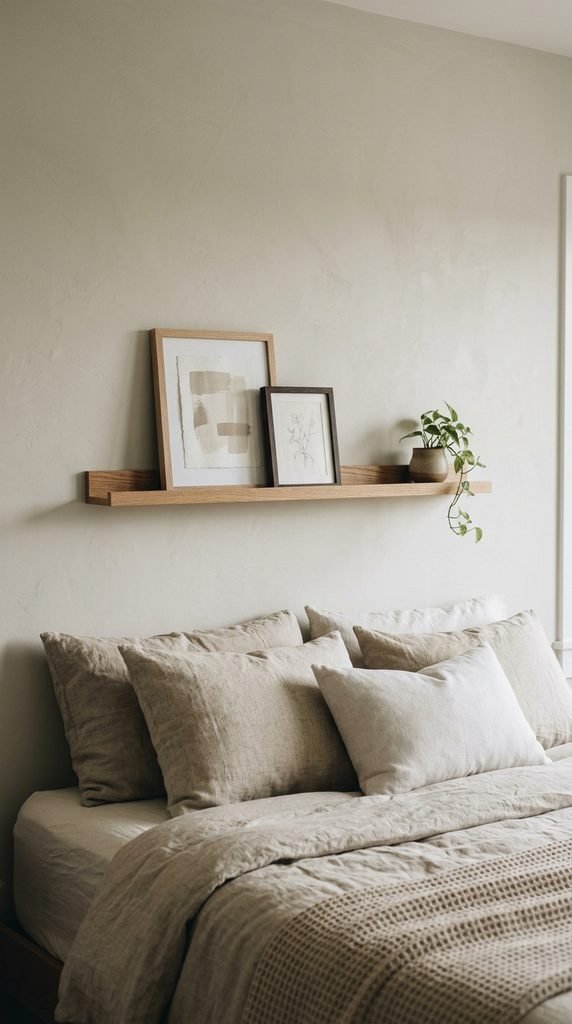
14. Style a slim picture ledge with light pieces
A narrow picture ledge lets you change your display whenever you like. A couple of small frames leaning on the shelf feel relaxed, and you can swap them with the seasons.
Keep everything light, and skip heavy or fragile objects above the bed. A ledge with a small lip stops frames from sliding off. This is a good choice if you like to change things up often.
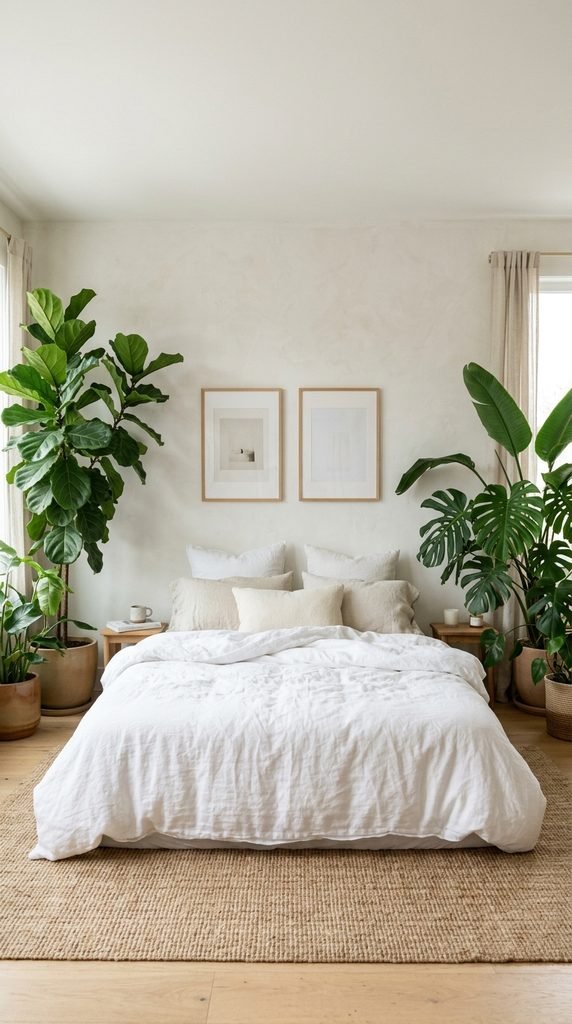
15. Frame the bed with tall plants
Tall plants on either side of the bed create a natural frame that does a headboard’s job. They add life, soften corners, and bring a fresh feel to the room.
Choose plants that cope with indoor light, like a rubber plant or a snake plant, and place them in matching pots. If light is low in your bedroom, faux plants work well too. Don’t crowd the sides, so you can still reach your nightstands
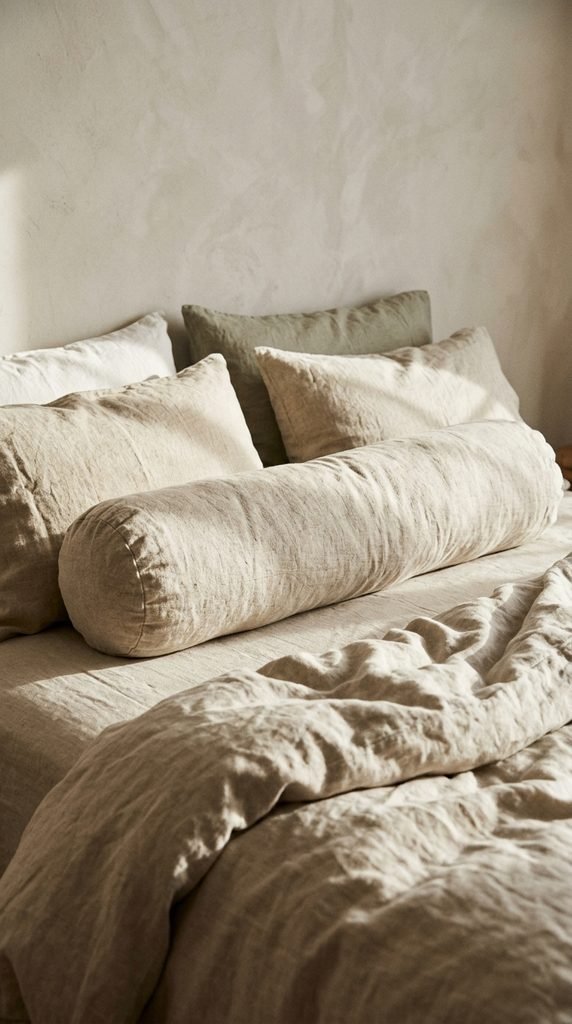
16. Prop up pillows with a bolster or wedge
One of the biggest worries with no headboard is pillows sliding down the wall. A long bolster cushion across the head of the bed solves that, and it also adds a soft place to lean against.
You can also wall-mount a bolster using a French cleat, which takes less room than a full headboard. A foam wedge pillow under your regular pillows gives extra support for reading.
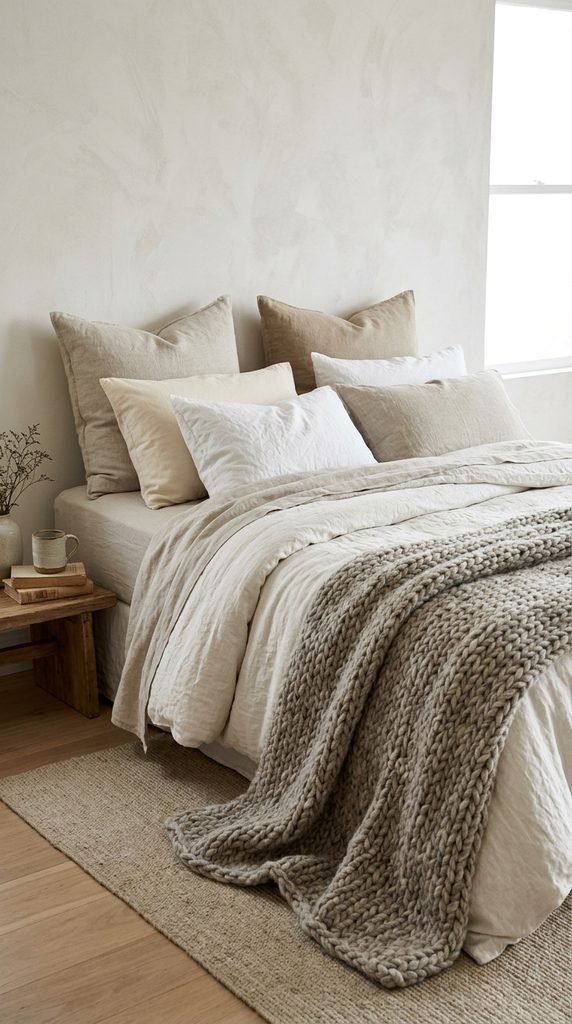
17. Layer oversized pillows and cozy bedding
Great bedding can make a bed look complete all by itself. Stack two or three large European pillows at the back, add standard pillows in front, and finish with a textured throw across the foot.
Mix a few textures, like linen, waffle, and knit, in one or two colors so it feels rich but calm. When the bed looks that inviting, nobody misses the headboard.
18. Choose a low platform bed that looks finished
Some beds are designed to look complete without a headboard. A low platform bed with a clean wooden frame looks intentional, modern, and calm, especially in a minimalist or Japandi room.
Keep the surrounding decor simple, and let the bed’s shape do the talking. A slim nightstand on each side and one simple lamp are enough. It’s also one of the easiest ways to make a small room feel more open.
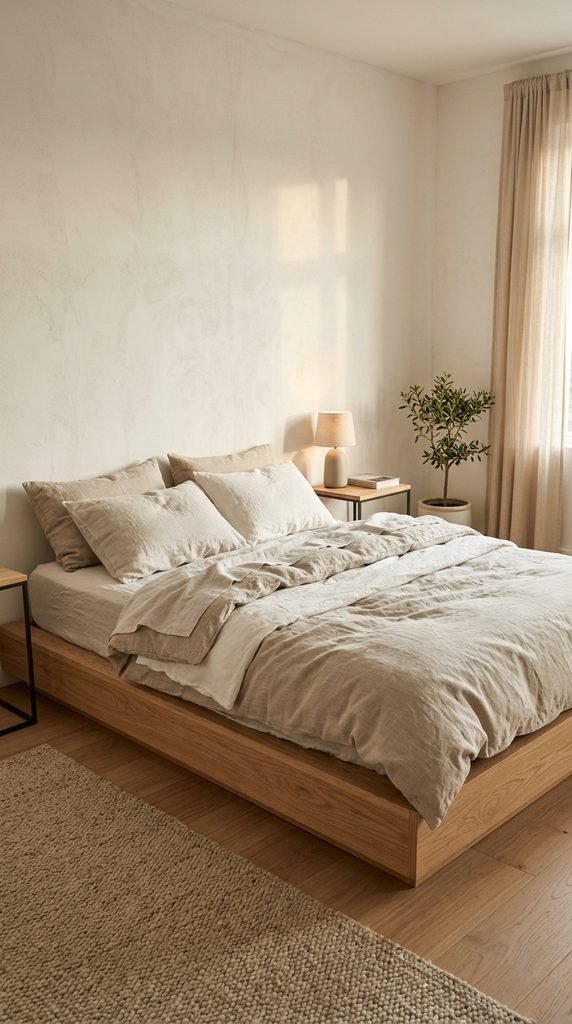
19. Pick an ottoman or storage bed with clean lines
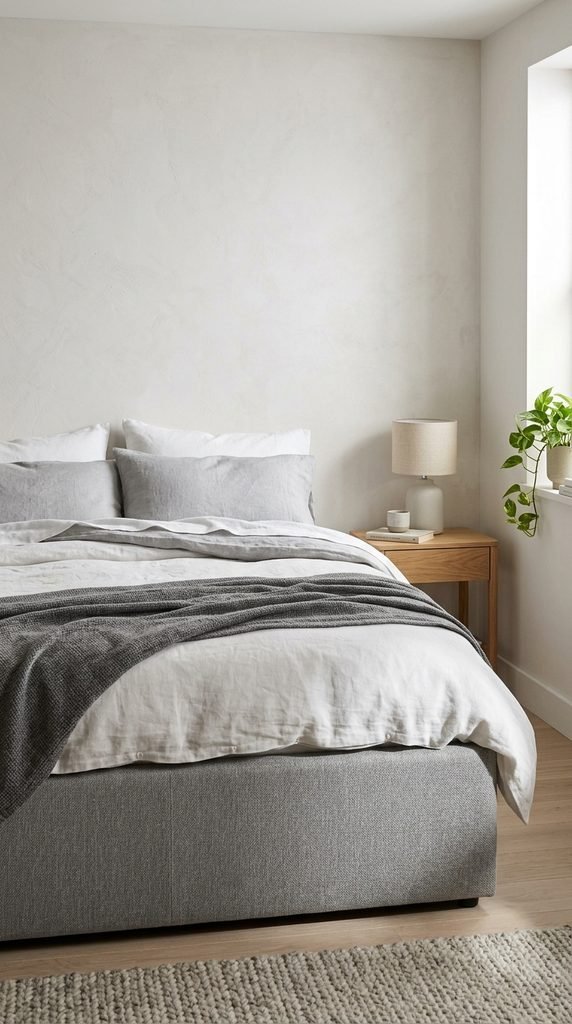
An ottoman or storage bed is a clever choice for a small room. With no headboard, the bed can sit flush against the wall and save you valuable inches, and the storage underneath is a real bonus.
Check you have enough clearance to lift the base without hitting a wardrobe or wall. A fabric-covered frame in a soft grey or beige gives the bed a finished look all on its own.
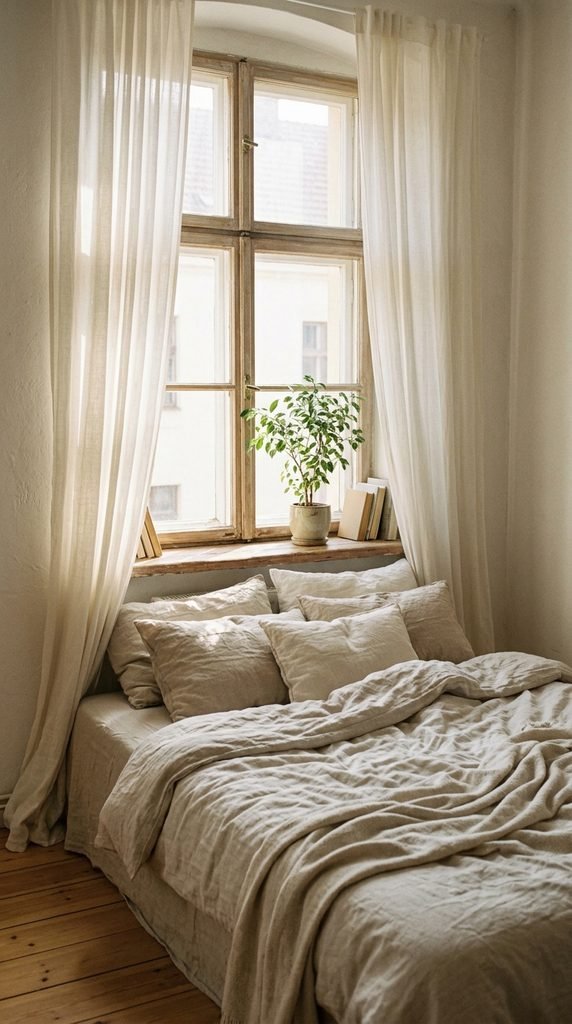
20. Place the bed under a window
A bed under a window needs no headboard, because the view does the job. It frames the bed and brings in plenty of natural light, which makes the room feel open.
Hang soft curtains on either side, and choose a roller blind or sheers for privacy. In winter, check for drafts from the glass and keep the bedding warm. It’s a lovely layout when walls are short or sloped.
If your bed sits under a window, this is also the spot to think about blind cord safety. A cordless blind is the safer choice here, because there is no dangling cord hanging down beside the pillows, which matters most in a bedroom used by children or pets. A cordless roller blind or a wand-operated blind gives you the same privacy as a corded one, but the window looks visually cleaner and there is nothing loose to catch on bedding or a pillow at night.
Cordless blinds are also easier to look after. A quick wipe or a gentle dusting of the slats keeps them clean, and without cords there is less to tangle, fray, or replace over time. If you already have a corded blind on that window, a cord cleat fitted high on the wall, well out of reach of the bed, is a simple safety step until you can switch to cordless.
21. Keep it simple and let the bedding do the talking
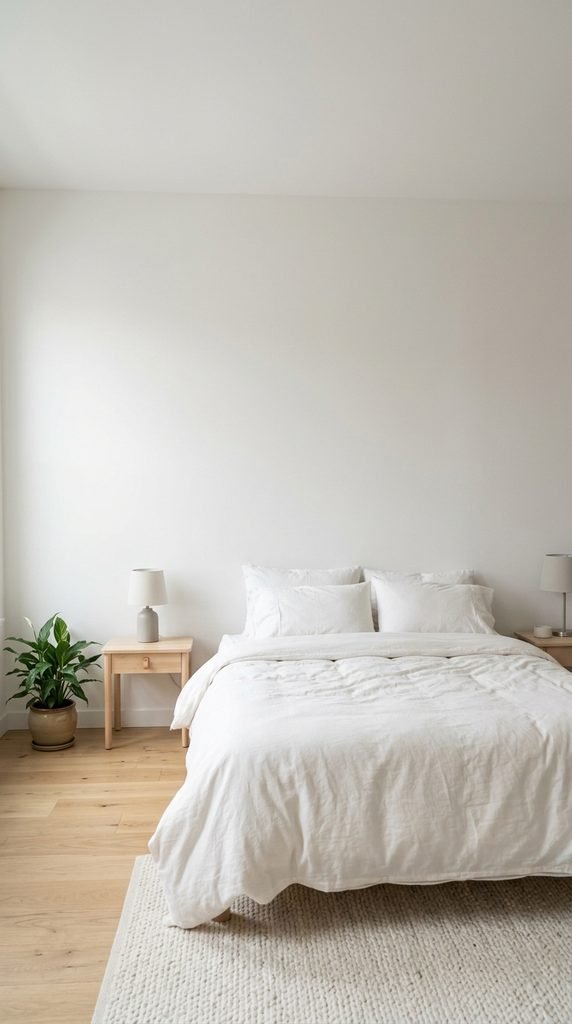
Sometimes the best idea is to do almost nothing. A clean wall, great bedding, and good lighting can make a bed feel complete. Quiet, simple bedrooms often feel the most restful.
Spend your budget on soft sheets, a good duvet, and warm bedside lamps instead. Leaving the wall bare also makes it easy to add something later, once you know what you want.